Cuyana — Fewer, Better
She drove to VC meetings between MBA classes, pumping breast milk in parking lots before walking into rooms full of skeptics. That's how Cuyana started. Today, it's a $21M+ sustainable fashion brand with a leather tote that's been the bestseller for over a decade.
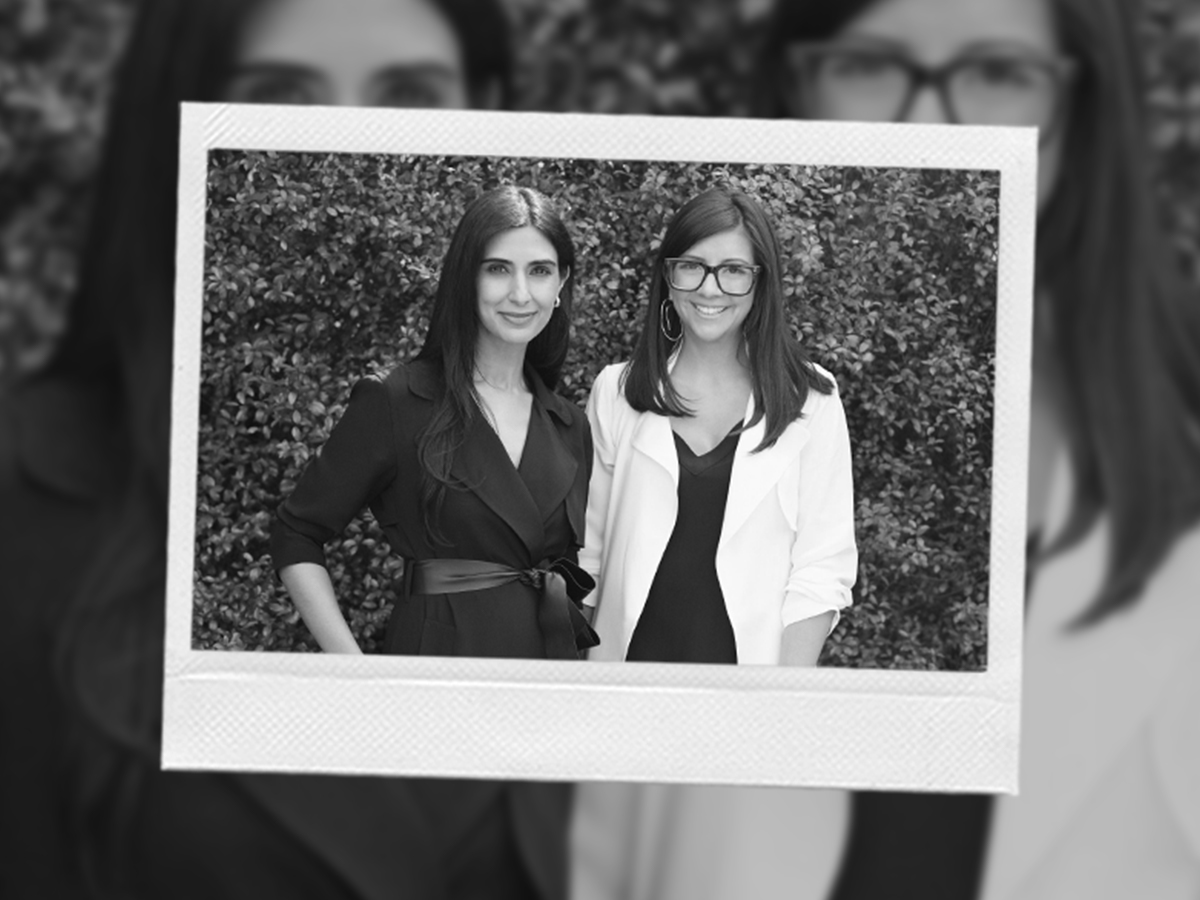
Shilpa Shah & Karla Gallardo — Co-founders, Cuyana | Courtesy Cuyana
In 2013, when every e-commerce brand was racing to sell more, Cuyana published a brand statement that did the opposite. Shilpa Shah's question at the time: "What e-commerce company tells you to buy less?" The answer turned out to be a $21M business.
Shilpa Shah spent her 20s learning something rare: how to design things people actually want to use. Not pretty interfaces. Not clever flows. Things that respect the person using them. At 23, she reported directly to Disney's VP Paul Yanover, part of a small team building online experiences for one of the world's most demanding consumer brands.
When the entire team left, she inherited management responsibilities she didn't ask for. She tried to recruit someone senior to be her own boss - spending four months attempting to hire above herself before finally accepting the role. That reluctance was the tell: she was the kind of designer who believed in building the right thing, not climbing.
By 32, she had worked at Disney, AT&T, Sun Microsystems, and Punchcut - one of the first generation of professional UI/UX designers in Silicon Valley. She was good at what she did. Good enough that she wanted to understand why good ideas died in boardrooms. So she applied to business school.
She had a 2.5-year-old at home. She was 32. Her mother told her to focus on her family. She enrolled anyway.
By the first semester, she was pregnant. She delivered her second son in August. That fall, while completing her final MBA semester at UC Berkeley's Haas School of Business, she met Karla Gallardo - an Ecuadorian entrepreneur with a lifelong love of fashion and a clear-eyed view of what was wrong with the industry.
The pitch was simple: luxury quality at accessible prices, built on a supply chain that wasn't a race to the bottom. In 2011, when fast fashion had already won the mass market, this wasn't obvious. Shah's mother and grandmother had taught her to look at the silk, feel the seam - a quality instinct that American retail had mostly abandoned. Cuyana was the attempt to bring it back.
Between school sessions, Shah drove to VC pitches, pumping breast milk in the parking lot before walking in. She was managing a 4-month-old, a 3.5-year-old, and an early-stage startup simultaneously. "I had never worked harder in my life," she has said. "I dropped every ball. I barely saw my children at times."
Cuyana launched in 2012. The leather tote, introduced that same year, has never left the bestseller list.
"I wanted to go to business school to understand what happens in a boardroom when good ideas die."Shilpa Shah — Co-Founder & CXO, Cuyana
The first two years of Cuyana were spent entirely on supply chain. No big marketing push. No virality play. Shah and Gallardo launched one product at a time, tested in one market at a time, before committing a dollar to advertising. Shah called it "a full ethnography" - combining quantitative and qualitative research to understand what women actually wanted before telling them what to buy.
The breakthrough came in 2013 when they packaged the core idea into something customers could share: "Fewer Better Things." An e-commerce brand telling you to buy less. The phrase was counterintuitive enough to spread. Word of mouth did what paid media couldn't.
Male investors were puzzled. They spent entire pitches trying to prove the problem existed rather than discussing how to solve it. Female investors, Shah noted, understood the value proposition immediately. They had lived it.
Sell-through rate measures what percentage of inventory actually sells. Higher = less waste, more intentional buying.
"It should never be a question of whether you should make an impact or make a better business decision."Shilpa Shah
Between MBA classes, Shilpa Shah drove to venture capital pitches, pumping breast milk in the parking lot before walking in. Not as a dramatic sacrifice story - just as the logistics of what it looks like to co-found a company with a newborn, a toddler, a husband in medical residency, and a semester of school left. "I had never worked harder in my life," she said later.
At 23, when every designer on her team at Disney left, she inherited management of the whole operation - but refused the title for four months, spending that time actively trying to recruit someone senior to be her own boss. When a mentor finally told her to just take the job, she did. The lesson: leadership found her before she went looking for it.
Her mother and grandmother taught her how to shop: "Look at the silk. Look at the seam." That tactile, quality-first instinct - inherited from a family that came from a culture where things were built to last - became the philosophical spine of Cuyana. The brand is, in a sense, an argument that this way of seeing the world should be American retail's default.
Cuyana's classic leather tote launched in 2012. It is still the brand's best-selling product, more than a decade later. In an industry built on planned obsolescence and seasonal churn, that's either a miracle or a proof of thesis - depending on your priors.
"I think balance is bullshit. It's just yet another thing we make women do."
"Design with intention and purpose is what resonated with me."
"I feel that it's almost a crime that we don't teach everyone a certain level of business for them to be successful in this world."
"Work equally hard and smart without ever compromising your own integrity."
"It has to be something that is driving you from within even if no one talks about it."
"What e-commerce company tells you to buy less?"
"It should never be a question of whether you should make an impact or make a better business decision."
"Cuyana will be the go-to brand for the day-to-day essentials of the modern woman."
"Between school sessions I drove to VC pitches, pumping milk in the parking lot after pitching. I had never worked harder in my life."Shilpa Shah — on the early days of Cuyana
BA in Human Computer Interaction and Computer Science (Cognitive Science major, CS minor). One of the first formal HCI graduates to build a career in Silicon Valley UI/UX design.
MBA from UC Berkeley's Haas School of Business. Enrolled at 32 while raising young children. The business school where she met co-founder Karla Gallardo and developed the Cuyana concept.
10+ year career across Disney Parks & Resorts Online, AT&T, Sun Microsystems, and Punchcut. Rose to Design Director. Among the earliest professional UX designers in the US.
"I feel that it's almost a crime that we don't teach everyone a certain level of business for them to be successful in this world."Shilpa Shah
Shilpa Shah's ambition for Cuyana is specific: make it the go-to brand for the everyday essentials of the modern woman. Not a trend brand. Not a seasonal refresh. The brand that's already in your wardrobe when you need to look sharp, feel good, or travel light.
The sustainability piece isn't the mission - it's the method. Shah has been clear that impact and business excellence aren't in conflict; the 90% sell-through rate is the proof. Cuyana's second-life Revive resale program, recycled packaging, and product repair services are evidence of a circular economy model that treats products as investments rather than inventory.
In 2025, Cuyana launched "Made With Air," described as the world's first true zero-impact collection - a significant step toward making fashion's environmental reckoning into a product line, not a press release.
The CXO title is instructive. Shah is not running the day-to-day - that's Gallardo's domain as CEO. Shah owns experience: how it feels to discover Cuyana, receive a package, use a product for 10 years, and eventually pass it on. That's a specific and unusual thing to be responsible for. It suits someone who spent a decade studying how humans actually interact with designed objects.