Ross Buhrdorf had a reasonable plan. After HomeAway, he would take a year off. He had spent years helping build the vacation rental business, and a stretch without the demands of another company seemed an entirely sensible reward. He lasted ten months. Then the engineer wanted something to build. Within two weeks of deciding to return, he was already absorbed in the next venture. Leisure had put up a respectable fight.
He tells the story with the cheerfulness of someone who has stopped arguing with his own appetite for work. “I couldn’t make it a year,” he recalled. The next venture was ZenBusiness, the Austin company he co-founded with Shanaz Hemmati. Its customers would include people for whom starting a business was still an intimidating first step, rather than a familiar professional habit.
That distance between the experienced builder and the inexperienced owner gives his second act its interest. Buhrdorf knew how to build technology at scale. Now he wanted to put some of that experience within reach of people beginning with an idea and a list of questions.
Before the business plan, the engineering
Buhrdorf is a Nebraska native whose professional education took him to the University of Texas at Austin, where he earned a computer science degree. His early employers included Data General, Tandem Computers and HAL Computers. These were places concerned with the machinery beneath the screen: computing systems, reliability and the engineering required to make complicated technology behave.
His university biography describes an interest that has remained consistent across changing job titles: applying technology to improve the products people use. The degree also connects him to an institution he continues to serve through its computer science advisory council. A long career can put considerable distance between a graduate and a classroom. In his case, there is still a working connection.
At Excite.com, one of the early web portals, Buhrdorf became vice president of engineering. He managed a global engineering team of about 200, working on a service whose communities generated 40 million daily page views. An audience that size makes the abstract business of software rather concrete. A small technical decision can become a large public inconvenience.
HomeAway brought another set of demands. Buhrdorf joined in 2005 and became its founding chief technology officer. His remit covered technology, infrastructure, trust and security, corporate IT and customer systems. As the company acquired other businesses, the engineering work included getting different systems to function as parts of a growing whole.
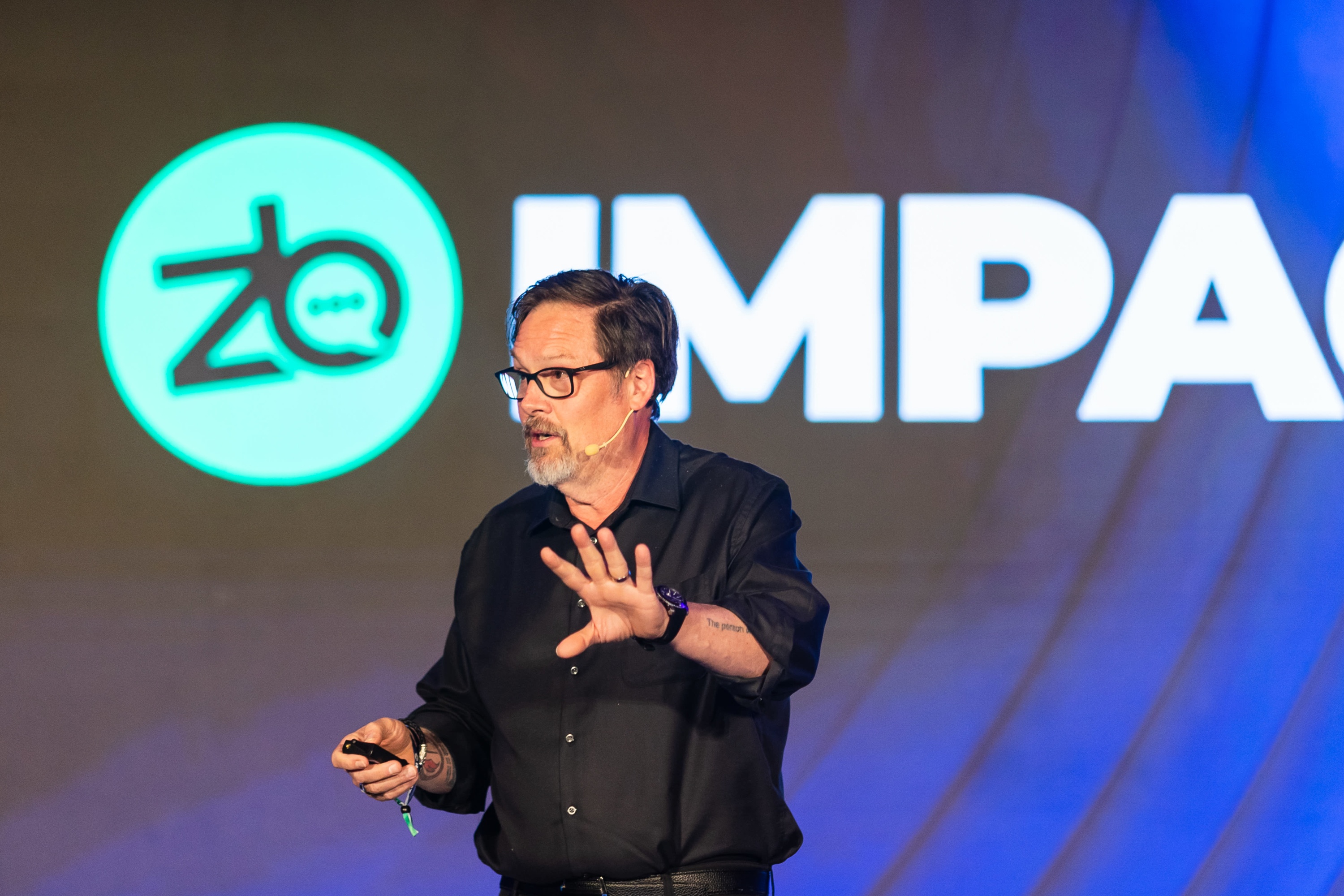
One test arrived with HomeAway’s February 2010 Super Bowl advertisement. A national commercial invites an audience to turn up at once; the servers must be prepared to receive the invitation’s consequences. Buhrdorf and his team fortified the site for the traffic. The work sits some distance from the romance of a television campaign, which is precisely why it matters.
HomeAway went public in 2011. Expedia acquired it in 2015 for $3.9 billion. Those milestones gave Buhrdorf experience of a company at very different sizes, from early engineering decisions through public-market scrutiny and an acquisition. The sale supplied an obvious ending to a career chapter. It did rather less to settle the question of how he wanted to spend his days.
The customer who had been overlooked
ZenBusiness’s own history dates its founding to 2015. Hemmati and Buhrdorf had met at Excite, giving the partnership a history that preceded their small-business platform. A shared past can be a useful starting point when the next undertaking involves persuading customers, recruiting colleagues and making decisions before all the evidence has arrived.
The company’s premise was practical: help people start, protect and grow businesses, putting guidance and tools together. The early customer might understand the service they wanted to sell perfectly well while finding the administrative steps unfamiliar. A business owner can be very good at their trade and still need help becoming the person responsible for everything around it.
There is a particular kind of friction in that situation. Each task can look manageable on its own, yet the owner must work out which tasks apply, how they fit together and what comes next. ZenBusiness made that sequence its business. Formation opened the relationship; the continuing responsibilities of ownership gave the company more work to do.
Today its platform combines business formation and compliance with tools intended to support ongoing operations. The ambition is continuity: an owner should be able to return as the business develops. It is a product philosophy built around a customer’s changing circumstances, with the initial filing treated as the beginning of a longer working relationship.
A useful habit: let the customer spoil the idea
Buhrdorf’s experience has left him wary of confusing the ability to build software with a reason for anyone to buy it. In a 2021 conversation about ZenBusiness, he described repeatedly questioning customers about prices, features, functionality and their journeys through the product. His team wanted evidence before committing effort.
The habit has an engineer’s economy to it. Every feature consumes time, and a feature that goes unused still needed to be designed, written and maintained. Asking customers what they need can be awkward for a team already attached to an answer. It also offers the possibility of discovering the mistake while it is still relatively inexpensive.
His skepticism extends to the familiar instruction that entrepreneurs should never give up. Buhrdorf has argued for abandoning a flawed idea when the evidence warrants it. He has also described an unsuccessful attempt to sell supply-chain software into a troubled automotive market. Good software, by itself, could not make the market cooperate.
That leaves room for a less theatrical account of leadership. He values listening and learning, and distrusts dogmatic formulas. His instruction for communicating with a team is compact: “Tell the truth, and the plan forward.” There is an appealing lack of ceremony in the sentence. Colleagues need an honest account of the situation and something useful to do next.
“Tell the truth, and the plan forward.”
Ross Buhrdorf
A billion-dollar company for small beginnings
In November 2021, ZenBusiness announced a $200 million Series C, valuing the company at $1.7 billion. Oak HC/FT led the round, with SoftBank Vision Fund 2 and existing investors Cathay Innovation and Greycroft participating. Mark Cuban joined as an advocate and spokesperson, bringing another public voice to the company’s entrepreneurship pitch.
The financing placed a large number beside a business concerned with comparatively small beginnings. That is part of the commercial logic: many owners each need help with recurring, necessary work. The announcement described investment in products to help customers manage their businesses over time, including financial tools available through a shared dashboard.
In 2023, Buhrdorf became an EY Entrepreneur Of The Year Gulf South award winner. The regional distinction recognized his work at ZenBusiness. His response turned attention toward the company’s customers, describing the inspiration he drew from the nearly half million business leaders it then served. The choice of emphasis suited a CEO whose product depends on helping others take ownership.
ZenBusiness operates as a public benefit corporation. That formal identity accompanies a stated purpose of widening access to entrepreneurship. It also gives readers a useful way to assess the enterprise: the funding and awards describe recognition; the practical value of the service rests with the people using it to get their work done.
The next step, on demand
In July 2025, ZenBusiness introduced Velo, an AI agent designed to help with the work of starting and running a business. The launch described guidance and automation for tasks such as regulatory filings, research and website creation. It also paired the technology with access to human customer support.
The intended customer was familiar. An owner trying to get a business underway may have little spare time to learn another technology. Velo’s proposition was to bring assistance into the work already in front of them. The company presented it as a way to reduce uncertainty and the time spent navigating necessary tasks.
By June 2026, ZenBusiness had expanded Velo’s access across its website and mobile app, including people still considering a business. Its blueprint experience offered a plan shaped around the user’s stage. Someone wondering about a license and someone preparing to hire could begin with different questions and receive different next steps.
The company reported that more than half of its customers had engaged with Velo and that 53 percent of users returned within the same month. Those are company-reported usage measures, rather than proof of business success. They do suggest the product was receiving repeat visits, a more useful early test than the novelty of an announcement.
of Velo users returned within the same month, ZenBusiness reported.
Usage measures engagement; it does not establish customer business outcomes.There is still a blank page
Outside the company, Buhrdorf is a Santa Fe Institute trustee, an active visual artist and a serious reader. His institutional connections extend to Capital Factory, where he is a partner and mentor. The combination puts him in contact with scientists examining complex systems and founders trying to get young companies through their next practical problem.
His forthcoming book gives another form to an argument he has been making for years. Fear Is a Liar: Stop Overthinking and Launch Your Dream Business is scheduled for March 16, 2027. Its announced subject is the collection of beliefs that can prevent people from starting, including doubts about expertise, timing and the commitment ownership requires.
The book will have to make that argument on the page, just as Velo has to make its case in use. Both carry a recognizable concern from his career: what would help a person begin, and what would help them continue? Buhrdorf has chosen to keep working on those questions. Ten months away apparently gave him enough time to decide.