Jean Anne Booth brought a spreadsheet to a conversation with her mother. This was an entirely reasonable thing for an electrical engineer to do. She had compared the available products, collected pictures, and arranged the options. Her mother, a former model with firm views about appearances, rejected the lot. The spreadsheet had performed its duties. The customer remained unconvinced.
Booth had already helped build semiconductor businesses that ended up at Texas Instruments and Apple. She had retired, left the corporate timetable behind, and taken a job as a divemaster on a liveaboard scuba boat. There were persuasive arguments for staying at sea. Instead, she returned to a problem that her mother had made impossible to ignore: what happens when the person you are designing for simply refuses to wear the thing?
The company that followed, UnaliWear, began in 2013. Its founder had spent years working on the machinery inside other people’s products. Now she faced a customer who could dismiss an entire proposal without troubling herself over the circuitry. It was an excellent qualification for the job Booth was about to offer her.
A spreadsheet meets its match
A couple of weeks after that first rejection, Booth came back with a different idea: a watch that its wearer could talk to, and that would talk back. Her mother’s verdict, as Booth later recalled it, was brisk: “I’d throw it out the window.” Booth’s response was to hire her. Some companies pay consultants considerable sums to achieve this level of candor.
Her mother became a senior user-experience adviser. The company also calls her its Senior Experience Officer, a title that acknowledged both her role and her years. She reviewed prototypes and helped recruit the first roughly 100 people to the focus groups. Ultimately, more than 400 people across the United States took part during development.
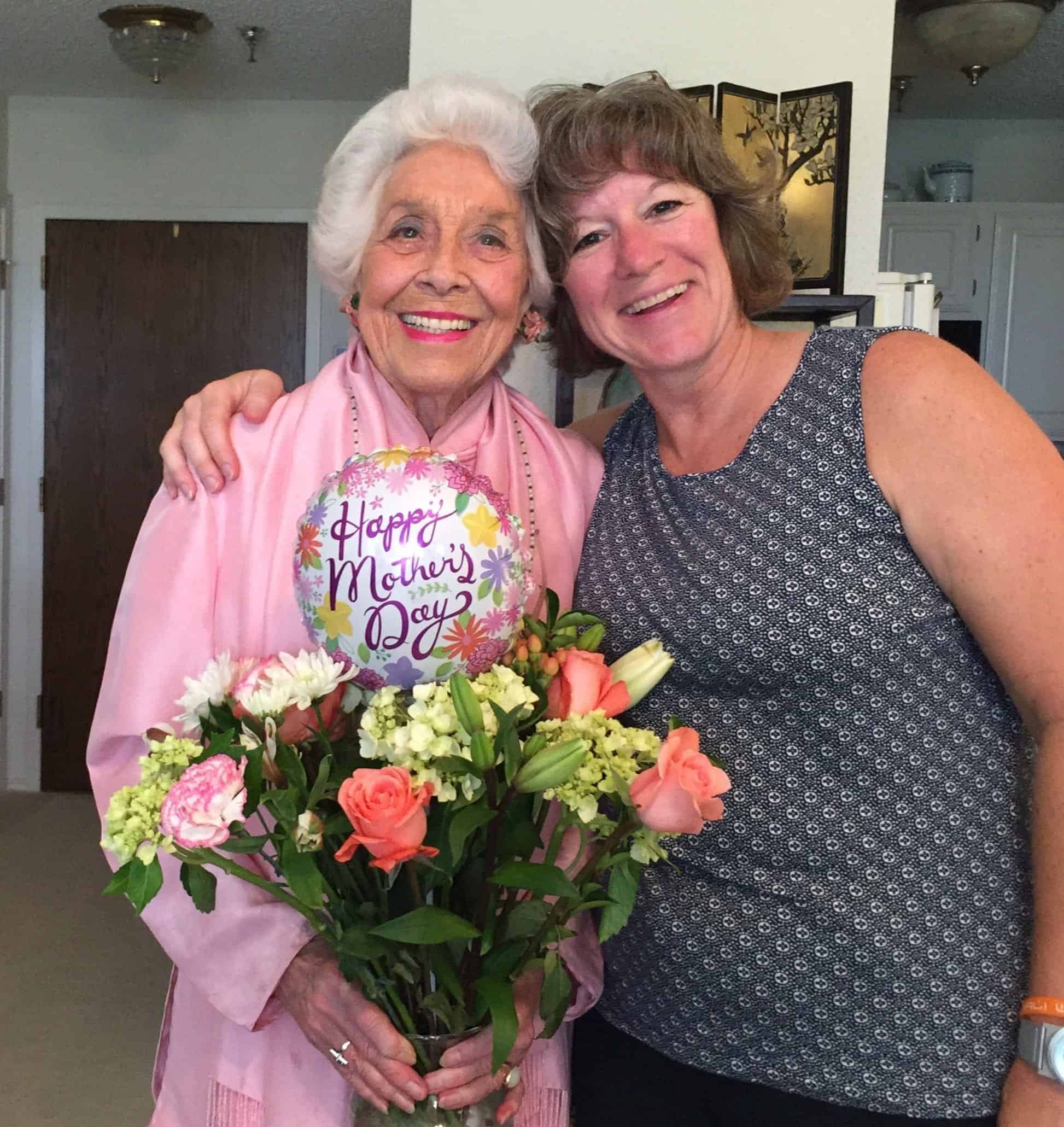
That arrangement gave the original objection somewhere useful to go. Her mother could keep saying what she thought, and the engineers could keep changing what they made. A pitch to a reluctant customer had become a working relationship. Booth and her mother had never worked together before; developing the watch gave them years of that experience.
The former model cared about the appearance of something she would put on her body. Her daughter had to make the technology accommodate that preference. In a business meeting, this might have been described as a customer requirement. In a family conversation, it needed fewer syllables.
The education before the exits
Booth earned her electrical engineering degree at the University of Texas at Austin in 1985, followed by a master’s in computer engineering at National Technological University in 1992. During college, she alternated semesters of study with NASA’s co-op program. She maintained computer systems in the space shuttle transportation program office and taught administrative staff who were encountering computers for the first time.
Teaching exposed the gap between knowing how a machine works and knowing how another person expects to use it. A file, for someone accustomed to an office cabinet, began with a drawer. The lesson stayed with her: an interface carries assumptions, and the person using it may have perfectly sensible assumptions of their own.
Her early career included a decade at AMD, across engineering, marketing, and management. Yet when an opportunity arose to take a product line out into a separate business, she did not leap. “I was scared,” she recalled. Business experience had not supplied a working knowledge of startup funding. Nor had it made uncertainty especially attractive.
She eventually joined Exponential Technology. Nine months after she arrived, the company failed. She helped with the shutdown, including selling desks and computers. There was a practical education here that no polished founder biography can quite reproduce: someone has to dispose of the furniture after the strategy stops working.
Booth later described the failure as useful preparation for the next three companies. She had seen how financing worked, how it failed to work, and what closing a business demanded. The experience gave her a view of entrepreneurship that included the ending before she began writing her own beginnings.
Two buyers, two different clocks
Members of that team went on to build Intrinsity, where Booth was a founder. She later founded Luminary Micro, which developed the Stellaris microcontroller platform and brought ARM Cortex-M3-based microcontrollers to market. Texas Instruments bought Luminary Micro in May 2009. Apple acquired Intrinsity in April 2010.
acquired by TI
acquired by Apple
founded
Her work also extended to explaining the technology to other engineers. At TI, Booth coauthored a white paper on serial-wire debugging with applications engineer Sue Cozart. The subject was the practical business of finding and correcting problems in increasingly complex programs. Alongside the acquisitions, there was this quieter work: making a development platform understandable to the people expected to build with it.
Those dates can make the career look tidier than it felt. Luminary Micro’s sale followed the 2008 financial crisis. Booth remembered watching orders disappear from the backlog. At the same time, funds that had invested in the company were approaching the end of their own lifetimes. Their need to return money to investors imposed a timetable on the business.
Years later, she was willing to revisit her own decisions. She had approached other semiconductor companies after receiving an offer from Texas Instruments, but had not conducted a broader search for buyers. Looking back, she thought a wider search might have improved the outcome. She described a successful acquisition without polishing away the choice she would make differently.
After the transaction, she joined TI and eventually served as general manager of its Stellaris product family. She retired in 2012. By then, her work had covered silicon, software, product definition, marketing, and operations. Retirement offered a welcome change of equipment. A dive boat has its own demanding systems; it also has a considerably better view than most meeting rooms.
A watch that stayed on the wrist
The technical idea that helped bring Booth back was a battery system built into the watch band. Small rechargeable batteries could be exchanged while the watch stayed on the wrist. The design moved a recurring chore away from the entire device and into removable parts. A wearer could charge the batteries without setting aside the watch.
That detail mattered enough to influence her decision to start again. Booth knew what another hardware company would involve: money, time, development work, and the effort of bringing a physical object to market. An appealing concept alone had to contend with a very appealing retirement. The battery architecture gave the proposal a concrete engineering foundation.
in the band
ready to exchange
The watch stays on. The batteries take turns.
Other choices followed the same attention to use. The watch had a bright white-on-black display. It used speech. It could work independently of a smartphone. These were decisions about the experience of living with an object, including how much additional equipment a person should have to manage.
Booth’s development rule was concise: “Nothing about me without me.” The mother who objected to the first proposal remained involved through successive prototypes. The focus groups brought more voices into the process. An engineer’s preference could be tested against the preferences of people who would actually wear the result.
“Nothing about me without me.”
Jean Anne Booth, on involving the people a product is built for
Fred Astaire joins the conversation
Her mother also chose Fred Astaire as the wake word for her watch. Booth later used the name on her own watch in her mother’s honor. There is something pleasingly specific about an engineering project that makes room for a favorite performer. A voice interface can contain a personal preference as well as a technical specification.
The company’s naming had a family connection, too. Booth says Unali and Kanega draw on Cherokee words for friend and speak, bringing part of her heritage into the business. The idea of a speaking friend gave the product a character that made sense to her. The names carried an intention about the relationship between a person and an object.
The collaboration continued until her mother died in late 2018. By then, the woman who had rejected the original options had helped shape their replacement. Her involvement left practical traces in the work, from feedback on prototypes to the people she brought into testing. It also left Booth with the experience of building something alongside her.
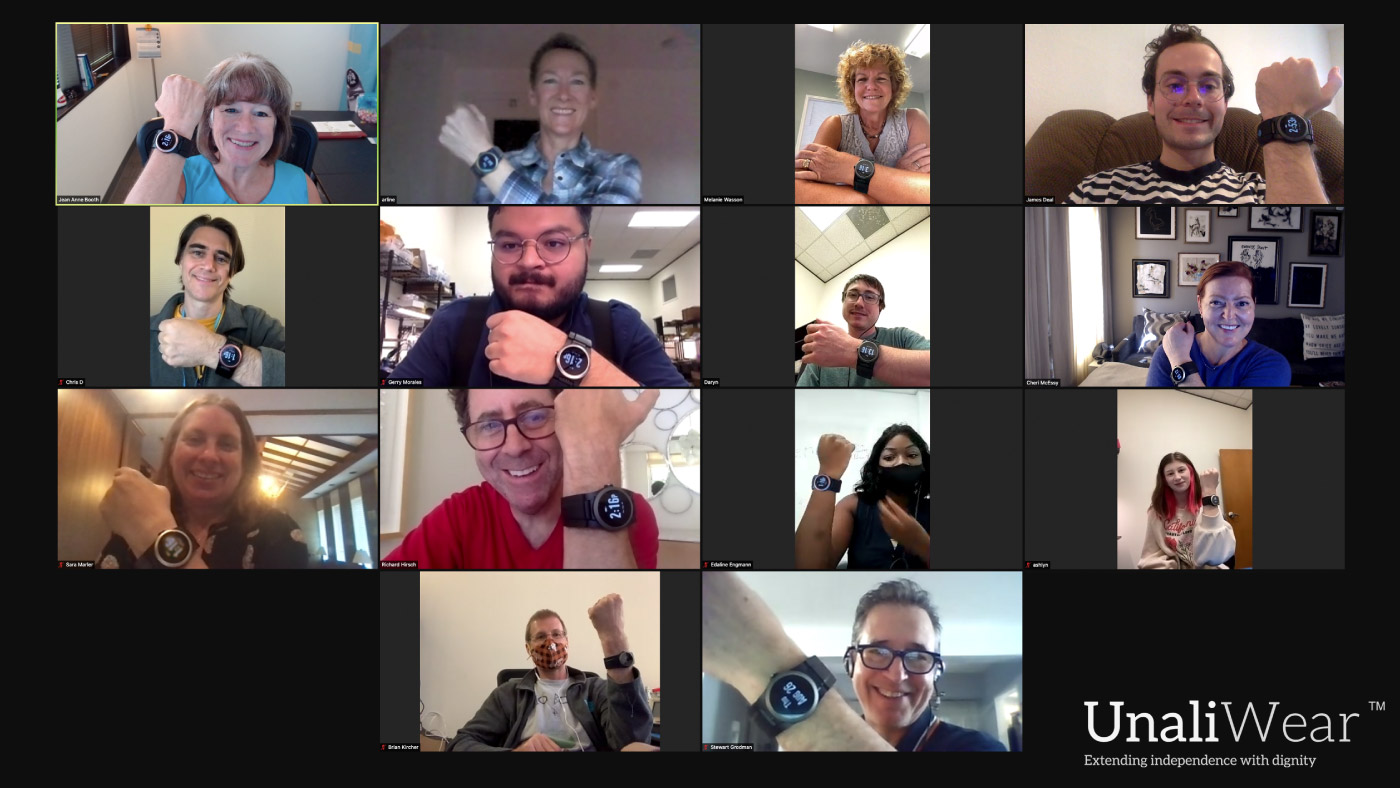
Still listening, thirteen years later
In an October 2026 conversation, Booth was still returning to the question of whether someone would willingly wear what she had built. She talked about the mistaken assumption that people stop caring about appearance as they grow older. Her mother had supplied an early correction. More than a decade of running UnaliWear had given Booth plenty of reason to keep it in mind.
Her career now connects several kinds of customers: the administrative staff learning their first computer, the developers using a microcontroller platform, and the people putting on a watch. Each brought expectations that the engineering had to meet. The spreadsheet was useful. The circuit mattered. So did the person deciding whether any of it belonged in her life.
Booth had the opportunity to remain on the boat. Instead, she returned to work with a colleague who had already threatened to throw the proposal out a window. Years of engineering experience had taught her to recognize useful information. Her mother made certain it arrived without a presentation deck.