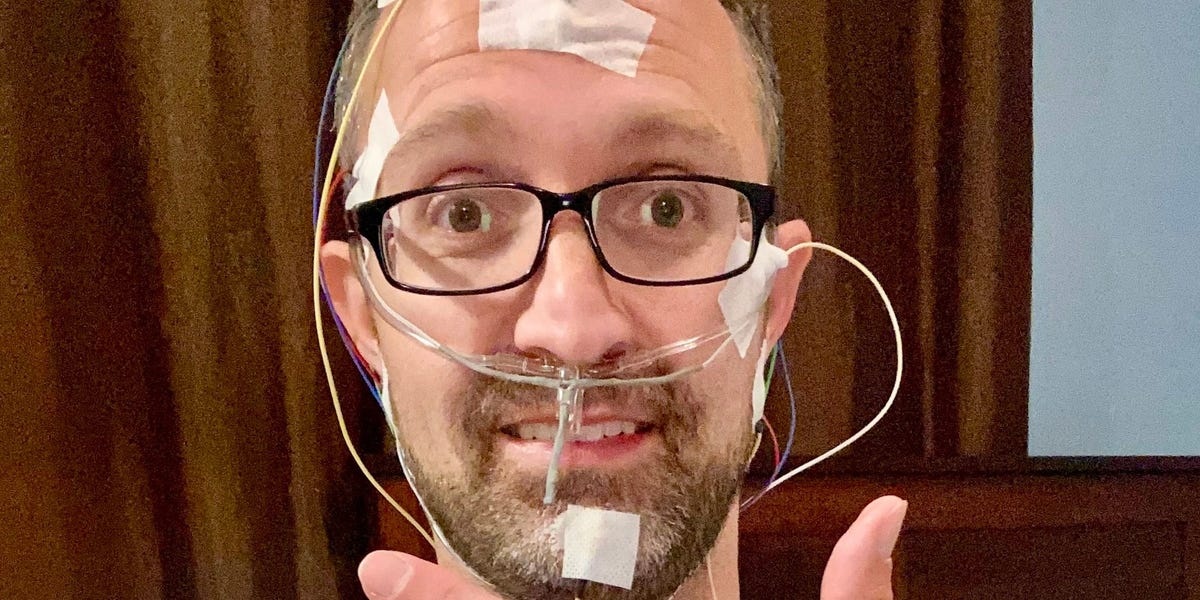
At 24, Dustin Freckleton had a stroke. He was in medical school, an awkward place to discover how much medicine can leave unanswered. He would later describe relearning how to walk. Seven years passed before he received a sleep-apnea diagnosis. The emergency had been visible. What happened while he slept had remained outside the frame.
- Happy Health pairs a finger-worn sleep test with physician-guided care.
- The company’s first public pitch, in 2022, centred on stress and mood.
- Its published self-pay sleep test costs $396; treatment costs extra.
Seven years between two diagnoses
That account, which Freckleton shared publicly in 2026, gives Happy Health its organising problem. A doctor can only work with what reaches the doctor. A hospital offers intense observation over a limited period. A wearable offers repeated observation amid the untidy business of ordinary life. Happy Health wants the second to make the first less necessary.
Sleep is its opening application. Through the Happy Sleep brand, the company sells access to home testing and a clinical team. The likely customer is someone who snores, wakes tired or suspects a sleep problem, and would welcome a way to investigate it without arranging life around a laboratory appointment.
The mood ring gets a medical job
In August 2022, Happy Health introduced a rather different proposition: a ring to measure stress, mood and sleep, accompanied by breathing exercises and journal prompts. Membership started at $20 a month. Its launch announcement named five co-founders, including Freckleton and Tinder founder Sean Rad, and disclosed a $60 million Series A led by ARCH Venture Partners.
By 2024, the language had become clinical. The FDA cleared the Happy Ring Health Monitoring System on September 24. On June 18, 2025, a separate clearance followed for Happy Health Home Sleep Test software. A company initially asking customers how they felt was now helping clinicians investigate what happened during sleep.
The change in public positioning is clear. It does not establish that the original product failed. What it does show is a more specific destination for the same general idea: collect information comfortably, then make that information useful. The destination now includes a prescription, a medical interpretation and a route to treatment.
A clinic behind the ceramic
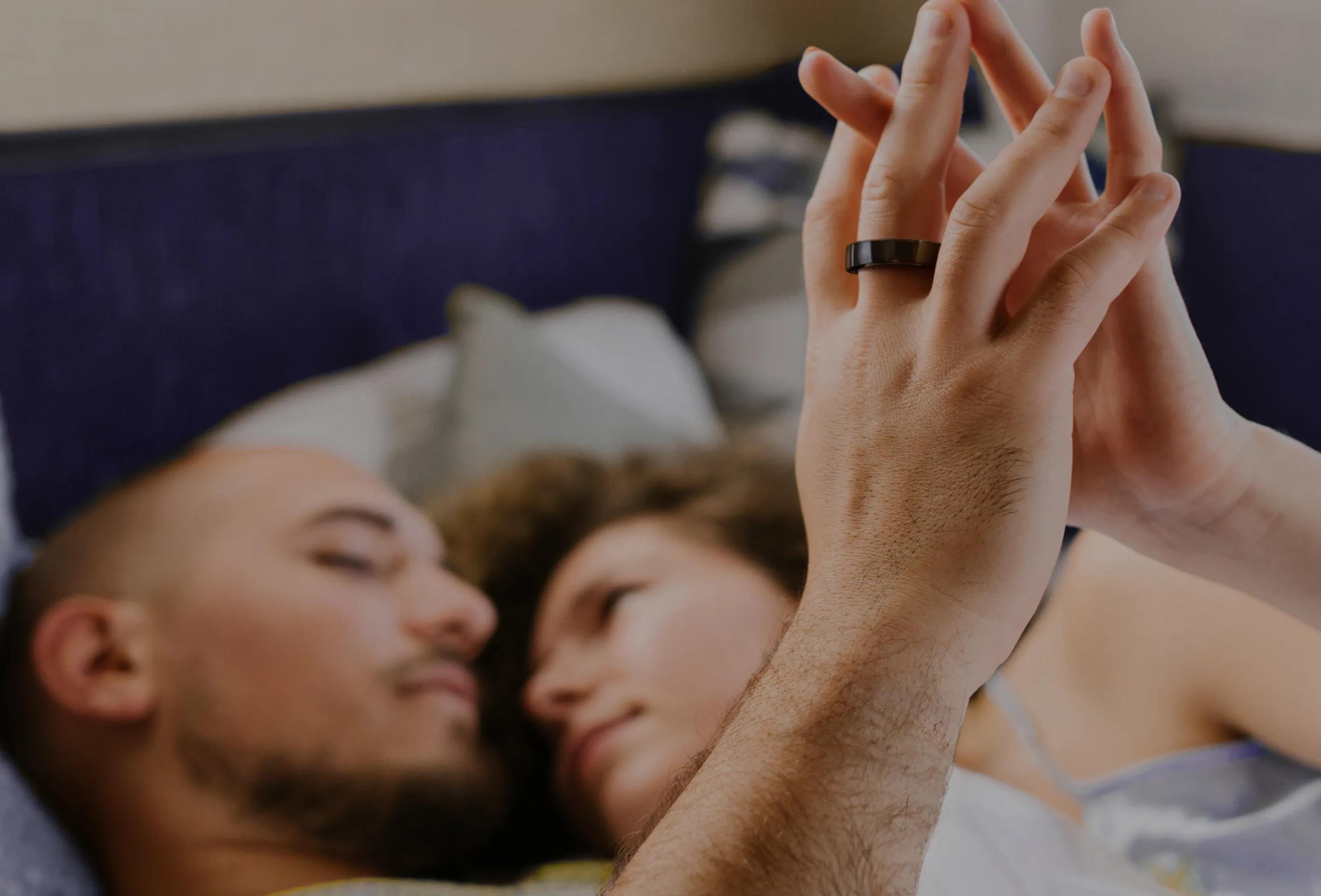
The ring measures physiological signals rather than asking the wearer to remember a night they mostly slept through. Its hardware includes optical sensing, movement sensing, temperature sensors and electrodermal sensing, which detects changes in skin conductivity. Bluetooth carries data to the phone. Software turns those readings into information a clinician can review.
The sleep-test software has a narrower assignment than the company’s broader health ambitions. It processes movement and optical pulse data to produce total sleep time and a Happy Health apnea-hypopnea index, an estimate of breathing disturbances. Its FDA-cleared use concerns adults aged 22 or older with suspected sleep apnea, under a trained provider’s direction.
The iPhone app supplies the less photogenic parts: medical questions, insurance uploads, reminders and delivery of nightly data to the care team. It also supports treatment tracking. A small device can make a large promise, but the promise depends on these handoffs working. Jewellery rarely needs to know your deductible.
- 01 / RecordRing captures the night
- 02 / ReviewPhysician interprets results
- 03 / TreatCare team coordinates next steps
The small print has a price tag
Happy Sleep’s published self-pay schedule lists home sleep testing at $396 and a follow-up visit at $99. A custom oral appliance is $1,999; a CPAP machine bundle runs from $999 to $1,799. Those prices describe different stages of care. Buying the test does not mean buying every possible remedy.
Follow-up and therapy are priced separately.
Insurance adds another set of calculations. Happy Sleep advertises participation with major plans, including Medicare, but coverage does not settle a patient’s final bill. Copays, deductibles and coinsurance still matter. The model combines consumer convenience with the billing machinery of healthcare, a less romantic arrangement than simply shipping a gadget.
There are clinical boundaries, too. A home breathing test cannot answer every sleep question. Happy Sleep itself tells people who suspect other disorders to ask a physician whether an in-lab study is needed. Its appeal depends on matching the person to the test. Comfort cannot rescue an inappropriate measurement.
Fifteen rings before the ring
Surfaceink, now part of PwC’s network, helped develop the hardware. Its case study describes 15 product iterations and a 30% reduction in unit cost between engineering validation and mass production. During pandemic restrictions, mirrored teams in the United States and China used morning and evening check-ins to manage remote builds.
Battery lead times prompted the teams to qualify multiple vendors. PwC reports no initial production line-down days from plant closures or supply-chain issues. The lesson is practical: backup suppliers and frequent engineering conversations belong inside the product plan. A sensor that cannot be manufactured is an expensive opinion.
“We’ve built a healthcare system that waits for people to become sick before it acts.”
Dustin Freckleton, August 2026
A score needs somewhere to go
Happy Health occupies the junction between consumer wearables and sleep medicine. On one side are rings bought for wellness tracking. On the other are laboratories and home diagnostic devices. Happy’s distinctive proposition is the connection: the ring, the interpretation and the subsequent care live within one service.
Its August 2026 financing disclosure named ARCH and OpenLoop and put $75 million in the headlines. Accounts differ on whether that represents a new round or cumulative funding. The company’s broader ambition is home monitoring across other diseases. For now, sleep supplies a concrete task. Other founders can copy the question behind it: after your product measures something, who takes responsibility for the next step?
Follow the ring
Visit Happy Sleep or its help centre. Follow LinkedIn, Instagram and Facebook.
For a closer look: Freckleton’s NYSE Live interview, the August financing coverage and the manufacturing story.