A vacant apartment was useful to Peter Rex twice over. It was a property he could prepare for the next tenant, and a place where he could sleep without spending money on somewhere else. He handled maintenance himself. The landlord, the repair crew and the overnight occupant shared a name. It was an economical arrangement, if a slightly awkward basis for a dinner-party introduction.
He bought his first property in 2005, after graduating from Georgetown. He had begun working in construction at eighteen while attending community college. Later came Harvard Law School and a CPA qualification. There is something pleasingly unglamorous about that combination: philosophy, government, law, accounting, and the practical question of whether an apartment is ready to rent. The credentials grew; the work still had to get done.
Today Rex leads the Austin company that bears his surname, directing its technology ventures and overseeing its investment and management businesses. His career makes more sense when followed from the apartment floor upward. Before he could talk about making real estate easier to operate, he had lived with the inconvenience of operating it. Before he could talk about ownership, he had discovered how quickly ownership could become a problem.
02The expensive lesson in cheap money
During the financial crisis, the debt that had helped Rex buy properties became the threat to the whole enterprise. He had little equity and substantial borrowing. In his account of those years, the squeeze reached him through the ordinary mechanics of rentals: money became harder to collect, while the obligations attached to the buildings stayed put.
His way through involved negotiating with lenders and selling assets. He knew the properties and could manage them cheaply; that knowledge gave him something useful to offer the people who were owed money. The resolution left him starting over. It also gave him a lesson that a law-school diploma could hardly have supplied by itself: a business can look impressive and still be standing on very little room for error.
Speaking to students in 2019, he described going broke as one of the best things that had happened to him. Delivered to an audience of aspiring businesspeople, the line has the attraction of a paradox. The useful part comes after the applause. Rex described negotiating rather than filing for bankruptcy, preserving relationships as he worked through the trouble. Reputation was an asset that did not appear in the apartment inventory.
The later record contains a second reversal. In 2019, after years of building a large apartment operation, he became concerned about exuberant prices and shifted toward selling. Rex says the operation sold more than $1.5 billion in property through 2022. Buying had built the business. Selling required accepting that the same market could stop offering the same opportunity. For an entrepreneur who likes motion, restraint became another kind of work.
“Going broke was one of the best things that has ever happened to me.”
Peter Rex · 2019
03A business plan with a passport
Rex’s move toward technology included an unusually long research trip. In a 2019 interview, he described travelling with his wife and child through 85 countries over roughly eighteen months, meeting businesspeople and accumulating 1,600 pages of notes. Most family trips produce photographs and a dispute about luggage. This one also produced a considerable filing problem.
He was thinking about a platform for entrepreneurship, initially expressed through Trustwork and MakeRise. The proposed services brought together people seeking work, professionals offering it, and customers who needed something done. It was a broad ambition, but the entry point was familiar territory: maintenance, construction and preparing rental units between tenants.
His advice from that period was blunt: “Go expensive on people and go cheap on commodities.” The distinction suits someone who had saved money by doing so much himself. There is a limit to the usefulness of a founder who personally performs every task. Beyond that limit, the quality of the people around him matters more than another small saving on supplies. A company has to become capable of working when its founder leaves the room.
04Software meets the turnover crew
The early marketplace contained a practical answer to a familiar problem. Customers would not arrive without service providers; providers had little reason to join without customers. Rex described creating service businesses that could operate on the platform, using existing property relationships to give the marketplace something to do. It was a less elegant beginning than a diagram of a self-sustaining network. It was also a beginning with actual work attached.
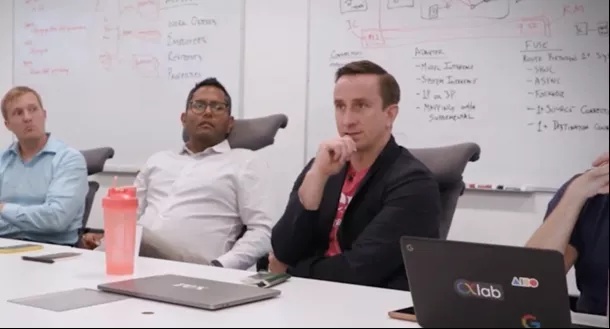
By 2022, the technology effort had developed into ten companies addressing different parts of real estate operations. Rex’s argument for pursuing this field rests on three advantages: technical ability, knowledge of the industry, and access to property-management operations where products can be tested. He can ask whether software helps with a real task, then put it near people who have to perform that task.
An apartment turnover is a useful example of why that matters. One resident leaves; another is expected. Cleaning, painting and repairs must happen in the gap. The job may sound modest beside the vocabulary of artificial intelligence, but it has a deadline and a customer. Software that changes the handling of work, payments or compliance has to earn its place in that sequence.
The attractive idea here is proximity. Owning or managing property brings Rex’s teams close to the inconveniences they want their technology to solve. It does not settle whether any particular product will succeed. It does give the effort a concrete starting point. The problem can be described by someone carrying keys, rather than invented in a meeting about a market nobody in the room has visited.
05Austin, on a thirty-year clock
In 2020, Rex moved his business headquarters from the Seattle area to Austin. He announced the decision publicly in an opinion piece, turning a relocation into an argument about the environment in which he wanted to build. The move followed time in both San Francisco and Seattle. Texas became his chosen base for the next stage.
His explanations mix business with conviction. He has criticized the conformity and leadership he sees in major technology centres, and he speaks frequently about faith, family and freedom. These are his judgments about the places and cultures involved. They also tell a prospective colleague something about the founder’s priorities before the first interview.
Asked about Austin in 2022, he described thinking over a thirty-year cycle. That is a revealing interval for a software entrepreneur and a comprehensible one for a property investor. Buildings keep standing through several changes of technological fashion. Choosing a city is a decision about hiring and offices, but also about where children grow up and where professional relationships become ordinary friendships.
He has made those relationships visible. In March 2022, he joined Governor Greg Abbott for a “Why Texas?” discussion at Hotel Ella, moderated by Robert Allen of the Texas Economic Development Corporation. The subject was the state’s economy and workforce. Rex had become both a participant in Austin’s business life and an advocate for the place he had chosen.
- 2005First property
- 2019Shift toward sales
- 2020Austin move
- 2021Hotel Ella purchase
06An old mansion, a new ownership question
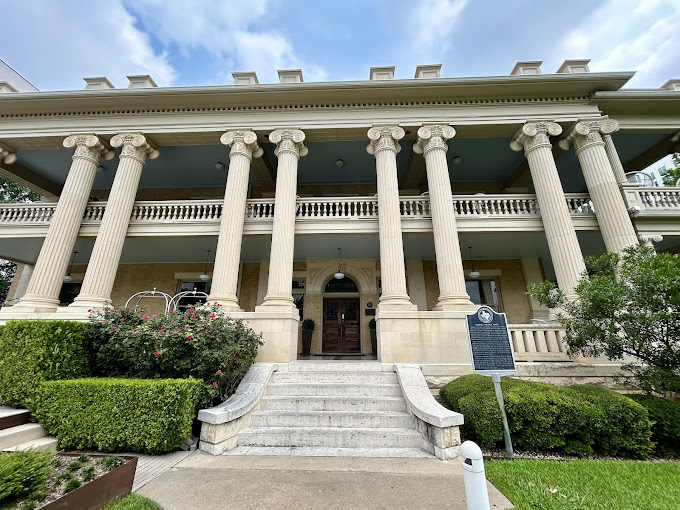
Hotel Ella gives his ambitions a street-level form. Rex acquired the hotel in November 2021. Its front is the Goodall-Wooten Mansion, dating to 1898. In 2022 he outlined an expansion from 47 rooms to 213, preserving the historic mansion while replacing buildings behind it. The proposal paired old architecture with new construction and technology.
The plans have included restaurants, bars, more event space and technology in the guest experience. The company’s current description puts the longer-term development at $150 million. These are plans for the property. Their interest lies partly in the combination: a founder attracted to software is also willing to spend time thinking about the continued usefulness of an old building.
The ownership proposal is just as revealing. Through OwnProp, Rex presented a way for accredited investors to buy fractional interests in property using blockchain records. His broader aspiration is to let people working in a hotel own a small part of it. That aspiration comes with eligibility and transaction questions; a smaller financial minimum alone does not make an investment open to everyone.
He has argued publicly for reforming accredited-investor restrictions. His position joins the practical project to a larger belief about access: people who contribute work to an asset should have more opportunities to participate in its value. The interesting test is what an employee can actually buy and understand. A sophisticated ownership system still has to make sense to someone who has just finished a shift.
07A school before the software pitch
Rex’s concern with opportunity also has a less fashionable address. In 2014, after morning Mass, he approached Father Steve Ryan with a challenge: find a new way to help young people in Tampa, and he would help. He brought a business card for the Cristo Rey Network. Avesta, later InvestRes, became a founding partner and supporter of the school that followed.
Cristo Rey Tampa opened in 2016 with a college-preparatory programme for families with limited means. Its corporate work-study model places students in workplaces and uses their earnings toward tuition. Education and work meet in the same week. It is an unusually concrete expression of the idea that a business can help people get started.
Catholic belief remains central to Rex’s explanation of entrepreneurship. He considered religious life when younger and decided politics was not his route either. Business became the place where he wanted to serve. The ambition is expressed in products, employment and investment, alongside the explicitly religious language he uses to describe their purpose.
His family offers a smaller-scale view of the same determination. In 2019, he said he spoke Spanish at home with his wife and children so the children would learn it. That year he also described taking his wife and each child on individual dates despite a six-day working week. The calendar had to make room for particular people. A mission concerning humanity becomes more credible when it can survive an appointment with one member of the household.
08Back to the building
Rex’s current business still combines property and technology. The company says its ten technology ventures are generating revenue, while its real estate operation is seeking acquisitions in what it regards as a dislocated market. The founder who once changed direction to sell is again making the case for buying. The useful question is always what the particular moment, property and price permit.
His work also includes Arena Hall, an Austin hotel property converted into a place for events, tenants and discussion. It belongs beside Hotel Ella in this story: buildings used to gather people, with a founder trying to influence what happens once they are together. Software may connect a transaction. A room can connect the people making it.
The vacant apartments remain the most revealing introduction to Peter Rex. They place work, shelter, capital and risk inside the same four walls. His later ventures keep returning to the relations among those things. Who gets the job? Who handles the repair? Who owns the building? His answer keeps expanding, but the questions were there before the company name went on the door.
Keep the conversation going
Read, watch & listen
- Peter Rex’s biography at Rex ↗
- Peter Rex on LinkedIn ↗ · X ↗
- Austin Next: the property and technology interview ↗
- Watch: Peter Rex with Kevin Roberts on YouTube ↗
- Mixergy: the early MakeRise story ↗
- Entrepreneurs on Fire: the 2019 conversation ↗
- Faith and entrepreneurship, March 2025 ↗
- How Cristo Rey Tampa got started ↗
- The 2022 Hotel Ella proposal ↗ · Current property plans ↗
- Rex’s essay on investment access ↗