Before OJO bought a real estate portal, John Berkowitz had a more immediate problem: persuading someone to pay for it. He wanted Movoto, a much larger business with millions of visitors. In his account to Entrepreneur, 150 investor meetings produced no deal. Then the pandemic arrived. Meetings stopped, rival buyers retreated, and the acquisition looked both more attractive and more difficult to finance.
The opening came when Berkowitz admitted his predicament to an early investor, who introduced another potential backer. Candor replaced the polished pitch. “I gave ruthless transparency into our business,” he said. The deal eventually closed in June 2020. An AI company had acquired something wonderfully ordinary and commercially consequential: a website people already visited.
- Guide the buyer: combine personalized search with human help.
- Own the doorway: buy Movoto’s existing audience.
- Connect the money: join Lower’s mortgage business in 2025.
The assistant that went house hunting
OJO’s first destination was dinner. Founded in 2015 by Berkowitz and David Rubin, the company launched Map Mojo, a text-message assistant recommending restaurants, bars and local activities. In a 2020 interview, Berkowitz said engagement suggested people liked personalized advice without the pressure of a salesperson. The founders considered several applications before choosing housing, with its combination of complexity, market size and personal consequence.
They brought experience from online marketing businesses Yodle and ProfitFuel. The new task involved understanding preferences, interpreting property information and deciding when someone needed professional help. By 2019, OJO’s assistant combined messaging, image recognition and recommendations with human expertise. Its operations included AI training and customer service in St. Lucia. The intelligence had a payroll.
That arrangement suited a purchase full of qualifications. A buyer can specify bedrooms and still need help choosing a neighborhood, understanding financing or deciding whether to move at all. OJO worked in the interval between casual browsing and a serious conversation with an agent. Its mission put better decisions ahead of a quicker click.

Buying the place people already looked
A useful assistant still has to meet its users. OJO assembled assets around that problem: real estate data provider WolfNet in 2018, software business RealSavvy in 2019, and Movoto in 2020. Movoto supplied home-search traffic at a scale the younger business could immediately use. OJO’s own announcement described nearly 24 million monthly visits at the time.
The accompanying $62.5 million financing round was led by Wafra. Contemporary reporting described the purchase as a mixture of cash and equity, with some of the new capital reserved for growing the combined operation. The financing amount should not be mistaken for the acquisition price. They answer different questions: what investors supplied, and what the seller received.
Visits count traffic, not individual people.
Digs followed in October 2020. Its personal finance tools addressed savings and financial readiness before a buyer began seriously shopping. That expanded the idea of a customer beyond someone ready to transact. OJO reached No. 49 on the 2021 Inc. 5000. A business built around helping people wait had found a route to growth.
There is a useful distinction here between building another feature and acquiring a route to customers. Movoto already occupied the moment when people expressed interest in homes. OJO could attach its guidance to that moment. The interpretation is straightforward: distribution changed what the assistant could become, while the surrounding services gave visitors more reasons to stay.
The buyer is free. The introduction has a price.
OJO served two audiences whose clocks rarely agree. Consumers wanted relevant homes and reliable help. Agents wanted conversations that might become transactions. A contact form could satisfy neither if the shopper was unprepared or the agent failed to respond. Conversion Boost, introduced with Realogy in 2020, aimed to qualify and nurture those contacts before handing them over.
Historically, agent referrals used a success-based model. Industry reporting in 2023 described fees of up to 35% of an agent’s commission when a referred customer closed. That delayed OJO’s payday until the transaction happened, while giving agents a way to avoid paying for every speculative inquiry.
The model has since broadened. Lower’s Movoto Advantage, formally launched in April 2026 after a late-2025 rollout, charges subscriptions to vetted solo agents and caps membership by market. It uses live introductions; Movoto Pro+ has served teams since 2023. Lower reported approximately 200 Advantage agents at launch. Subscriptions move some financial risk toward the professional, making consistent opportunity flow especially important.
The lenders came upstream
In February 2023, RBC acquired OJO’s Canadian operation. The U.S. story took a parallel turn in May 2025 when Lower acquired Movoto. Berkowitz became Lower’s president of real estate, and he confirmed that the OJO and Movoto team had joined the lender. The transactions were separate, with different buyers and geographies.
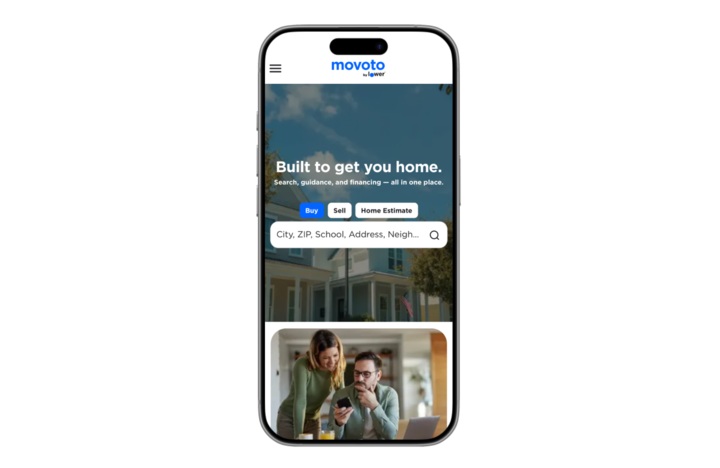
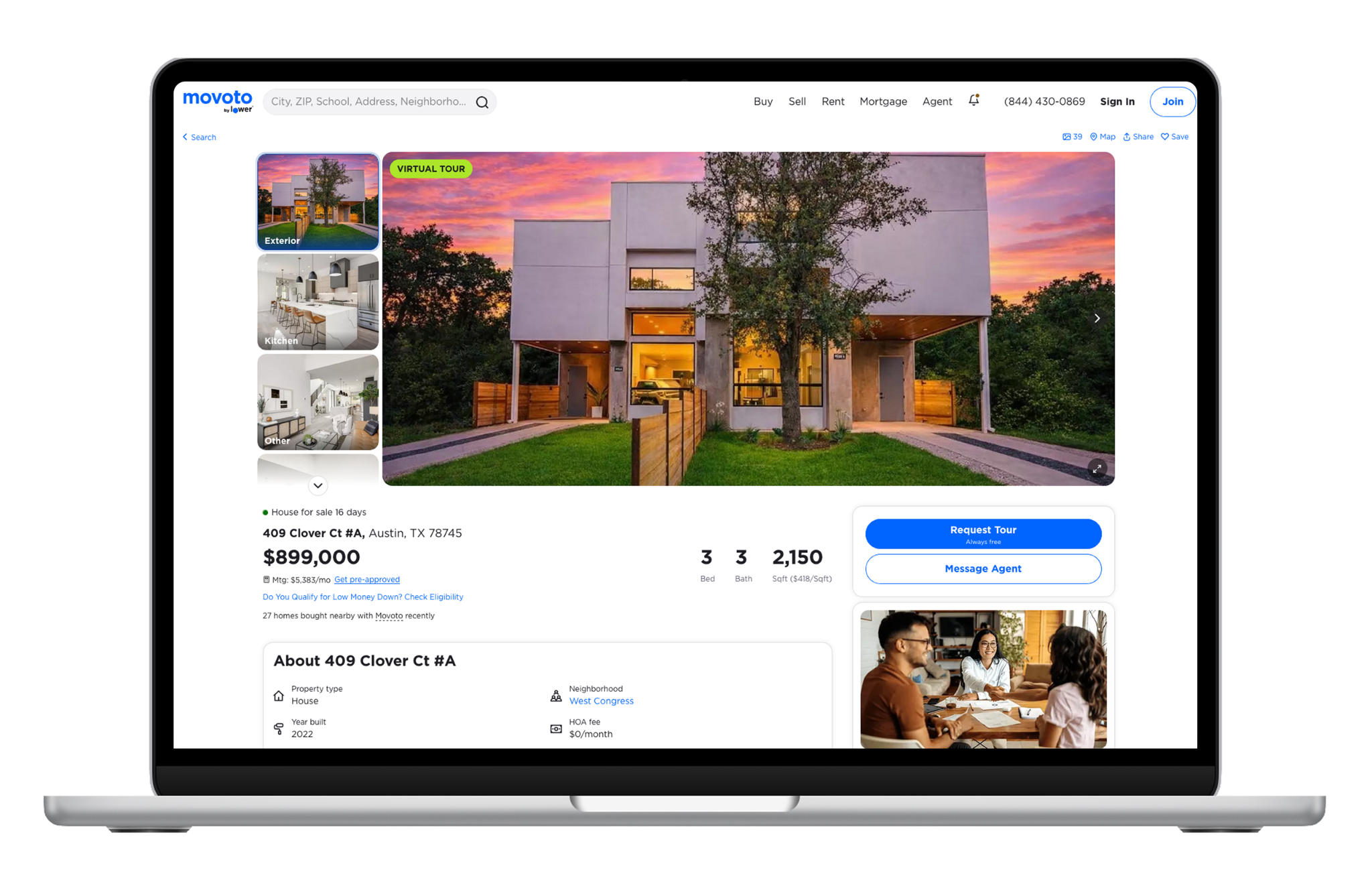
The strategic attraction is easy to see. A lender meeting someone during home search can discuss affordability earlier. A buyer can connect the property shortlist with the borrowing conversation. Zillow, Realtor.com, Redfin and Homes.com remain alternative starting points; OJO’s position developed around guided discovery and professional connections, now supported by Lower’s lending operation.
“Home search and financing are closely tied, but historically they have lived in separate experiences.”John Berkowitz · April 2026
Lower’s 2026 Movoto refresh added clearer routes between properties, agents and financing, alongside homeowner reports and property-value estimates. In July, nearly 70 mortgage and real estate employees moved into a shared Austin office. The organizational chart was beginning to resemble the product.
Copy the handoff, not the shopping spree
The transferable lesson is to examine where customers lose context. OJO kept adding the next missing piece: data, distribution, readiness, agents, financing. A smaller company can apply the same reasoning by passing preferences and timing to the next person who helps, then checking whether that person responds.
The limits follow from the design. Agent coverage and responsiveness must hold up locally. Subscriptions need enough useful introductions to justify their cost. Financing connections cannot manufacture affordable inventory or guarantee approval. For shoppers, the practical move is to use the search and professional introductions while comparing financing offers independently. A pleasant introduction is a beginning. The house still has to fit.
For an agent, the equivalent exercise is to count conversations that match the local business, then track what happens after each introduction. For a product team, it is to watch the customer cross from software to a person. That crossing is where the promise becomes testable.