Steve Harward has described a job interview that takes an unexpected turn toward the parking lot. There are two go-karts outside. Would the candidate like to race? It is an unusually literal way of finding out whether someone wants to go places. It also supplies a useful introduction to a founder whose public business talk keeps wandering away from the spreadsheet and toward the person sitting across from him.
Harward founded Prime Corporate Services in 2012. The Utah company helps entrepreneurs deal with the formal machinery of owning a business: formation, tax services, business credit and estate planning. These are subjects capable of making even an enthusiastic founder remember an urgent appointment elsewhere. Harward has built a career around getting people to stay for the conversation.
His own conversations can be exuberant. He talks about relatives, mentors, gifts and the work of keeping a relationship alive after its obvious commercial purpose has passed. There is a practical question underneath the enthusiasm. How does somebody become useful enough that another person wants to keep taking the call?
The hard hat came first
Construction came before corporate services. Harward’s early working life involved a hard hat and a shovel, a background he has discussed alongside attorney J.J. Childers. He later moved into commission sales. That change matters to the story because it placed him on both sides of a familiar small-business problem: learning to generate income, then discovering how much else had to be understood.
He has recalled a year in Los Angeles when a large sales income was followed by a tax bill he had failed to prepare for. The lesson stayed with him. Money arriving in an account could create responsibilities that a good month of selling had done little to explain. Success had brought homework, with rather less forgiving deadlines than school.
PRIME emerged from his interest in helping entrepreneurs understand business structure and the financial responsibilities around it. He and his brother saw room for guidance aimed at investors and small-business owners. The business dates to September 26, 2012. What began as a response to problems he recognized became an organization devoted to handling them repeatedly for other people.
A company with relatives in the room
The family part of the founding is more substantial than a ceremonial photograph. Harward has described starting PRIME with his mother and two brothers. That puts an interesting pressure on the usual language of company culture. In a family business, the people receiving the motivational speech may also remember the speaker before he had a company to motivate.
His account of childhood includes limited money and a mother raising three children. He connects her willingness to give to the philosophy he now brings to relationships. The example preceded the terminology. Long before generosity became something he could discuss on a business podcast, it was something he watched someone practice with few resources to spare.
By 2023, PRIME’s description of his role emphasized relationship development, partner management and the company’s future direction. The same biography placed his children, Nolan and Zion, at the center of his motivation. He wanted them to see possibility in the work he was doing. The business could provide an example as well as an income.
That ambition gives the story a domestic scale. A founder can speak about customer numbers before an audience and still think about what his children are absorbing. Harward’s public account repeatedly returns to the connection between those worlds. The office is a place where he builds relationships, and also a place from which he hopes to send an intelligible message home.
The audience was already somewhere else
The commercial expression of all this is a network of partners. Harward’s business reaches entrepreneurs through people and organizations that already have their attention. In a November 2025 conversation with Tom Krol, he appeared with PRIME president Tommy Thornburgh to discuss affiliate partnerships, client retention and the services that can sit behind a coaching business.
The arrangement has an understandable appeal. A coach may help someone pursue a business opportunity. That customer can then need help with the structures surrounding it. A referral connects the two conversations. The partnership has value only if the second conversation is useful enough to justify the first person making the introduction.
Harward’s December 2025 ClickFunnels Radio appearance described a model driven heavily by partnerships and a network of more than 700 affiliates. Those were figures presented in the episode’s account of the business. They help establish the scale of the approach without turning a private company’s description into a financial audit.
- 01A partner’s
audience - 02A trusted
introduction - 03A PRIME
conversation - 04Relevant
services
Editorial schematic of the model, not a conversion or revenue chart.
It also explains why reputation matters twice. The customer is evaluating PRIME. The person who made the referral is learning whether that recommendation was wise. Every completed service can therefore affect a relationship beyond the customer receiving it. The model gives attentive delivery a second audience, even when that audience never joins the call.
PRIME makes live, individual consultations part of its proposition. Its published values include a preference for lasting client relationships and an expectation that colleagues put the team ahead of themselves. Those commitments give Harward’s personal language an organizational counterpart. They also give customers and employees a standard against which to judge the everyday work.
The partner model also gives the company a continuing test. An introduction can bring a first appointment, but the person making it has a reason to watch what happens afterward. For Harward, keeping those relationships requires the organization to follow through after his own conversation ends. This is where the public philosophy meets the service business: attention has to travel beyond the founder’s desk and into the next customer interaction.
When the founder has to stop replying
For a long time, Harward kept part of that everyday work close. He has said that he handled the support inbox for seven years. There is an almost irresistible charm to the image of a founder answering a customer in the small hours. Entrepreneurs enjoy these stories. Customers, reasonably, tend to care more about whether the reply solves the problem.
The arrangement also raises a question about how a company grows. Someone who knows every answer can become the place where every question waits. A useful habit in a small organization can acquire a different meaning when many more people need the founder’s time. The inbox keeps accepting new arrivals, with magnificent indifference to the calendar.
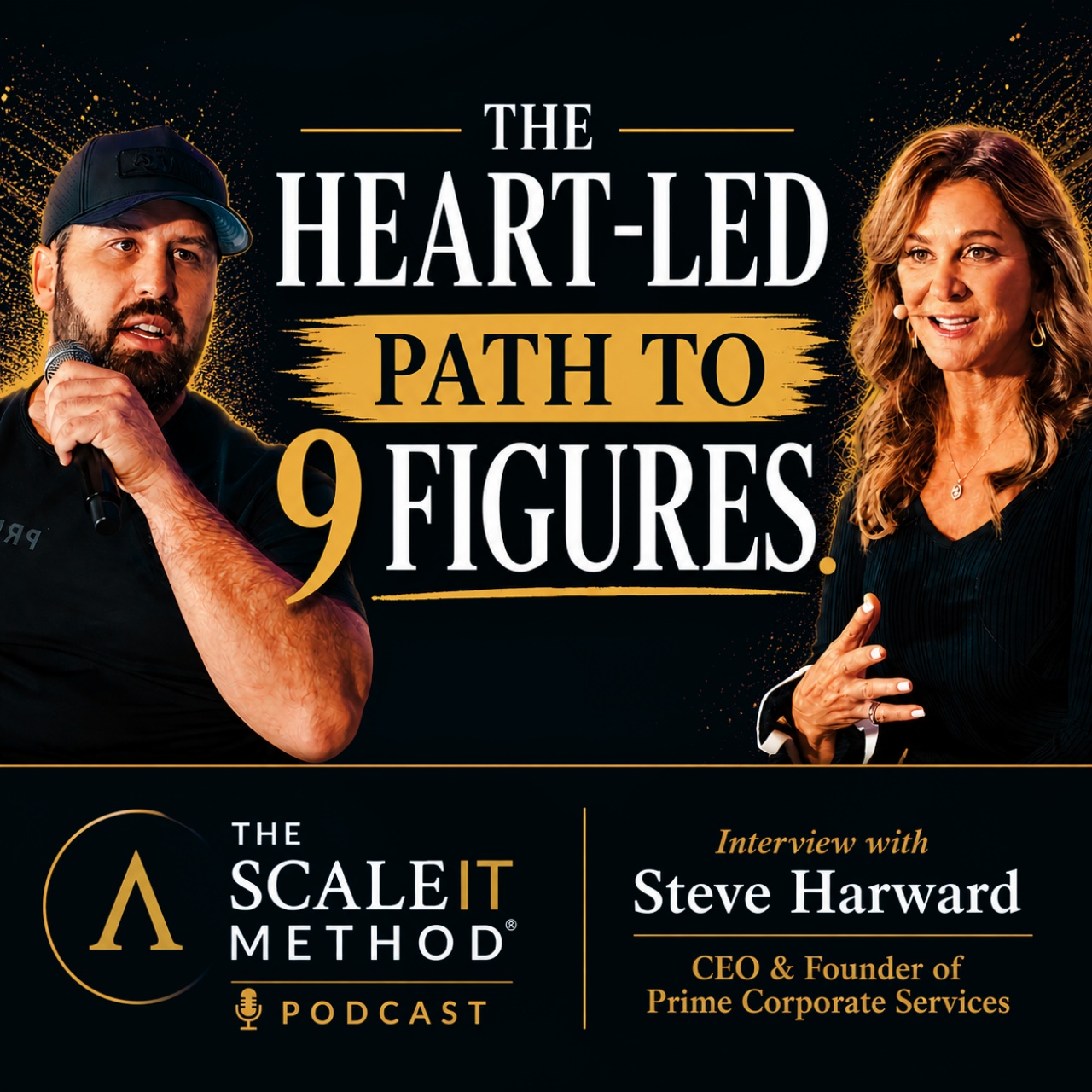
His conversation with Allison Maslan in June 2026 addressed handing over responsibilities, including support and payroll. The episode framed delegation as an important part of the company’s growth. That is a revealing companion to the stories about personal service. Eventually, the founder has to let colleagues become the people customers can rely on.
A business built around relationships needs that transfer to work. The founder may have helped establish the promise, but other people must be able to keep it. Hiring, training and accountability become part of the same story as introductions and generosity. A thoughtful gift cannot complete a customer’s unfinished paperwork. Somebody has to do the work well.
The gift has to fit the person
Harward’s most compact illustration involves a conference attendee who mentioned that she loved dolphins. He remembered, bought a small dolphin statue for $13 and gave it to her. In his telling, the surprise was that he had listened and acted on it. The object was inexpensive. Its specificity did the interesting work.
“I win even if nothing comes back.”
Steve Harward, discussing generosity
That is an appealing claim with a demanding condition. The pleasure has to survive the absence of a deal. Otherwise, the recipient has merely received a small invoice disguised as a present. Harward describes the act itself as a reward, a way of making the relationship worthwhile before anyone starts calculating its commercial return.
His public circle includes entrepreneur and mentor Randy Garn, and he has appeared in the Flow Mastermind community associated with Charles Byrd. The Lake Coeur d’Alene Summit listed him among its 2025 speakers. These settings put him in rooms organized around introductions and shared experience, places where a message about listening has an immediate practical test.
By September 2026, an announcement for TEDx University of Pittsburgh-Johnstown identified Harward as PRIME’s founder and executive chairman. It listed him for the October 3 program with a talk called The Generosity Advantage. The message he had been explaining through business anecdotes was becoming a subject for an audience beyond prospective partners.
For all the talk of growth, the small details remain the most persuasive part of his story: a remembered preference, a reply to a customer, the relatives who helped begin the company. They make the philosophy concrete. Paying attention takes time, and following through takes more. Harward has made those two demands central to how he explains the business he built.