Paul Hedrick had taken a very respectable route to an inconvenient shopping problem. He had gone to Harvard, worked in consulting and moved into private equity. In Connecticut, he wore ostrich cowboy boots to the office. They connected him to Texas; replacing them required more effort than he thought a purchase should. He would fly to Dallas to find the sort he wanted. Even there, buying a pair could feel like entering a club whose rules nobody had thought to write down.
The boots had cost around $600. Around them sat a question that would eventually become Tecovas: could a new company make the product he loved easier to buy? The answer involved leaving finance, moving to Austin and asking people who knew far more about bootmaking to help turn his drawings into something someone could actually wear.
There is a pleasing lack of distance between the object and the idea. Hedrick was wearing the evidence. His future business had been going to work with him, quietly, below the desk.
The creative kid takes the conventional route
Texas had supplied the attachment. Harvard and his early jobs supplied a way to examine it. Hedrick worked at McKinsey and then Catterton, the consumer investment firm now known as L Catterton. He learned about businesses that sold tangible things to ordinary customers. There was another interest waiting for a job, too. As a child, he had drawn, performed and made music. He had imagined creative careers before following the more conventional route into business.
His initial plan was to do well in that world and find room for creativity later. That arrangement has an obvious weakness: later is a date with no calendar entry. It can move indefinitely, particularly when the current job looks so sensible to everyone else.
Business school seemed a plausible next stop. Hedrick applied to Harvard and Stanford and received neither an offer nor an interview. He has described those rejections as the event that made him reconsider what he wanted to do. A carefully ordered progression had stopped progressing. Suddenly, there was room for the boot idea.
Rejection alone does not explain the choice of product. He already cared about boots, country music and Texas. Returning home mattered. The idea joined those attachments to a commercial problem he could investigate. By 2014 he had moved to Austin. A career change and a homecoming had become the same undertaking.
“I love Texas.”
Paul Hedrick, on his decision to return
A slide deck meets a bootmaker
Hedrick could draw. He had never been trained as a footwear designer. He went to León, Mexico, carrying sketches and a PowerPoint presentation, then worked with people whose expertise lay in making the thing his slides could only describe. The arrangement gave his creative interests an exacting new audience. Leather, unlike a presentation, must eventually bend.
The distinction matters to his story. Tecovas introduced a different way to buy a familiar product. Its boots depended on established craft. The artisans in León brought the knowledge needed to turn a silhouette into an object with structure, fit and a finish. A founder can have a clear opinion about what he wants without possessing the means to make it.
Early production also revealed the distance between placing an order and accepting it. Hedrick has recalled staying in León to inspect the first run himself, rejecting pairs and remaining longer than expected. It is a more useful scene than the tidy instant when an idea supposedly arrives complete. Here was the idea being argued over, pair by pair.
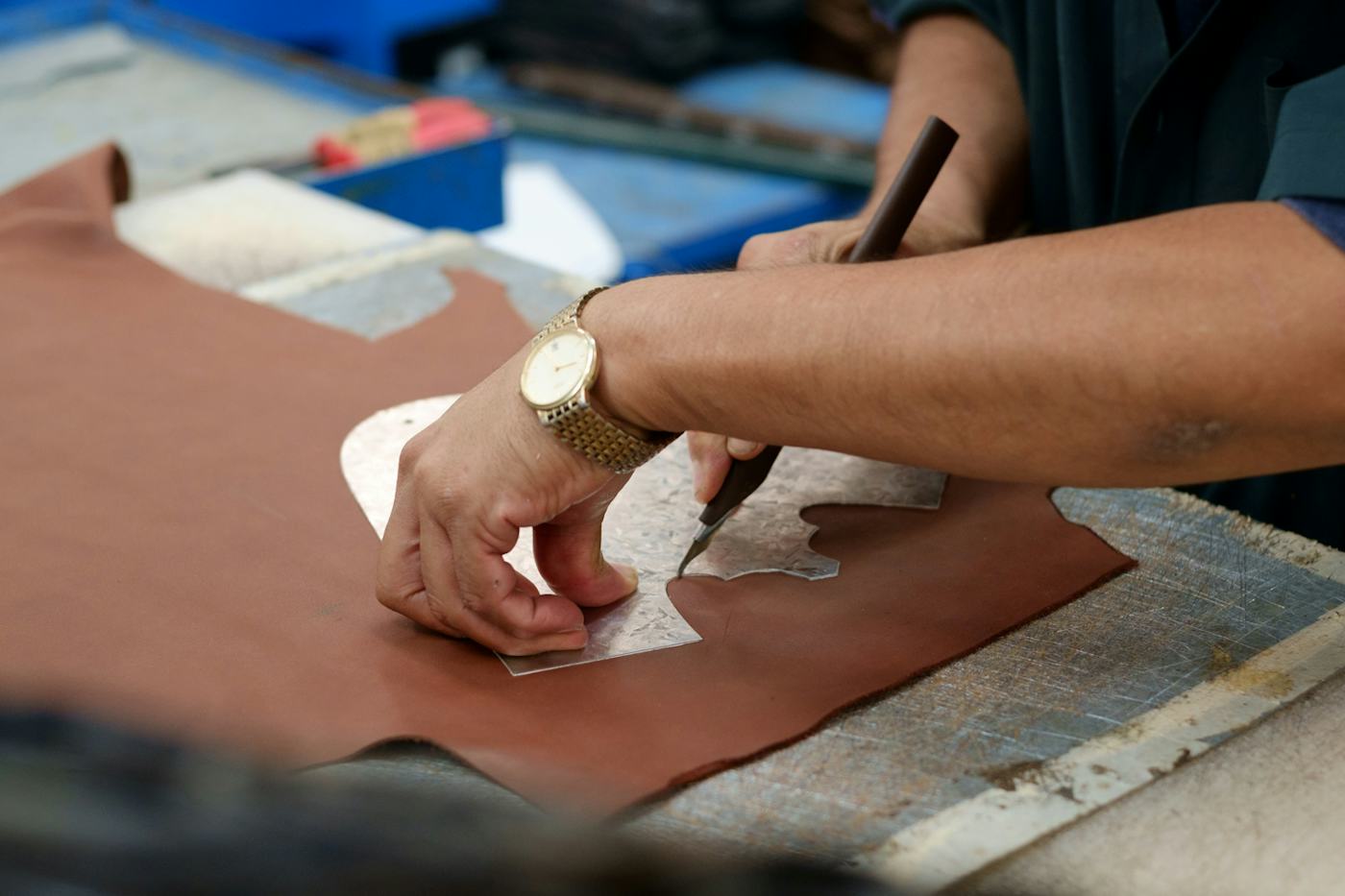
The customer would encounter one finished pair. Behind it stood a sequence of decisions and a group of people who knew how to execute them. Hedrick’s insistence on the result could be demanding. It also made the promise of quality something that had to survive inspection before it could survive an advertising campaign.
An SUV, a holiday fair, a first customer
Tecovas launched online in October 2015. The early business had room for a founder’s apartment and the sort of selling venues that rarely appear in a polished retail expansion plan. Hedrick took boots to farmers markets and local fairs, including the holiday fair at his former elementary school. His SUV served as transport for the merchandise.
Imagine the change in scale from consumer investing to carrying your own inventory. The product has to come out of the vehicle. Someone has to explain it. The next person walking past may be curious, indifferent or perfectly happy with the boots they already own. There is no automatic audience for the conviction that has rearranged your life.
Those encounters made the business personal in a practical way. Hedrick could talk to buyers and hear what they needed. The company’s online model could then reach people far beyond the next market stall. By late 2016 it had an Austin showroom, while the overwhelming majority of its boot sales still happened online.
- 2015Online launch
- 2019First full retail store
- 2021Millionth pair sold
- 2022Leadership handover
In 2019, Tecovas opened its first full retail store on South Congress in Austin. Dallas and San Antonio followed that year. For a business associated with direct online sales, stores were a substantial addition. For a seller who had already spent time fitting people at fairs, meeting the customer in person was familiar work.
A boot asks something of a buyer that a photograph cannot settle entirely. There is the fit, the feel of the leather, the question of whether this particular shape belongs in your life. Stores gave those questions somewhere to be answered. Hospitality became part of the setting, with drinks and boot shines accompanying the merchandise.
A boot for the job at hand
Hedrick’s product interests extended beyond the original leather-soled styles. The Ranch line brought rubber outsoles, rugged leathers and a different set of expectations. A boot worn to dinner and a boot worn in mud face different examinations. Understanding the distinction required attention to the conditions in which people would use what Tecovas sold.
He has described months spent developing a custom Vibram outsole, revising leather, reinforcing pull straps and working through fit. The details are revealing. An outdoor boot cannot earn its place through the mood of its photographs. Mud, water and repeated use are exceptionally literal customers.
The work also gave his creativity a continuing role as the business acquired more people. Design was no longer only a matter of getting the first collection out. It became a way to decide which adjacent products deserved to exist and what customers should be able to expect from them.
“We just gotta make product that makes people happy.”
Paul Hedrick, on product development
The founder makes room
By the end of 2021, the scale was different. Tecovas had recorded its first year above $100 million in revenue and sold its millionth pair of boots. In January 2022 it announced a $56 million Series C, led by Elephant. Total equity funding had reached approximately $120 million. A business once small enough to carry around now had a national expansion to manage.
The figures made another decision possible. David Lafitte, then chief operating officer at Deckers Brands, would become CEO on June 27, 2022. Hedrick would become executive chairman. Lafitte brought experience overseeing a footwear portfolio that included UGG and HOKA. Hedrick would concentrate more on the brand, merchandising, design and customer experiences.
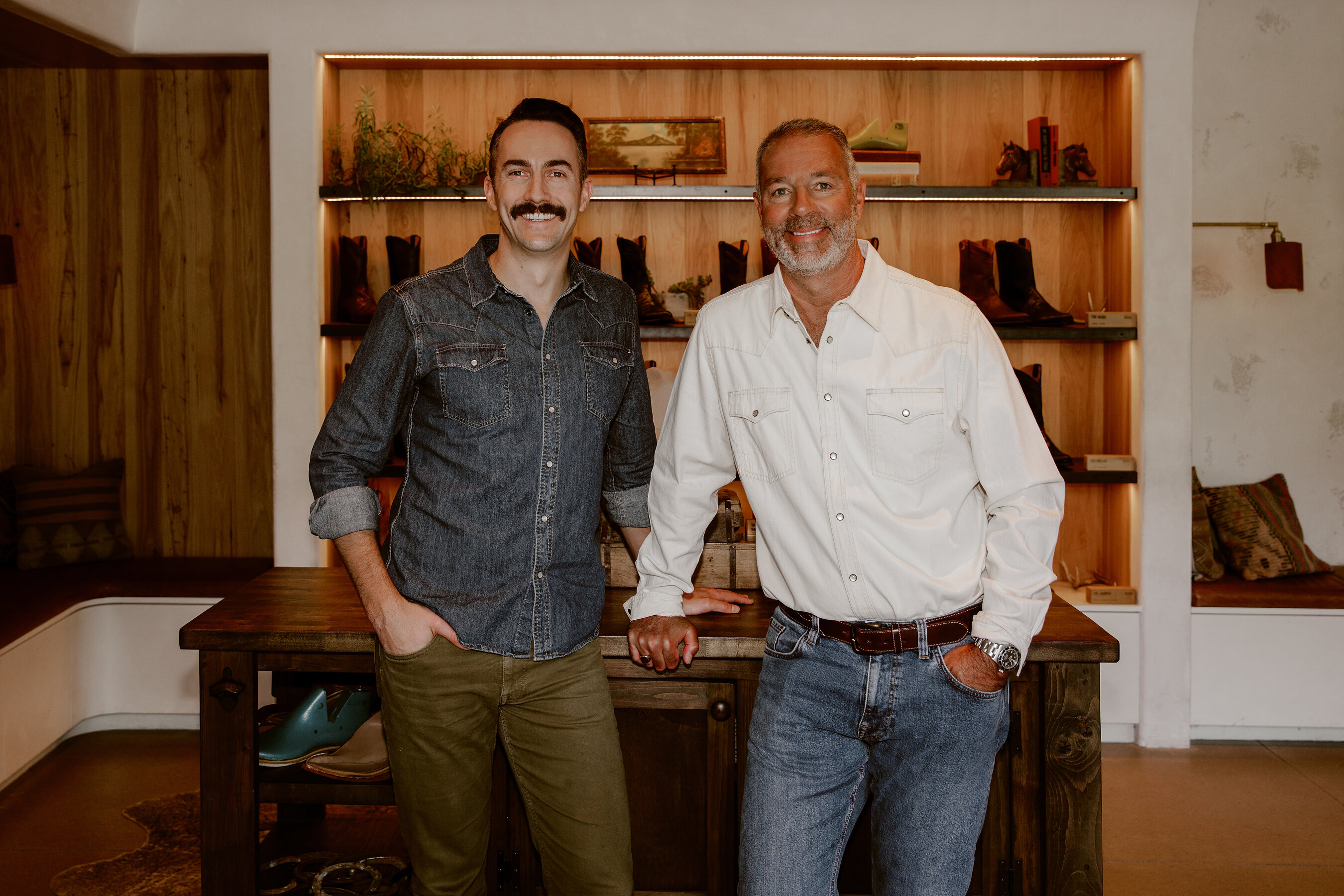
Hedrick described the appointment as the result of years of thought about his role. That detail gives the handover its weight. Founding a business had demanded that he do whatever needed doing. A larger company allowed him to ask where he could contribute most. The title changed alongside that answer.
His ambitions remained substantial. He publicly imagined Tecovas becoming a billion-dollar brand within the following decade. That was a destination he proposed, rather than a result already delivered. The distinction is useful in a growth story: an aspiration says where someone wants to go; completed work shows how far they have walked.
How long does it take to become heritage?
Tecovas continued to widen its distribution. In 2024 it entered wholesale, adding selected retail partners to its own shops and website. In 2025, the company was forecasting sales above $300 million. The original channel was becoming one route among several. The customer’s opportunity to encounter the product had expanded.
Hedrick has also begun offering his experience to other founders through Intro. His list of subjects is revealingly practical: hiring, capital, sourcing products and opening stores. Each sounds straightforward until you have to do it for the first time. Together they describe much of the distance between wanting a company and having one.
Some of the personal scale survives inside the merchandise. Cartwright, one of the original boot names, came from a friend. Other early styles took their names from dogs. The company name reaches farther back, to a geological formation in the Texas Panhandle. There is room on the shelf for both a private joke and a very old piece of home.
Hedrick’s stated ambition has been to build a Western brand with a long life. Heritage presents a peculiar assignment for a founder: you can choose the materials and commission the design, but you cannot order another fifty years. Customers have to supply those, through use, memory and the decision to buy again.
For someone whose idea began with a pair he already owned, that seems a fitting measure. He wanted a better way to find his next boots. The larger ambition depends on people wanting their next pair, too.
Keep walking
More from Hedrick and the people who have spoken with him.