Shai Eisenman went into an early focus group expecting confirmation. She had ideas about what young people bought, where they shopped and what would interest them. Then the young people started talking. Afterward, she called an adviser with an awkward report: “Everything I said was completely wrong.” For a founder preparing to enter a crowded consumer market, this was inconvenient. For the company she was trying to build, it was useful.
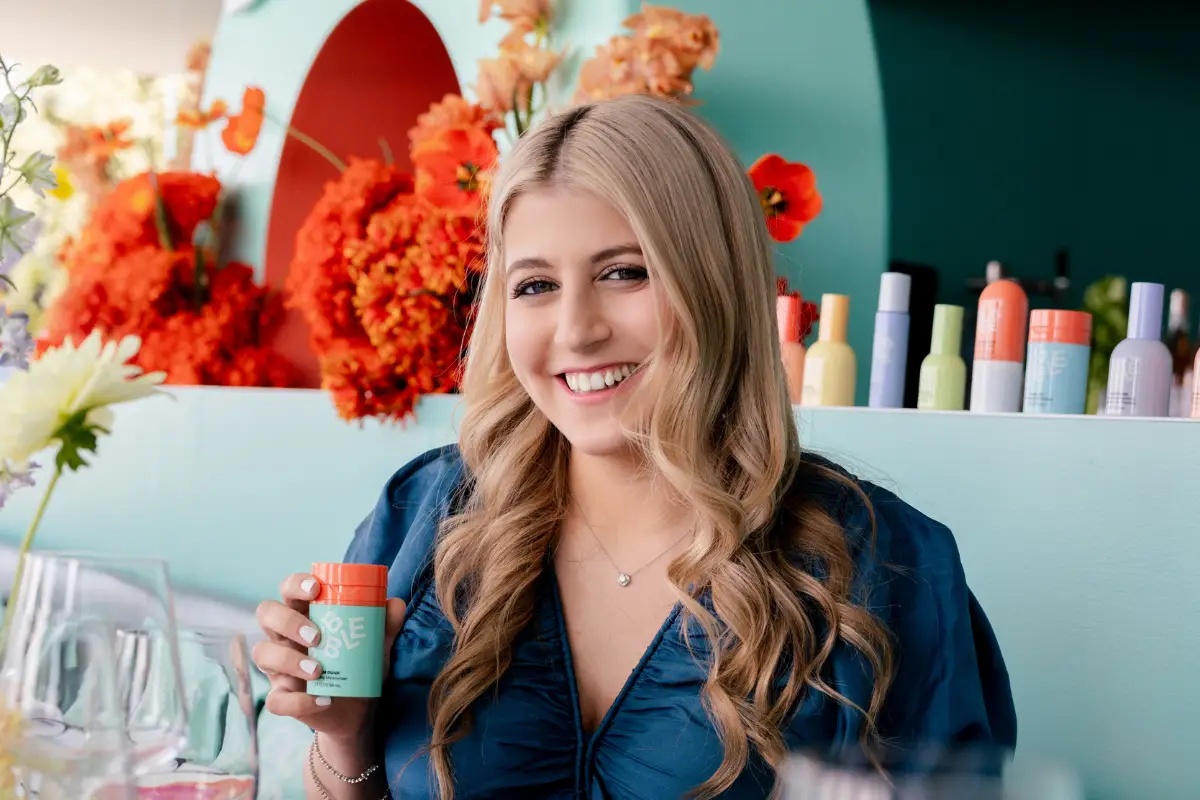
Bubble, the brand she began developing in 2018 and launched in November 2020, grew out of that willingness to revise the plan. Its bottles would be bright. Its prices would be accessible. Its customers would help make decisions. The last promise is the one that makes Eisenman interesting: she had already been running businesses for years, yet she was prepared to let a roomful of younger people interrupt her certainty.
“Everything I said was completely wrong.”
Shai Eisenman, recalling an early focus group
A business education with no waiting period
The early milestones come quickly. Eisenman began her Bachelor of Arts studies at 15 and started working in business at 16. Her experience included business development at the security startup Bullet Plate, then compliance and business development at Babylon.com. At 21, she moved into a leadership role at a Playtech subsidiary, overseeing roughly 90 employees. Most people that age are still learning how to address an email to their manager.
Her father was an entrepreneur, and she has said she wanted to pursue that life from childhood. She also played chess professionally, an experience discussed in her early podcast appearances. The combination gives her career an unusual opening: an accelerated education, an appetite for building things and time spent in businesses far removed from a colorful bottle on a shop shelf.
She did not arrive at Bubble claiming to possess a lifetime of beauty expertise. Running a company had already taught her how much depended on the people around her. When building the brand, she recruited experienced advisers and leaders. Her own background brought another perspective: a familiarity with consumer behavior, business development and the work of getting an organization to function.
The meeting that spoiled the plan
Her original observation was straightforward. Expensive beauty counters offered abundant choice, while shoppers on smaller budgets kept encountering familiar names. Eisenman saw an opening for a brand that felt contemporary without asking its customers to spend like luxury consumers. Young shoppers were central to that idea. Understanding them, she discovered, required more than remembering her own teenage years.
The company’s early research included focus groups with 200 consumers, followed by a larger quantitative study and a community of several thousand participants. That work expanded into an ongoing conversation. Customers helped shape names, packaging and the people Bubble might work with. A useful piece of information could arrive before a launch, while a product was being developed, or after someone had brought it home.
The mechanism for finding participants was pleasingly ordinary. An Instagram advertisement invited people to take part in a skincare launch. Bubble used the Geneva app to support the conversation. The point was to keep people involved. When Eisenman was asked how she would spend an extra $1,000, her answer was market research on Perksy. Even her hypothetical windfall had to answer questions.
The inventory mistake that opened a door
The move into physical retail offers another example of a plan being improved by reality. Bubble began online, but its research showed that many of its customers preferred buying in stores. In 2022, Eisenman said 60 percent primarily shopped in person. Walmart, CVS and Ulta were among their favored destinations. A generation fluent in social media still had perfectly practical reasons to walk down an aisle.
That finding made distribution part of the founder’s promise of accessibility. A reasonable price loses some of its usefulness when the product is awkward to find. Bubble entered Walmart in July 2021, roughly eight months after its online launch. By July 2022, Eisenman was describing a presence in 3,900 Walmart stores and preparing for a CVS expansion.
There was an unglamorous advantage behind the first rollout. Bubble had ordered too much inventory for its launch. Eisenman later explained that the surplus helped the team move into Walmart sooner than planned, during a period of supply chain disruption. An error in forecasting had left something useful in the warehouse. It is the sort of detail that disappears when a company history is polished until every decision looks inevitable.
of its consumers primarily shopped in-store, Eisenman said in July 2022.
A dated research snapshot, rather than a measure of all Gen Z shoppers.
A customer with a seat at the table
Consulting customers is easy to promise. Making their answers consequential takes more work. Eisenman has described a community testing threshold of 90 percent acceptance before a product launches. She has also described daily conversations that influence the products already under development. The relationship extends beyond a single survey sent out when the team needs a favorable number for a presentation.
Some of the results are visible without opening a bottle. Bubble’s packaging was developed with feedback from young consumers, including designs that connect like puzzle pieces. Color and playfulness were part of the proposition. The visual language made sense for the people the company wanted to reach, while giving the brand a recognizable presence among more familiar retail neighbors.
By June 2026, Eisenman was reporting more than 100,000 ambassadors and research conversations every two weeks. She said repeated mentions of Poppi helped lead to a collaboration, and a similar pattern supported a partnership with American Eagle. Those are useful examples of how listening can travel beyond the original product category. A recurring customer interest becomes something a company can investigate, rather than a stray comment someone liked in a meeting.
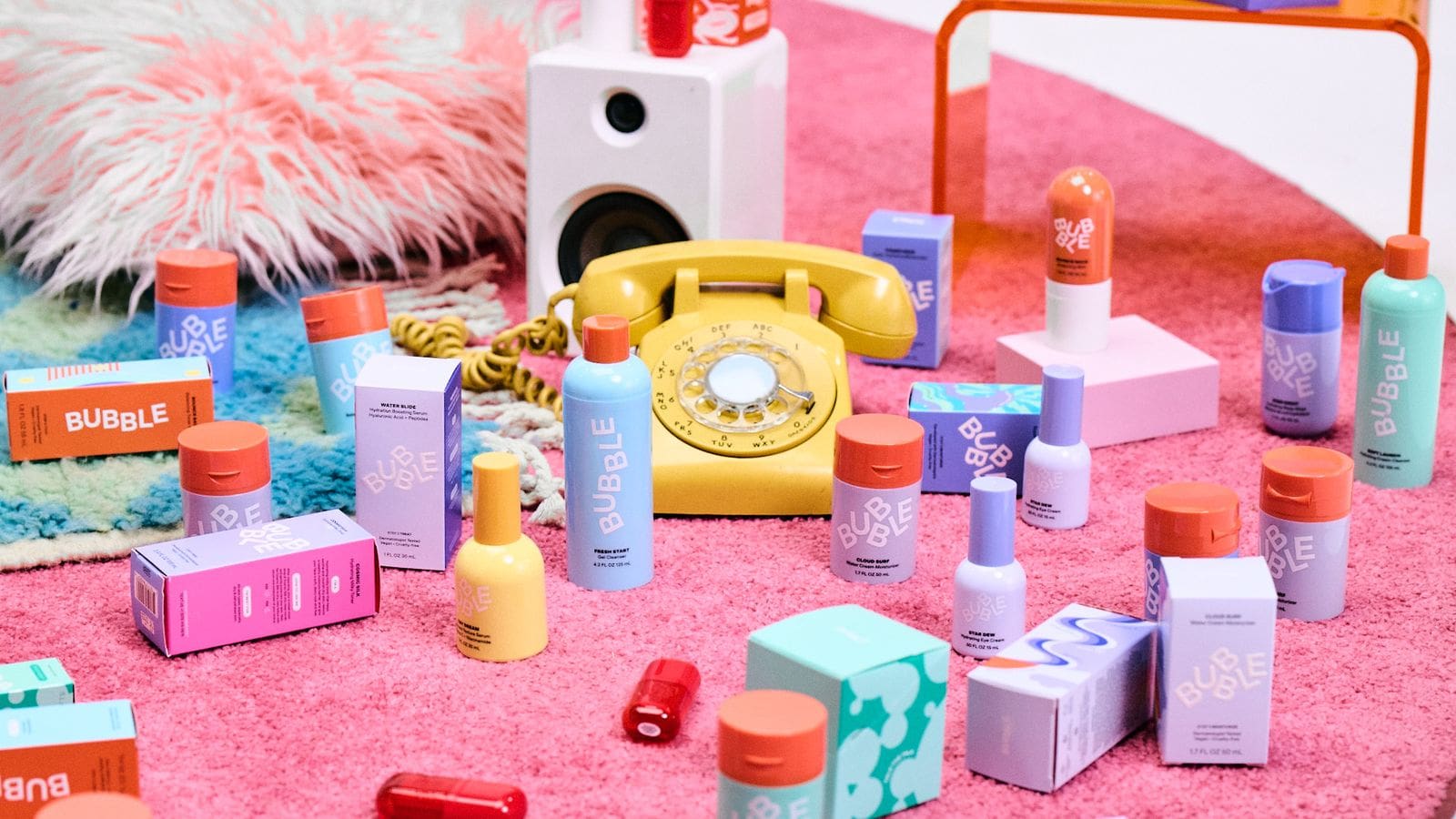
In August 2026, the idea reached another collaboration, this time with e.l.f. The companies announced a limited-edition collection inspired by how their communities mixed skincare and makeup. It brought Eisenman’s approach into a shared project: observe what people are already doing, then build around that behavior.
When the bottle talks back
Feedback becomes more revealing when something annoys the person giving it. Bubble’s Cosmic Silk packaging supplied a small, concrete example. Its dosing cap could retain a little product; closing it too quickly could cause a spurt. The company shared a video explaining a workaround and told customers it was working on an adjustment. There was a practical problem, and the response needed to be practical too.
“Our community doesn’t expect perfection. They expect honesty,” Eisenman said. That is a manageable standard to state and a demanding one to maintain. It asks the company to acknowledge the experience of the person using the thing, even when the complaint concerns a cap rather than the grand idea behind the business.
The same openness appears inside the organization. A newer creative colleague proposed taking the CC Balm campaign toward an undercover theme. The team changed direction, and the colleague helped lead the storytelling. For Eisenman, that episode illustrated why people close to an audience should have ownership. A useful idea had room to move without waiting to become the most senior person’s idea.
A shop that is actually open
International expansion has given Eisenman new versions of an old question: how convenient is this for the customer? During a visit to Australia in late 2025, she found that shops were closed by the time she finished meetings. The experience sharpened her interest in retailers with longer opening hours. Access can be a matter of a door still being unlocked after work.
By January 2026, Bubble was stocked across ten countries. Canada was another priority, with distribution through Walmart Canada and Shoppers Drug Mart. The founder’s approach to growth remained tied to mass retail partnerships. The ambition had moved well beyond the original online launch, but the practical test was familiar: could someone fit the purchase into an ordinary day?
Running at that scale also changed her understanding of leadership. Eisenman has described an earlier tendency to do everything herself, followed by the realization that it slowed the business. She learned to give colleagues responsibility and direction. She also protects time for focused work. These are quieter habits than a launch campaign, and rather harder to photograph.
An appointment 77 years from now
For all the color around Bubble, Eisenman’s stated ambition has a surprisingly patient timetable. In December 2024, she said she wanted the brand to be around for 70 or 80 years. Cetaphil’s rebranding after 77 years provided the kind of milestone she imagined for her own company. Founders usually want to arrive. She was picturing the renovations.
There is a personal counterweight to that long calculation. Eisenman has described her daughter as optimistic and herself as someone inclined to see the downside. Her daughter reminds her to look through a more positive lens. The admission suits a founder whose public story contains both conviction and a repeated willingness to be corrected.
Recognition has followed, including BeautyMatter’s 2024 Entrepreneur of the Year award and Inc.’s Female Founders honors. Yet the more instructive details remain the awkward ones: the assumptions that failed, the stock that piled up, the cap that needed attention. They give a human scale to a company now measured in thousands of retail locations.
Eisenman’s advice is brief: “You need to listen. Don’t assume you know everything.” The hard part comes after the sentence, when someone tells you something you would rather not hear. Bubble began taking shape in one of those moments. Its founder hopes to keep the conversation going for a very long time.
Keep the conversation going
- Bubble’s website
- Shai Eisenman on LinkedIn
- Shai Eisenman on Instagram
- Read: The August 2026 e.l.f. collaboration
- Watch: Female Startup Club interview on YouTube
- Listen: Glow Journal, May 2026
- Read: The early focus-group story
- Read: Inventory and the Walmart launch
- Read: Customer research and retail
- Read: Building with consumers
- Read: Packaging and team decisions
- Read: Leadership and delegation
- Read: An Australian retail lesson
- Read: Canadian expansion
- Read: The 2026 ambassador community
- Read: The 77-year ambition
- Inc. founder profile