A supermarket looks wonderfully orderly from a spreadsheet. Revenue arrives in columns. Costs sit where they are put. The strawberries do not bruise, the trucks do not flood, and nobody comes home from work to discover that dinner was supposed to have been ordered yesterday. Jason Ackerman spent the first part of his career financing businesses in this industry. Then he helped build one, and the strawberries acquired opinions.
FreshDirect, founded in 1999 and launched to New York customers in 2002, turned a former paper plant in Long Island City into the starting point for a different grocery routine. Customers could choose food online and have it delivered without visiting a supermarket. Behind that simple transaction sat a business that bought, prepared, packed and transported perishables. Ackerman had exchanged the neatness of a deal for the obligations of a dinner.
His career has since taken him into cannabis retail, including Joyleaf in Roselle, New Jersey. The product changed. The questions about quality, staff and the customer’s experience remained remarkably familiar. The interesting part of his story is how much he had to learn between recognizing an opportunity and being able to run it.
The banker who wanted an operating problem
Ackerman’s family had a manufacturing business in New Jersey, Economy Color Card, which produced sample books and cards. His father, Don, ran its operations. His uncle, Peter, worked in finance. Jason chose the financial route, graduating from Boston University with an undergraduate degree in economics and business management before working at Drexel Burnham Lambert and Donaldson, Lufkin & Jenrette.
Supermarket and specialty retail transactions gave him a close view of the trade. He could see how its businesses were assembled and financed. At around 30, he wanted the responsibility of building his own company. Financing somebody else’s decisions had begun to offer less of what he wanted from work.
He approached Joe Fedele, whose experience included Fairway Uptown. The pairing brought together knowledge of financial structures and experience with actual food retail. David McInerney brought culinary and sourcing expertise to the founding team. FreshDirect’s subsequent identity owed much to that combination: the financial proposition depended on people who could recognize a good ingredient.
The timing gave the idea an extra burden. Webvan’s collapse had made online groceries a cautionary tale. A new entrant needed to explain why it would fare differently, preferably before somebody finished saying “Webvan.” FreshDirect’s answer concerned what happened to the food along the way.
A shorter journey for dinner
The early FreshDirect model borrowed something from Dell’s approach to computers: make to order, remove unnecessary steps, and use the internet to connect demand to production. Food required its own version of that discipline. A tomato cannot wait for a software update.
The founders wanted to reduce waste and the expense of the conventional grocery chain. Orders gave the operation information about what to prepare. Buying from producers and processing centrally could shorten the route between source and customer. The website was the visible part of a much larger rearrangement.
That distinction matters to understanding Ackerman. He entered an internet business through an interest in retail economics. The computer screen made a different operation possible, but the operation still had to earn its place in the kitchen. Beautiful buttons could hardly compensate for disappointing produce.
In May 2011, FreshDirect’s board appointed its founder and chief financial officer as CEO. The promotion formally put Ackerman in charge of a business whose work now extended well beyond the financial questions he had trained to answer.
Then the water arrived
FreshDirect entered Philadelphia in October 2012. Ackerman appeared at City Hall amid baskets of apples, peppers and other produce. The company had pursued expansion deliberately, taking time to develop its model. It had reached a reported $500 million in annual sales. The stage was set for a story about a patient business getting bigger.
Later that month, Hurricane Sandy offered a rather less cooperative plot. The storm damaged FreshDirect’s truck fleet. Flooding in lower Manhattan also disrupted the servers hosting its ordering website. Supply chains backed up and delivery routes were blocked. The trouble reached across the business, from the customer’s screen to the road outside.
Ackerman’s retrospective account described damage to a fleet of 160 trucks. Contemporary reporting documented cancelled orders and a gradual restoration of service, with some areas expecting limited deliveries only after Thanksgiving. A grocery business measured in daily promises was having to ask its customers to wait.
There is nothing abstract about this kind of management. A delivery company can have willing customers and food to sell while losing the means to connect them. FreshDirect’s survival through the disruption belongs in Ackerman’s story alongside its funding rounds. It tested the organization he had helped build under circumstances no pitch deck could make pleasant.
When tomorrow’s dinner becomes tonight’s
By early 2016, FreshDirect had more than 600,000 customers and more than 3,000 employees. Its CEO was considering a change to the habit on which the service had been built: ordering ahead. Customers were telling the company that their evenings often failed to follow a schedule.
FoodKick, launched in January 2016, offered delivery in as little as an hour in its initial Brooklyn and Long Island City service areas. It addressed the empty refrigerator, the unexpected guest, the decision to stay in. The parent company’s carefully planned basket now had a quicker sibling.
“There are all these food moments that happen spontaneously.”
Jason Ackerman, 2016
The observation was mundane enough to be useful. People could appreciate fresh ingredients and still neglect to make a plan. A retailer hoping to serve them had to accommodate both characteristics. Ackerman’s work increasingly involved revising the original system without losing the qualities that made it worth using.
In September 2016, FreshDirect closed a $189 million investment led by J.P. Morgan Asset Management. The announced purposes included geographic expansion, facilities and new businesses. Money could buy capacity. It also enlarged the number of decisions the organization had to get right.
Raised for expansion, facilities and new businesses.
The floor has a vote
Ackerman’s own account of leadership became increasingly concerned with the limits of the founder’s knowledge. The person who knows a business intimately can also make it too dependent on him. At FreshDirect, he described the gradual work of building talent and stepping back far enough to think beyond the day’s problems.
One detail makes his ambitions as a manager tangible. New employees were introduced at all-hands meetings through three interesting personal facts, giving colleagues something to know beyond a job title. For a business with thousands of employees, it was a small attempt to preserve the person inside the organization.
PJ Oleksak later credited Ackerman with giving her opportunities that her résumé alone might not have earned. He let her step into responsibilities, she recalled, and trusted her to deliver. Their eight years working together gave her an education she described as unusually dense with experience.
That account gives substance to a familiar executive claim about developing people. It comes from somebody who received the opportunity and still remembered who offered it. Ackerman’s influence can be traced through careers as well as through the company’s balance sheet.
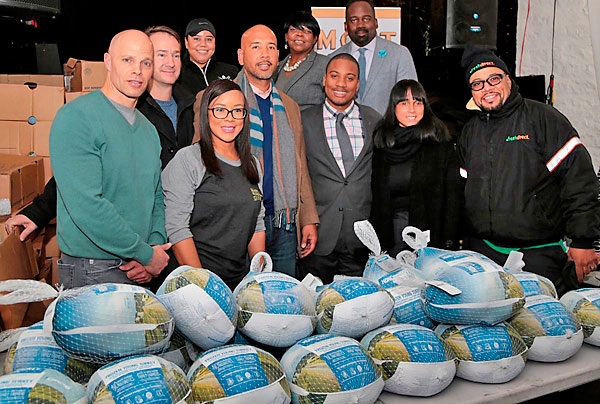
His public work also brought him into contact with people outside the customer base. In 2016 he joined local merchants and officials at that Thanksgiving giveaway. In January 2017, FreshDirect hosted SUNY New Paltz business students for a facility tour and questions with company leaders. The operation was something people could walk through and learn from.
A bigger building, a difficult goodbye
FreshDirect’s move to a new Bronx facility in 2018 promised room to grow. The roughly 400,000-square-foot operation included different temperature zones for different foods. Tomatoes and chicken did not need the same environment. Once again, a seemingly simple basket demanded a highly particular building.
The transition brought service problems. Customers complained about missing items and late deliveries, and the business had to work to regain reliability. These are consequential details in a founder’s story. The machinery designed to improve an operation can introduce a difficult period of its own.
In September 2018, Ackerman resigned as chairman and CEO. McInerney succeeded him. The departure ended nearly two decades helping to build FreshDirect, including seven years in the CEO post. The company went forward with another member of the founding team at its head.
Ackerman’s farewell emphasized the people with whom he had built FreshDirect and FoodKick. The scale of the operation was evidence of an achievement; the disruption around the move was evidence of how demanding that achievement remained. Grocery retail provides few opportunities to declare the work finished.
- 1999 / 2002FreshDirect founded / deliveries begin
- 2011From founder and CFO to CEO
- 2016FoodKick launches; $189m investment
- 2018Leaves FreshDirect leadership
- 2019–2021Executive roles at TerrAscend
- 2023Joyleaf opens in Roselle
Back to Roselle, back to retail
In November 2019, Ackerman became executive chairman of TerrAscend. He took on the interim CEO role in January 2020 and became CEO that April, leaving both positions in March 2021. The move gave him operating experience in cannabis, a sector with agricultural production, packaged goods and retail distribution.
Joyleaf opened in December 2023 with Dharshini Casinathen as his business partner. Its Roselle location stood in a shopping plaza on the former site of his family’s color-sample factory. After the banking career and the Queens warehouse, his next venture had arrived at a place with a family history.
Casinathen brought experience from KPMG and PepsiCo. She described Ackerman’s advice about assembling a “rainbow” of skills and personalities, an image of a team whose members contribute different things. Their partnership carried that approach into a store where the interaction between staff and shoppers mattered.
Joyleaf organized merchandise by product type and made space for browsing, drawing on familiar supermarket habits. In a category where shoppers might have questions, the layout gave them time to look and compare. Ackerman’s interest in retail had followed him into the arrangement of the shelves.
In September 2025, Joyleaf announced a NECANN Cup award for Best Dispensary Overall in New Jersey. Ackerman’s comment returned to the family’s more than 50 years doing business in Roselle. The local connection had become part of the company’s story, alongside the experience he had brought from elsewhere.
The circle is pleasing without being tidy. A founder who once helped customers avoid the supermarket is again thinking about what happens inside a shop. Across both businesses, the customer eventually has to make a choice, the staff have to understand the product, and the promises have to survive the working day. After all those years, the spreadsheet is still only the beginning.