Sean-Lin Huang’s career is difficult to fit into the little box beneath a name. Software developer would have worked once. Enterprise salesman would have worked later. So would startup co-founder, finance professional and, eventually, chief executive. Read the titles in sequence and a more interesting question appears: what does someone carry from one working world into the next?
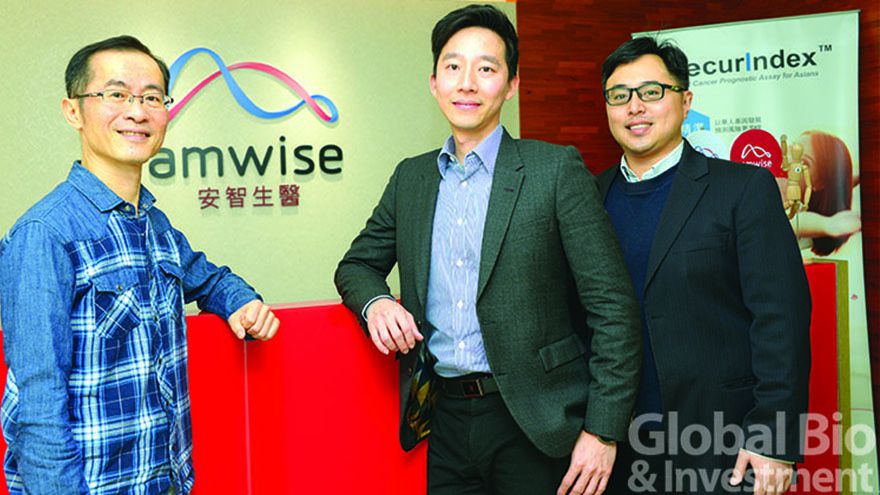
For Huang, that question leads to Amwise Diagnostic, the company he founded and leads. It also leads backwards, past the familiar founder’s title, to a university computer science course in Taiwan and a business school in Spain. The journey has enough changes of direction to make a conventional career ladder look like an unnecessarily restrictive piece of furniture.
The useful way into his story is through those changes. They put technology, selling, finance and organization building in the same working life. Each has its own habits and its own definition of a convincing answer. Huang’s career places him at their intersection, where having an idea and getting other people to work on it become separate, equally consequential tasks.
The earlier beginning
Amwise was preceded by another founding role. In 2007, Huang co-founded Ubic Corp., a venture intended to develop an online social network for Asia. His responsibilities included strategy, financial planning, approaching potential investors and establishing a sales and marketing department. Before the later company came this earlier encounter with the work of making a business exist.
It is a chapter worth keeping in view. A founder’s biography can become strangely forgetful once a subsequent company supplies the headline. Yet the earlier venture changes the sequence. Huang had already worked on the commercial and organizational questions that accompany a startup: how to explain the proposition, how to finance it and how to find customers.
His professional beginning was technical. A software development position at Trend Micro came in 2003, followed by an advisory sales specialist role at IBM in 2004. The movement from development into sales put different kinds of work next to each other early in his career. Making software and explaining its value to a buyer demand different conversations, even when they concern the same underlying technology.
That distinction helps explain why this part of the chronology deserves more than a row of logos. A development role identifies one kind of responsibility. A sales role identifies another. The later founding role brought planning and recruitment into the picture. Taken together, the positions describe an expanding range of responsibilities, rather than a single specialty pursued under several employers’ names.
- 2003Trend Micro
Software development - 2004IBM
Advisory sales - 2007Ubic Corp.
Co-founder - 2010Citi
EMEA associate - 2012OUE Limited
AVP
A change of language
Huang studied computer science at National Chiao Tung University. He subsequently went to Spain for an MBA at IESE Business School, with an international exchange at China Europe International Business School in 2011. The geography matters, but so does the movement between disciplines. Technical study and business education ask students to look at a problem through different windows.
His education therefore supplies a useful companion to the employment history. Taiwan and Spain were places of study as well as stops on a map. Computer science and management were fields of study as well as entries on a résumé. The combination gives a concrete basis for describing his background across disciplines, without turning it into a claim that any one qualification explains his later decisions.
His work took him into finance, including Citi and OUE. An international conference biography also described his experience at IBM and OUE across Europe and Asia. By the time he was building Amwise, his professional background already crossed both organizational and geographical boundaries. The company did not introduce international work into his life for the first time.
The education chapter continued with a finance EMBA program at Tsinghua PBCSF, for which his profile gives attendance dates of 2018 to 2023. That places further study alongside his years as a company leader. The chronology is useful in its own right: formal education appears at several stages, rather than ending before the first job. Computer science, an MBA and later finance study occupy different places in that sequence. They give his career another set of dated reference points, running alongside the employers and ventures rather than standing apart from them.
A degree cannot tell us how someone behaves in a meeting. Neither can a corporate job title. Their value here is more modest and more useful: they establish the different environments in which Huang worked and studied. The business-school chapter sits beside the technical chapter. The finance chapter sits beside the earlier startup. None needs to erase the others to make the story tidy.
Room for people who know more
In a 2018 leadership interview, Huang reached for rockets and Dragon Ball to describe company building. He used the prospect of boarding a rocket as a recruiting image. Demanding sessions with experienced advisers reminded him of the manga’s training room, where time and effort acquire rather unusual proportions. It is a more memorable description of a management meeting than most management meetings deserve.
The point underneath the imagery was practical. He sought experienced people, including people senior to him, and emphasized listening to understand what would persuade them to join. The same account described an advisory group meeting every three to six months. His storytelling belonged alongside scrutiny, with outside experience brought into the room to question strategy.
“精神時光屋”
The Dragon Ball training room - Huang’s image for demanding advisory sessions, 2018.
There is a useful tension here for anyone reading a founder’s story. Recruiting asks a leader to make the future attractive. Seeking advice asks that leader to leave the future open to challenge. Both involve other people’s judgment. Put the two activities together and the chief executive’s work becomes less solitary than the title might suggest.
That is an interpretation of the working arrangements, rather than a theory about Huang’s private personality. The documented details are sufficient: recruitment, listening and recurring strategic review. They give the reader something firmer than an adjective. A company can say that it values experience. An advisory meeting puts that experience in a position to answer back.
A company with several addresses
Amwise’s own company history dates its Singapore registration to 2015, its Taipei office opening to 2017 and its Hangzhou office opening to 2019. The sequence offers a clearer picture than an undifferentiated claim of international reach. There was a registered company, then offices in additional cities, with each date marking a separate step.
Those addresses also connect the company’s history to Huang’s earlier experience. His public professional profile lists Singapore as his location. The business operates across places where language, relationships and organizational expectations cannot simply be assumed to match. A map makes expansion look neat. The work implied by maintaining several offices is considerably less decorative.
In 2021, Huang described strategic partnerships and investment relationships as part of the company’s expansion planning, including plans for Europe and the United States. Those were stated ambitions at that point in time. Keeping the date attached preserves the difference between a direction a founder wanted to pursue and a subsequent result.
Alibaba and the Lippo Group appeared among Amwise’s investors in accounts of the business. For a profile of Huang, their relevance is the relationship between a young company and larger organizations. Capital is one part of that relationship. Access, introductions and the chance to work across an existing network are other parts of the expansion approach he described.
The work beyond the title
Huang also appeared on the agenda of a 2020 digital forum organized by Morgan Philips, alongside discussions of AI applications and talent development. It is a small but useful addition to the portrait: another setting in which technology and the people expected to work with it belonged in the same conversation.
His professional profile lists entrepreneurship recognition in Hangzhou in 2018, Future CEO recognition that same year and a Golden Peak Award in 2020. These are dated milestones. They belong to particular stages of his career, alongside the positions, education and office openings. Read together, they give the story a sequence instead of leaving it suspended around a title.
What makes that sequence interesting is its variety. Huang’s working life contains an earlier venture, established employers, technical study, business education and a company with several locations. The through-line is the recurring task of bringing different kinds of work together. It is visible in the responsibilities and places, without requiring a polished legend about an inevitable destination.
Return to the little box beneath his name and “Founder & CEO” remains accurate. The longer story gives it some company: developer, salesperson, student, finance professional, recruiter. Each word supplies another angle on the work. For someone whose recruiting imagery once involved a rocket, the route to the launchpad was pleasantly indirect.