Johnson Zhang has occupied two particularly revealing seats in business: the founder’s chair at a company being bought, and the executive’s chair at the company doing the buying. In between, he has worked inside a multinational, led a regional operation and returned to entrepreneurship. His career makes an acquisition look less like a finish line than a junction. The paperwork ends. The professional life carries on, sometimes in a rather different direction.
Today he is the founder and Global CEO of Virtue Diagnostics, based in Singapore, leading a business that reaches into China, Brazil and Indonesia. The geography is striking. So is the sequence that produced it. Before the international footprint came an earlier company, a change of ownership and years spent managing at a different scale. Zhang’s story is about what happens when those chapters are read together.
The founder changes seats
In 2000, Zhang founded Xinbo, serving as chairman and general manager. In September 2009, PerkinElmer acquired Shanghai Xinbo Biotechnology. Zhang joined the buyer. By October, he had an Asia-Pacific leadership appointment. Further appointments followed in 2010 and 2011, when his responsibilities extended to the regional business of PerkinElmer’s Diagnostics Division.
Those dates mark a substantial professional change. An independent founder became a regional executive inside a larger organization. The familiar entrepreneurial story often stops at the sale, preferably with a photograph of someone looking pleased. Here, the sale starts another period of work. There were new responsibilities waiting on the other side of the transaction.
During his PerkinElmer years, the regional business grew from about US$10 million to about US$400 million in revenue, a period of expansion Zhang has described when discussing his career. Those figures give a sense of the operating scale he encountered before Virtue. His return to the founder’s role came after working with a business that had changed considerably in size. He brought that regional management experience into a company still being assembled.
By 2018, Zhang was speaking at CABA’s Boston BioForum about entrepreneurship, acquisitions and cross-border investment. His session title included the phrase “Inorganic Business,” the corporate vocabulary for growth by acquisition. Business language occasionally makes buying a company sound like a minor gardening problem. Zhang, at least, had practical experience behind the terminology.
The conference appearance captures a useful point in the story: he could discuss the transaction from more than one professional position. He had built the business that was acquired and then worked within the organization that acquired it. Years later, the group he founded would become a buyer itself. Acquisition runs through his career as an operating experience, with a different set of responsibilities each time.
A second education
Zhang’s formal education includes a bachelor’s degree in mathematics from Fudan University and an MBA from China Europe International Business School. He studied at CEIBS from 2008 to 2010, a period that spanned the transition from Xinbo to PerkinElmer. The classroom and the change in ownership belong to the same stretch of his professional life.
When discussing CEIBS, he has singled out classmates from government and other industries, and the experience of working through cases together. That is a specific kind of educational benefit: seeing a business problem through the experience of someone whose daily work looks different from yours. The value lies partly in being taken outside a familiar industry conversation.
His career provides several such changes of vantage point. Founding a company, joining its buyer and managing a region are different jobs, even when the underlying industry stays the same. The titles record those changes. His later return to founding adds another. It gives the biography a circular shape, though the second venture begins with a much longer professional history behind it.
When asked about running Virtue, Zhang has emphasized clear goals and recruiting leaders who can deliver them. He has also described motivating team members and supporting their development alongside the company. That account puts a fairly ordinary management task at the center of an international business: making sure people understand the direction and have the ability to do the work. Across several countries, the practical importance of that task is easy to recognize.
Capital meets a map
Virtue Diagnostics was founded in 2019. On January 6, 2022, it announced a US$100 million Series B financing. Sequoia China, Morningside Ventures and ORIZA Holdings were named in the round, alongside existing investors Lilly Asia Ventures and PerkinElmer Ventures. The announcement placed Zhang in the CEO role and made the scale of the company’s funding public.
It also described an organization already divided across locations: corporate and research functions in Singapore, manufacturing in Suzhou and another operating base in Beijing. Even at that stage, the company’s working geography could not be reduced to one pin on a map. Different activities sat in different places.
The fundraising and the map explain different parts of the same business. One records the capital committed to the venture. The other records where its work was organized. Neither can stand in for the other. A large financing announcement is a milestone; an operating structure is something people have to use every working day.
For a profile of Zhang, the useful point is that Virtue gave his return to entrepreneurship an international frame early on. Expansion was present in the arrangement of the company, as well as in its stated plans. The next chapters would add an established Brazilian organization and an Indonesian production base to that developing footprint.
Brazil, with its own history
In September 2022, Labtest announced that it had become part of Virtue. Its message to readers was unusually helpful in understanding the human side of a transaction: Labtest’s culture would remain, and so would its leadership. The announcement paired that continuity with plans for greater production capacity, a broader portfolio, new jobs and expansion inside and outside Brazil.
This was an existing organization speaking about its next chapter. The distinction matters. An acquisition brings people, habits and relationships into a group along with the assets that appear in the agreement. Labtest’s own announcement put its culture and leaders near the center of the explanation. Readers were being told how the organization expected to carry on.
Labtest had been founded in 1971. When it joined Virtue, the Brazilian company brought roughly half a century of history into a much younger group. Age, in this case, ran in the opposite direction to ownership: the newer company acquired the older one. It is a small chronological detail with considerable explanatory value.
A subsequent English-language catalogue described expanded production, research and access to other countries. By September 2025, Zhang was visiting Brazil for a congress and strategic meetings with Labtest. The relationship had moved beyond its announcement into the ordinary calendar of a group with operations far apart. That calendar is part of what international expansion actually looks like.
A partnership has its own machinery
Ownership was one route available to Virtue. A distribution agreement offered another. On December 13, 2023, Virtue and Revvity signed an exclusive global agreement covering three product lines. The arrangement took effect on January 1, 2024, giving Virtue worldwide selling rights for the licensed products and responsibility for after-sales services.
That last detail belongs in the business story. A distribution agreement includes the work that follows a purchase. Selling rights establish where a company can operate; service responsibilities establish something it must do once it gets there. The agreement also allowed for future localization and registration in emerging markets when considered suitable.
Zhang described the arrangement in terms of aligning the companies’ portfolios and market strategies. Revvity’s Nicky Xu, meanwhile, pointed to Virtue’s experience in local operations and market development. Both descriptions place organizational capabilities alongside the products covered by the deal.
Seen next to Labtest, the agreement shows two distinct ways of extending a company’s reach. One brings an established business into the group. The other assigns rights and responsibilities between partners. Zhang’s work at Virtue has included both. The international footprint has been assembled through several kinds of agreement, each carrying its own operating commitments.
The factory is the argument
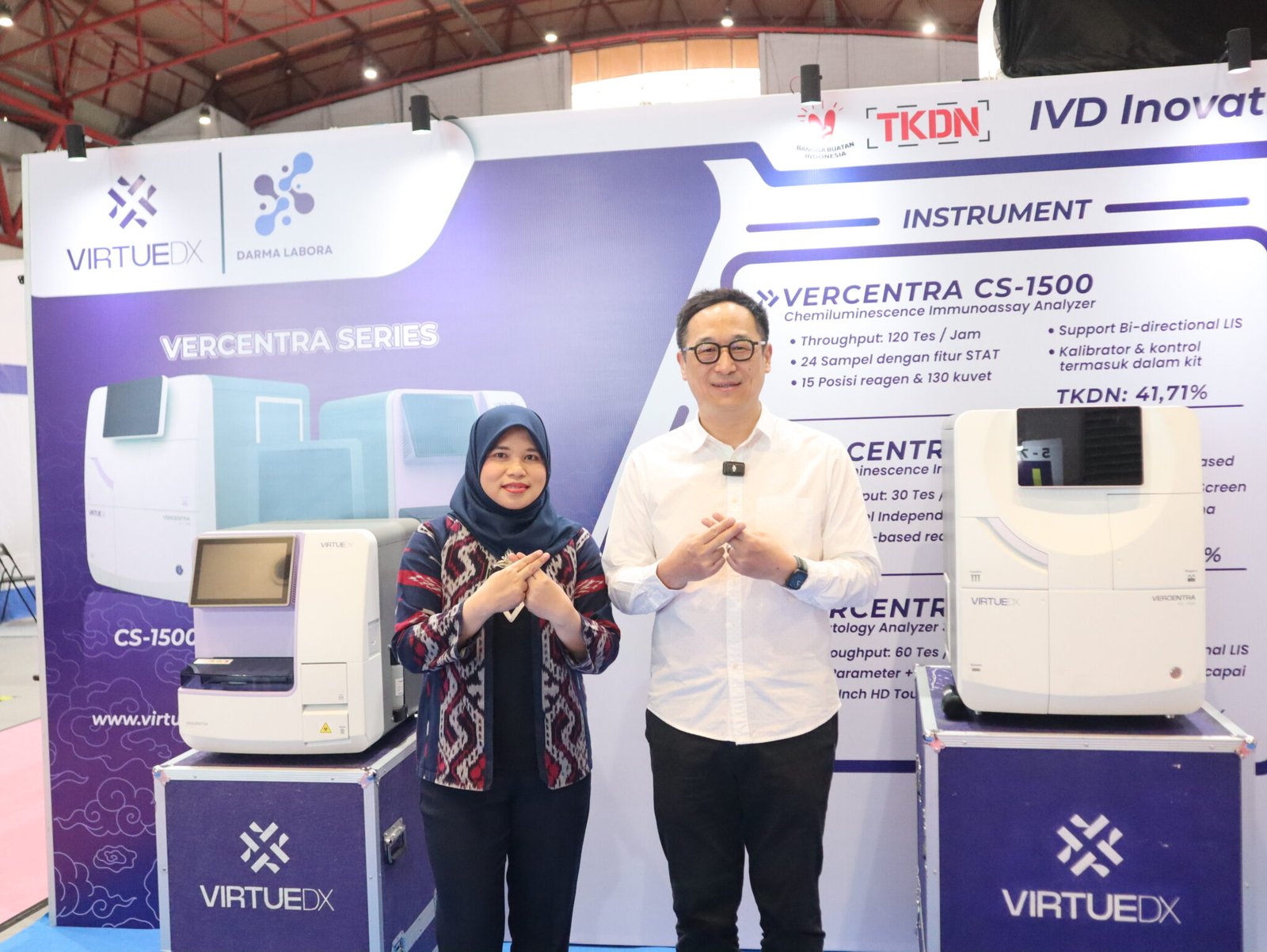
On March 5, 2024, Virtue’s manufacturing facility in Cikarang, Indonesia, opened. The site occupied 12,200 square meters of land, with 8,900 square meters of buildings. Zhang described the development as part of the group’s global strategy to strengthen production and distribution for Southeast Asian markets. Here, the expansion plan had a physical address and a building area.
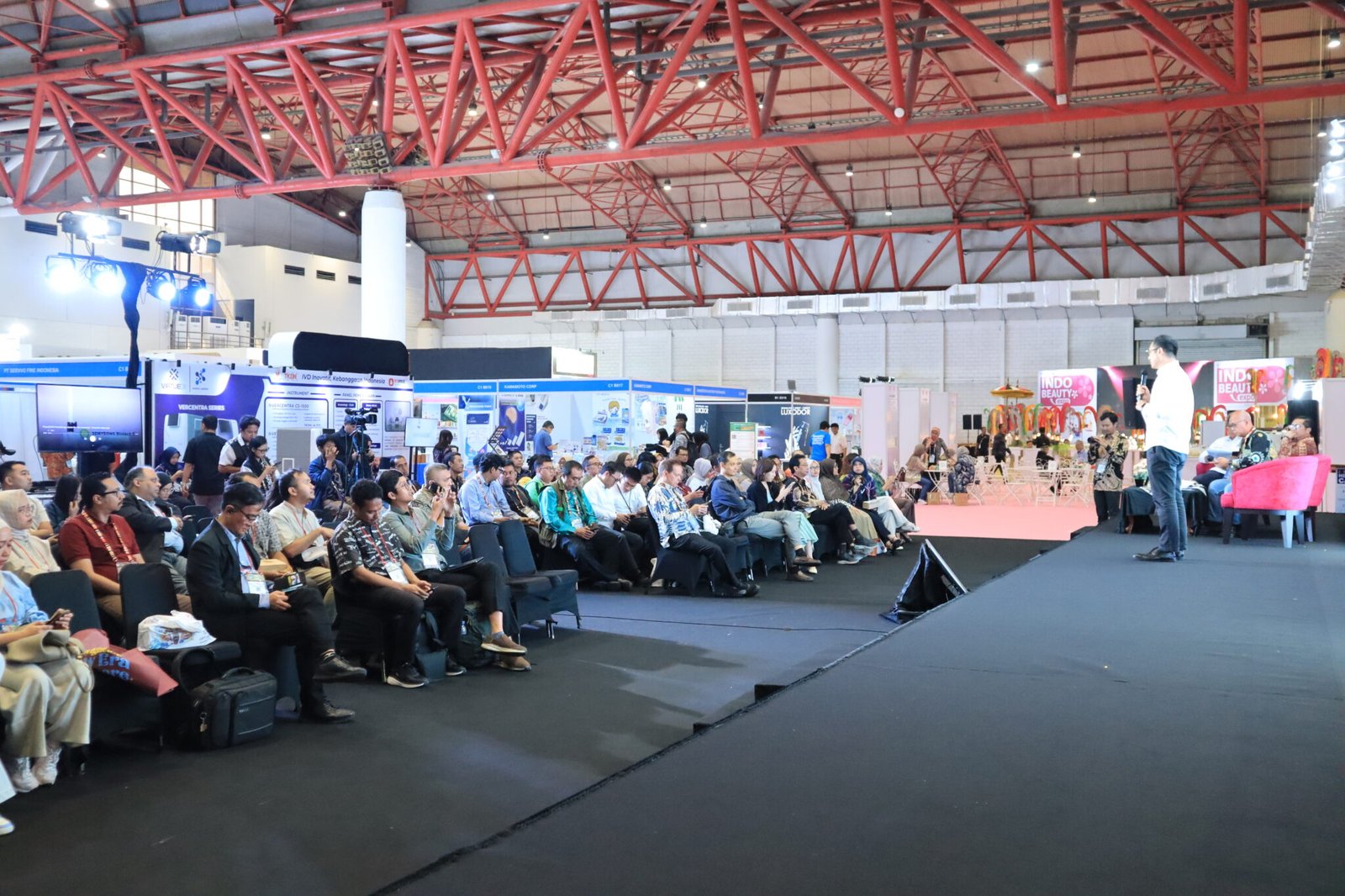
In August 2026, he was back in public discussion of Indonesian manufacturing at an industrial symposium and press conference in Jakarta. The company’s account placed long-term investment, market conditions and regulation among the topics. Two years after the opening, the local operation remained an active part of his work.
“In the Region, for the Region.”
Virtue Diagnostics’ operating philosophy
The company uses the phrase “In the Region, for the Region.” It is a compact expression of a strategy that can be examined through specific commitments: the Brazilian acquisition, the Indonesian facility and partnerships that leave room for local production. Those decisions give substance to the geographical language.
Zhang’s route to this point has involved repeated changes in responsibility. He founded Xinbo, joined its acquirer, led a region and returned to founding. At Virtue, that history continues through transactions, partnerships, factories and teams in several countries. The story keeps returning to the same practical question: once a company has arrived somewhere, what will it build there? His next chapter is being written in the operations intended to answer it.