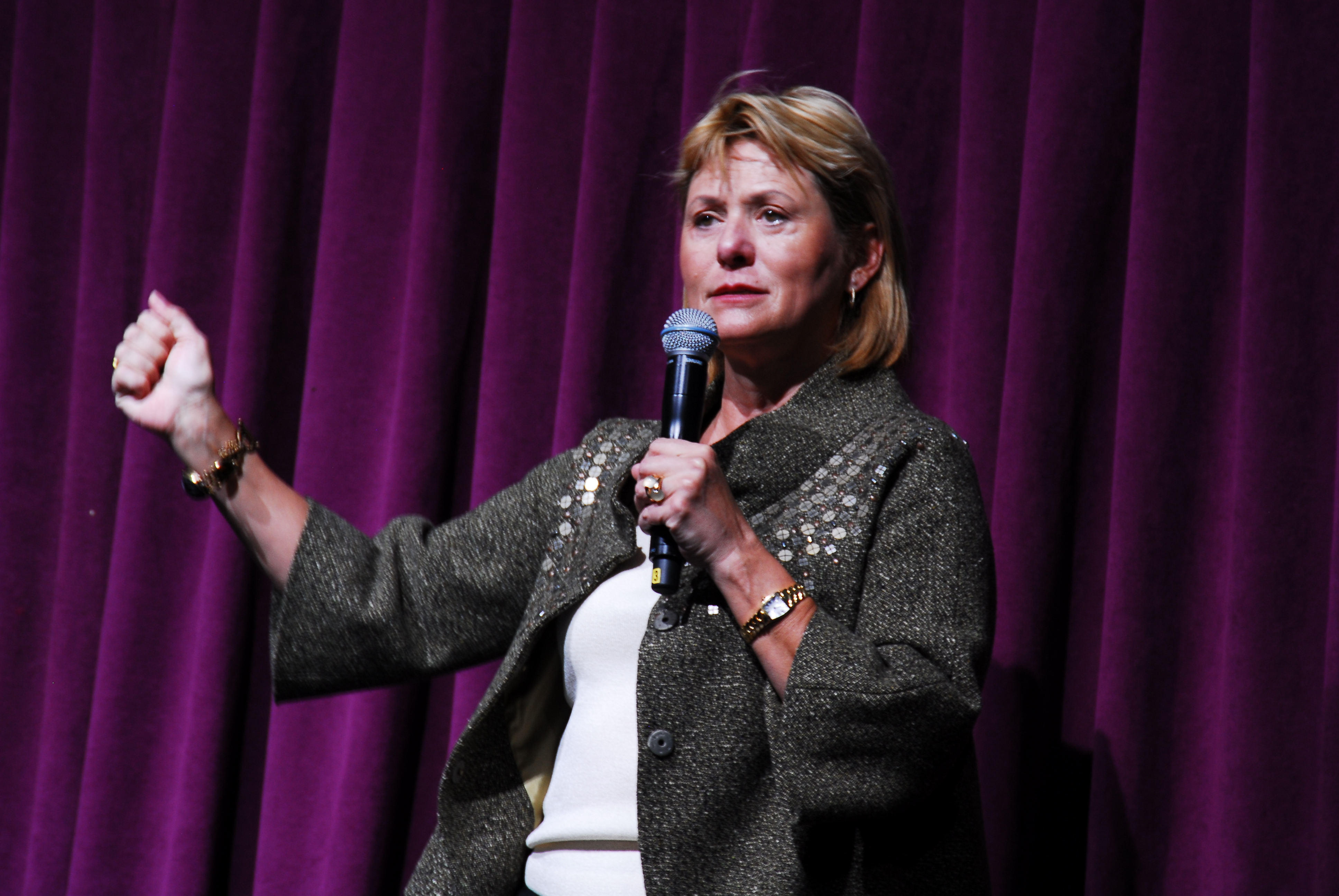
The Iron Logic of a Dairy Farm Girl
Carol Bartz doesn't have a founding myth. No garage, no pivot story, no aha moment polished for a TED stage. What she has is a grandmother's voice from a farm near Alma, Wisconsin: "You deal with what life delivers, make the best of it, and then move on." That single instruction - spare, practical, non-negotiable - guided her from a feed-mill town to the most powerful boardrooms in American technology.
When she was eight years old, her mother died at 28. Her father couldn't manage. She and her brother were sent to live with their grandparents. The farm was small. The winters were long. Nobody was handing her anything.
In 1971, at the University of Wisconsin-Madison, she graduated with a B.S. in Computer Science. She was one of two women in the program. Not one of several. Two. The entire department. She didn't write about it at the time. She just got a job.
She sold computer services at a bank in St. Paul. Then worked at 3M in their microfilm division - the kind of unglamorous entry point that wouldn't feature in a highlights reel. She joined Digital Equipment Corporation and became only the second woman ever in their sales department. She became a manager. She moved to Sun Microsystems. She climbed without a roadmap because there wasn't one to follow.
In 1992, Autodesk handed her the top job. She became the first woman to run a major technology company in America. This was not a moment that magazines fully recognized at the time. There was no category for it yet.
In that same year, she was diagnosed with breast cancer. She asked her doctor for one month. She needed to set up her executive team. She had a keynote to deliver. She kept both commitments, then announced her diagnosis to the company, had surgery, and came back.
The Fail Fast Forward Philosophy
Bartz introduced the "3F" principle at Autodesk: Fail Fast Forward. Not "fail often" as a cliche - but the specific discipline of trying something, learning quickly that it isn't working, and moving before the sunk cost calculates itself into your decisions. Silicon Valley later adopted the language broadly. She got there first, running a CAD software company in 1992.
Over 14 years at Autodesk, she grew annual revenue from $285 million to $1.5 billion - a 5x increase. Stock price rose an average of 20 percent annually. She acquired Discreet Logic for $410 million and moved Autodesk into animation and visual effects, a business that grew to represent 15 percent of total revenue. Architects, builders, filmmakers. The software that designed the buildings you enter and the films you watch.
She left Autodesk in 2006. In January 2009, Yahoo recruited her to replace co-founder Jerry Yang. The company was the fourth most-visited web domain on earth, bleeding against Google and Facebook, internally fractured, publicly embarrassed. She negotiated a 10-year search partnership with Microsoft and Bing to offload search infrastructure and share ad revenue. She cut costs. She improved margins. She could not grow revenue fast enough in a market that was moving faster than any single executive could redirect.
On September 6, 2011, Yahoo Chairman Roy Bostock called her by phone to fire her. He was approximately 20 minutes away in a car. That evening, she sent an email to all 14,000 Yahoo employees from her iPad. "I am very sad to tell you that I've just been fired over the phone by Yahoo's Chairman of the Board." Signed: "Sent from my iPad." Later, in Fortune Magazine, she said: "Yahoo f---ed me over." Of Bostock's method, she said simply: "I thought you were classier."
This is not the behavior of someone trying to manage a graceful exit. It is the behavior of someone from a dairy farm who learned early that silence is a form of lying.