In January 2002, Mike Collette’s basement became a planning room for an ice rink. The questions were wonderfully unglamorous: where to put it, how to finance it, who would join. Collette had learned to skate in Pawling, New York, and wanted children around Cincinnati to have a winter gathering place of their own. Before anyone could glide, quite a few adults would have to sit through meetings.
It is an appealing place to begin with the founder of PatientPoint. His business story contains the expected transactions and transitions. The basement introduces something more tangible: an idea that needed neighbors, a site and enough people prepared to commit. A rink has one useful advantage over an ambitious corporate vision. You can eventually stand beside it and watch somebody fall over.
Collette helped turn that proposal into the Indian Hill Winter Club, which opened in 2006. His career in media took much longer to unfold. Put the two projects beside each other, though, and a recurring question emerges: how do you get people into something they have never tried before?
Three teams before the company
At Hotchkiss, Collette captained the soccer, hockey and lacrosse teams. He arrived there after becoming dissatisfied with his previous high school. A connection helped arrange the visit: athletic director Nels Corey had coached Collette’s father at Bowdoin. The younger Collette’s response to the campus tour was immediate: “Can I start tomorrow?”
He graduated in 1980, then attended Dartmouth, where he played varsity hockey and earned an engineering degree. Years later, he credited school athletics with teaching him to lead, work with teammates and persist through setbacks. Those are familiar virtues on a school prospectus. Three captaincies give them a little more substance.
There is also something useful about remembering the pupil behind the executive. Collette recalled needing extra help with mathematics at Hotchkiss and appreciating teacher Walter Crain’s patience and humor. The future engineering graduate had needed someone to make room for the part he found difficult. An education can leave its mark through the help a person receives as much as through the prizes.
The price of being seen
His early working life took him into brand management at Procter & Gamble. There, he saw the possibilities of placing messages where a particular audience would encounter them. He also saw expensive placements and uncertain measurement. The opening was commercial and specific: offer a better account of what an advertiser’s money accomplished.
“We could do it a lot better,” he recalled. Starting On Target Media required cashing in a life insurance policy and exhausting a credit card. Two P&G colleagues eventually joined him. It is a founding story with an actual household balance sheet attached. Whatever the appeal of independence, the credit-card bill would arrive on schedule.
That venture was a predecessor of PatientPoint. Across the ensuing decades, the delivery technology changed from print to digital. The founding question about value remained legible: buying a placement ought to produce something that can be examined after the invoice is paid.
The founder leaves, and comes back
Collette’s career has an interruption that a neat founder biography could easily smooth away. He stepped down as CEO in early 2012 and stayed on as chairman. In 2013, he became an executive-in-residence at CincyTech. By January 2017, he had mentored seven companies over nearly three years and made private investments.
Then he returned to PatientPoint as CEO. The company he rejoined had changed technologically during his absence. His own work had changed, too: he had spent time helping other entrepreneurs build their enterprises. The return supplies a useful correction to any picture of a founder permanently stationed at the same desk.
Mentoring also took him into a classroom. At Cincinnati’s Seven Hills School, Collette and experiential-learning director Nick Francis organized a two-hour competition following an entrepreneurship seminar. Twelve juniors and seniors worked in four teams, developing app proposals and pitching them to local business leaders. Their audience included parents, teachers and peers.
One project concerned alarm clocks. It is hard to imagine a more appropriate market for students. The exercise itself was practical: take an idea, develop a plan and put it in front of people who can question it. A founder’s experience becomes useful to someone younger when it helps turn enthusiasm into work that can withstand a conversation.
Room for the beginners
At the winter club, that same invitation to participate had a physical setting. Planning had expanded beyond an outdoor rink to an indoor facility with other activities. Organizers listened to prospective members, secured a lease, gathered donations and membership commitments, and navigated a delayed construction process. The finished recreational building measured 50,000 square feet.
The opening in May 2006 brought hundreds of children onto the ice. A donated Zamboni was among the contributions that helped make the place function. The machinery of community life occasionally comes with a very literal resurfacing machine.
Collette coached an early hockey team of beginner skaters, boys and girls, including players recruited from the youth lacrosse team he coached. He called the group his “Bad News Bears” team. Some prospective members had worried that their children could not skate. The organizers’ answer was that they would learn.
The club also imported a Dartmouth winter-carnival tradition. Early adult events included shopping-cart races, a human Iditarod and barrel jumping. Collette himself was a barrel jumper. These details rescue the project from the solemn language that often accumulates around civic achievement. There was room in the enterprise for people to look ridiculous and enjoy themselves.
Indian Hill Winter Club’s recreational facility, opened in 2006.
A bigger company, a different job
At PatientPoint, a different kind of expansion arrived in 2021. The company merged with Outcome Health, and Collette led the combined business. It operated under the PatientPoint brand, with PatientPoint executives taking the senior leadership roles. Employees from both businesses were to remain as the organizations combined their talent and technology.
A merger is a large event in a company’s history. For the people inside it, the less ceremonial question is how the next working day will function. Decisions about teams, systems and responsibility give the transaction its everyday reality. Collette’s story by then had moved a considerable distance from a founder financing a launch on a credit card.
He was candid about the difficulty of that distance, acknowledging that growth made mistakes more expensive. He described a troubled 2013 acquisition and the resulting emphasis on more rigorous due diligence. His account of scaling also centered on learning to build through other people. The business could no longer depend on its founders doing everything themselves.
“As you grow, mistakes become far more costly.”
Mike Collette
On October 1, 2024, he handed the CEO role to Sean Slovenski and moved to chairman. The announcement described more than 675 full-time employees and a business that had become essentially digital. Collette emphasized the management team and company culture. On LinkedIn, he described the decision as bittersweet.
That word is more illuminating than a frictionless farewell. A founder can support a successor and still feel the weight of leaving the job. The earlier departure and return make this particular handover more interesting: he had already experienced one version of working alongside the company without running it.
An award, a board seat, another venture
In August 2025, Advent International announced an agreement to acquire PatientPoint from an investor group led by L Catterton and Littlejohn. The terms were undisclosed. A March 2026 Carefeed announcement subsequently described PatientPoint’s sale to Advent as part of Collette’s career history. By April 2026, he was being identified as PatientPoint’s former chairman.
Carefeed appointed him to its board on March 10, 2026. Its CEO, Terry Wall, was a former PatientPoint colleague, a connection Collette acknowledged publicly. The new role keeps him involved in company building through a different seat at the table. He expressed an intention to support growth and improve customers’ daily operations.
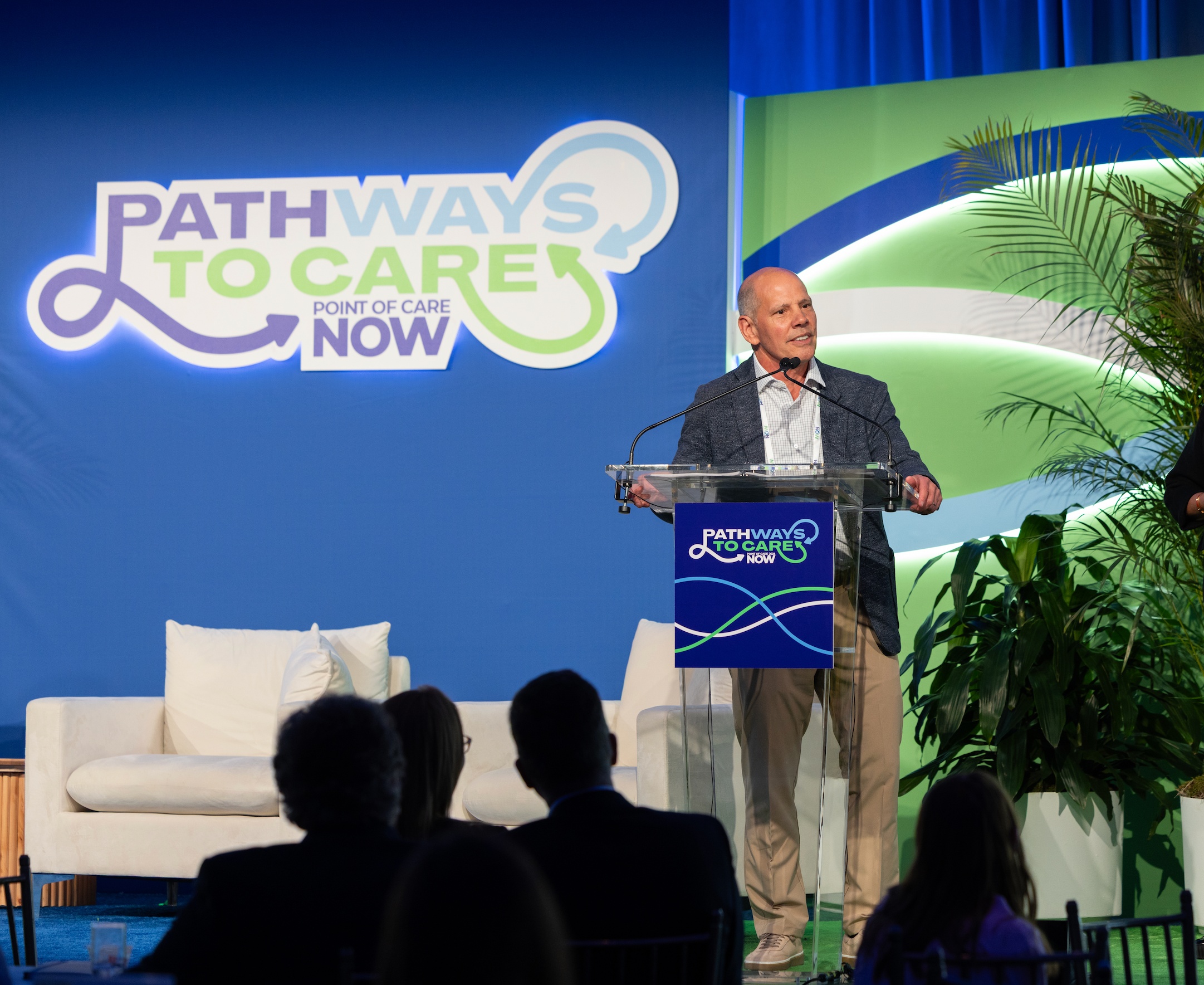
That March also brought POCMA’s Lifetime Achievement Award at its New York summit. Collette had helped found the organization that became the association. Recognition from an industry he helped organize adds another dimension to the company milestones: some of the work had involved building a forum in which competitors could agree on standards.
There is a less predictable entry in his newer biography, too. A Blue North event introduces his involvement with Double Cross Vodka. After the digital networks, boards and merger agreements, a spirits venture is a fairly persuasive argument against assuming the next chapter from the previous one.
His personal biography contains a continuing hope for disco’s return. Whether the dance floor cooperates is beyond a founder’s authority. The rink, at least, got built. Children learned to skate there, a beginner team took the ice, and other people made the place their own. For someone whose work has involved getting things started, that is a satisfying place to leave the story moving.
Keep the conversation going
- PatientPoint
- Twitter / X
- The 2024 leadership interview
- Hotchkiss: school days and sport
- The 2017 CEO return
- Carefeed board appointment
- The 2026 award conversation
- The winter club’s beginnings (PDF)
- Opening night and early hockey (PDF)
- Seven Hills: students make their pitch
- MM+M audio interview, 2019
- Blue North: the Double Cross chapter