Eric Shapiro and Adam Fingerman once made a list of 38 things they might build for the iPhone. There was a kitchen island in Menlo Park, a piece of paper, and the sort of conversation that makes an ordinary afternoon expensive. The two had been friends since their freshman engineering days at Tufts. Now Apple was opening a new shop window for software, and they had ideas to put in it.
Fingerman remembers standing across the island from Shapiro, trying to capture the suggestions as they came. Both had worked at Apple. They were working at Caustic Graphics, where Shapiro was a founder and CEO and Fingerman led product and marketing. They knew something about turning technology into a product. The App Store would teach them something about turning a product into a business.
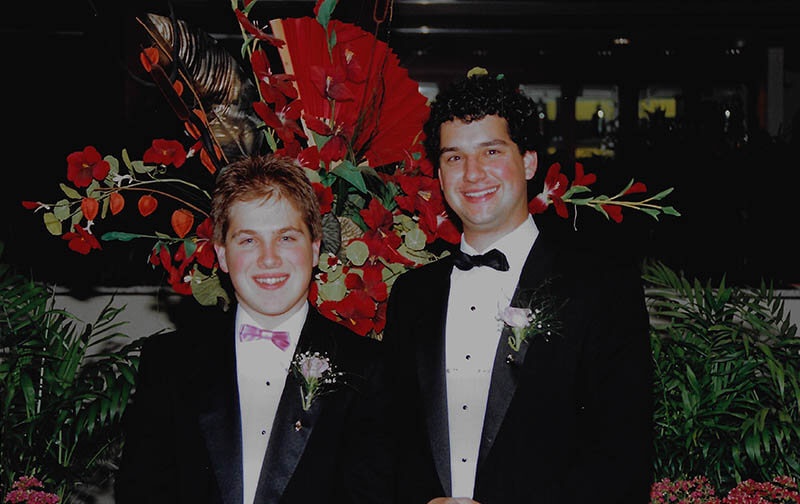
Nearly two decades later, Shapiro remains ArcTouch’s chief executive. The company builds digital products for other businesses. But the more revealing continuity is the person beside him. Markets have changed repeatedly. The former roommate has stayed.
A business small enough to picture
Their first plan had room for five people: someone to bring in work, two engineers, and the founders managing products and the business. A living wage would do. They wanted a working life they could enjoy together after disagreements with other founders at a previous startup.
Then came the awkward arithmetic. They had imagined selling software at prices familiar from their earlier careers. App prices fell toward 99 cents and free. Shapiro drew on his experience consulting around Java: companies entering a new platform might pay for help. ArcTouch could build apps for businesses that earned their money elsewhere.
Its history dates the founding to 2008. The founders also celebrate February 9, 2009, when their first engineers joined, as the moment the enterprise became real. A garage in a San Francisco live/work loft supplied an address. The ambition was modest enough to fit inside it.
Users get a useful service
Same platform. A different place to collect the value.
The colleague who already knew him
Friendship alone did not qualify Fingerman for the job. Shapiro’s own account emphasizes their previous working relationships. They had seen each other make decisions, deal with mistakes, and operate inside companies. Familiarity came with evidence.
He describes a complementary pair: Shapiro drawn to risk and opportunity, Fingerman focused on execution and prepared to challenge an idea that might lead them astray. Their arrangement leaves space for disagreement. When a discussion becomes heated, Shapiro recommends returning to it later, after the temperature falls.
He also describes fairness as something measured across decisions, rather than a rule assigning every possible argument to one founder. One partner can defer because an issue matters more to the other. That requires remembering enough to be fair and forgetting enough to keep working. A spreadsheet could struggle with the second part.
Before the phone, the installer
Long before ArcTouch, Shapiro worked on the less glamorous business of getting software onto a computer. At Zero G Software, he led a company known for InstallAnywhere and PowerUpdate. Its products addressed the friction between writing an application and actually delivering it across operating systems.
A Zero G financing announcement from 2000 describes a business expanding toward software services, with customers including Adobe, FedEx, IBM and Sun Microsystems. Shapiro was already navigating the relationship between a technical tool and the wider market around it.
At Apple’s 2001 developer conference, Shapiro appeared with InstallAnywhere architect Michael Acosta. Their presentation followed a wonderfully familiar software ritual: Acosta acknowledged that the demo had only recently begun working. The product’s job was to handle installation, configuration and maintenance after developers finished writing their applications. Even a polished new platform needed someone to mind the awkward last mile.
That earlier work makes the mobile chapter easier to understand. A new computing environment creates opportunities for the people who help others use it. The opportunities often sit in the details that a launch presentation skips.
Brazil was a relationship first
ArcTouch’s engineering team began across an ocean. Paulo Michels had worked for Shapiro at Zero G while living in Brazil. After Zero G was sold, Michels moved to another company. When the App Store arrived, Shapiro and Fingerman invited him into their new venture.
Michels later explained his decision to stay in terms an engineer would recognize: new technology and difficult problems. His account gives the international footprint a personal origin. The founders were asking a colleague they already knew to help explore an unfamiliar field.
Today Michels is listed as ArcTouch’s chief technology officer. A company can accumulate offices, departments and reporting lines; here, one of its central technical relationships reaches back to the business before it.
The starship in the brief
There is another way into Shapiro’s product interests: Star Trek. He has attended conventions, shares the enthusiasm with his wife, and once received a copy of Make It So: Leadership Lessons from Star Trek from an employee. Office gifts can be perilous. This one appears to have found its audience.
When the iPad arrived, ArcTouch saw a chance to recreate the experience of the fictional PADD. The official app brought Shapiro into a collaboration involving Michael and Denise Okuda, whose work helped shape the television franchise’s graphics and interfaces.
It was a meeting between a fan’s memory and a new piece of hardware. Shapiro’s explanation was practical: technology had reached the point where the device could be simulated. The attraction lay in letting people hold a small part of that imagined future. The project made his enthusiasm part of the work itself.
A fare explained, a principle clarified
In Brazil, Shapiro and Fingerman encountered a smaller interface problem. Their airport taxi driver asked for roughly twice the amount showing on the meter. The visitors did not speak Portuguese. The driver did not speak English. Everyone had information; nobody had a shared explanation.
Fingerman used Google Translate to ask the question. The driver took out his own phone and answered. Tolls and a tax accounted for the difference. An exchange that might have ended in suspicion became an ordinary conversation about a bill.
Shapiro wrote about it afterward because it captured the kind of connection he wanted apps to make possible. The technology mattered through the thing it allowed three people to do. A meter, two phones and an explanation formed a surprisingly economical product demonstration.
Growing beyond the original five
On January 27, 2016, WPP announced that Grey had acquired ArcTouch. The announcement put its staff at 97 and gross revenue at approximately $14 million for 2015. More than 250 completed projects were on the books. The garage-scale plan had acquired considerably more furniture.
The founders continued working together. ArcTouch’s current company history places the studio within AKQA and reports more than 350 professionals and over 500 digital products. These are company totals, rather than a personal scorecard, but they show the distance travelled from a business designed to support five salaries.
- 2008ArcTouch founded
- 2016Grey / WPP acquisition
- 2026Human + AI foreword
Shapiro’s published management practices are deliberately social. Cross-functional hackathons put people from different jobs together. Monthly demonstrations give employees a view of colleagues’ work. Forums for ideas allow junior staff to contribute beyond their assigned roles. He has argued against managing people as demographic stereotypes. The recurring concern is how a growing company lets individuals participate.
The hands-on experiments continued, too. A 2014 hackathon entry lists Shapiro among the creators of PROXIMITY, an ArcTouch project combining Salesforce contacts, iBeacons and a Pebble smartwatch. Its premise was to make nearby contacts visible through connected devices. The tools date the experiment; the interest in connecting people is familiar.
A rematch with his younger self
In a March 2026 foreword, Shapiro returned to a college project: an AI-powered Stratego game that had taken a semester to build as a text-based application. With modern AI assistance, he recreated and improved it in minutes. The comparison gave a new technology a scale he could feel.
“It makes me feel like a kid again.”
Eric N. Shapiro, on AI, 2026
His position is that AI should strengthen the work of human specialists. The speed of a prototype still leaves decisions about usefulness, quality and design. Earlier, in 2019, he had imagined AI becoming an unobtrusive part of everyday software, closer to the Enterprise’s computer than its humanoid Data. His reference library has remained consistent.
His recent work also reaches beyond ArcTouch. In September 2026, Westport reporting described his mentorship of travel-app founder Oona Robinson through StartUp Westport. In April, his own writing covered ArcTouch’s Shopify partnership and the integration work behind branded digital experiences. The platforms keep changing. Shapiro keeps finding people with something to build. For someone whose career has repeatedly crossed into new territory, an old friendship has supplied a remarkably durable place to begin.