In July 2013, a San Diego entrepreneur could spend an evening moving between coworking spaces, startups, and incubators, then turn up the next night for a remarkably orderly exercise: twenty technology executives mentoring twenty emerging companies in twenty-five-minute rounds. The old StartupSD calendar reads like instructions for assembling a community. First, get people out of their offices. Then give them something useful to discuss.
- Startup Week supplies the annual gathering; recurring events keep people connected.
- A public coworking day costs $20. Individual membership is $365 a year.
- The nonprofit reported $272,070 in 2024 expenses. Keeping access affordable requires contributed support.
That practical impulse still explains Startup San Diego. The California nonprofit helps founders, students, workers, mentors, and investors find their way into the regional startup community. Its expertise lies in convening people and directing them toward relevant help. For someone who has an idea but few local introductions, that is a fairly concrete service.
01 The second meeting matters
Consider Christina Font, co-founder and CEO of Vibez 5D. In an October 2026 interview published by Startup San Diego, she describes returning to 1st Mondays partly to catch up with people she met three or six months earlier. She enjoys seeing their progress. Her request of the organization is connection. The detail matters: a useful community gives an introduction time to become a relationship.
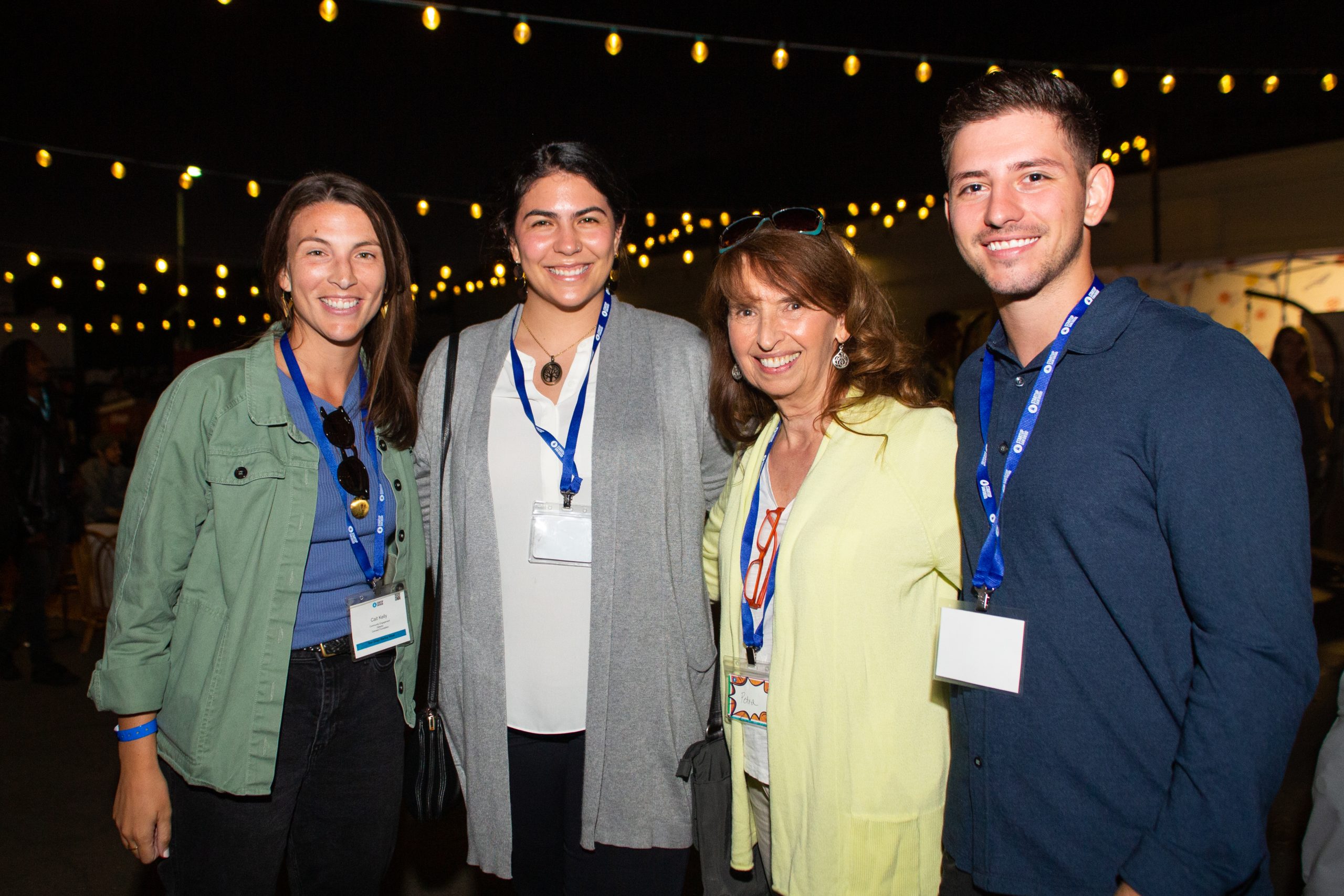
Despite its name, 1st Mondays currently runs quarterly. The organization describes a typical crowd of roughly 250 to 300, with expert panels, refreshments, and networking at changing venues. Students seeking advice share the audience with founders seeking collaborators and investors seeking companies. The mixture is part of the offering. A room containing only people with precisely the same problem would have fewer answers.

There are more focused encounters, too. A May 2026 event at ClickUp offered ten founders a mentoring add-on: two thirty-minute sessions with domain experts. Nonmembers paid $100; members could reserve at no additional charge. That is a useful distinction between general networking and scheduled help. Ten places also makes the constraint visible. A mentor’s attention has a capacity limit.
02 A calendar with several entrances
Last Fridays, delivered with Downtown Works, offers another way in: bring your work and spend the day beside other builders. The advertised nonmember pass costs $20, half the listed regular day-pass price. Registered annual members attend without an additional fee. Coffee, Wi-Fi, phone rooms, and afternoon programming make this an ordinary working day with more opportunities to meet someone.
In June 2026, the format became especially practical. A revenue-architecture deep dive put an expert talk before an afternoon of coworking, with three bookable strategy sessions. The speaker stayed while participants applied the material. Organizers elsewhere could copy that sequence: teach a specific skill, leave time to use it, and keep someone available when the first awkward question arrives.
The resource directory provides an entrance before anyone buys a ticket. It sorts support by business type, including high-tech, life science, physical businesses, and business services, alongside a map and startup-journey graphic. This helps explain the organization’s position among accelerators, university programs, and investor groups. It makes those resources easier to navigate. A founder can arrive here before knowing which institution to approach.
03 An open door has an operating cost
The business behind the introductions is a nonprofit with several paying constituencies. Participants buy tickets and memberships. Businesses pay for sponsorship and visibility. Donations and grants help sustain the work. Individual annual membership is listed at $365 and includes Startup Week, 1st Mondays, and Last Fridays benefits. Corporate membership is listed at $2,750.
The 2024 financial return puts a useful scale on the operation: $272,131 in revenue against $272,070 in expenses. The surplus was $61. Contributions supplied $132,523; program services generated $139,608. These are organization-wide figures for that year. They show how closely earned income and contributed support sit beside each other in the model.
$272,070 expenses → $61 surplus
The implication for anyone copying the model is straightforward. Ticket sales alone do not describe its economics. Someone must recruit sponsors, coordinate venues, schedule speakers, and welcome newcomers. The volunteer program offers event access as one benefit of helping. That exchange makes participation possible for some people while supplying labor the events need.
04 The audience changes the program
The early format had to evolve. A historical account describes organizers reviewing who was missing after the first Startup Week and adding skills-based tracks as companies matured. Later, COVID-19 disrupted physical gatherings; programming moved online. By 2022 the organization was rebuilding around fully in-person events. Community feedback in 2024 prompted more attention to investors, customer acquisition, branding, and mentorship.
“Give first!”A stated value in Startup San Diego’s 2024 impact report
That history suggests a condition for making this work: organizers must keep listening after people show up. A crowded calendar cannot supply a customer, guarantee funding, or make every introduction useful. Participation also requires time and geographic access. The opportunity improves when members bring specific questions, relevant experience, and a reason to follow up.
Its 2025 report records more than 7,000 in-person attendances across over twenty-two events in San Diego County and Tijuana, supported by 165 volunteers and 108 annual members. Those figures describe activity, rather than proving business outcomes. They do show the amount of coordination involved. The same year brought Startup Week X, a community-driven program that amplified industry-focused events. The organizing question had widened from what to put on one stage to how to help other people convene useful gatherings.
For November 2-6, 2026, Startup Week is again scheduled to gather the region. Opening-day programming in Carlsbad includes restaurateur John Resnick, whose businesses include Campfire and Jeune et Jolie. It is a pleasing choice for a startup stage. Someone building a restaurant also has to persuade customers, hire people, and make the numbers work. There should be plenty to talk about at the next meeting.