A bank customer disputes a trade. Somewhere, among the recorded conversations of thousands of agents, is the call that could settle it. In 1994, that call might be sitting on tape. Dan Bodner saw a business in making it easier to find.
It is an agreeably unromantic beginning. A conversation existed; somebody needed it; the storage system was in the way. Bodner’s idea was to put those recordings on computers, where speech could become material for analysis. Verint began in 1994 with a problem specific enough to explain to a bank.
By November 2025, the company had passed through an IPO, acquisitions, a separation into two public businesses and a turn toward artificial intelligence. Thoma Bravo’s acquisition closed after an agreement valuing the enterprise at $2 billion. Bodner, the founding CEO, moved into an advisory role. Thirty-one years is a considerable time to spend answering variations of one question: what useful work can follow a conversation?
First, find the call
The recording idea contained an important distinction. Keeping a conversation and being able to use it are separate accomplishments. A tape preserves the words. Software can make those words easier to retrieve and examine. The initial application was compliance, including disputes over bank trades, where remembering exactly what was said has a financial consequence.
There is a familiar comedy in this. Businesses ask customers to explain themselves, then struggle to retain the explanation in a usable form. The customer becomes the unofficial archivist, summoned to repeat the story on demand. Bodner’s starting point was the record already being made. The raw material was arriving with every call.
The company’s later development enlarged that proposition. Verint worked in customer engagement and security intelligence, applying analytics to information that does not arrive neatly arranged in spreadsheet columns. Its products and markets changed. The connection between an interaction and a decision remained a useful thread through Bodner’s career.
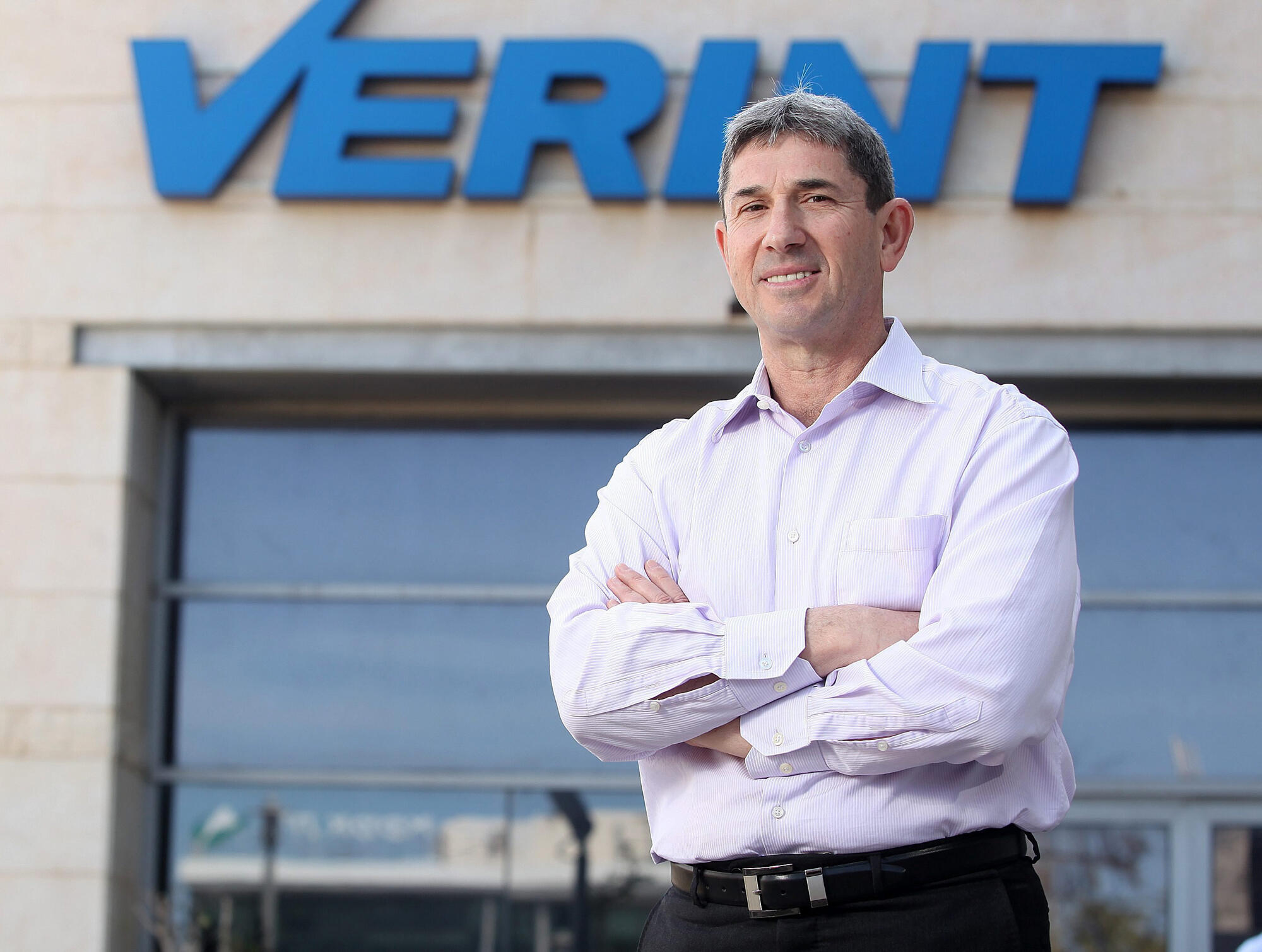
An engineer before the corner office
Bodner’s preparation was technical. In 1981, he earned a bachelor’s degree in electrical engineering, cum laude, at Technion - Israel Institute of Technology. He served in the Israeli Defense Force in an engineering capacity from 1981 to 1985. Before joining Comverse Technology, he spent two years as director of software development at Contahal.
A master’s degree followed in 1987, also cum laude, in telecommunications and computer science at Tel Aviv University. That year he joined Comverse, where he held management positions through 1991. He then served as president and CEO of Comverse Government Systems, a role he held from 1991 to 1998.
This makes Verint’s origin more concrete. Bodner came to it with experience in software, telecommunications and management. His career had already crossed the distance between building a system and being responsible for the organization around it. The company was incorporated as a Comverse subsidiary; its founding belongs within that operating history.
Verint went public in 2002. Bodner remained CEO, later taking the chairman’s role in August 2017. His name on the office door concealed a changing job: leading a subsidiary, running a listed company, buying businesses, and eventually deciding how the pieces should be separated.
- 1994Verint begins
Founding CEO - 2002Public listing
Nasdaq: VRNT - 2007Witness acquired
A broader software portfolio - 2021Cognyte separates
Two independent companies - 2025Ownership changes
Bodner moves to advisory work
Buying a wider view of the work
In 2007, Verint acquired Witness Systems. The announced transaction was approximately $950 million, net of acquired cash. It brought together Verint’s analytics with Witness’s workforce optimization software. Recording and understanding interactions would sit alongside tools for scheduling, quality monitoring, coaching and performance management.
The deal expanded what Bodner’s company could do for a customer-service operation. A call happens inside a working day. Someone has to schedule the staff, review the service and help employees improve. The combined portfolio addressed more of that surrounding work, giving the company a wider commercial proposition than the recording itself.
Bodner also described the practical cost of preparing for integration. Verint made investments before closing that reduced first-quarter earnings, with the aim of operating as an integrated business from the start. Growth here involved management teams and execution plans as well as a purchase price. Buying the software was only the opening move.
By 2015, the pre-separation Verint had passed $1 billion in revenue. That milestone includes the security business that would later leave. The qualification matters: Bodner’s company grew, then changed its boundaries. Comparing the numbers without remembering the boundaries would tell a tidier story than the business actually lived.
The founder who made the company smaller
On February 1, 2021, Verint completed the spin-off of Cognyte, its former cyber intelligence business. Shareholders received one Cognyte share for each Verint share. Two independent public companies emerged, with Verint concentrating on customer engagement.
Bodner became Cognyte’s non-executive chairman while continuing to lead Verint. He held the Cognyte chair until September 2023. The separation gave the businesses their own corporate identities and put the customer-engagement operation’s resources behind a more focused purpose.
Founders are usually asked how they intend to make things bigger. This decision required drawing a line through a company Bodner had helped build. It is one of the more revealing turns in his record: expansion had produced two businesses, and continued development would now happen separately.
Meanwhile, the service problem was becoming more complicated. In his 2021 discussion of customer engagement, Bodner described messages that continue across hours and employee shifts. A customer can disappear from a chat and return after the original agent has finished work. The next employee needs the context. A conversation now has a timetable of its own.
When the agents reached for the off switch
Bodner supplied a useful counterweight to AI optimism in 2024. An early Verint coaching bot had sold, but the agents switched it off. Its suggestions arrived at the wrong moment or supplied advice they did not need. The company redesigned the product to make help more selective.
“The agents turned them off.”
Dan Bodner, recalling an early coaching bot in 2024
That admission gives the technology a human scale. An employee already dealing with a customer has limited attention to spare. Assistance that interrupts competent work adds another task. The off switch becomes an unusually direct product review.
Bodner’s account puts acceptance inside the design problem. Advice needs to reach someone who can use it, at a useful time. A founder can approve a product and a buyer can purchase it; the employee still decides whether it helps.
A stopwatch has its uses
By Engage 2025 in Orlando, Verint’s message revolved around measurable outcomes. Customers described changes in capacity, service and revenue. The company encouraged starting with a limited number of bots, proving their value and expanding from there. New forecasting and intraday-spike tools addressed the amount and timing of incoming work.
The commercial approach also emphasized fitting into existing systems. Verint’s partnership with RingCentral, announced in 2024, brought workforce engagement and customer-experience automation capabilities to RingCX customers. Bodner had also appeared in a future-of-work discussion with Five9 CEO Rowan Trollope in 2021. His company’s ambitions depended on a network of other companies’ technology.
He shared a particularly legible customer example on LinkedIn in 2025: Utilita’s agents saving 35 seconds per call through automated wrap-up, with a reported 10 percent increase in capacity. A small unit of time becomes meaningful when it repeats across a working day.
Saved per call
More agent capacity
Customer results shared by Bodner in 2025. Separate measures; the percentages are not calculated from the seconds shown.
Verint marked another milestone by ringing Nasdaq’s opening bell on August 4, 2025. Its AI annual recurring revenue had grown 24 percent in the first quarter and represented approximately half of total ARR. The company cited results at airline Volaris and work across 4,500 agents at BT Group.
Bodner’s aspiration went beyond shaving time. “I believe the contact center will become a revenue center,” he said in 2024. More productive agents, in his account, could spend more time developing relationships and making sales. The ambition gives efficiency a destination: an organization chooses what to do with the capacity it gains.
There were employees behind those measures, too. In November 2025, Verint reported that 85 percent of employees globally considered it a great place to work, with certification in 16 countries. Bodner tied attracting and retaining people to the results customers received. The figure describes the company’s reported employee feedback, rather than a personal character reference. It does, however, put a workforce alongside the software in the closing stretch of his tenure. The founder’s customer-service business still depended on its own people.
The chair changes hands
On August 25, 2025, Verint announced its agreement with Thoma Bravo. Common shareholders would receive $20.50 a share in cash. The $2 billion figure was enterprise value, rather than the founder’s proceeds or personal wealth. The acquisition closed on November 26, and Verint was combined with Calabrio.
Bodner’s transition was explicit. He moved to an advisory role; Mike Lipps became chairman and interim CEO. Dave Rhodes, previously Calabrio’s CEO, took the combined organization’s CEO position in February 2026. By June, Bodner was publicly identified as CEO of Verixium Enterprise.
His Verint career leaves a sequence of concrete decisions: digitize recordings, widen the portfolio, separate businesses, fit automation into existing work. It also leaves the agents with their off switch. For a founder whose starting material was conversation, that may be an apt final detail. People continue to have a say in whether the system works.
Read, watch, follow
The conversations and milestones behind this profile.
- Dan Bodner on LinkedIn ↗
- Verint website ↗
- Verint company profile ↗
- The 2024 interview: recordings, growth and aspirations ↗
- Watch: Bodner in conversation with Dave Michels ↗
- Watch and read: the AI discussion with Michael Krigsman ↗
- The 2021 conversation about customers and employees ↗
- Witness Systems: the 2007 acquisition ↗
- Verint and Cognyte: the 2021 separation ↗
- Inside Engage 2025 ↗
- The August 2025 acquisition agreement ↗
- The acquisition closes and Bodner hands over ↗