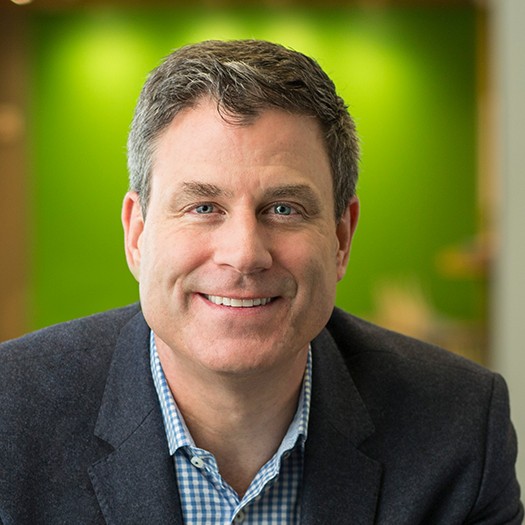
Profile
The Operator Who Picks Hard Problems
In 2015, Evernote was bleeding cash, its product sprawling across branded merchandise, an online store, and enough feature bloat to make the original vision unrecognizable. The board hired Chris O'Neill. He shut the store. Killed the side ventures. Doubled the user base in two years - without hiring a single salesperson. That is the short version. The longer version is more interesting.
O'Neill grew up watching the Toronto Maple Leafs lose. He will tell you this with the specific weariness of someone who has been doing it for decades. It is not a complaint - it is a credential. He knows how to stay committed to something that is not working yet, which turns out to be exactly what companies in turnaround situations need from a CEO.
He came to Evernote from Google, where he spent roughly a decade building things that were supposed to be impossible. As Managing Director of Google Canada, he took a regional operation measured in hundreds of millions and scaled it past a billion in revenue while tripling the team. The formula, as he later described it, was less about moving fast and more about choosing what not to do. Context over command. He was already writing the management playbook that he would eventually publish in Fast Company years later.
After Google's main business, O'Neill moved into Google [X] - the company's speculative R&D wing - to run business operations. This is the division responsible for self-driving cars, Project Loon, and other bets that sounded implausible until they weren't. Working there teaches a specific skill: believing in timelines that everyone else thinks are wrong. O'Neill carried that with him.
The shift from command-and-control to context-and-coach is the most important leadership evolution of our time.
- Chris O'NeillThe Turnaround
Evernote: Cutting to Grow
When O'Neill arrived at Evernote in August 2015, the popular narrative was that the company had lost the plot. Phil Libin had taken the company from a beloved note-taking app to a platform trying to do everything for everyone. The product had character but not focus. O'Neill's first moves were deletions, not additions.
He closed Evernote Market, the branded merchandise operation that sold things like Moleskine notebooks and bags. He wound down underperforming international offices. He asked the company a simple question: what does Evernote actually do for the person sitting alone at a desk at 2am? Everything that didn't answer that question was a candidate for removal.
The results, by conventional startup metrics, were counterintuitive. Revenue stabilized. Users doubled. The company stopped burning money on experiments and started spending it on the thing that people had originally signed up for. O'Neill departed in October 2018, leaving the company in substantially better shape than he found it - a quiet, unglamorous success that rarely gets the coverage of a flashy product launch but matters just as much.
He joined Gap Inc.'s board of directors in February 2018, a seat that reflects the breadth of his operating experience. Gap is a different kind of challenge from a tech startup - the brand, the retail footprint, the supply chain, the consumer sentiment cycles. O'Neill's presence on the board signals that his thinking travels across sectors.
Career Arc
Companies That Shaped Him
GrowthLoop
The Compound Marketing Bet
GrowthLoop is a composable customer data platform - a CDP that lives inside a company's existing data warehouse rather than pulling data out of it. The distinction matters because most enterprise marketing tools require you to copy your data somewhere else before you can use it. GrowthLoop skips that step. It runs directly on Snowflake, Google BigQuery, Databricks, and Amazon Redshift.
Chris O'Neill joined GrowthLoop's board of directors in December 2023 and was appointed CEO in August 2024. The appointment had an unusually personal dimension: O'Neill had mentored co-founder David Joosten during their time together at Google. When the founders were looking for someone to lead the company into its next chapter, they picked the person who had been in their corner for years. That kind of continuity is rare in startup leadership transitions.
O'Neill's tenure produced the Compound Marketing Engine - GrowthLoop's flagship concept built around the idea that marketing should compound over time like interest. Data feeds campaigns, campaigns generate data, data improves targeting, and the loop tightens with each iteration. He was also overseeing the company's push into agentic AI: systems that don't just automate tasks but make decisions about which audiences to reach, which messages to send, and which channels to prioritize.
Under his leadership, GrowthLoop closed a Series D round in October 2025 with River Pines Capital, followed by a strategic investment from TJC, L.P. in January 2026. The company was recognized in Snowflake's 2026 Modern Marketing Data Stack Report as "One to Watch" - validation from the data infrastructure company whose platform GrowthLoop is built on top of. O'Neill also secured the company's strongest-ever sales pipeline of Fortune 500 partnerships.
In April 2026, GrowthLoop's original co-founders Anthony Rotio and Tameem Iftikhar returned as Co-CEOs. O'Neill's chapter at GrowthLoop follows a pattern: he goes in when the stakes are high, does the work that's needed, and leaves the organization stronger than he found it.
AI doesn't replace the human in the loop. It gives the human in the loop their time back.
- Chris O'Neill, on agentic marketingIdeas & Publishing
Writing the Playbook While Running the Play
O'Neill is a working CEO who also publishes. His byline appears in Fast Company and Fortune - not puff pieces, but actual arguments. In February 2025, he wrote about strategic pauses: the case for leaders to deliberately call a timeout rather than maintain the Silicon Valley religion of perpetual velocity. The argument was precise. Moving fast and breaking things, he noted, is a fine strategy for a company with nothing to lose. For a company with real users and real infrastructure, it's a liability disguised as a virtue.
His Fortune piece from June 2025 - "How AI makes me a more human business leader" - took a position that was unpopular in certain quarters of the AI enthusiasm industry. The real power of AI, he argued, is not in what it removes but in what it restores: the capacity to focus, to think longer-term, to have conversations that matter rather than ones that are urgent. He has been saying versions of this in podcasts, at Wharton, at SaaStr, and at Advertising Week NY. The message doesn't vary much. That's how you tell it's something he actually believes.
He appeared on Knowledge at Wharton's Marketing Matters podcast in January 2026 discussing compound marketing, agentic AI, and data-driven experimentation. The SaaStr talk on downturns and turnarounds is one of the clearer accounts of what it actually feels like to run a company that is struggling - not the cleaned-up version told at a conference, but the version with the specifics.
Track Record
What He's Actually Done
- Scaled Google Canada from hundreds of millions to over a billion in revenue, tripling the team during the same period.
- Doubled Evernote's user base as CEO without building a sales team - growth through product, not headcount.
- Elected to Gap Inc.'s board of directors in February 2018, one of the few tech executives to hold such a seat at a major global retailer.
- Appointed Xero's first-ever Chief Growth Officer in 2022, defining a new senior role at one of the world's largest accounting software platforms.
- Launched the Compound Marketing Engine at GrowthLoop, reframing how enterprise marketing teams think about data-driven customer journeys.
- Led GrowthLoop to Snowflake's "One to Watch" recognition in the 2026 Modern Marketing Data Stack Report.
- Secured GrowthLoop's Series D funding (River Pines Capital, October 2025) and a strategic investment from TJC, L.P. (January 2026).
- Published in Fast Company and Fortune on leadership and AI while simultaneously running a growth-stage startup.
- Featured speaker at SaaStr, Advertising Week New York, and Wharton's Marketing Matters podcast.
In His Own Words
Five Things Chris Actually Says
Off the Record
The Parts That Don't Make the Press Release
His Twitter bio describes him as a "suffering Leafs fan." The Toronto Maple Leafs have not won the Stanley Cup since 1967. O'Neill has been waiting. Professionally.
He calls himself a "mediocre cyclist and golfer" in his public bio - a level of self-awareness that most CEOs edit out before publishing.
He uses @croneill on both LinkedIn and Twitter/X. Consistent across platforms since before personal branding was a discipline.
O'Neill mentored GrowthLoop co-founder David Joosten during their time at Google - years before GrowthLoop existed. When the founders needed a CEO, they called their old mentor.
His Evernote turnaround included closing the company's branded merchandise store - a move that sounds obvious in retrospect but required real nerve at the time.
His professional email is chris@growthloop.com. A CEO who keeps his address public is either very confident in his spam filter or very committed to accessibility.
Education
Where He Trained
O'Neill is a Tuck alumni story - the kind the school publishes because the career arc is genuinely unusual. Economics undergrad, Tuck MBA, then straight into the operational trenches of one of the world's fastest-growing companies. The Tuck program emphasizes general management and decision-making under uncertainty. He has been applying those skills continuously since 2005.
Latest Updates
What's Happened Recently
Go Deeper