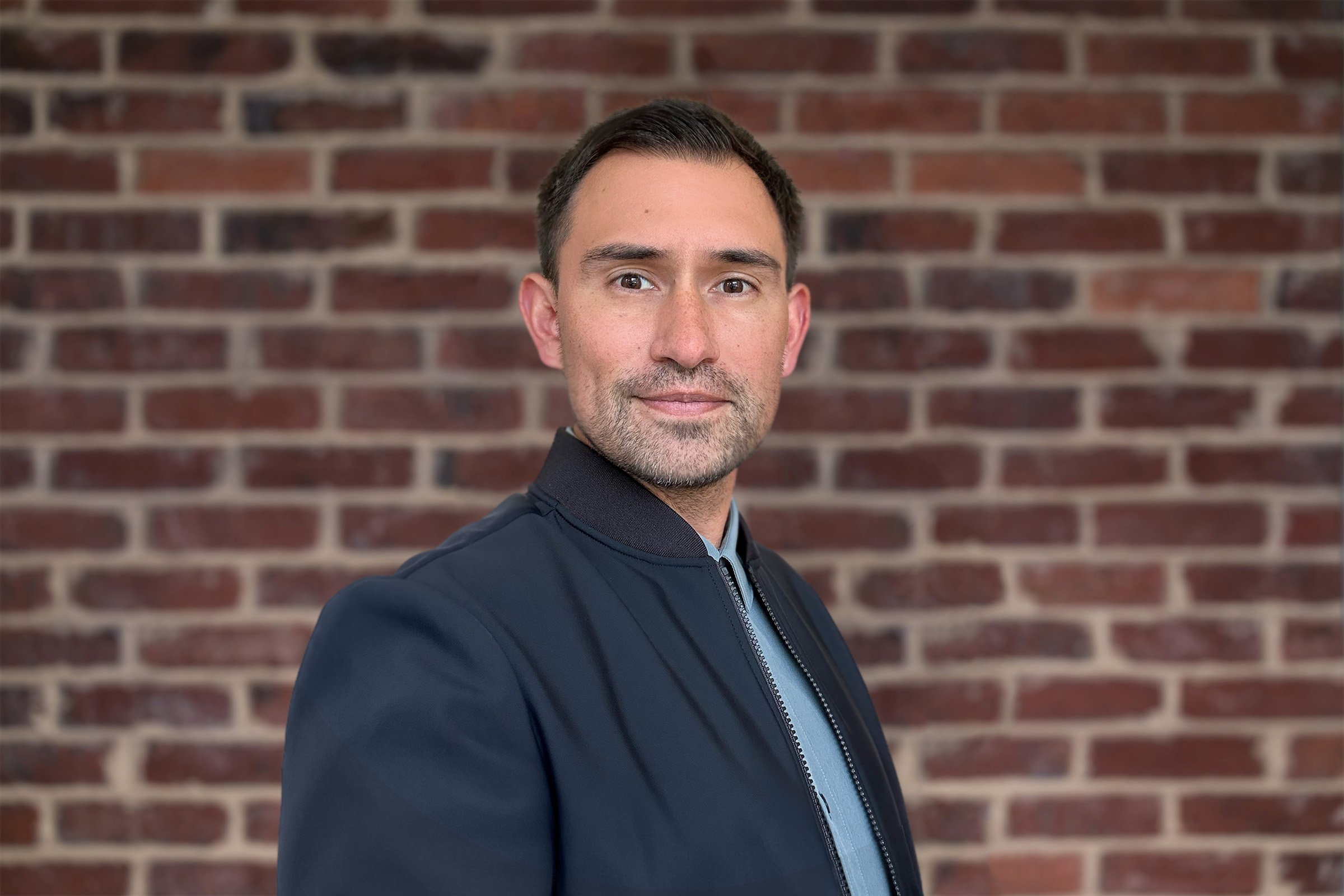
The Guard at the Gate Nobody Built
Belsasar Lepe joined Google at approximately 18 years old. Not as an intern. As an engineer, working on Enterprise Collaboration products in a building full of people who thought they were inventing the future. He was, by most measurable standards, already there. Stanford Computer Science degree in hand, brain wired for systems at scale, the kind of recruit Google flew in and hoped would stay forever.
He did not stay forever. Two years in, he and his brother Bismarck Lepe and Sean Knapp left to start Ooyala - a video technology company that would spend the next decade supplying the streaming infrastructure behind media companies migrating away from the set-top box. Bel ran product, design, and engineering: 300-plus people, five countries, seven offices. The company achieved two exits totaling over $440 million. By Silicon Valley standards, that is an unambiguous success story. By Bel Lepe's standards, it was round one.
Why does so much of enterprise identity security still rely on manual work?
- Belsasar Lepe, Co-Founder & CEO, CerbyBetween Ooyala and Cerby, Lepe served as Head of Product at Impira, a machine learning startup. He drove a 4x increase in revenue before the itch that becomes a company started. The itch had a shape: every enterprise he had ever worked with or advised was running a parallel shadow universe of applications that no identity provider could touch. Social media accounts. Legacy tools. Marketing platforms. Financial apps. Things employees shared credentials for in spreadsheets, or Slack messages, or Post-it notes on monitors. The official identity stack handled maybe two-thirds of the actual app portfolio. The rest was dark territory.
In mid-2020, six months after leaving Impira, Lepe and his co-founder Vidal Gonzalez launched Cerby to light that territory up. The pitch was specific: there is a class of application that Okta can't federate, that Azure AD can't provision, that every PAM and IGA tool on the market quietly ignores. Cerby automates identity workflows for exactly those apps - credential rotation, MFA enforcement, access governance, user lifecycle management - without requiring enterprises to rip out their existing identity stack. Cerby extends it.
Bowery Capital wrote the first check. $3.5 million, in under two months. For a six-month-old company, Lepe describes that timeline as "very rare in Silicon Valley." He is not wrong. Most seed rounds take closer to six months. The speed was a signal: the problem was real, the founder was credible, and the market had been waiting for someone to show up and solve it.
Build the team that builds the product. This is an important mindset.
- Belsasar LepeWhat followed was the kind of company-building that happens when a founder has already done it at scale once. Lepe was intentional about hiring strong generalists for the founding team. Four of his first five hires came from his professional network. All five remained with the company years later, in expanded roles. He later acknowledged one misstep: waiting until the 30th hire to actively diversify beyond his existing network. It is the kind of honest accounting that is either a sign of maturity or a lesson learned the expensive way. Probably both.
The company built out a team spanning the US and Mexico - a deliberate choice. Lepe has long been a vocal advocate for building technical teams in Mexico, citing employee retention rates of four to five years versus the one-to-two-year churn typical in US tech hubs. Cerby's founding team was composed entirely of members from underrepresented backgrounds. That is not a press release. That is the résumé of a first-generation Mexican-American who watched VCs ghost his co-founders at Ooyala twelve years earlier because of "stereotypes about founder profiles."
By the time Cerby raised its Series A, the product had found its enterprise footing. Twenty months later, ARR had grown 10x. The customer base had grown 5x. The platform was automating identity workflows across more than 2,000 applications, serving over 100 organizations - L'Oréal, Fox, Allstate, Chime, Dentsu, Colgate-Palmolive. In May 2025, Cerby raised $40 million in Series B funding led by DTCP, with Okta Ventures, Salesforce Ventures, and Two Sigma Ventures participating. By September 2025, the round had extended to $54 million, with Deloitte Ventures, Engage Fund, Squarepoint, and Valor Equity Partners joining. Then came the NYSE Floor Talk appearance - the kind of milestone that signals a company is no longer a bet, it is a fact.
The future of identity must reflect the complexity of how modern organizations actually operate.
- Belsasar Lepe, Series B announcementLepe's thesis about the problem has not changed. The product has. Cerby now integrates with existing IAM, IGA, and PAM systems - it does not ask enterprises to swap them out. It adds the automation layer on top, filling the governance gap across disconnected and legacy applications. The company is expanding into EMEA markets with DTCP's support, and investing in agentic AI capabilities to further reduce manual security workflows. The vision: a world where the phrase "manual credential management" is as anachronistic as a fax machine in a hospital waiting room.
On the security economics, Lepe is blunt: "For a third to a fifth of what you're paying your existing identity provider, we can cover that last mile of identity that is completely unprotected today." That is not a product pitch. That is a structural argument about how much risk enterprises are carrying for free - and how cheaply they can eliminate it. The math, for most CISOs, is not complicated.
What makes Bel Lepe unusual is not any single credential. It is the trajectory: engineering at Google, founding Ooyala, scaling it to 300 people and $440M in exits, stepping back into product work, and then betting again on a harder problem. Most founders retire after one exit. Lepe used his to build a better antenna for the next unsolved thing. He found one in the security gap that every enterprise was living with and nobody was building a company to fix. He is still building it.