The woman who convinced B2B marketers to stop thinking in straight lines. Author, keynote speaker, Stanford instructor, and the person at Atlassian making sure every piece of content earns its place - not by fitting a template, but by serving an actual human at an actual moment.
Ashley Faus runs lifecycle marketing for Atlassian's entire product portfolio - Jira, Confluence, Trello, and the rest of a stack that powers teams at most of the Fortune 500. That alone would be a career. But the thing that made her someone worth following is simpler and stranger: she looked at the marketing funnel, the diagram that every B2B org has taped to some wall somewhere, and decided it was wrong.
Not wrong in a "let's optimize the middle" way. Wrong in the way a map is wrong when it shows roads that don't exist. The funnel assumed linear buyers. Real buyers don't move in straight lines. They read a case study on Tuesday, ignore you for six weeks, watch a demo video on their phone at midnight, and then forward your pricing page to a procurement manager they've never mentioned. There is no step three.
"Treat the buyer's journey as a playground. People can enter and exit as they desire, they can go in any order." - Ashley Faus
So she built something different. The Content Playground. Three content depths - conceptual, strategic, tactical - designed not to move buyers through a sequence but to be findable and useful whenever the buyer shows up. It's a framework that has since spread across the B2B marketing world, showing up in conference keynotes, podcasts, and the syllabi of marketing programs she teaches at Stanford.
Her 2025 book, "Human-Centered Marketing: How to Connect with Audiences in the Age of AI," won the American Book Fest Best Book Award. She wrote it entirely without AI assistance - a deliberate choice that says something about what she actually believes. You don't write a book about human trust and then outsource the human part.
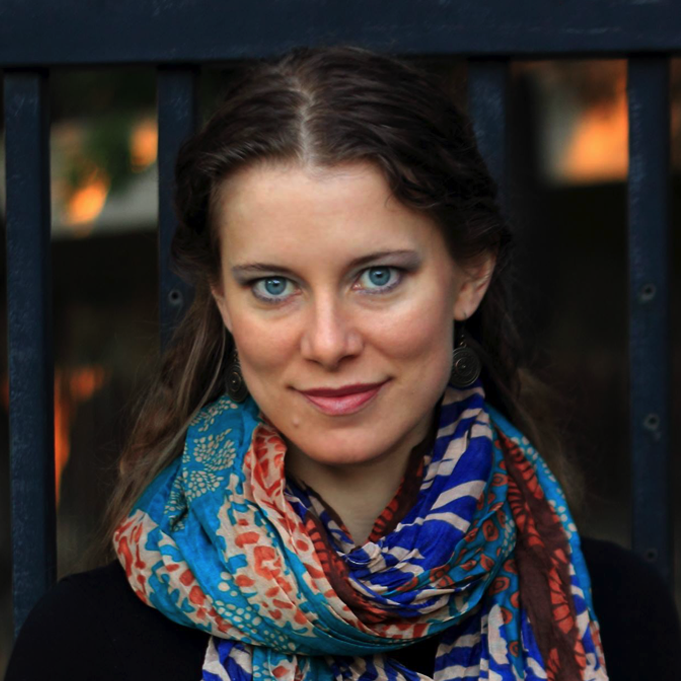
She was going to be a performer. Grew up in Texas singing in church productions, performing in school musicals, the whole arc pointing in one direction. When she got to college, she declared Musical Theater as her major and started working toward a career on stage.
Then she developed vocal cord nodules - calluses on the vocal cords that singers dread the way sprinters dread hamstrings. It wasn't a crisis she navigated. It was a door that closed.
She picked up a Marketing 101 textbook, mostly because she needed to declare something. She read the opening line: "Marketing is about people." She closed the book. Declared her major that afternoon.
"Marketing is about understanding problems and understanding solutions and matching those two things." - Ashley Faus
That pivot - from performer to marketer - isn't just a good story. It's the architecture of everything she does. She still performs in about two shows a year. She still thinks about audience, presence, and what keeps attention. The tools changed. The orientation toward people didn't.
She spent her early career in Texas, moved to the Bay Area about 15 years ago, worked at Duarte (the presentation design firm where she helped launch live-streaming capabilities), then landed at Atlassian in 2017. Four roles in seven-plus years, each one bigger than the last.
Most B2B content is either too shallow to be useful or too tactical to convert someone who just arrived. Faus's framework gives content a third dimension - and lets buyers navigate at their own pace.
Frames the problem. The "what" and the "why." Doesn't assume the reader knows what they're looking for yet. This is where audiences first discover they have a problem worth solving.
Explores solutions and approaches. The "how to think about it" layer. For buyers comparing options or building internal buy-in before a decision. Not step-by-step - directional.
Step-by-step instructions. Specific, actionable, implementable. For buyers who know what they want and need to know how to do it. The kind of content that earns long-term trust.
Buyers enter and exit freely - no prescribed sequence - every piece of content stands alone and connects to every other.
Faus draws a hard line between subject matter experts, influencers, and actual thought leaders. The four-pillar test is her way of separating the categories.
Established expertise, verifiable track record. Not follower count - actual domain knowledge that holds up under scrutiny.
Audience size and visibility. You need reach for ideas to travel - credibility without profile is expertise without influence.
Consistent, sustained content across channels. One great piece isn't thought leadership. Showing up repeatedly is.
Substantive, codifiable, implementable insights. Ideas that can be extracted from your head and applied by someone else.
The deliberate choice to write "Human-Centered Marketing" without AI assistance isn't a techno-skeptic stance. It's a proof of concept. The book's argument is that trust cannot be automated - and she wasn't about to outsource the demonstration.
Published by Kogan Page in May 2025, with a foreword by Jay Schwedelson, the book targets mid-to-senior marketers navigating audiences that are increasingly skeptical, increasingly distracted, and increasingly capable of detecting when they're being processed rather than engaged.
The case studies come from Adobe, HubSpot, and Edelman - organizations large enough that the lessons don't evaporate at scale. The framework is practical. The argument is human.
"Trust is the one thing that you cannot automate and you cannot outsource."
"We need to create a journey so smart and connected that people can move fluidly through content."
"The biggest trait for me is genuinely caring about the audience and being curious about their needs."
"I don't understand how you're gonna write content with no insights from the market, competition, and audience."
"Leadership is a different skillset than technical or craft skills. It's about understanding and motivating people, setting a clear vision, and connecting the dots."
"That connection over musical theater - that's the thing that AI can't do."
She self-describes as "nosy." Not in a gossipy way - in the way that good marketers are always curious about what problems other people are trying to solve.
She takes real interest in what colleagues across the org are building. In a company Atlassian's size, that's not nothing - it's how she keeps lifecycle and product marketing from drifting apart.
Two theatrical shows a year, still. The stage didn't disappear from her life - it moved to weekends. She brings the same performance intelligence to keynotes.
Bakes and decorates elaborate cakes as a hobby. There's a systems-thinking explanation here if you need one, or you can just accept that some people contain multitudes.
Her chosen personal brand word isn't "expert" or "strategic." It's approachable - a deliberate counter to the fast-paced, confident style that can read as intimidating on first contact.
Her go-to book recommendation is Frans Johansson's "The Medici Effect" - about intersectional thinking and what happens when ideas from different disciplines collide. Explains a lot about her marketing approach.
One-legged squats requiring serious balance, strength, and patience. The fitness equivalent of her preference for depth over surface-level output.
Her argument about AI and marketing is not a Luddite argument. She uses AI. Atlassian uses AI. The tools are everywhere. The question she asks is more specific: what, exactly, are you automating?
Logic: automatable. Formatting: automatable. First drafts: debatable but probably fine. Trust: not automatable. Authenticity: not automatable. The curiosity to actually care what a specific audience needs at a specific moment: not automatable.
In a market where AI can generate infinite content, the scarce resource is content that is visibly, provably human - content that could only have been written by someone who was actually paying attention. Her book's AI-free composition is the argument made tangible.
She wrote it without AI assistance "because a book about building human trust needed to come from a human." That sentence could live in the book itself.