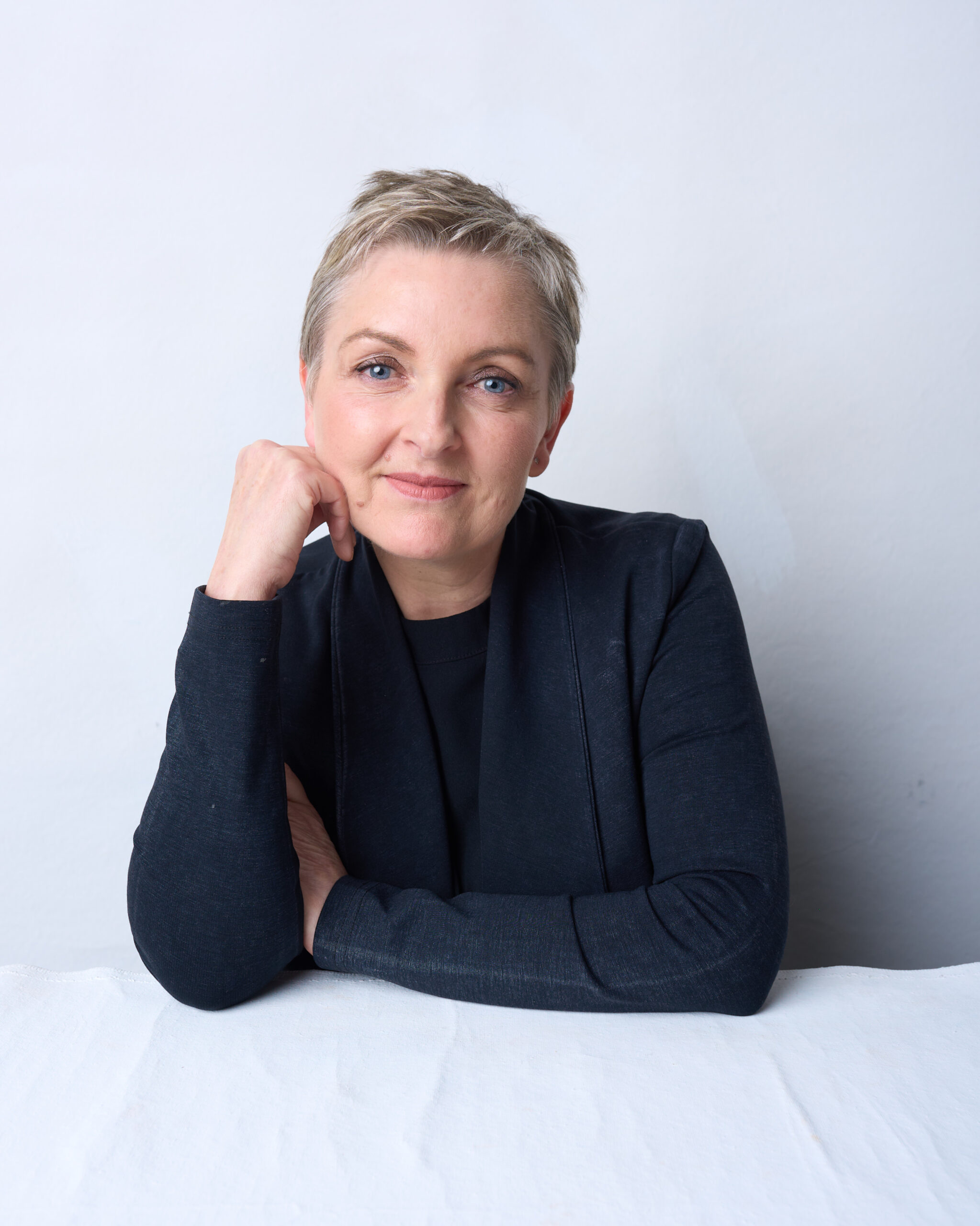
The Story
Not a marketer who learned to write. A storyteller who learned to market.
There are no books in Bernadette Jiwa's childhood home in Dublin. Not a shelf. Not a paperback spine. What there is: conversation, tall tales, the particular Irish genius for stringing a sentence long enough that no one can interrupt it. She grows up inside the storytelling capital of the world and absorbs the only thing that matters - that a story isn't decoration. It's the whole thing.
She eventually ends up in Melbourne, Australia, via the UK, raising three sons, working as a business strategist. Then, somewhere in her forties, she starts a blog. Not a big swing. Not a launch. Just words about what happens when businesses stop competing and start meaning something. "The Story of Telling" goes up three times a week. It gets read. Then it gets really read. Seth Godin - the person most likely to already know everything you're about to tell him about marketing - starts checking in. He names it one of the blogs he reads.
By 2012, the blog is voted the best business blog in Australia. By 2013, she's on a TEDx stage talking about the Fortune Cookie Principle. It's a deceptively simple idea with a hard edge: every product is just a cookie. The thing people buy is the fortune inside. Apple didn't sell a music player. It sold 1,000 songs in your pocket. The idea spreads. The books multiply. "Make Your Idea Matter." "Difference." "Marketing: A Love Story." "Hunch." "Story Driven." Each one small, dense, and stubborn about not explaining what you could just say.
"Innovation is a by-product of empathy."
- Bernadette Jiwa, Story Driven
What makes her different from the marketing-guru industrial complex is what she refuses to do. She won't tell you how to hack a funnel. She won't teach you to go viral. What she argues - book after book, with the patience of someone who has said it enough times to know it's still not being heard - is that the most powerful competitive advantage available to any organization is simply knowing who it is. "You don't need to compete when you know who you are." Story Driven is basically a business book-length way of saying: stop performing a brand and start being one.
The books keep coming. But so does something else. In 2022, she publishes "The Making of Her" with Penguin Random House - her debut novel, set in Dublin across four decades, about a woman whose identity was not her own. The New York Post names it one of the best books of the year. Bernadette Jiwa, the marketing strategist, is now also a literary novelist. In 2025, "Every Shade of Love" follows - Dublin again, summer 1987, an unconventional love story she describes with the precision she applies to everything.
She writes for two hours every morning. She shuts down email first. She prefers either total silence or a packed cafe - nothing in between. She doesn't believe in writer's block, which is either a gift or a discipline she's been doing long enough to forget it started as a discipline. She publishes a Substack called "briefly." - a place to find the extraordinary opportunity in the everyday - because she hasn't finished noticing things yet.
"Distraction is the enemy of insight."
- Bernadette Jiwa
Then there's the Seth Godin chapter. When Godin launches Akimbo Workshops, he asks Bernadette to create one. The Story Skills Workshop runs monthly with fifteen lessons, teaching what she's spent a career distilling: not how to spin a yarn, but how to make something real enough that someone cares about it. Thousands of people have gone through it. Many of them will tell you it's one of the more honest things they've done for their work.
She also founded Story Republic - a community of practice for people who take narrative seriously. Which is a short sentence for something that matters in a world where most "storytelling" means putting a picture on LinkedIn and calling it content marketing.
The thread that runs through all of it - the non-fiction, the fiction, the workshops, the newsletter, the Difference Map, the Fortune Cookie Principle - is a very specific kind of attention. The ability to notice what other people stopped noticing. She said it herself: the most important writing skill is "the ability to notice things other people forget to notice." Coming from Dublin, where no books but a lot of humans lived, that makes complete sense.
Bernadette Jiwa grew up in a house with no books. Now she writes them like she's filling in a very specific kind of gap. Not the gap of information. The gap of meaning. Which, if you've been paying attention, is the only gap worth filling.