BREAKING Jay Acunzo launches Premise Pitch Challenge 2026 How Stories Happen podcast: 60+ episodes with Seth Godin, Ann Handley & more #1 Rated Speaker at Content Marketing World 2016 Author of Break the Wheel • Keynote in 25 states & 3 countries Named one of “50 most influential B2B voices” by TopRank BREAKING Jay Acunzo launches Premise Pitch Challenge 2026 How Stories Happen podcast: 60+ episodes with Seth Godin, Ann Handley & more #1 Rated Speaker at Content Marketing World 2016 Author of Break the Wheel • Keynote in 25 states & 3 countries Named one of “50 most influential B2B voices” by TopRank
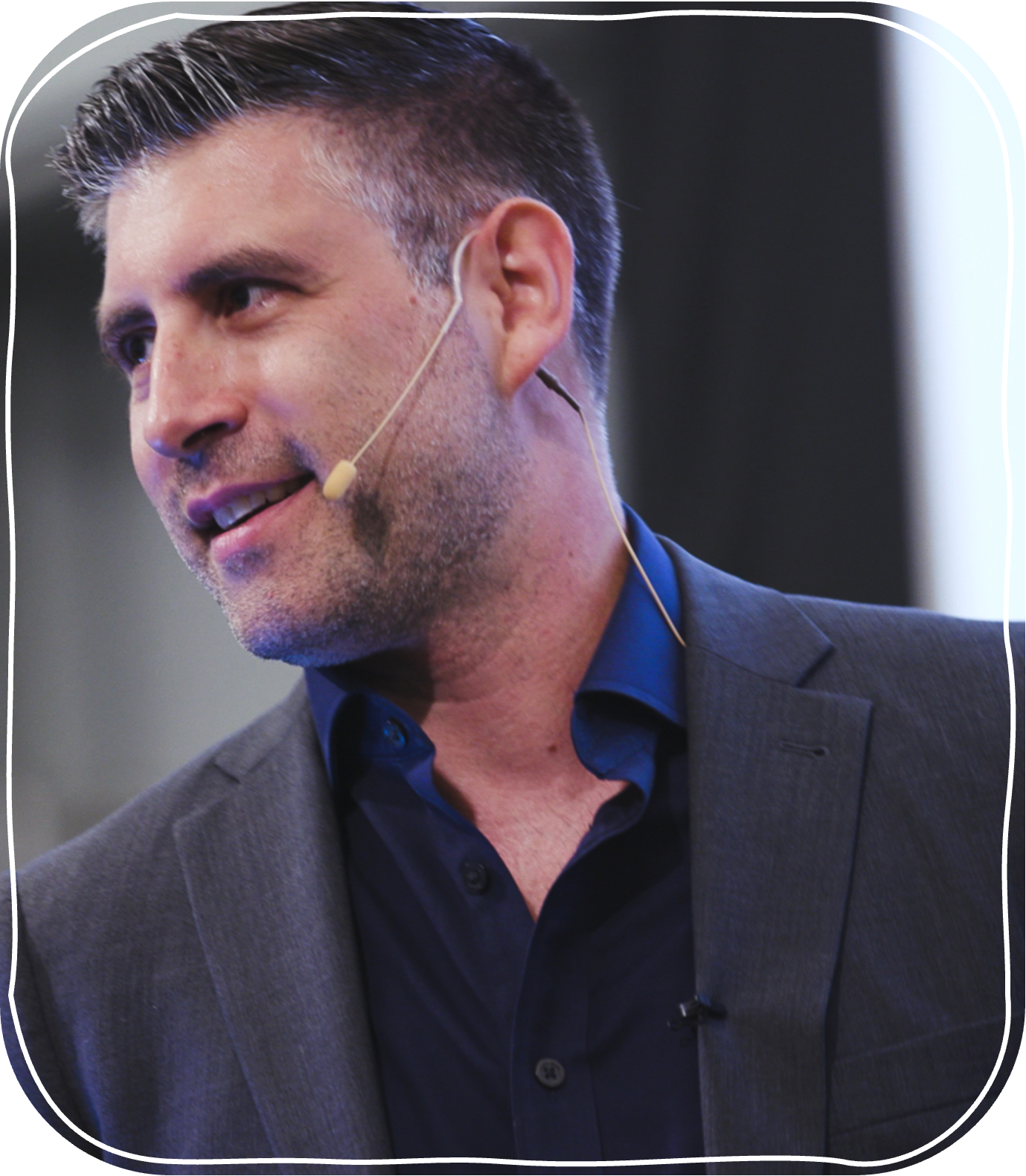
Jay Acunzo speaking on stage
Business Storyteller  /  Author  /  Speaker

Jay Acunzo.

The man who quit Google to teach the world
that best practices are someone else's answer

Keynote speaker, podcaster, author, and the guy most likely to argue that "what works for everyone" is exactly the wrong place to start.

Author Keynote Speaker Podcast Host Storytelling Advisor Former Google Former HubSpot
It has never been easier to be average.
- Jay Acunzo, Break the Wheel (2018)

Jay Acunzo is the person you call when your expertise has outgrown your ability to explain it. A business storytelling advisor, author, and keynote speaker, Jay helps entrepreneurs, executives, and creators stop producing content and start making work that actually lands - the kind of work people forward to a friend with "you need to read this."

He started as a sports journalist intern who wanted to write for ESPN. He ended up at Google. Then HubSpot. Then a venture capital firm. Then he walked away from all of it in 2016 to build something rarer: an independent creative practice centered on one genuinely contrarian belief - that best practices are dangerous not because they're wrong, but because they're someone else's answer dressed up as universal truth.

That idea became Break the Wheel, published in 2018. It became the Unthinkable podcast. It became a keynote stage at Content Marketing World in front of thousands. And it became the foundation for a body of work that's been cited at Harvard Business School, referenced in the Washington Post, and called "a must-subscribe" by Forbes.

Jay's current work breaks into three distinct channels. About 60% is one-on-one advisory work with experts who want sharper ideas and stronger signature stories - the kind that compound over years into genuine authority. Another 25% is group programs: cohorts and year-long intensives where he works with entrepreneurs on their public speaking and messaging. The rest is keynoting - 25 states, three countries, audiences ranging from 40 CEOs in a private room to 4,000 marketers in a convention hall.

The throughline in everything Jay does is a conviction about how influence actually works in a world drowning in content. Volume is not the strategy. Resonance is. He's spent the better part of a decade helping people understand the difference - and then act on it.

The How Stories Happen podcast - launched in 2024 - is the latest expression of that thesis. It's not a show about storytelling theory. It's a dissection of how real business storytellers find, develop, and deploy signature stories that shape careers. Guests like Seth Godin, Ann Handley, and Chase Jarvis show up not to give advice but to open the hood.

One detail that tells you a lot about Jay: before he was a marketer, he ran a sports blog called "Blog, Don't Lie" - a nod to NBA player Rasheed Wallace's famous "Ball don't lie" trash talk. The blog was supposed to cover sports. It evolved into commentary about sports writing itself. Jay started connecting with other writers and creators through early social media before it had a marketing playbook. That wasn't a pivot. It was a preview.

He is also, for the record, a New York Yankees fan who lived and worked in Boston for the better part of a decade. Make of that what you will.

In 2026, Jay is sharper, more specific, and more focused than ever on one core offering: helping experts own the room because of what they think, not just what they've done. He calls it "being their favorite." The job is to resonate so deeply with the right people that you're the first name that comes up when someone describes the problem you solve - not because you shouted loudest, but because you said the thing no one else was saying.
35+
Side Projects Since 2008
25
States Keynoted
60+
Podcast Episodes
#1
Rated CMW Speaker 2016

Intuition Over Best Practices

Here's the argument Jay has been making since before it was fashionable: best practices are not universal. They're observations about what worked in a specific context, for a specific organization, with specific constraints - stripped of all that context and handed to you as instruction.

The problem isn't that they're wrong. The problem is that they're incomplete. They tell you what to do but not whether you should. They describe the move without the situation. And in a market that rewards the distinctive, following someone else's playbook is a great way to blend in.

Jay's antidote is not gut instinct - he's careful about this. It's a trained intuition built on six foundational questions: about your customer, your company, your constraints, your competitors, your craft, and your character. Ask these before reaching for the "proven" approach, and something interesting happens. You start making decisions that actually fit.

In the AI era, he argues, this is no longer just a nice philosophy. It's competitive survival. When everyone can produce acceptable content instantly, the only remaining differentiator is perspective - specifically, your perspective, shaped by experiences no AI can replicate. The goal isn't to beat the algorithm. The goal is to make the algorithm irrelevant to the people who actually matter to your work.

He calls his current keynote on this subject "The Last Great Advantage." The advantage in question is public speaking - the ability to own a room with an idea, delivered through a distinctly human presence. In a world of bots and broadcasts, that's not a soft skill anymore. It's a moat.

His Framework: The Shift

  • Best practices Best approach for you
  • Broad reach Deep resonance
  • Volume strategy Signature ideas
  • Following trends Owning a premise
  • Begging for attention Earning loyalty
  • Who arrives Who stays
  • Generic expertise Lived perspective
Finding best practices isn't the goal. Finding the best approach for you is.
- Jay Acunzo

From ESPN Dreams to the Main Stage

The name of Jay's first blog was "Blog, Don't Lie." It was 2005. Rasheed Wallace was still playing basketball. Jay was a college sophomore at Trinity College in Hartford, Connecticut, studying English and interning at The Hartford Courant and ESPN, trying to become a sports journalist.

The blog was supposed to cover sports. But Jay was more interested in the craft - in the writing itself, in what made a feature story land or fall flat, in what separated forgettable sports coverage from the kind that people actually read. The blog became commentary on sports writing. And through the early connective tissue of the internet, he started finding other people who cared about the same things.

That instinct - to examine the craft rather than just produce it - followed him out of college. He graduated summa cum laude with a degree in English and no job. He applied to Google through an online form. They hired him. He spent several years as a Digital Media Strategist, pushing executives into the digital era at a moment when that was still a push.

From Google, he moved to HubSpot as Head of Content. Then to NextView Ventures, a Boston-based VC firm, as VP of Brand and Community - where he co-founded Boston Content, which grew into New England's largest community of content practitioners. By his early 30s, he had been inside some of the most influential institutions shaping how the internet talked about business.

In 2016, he left. Not because things were bad. Because the work he most wanted to do was the work he could only do independently.

He launched the Unthinkable podcast, built a speaking practice, and started producing original content that didn't look like anything else in the B2B space - including "Against the Grain," a travel docuseries made in partnership with Help Scout that explored values-driven businesses across the country. He was the host, director, and writer. He was, in every sense, betting on his own distinctive perspective.

It paid off. He was rated the #1 speaker at Content Marketing World 2016 by attendees. The next year, he opened the conference. His newsletter - Playing Favorites - gathered thousands of loyal readers. Clients like Mailchimp, Salesforce, Wistia, GoDaddy, and Harvard Business School started showing up. And Jay became something harder to categorize but more valuable than any title: the person smart people send their friends when they want to think differently about storytelling.

2005
Starts "Blog, Don't Lie" - sports journalism as side project at Trinity College
2010
Joins Google as Digital Media Strategist - pushing execs into the digital era
2013
Moves to HubSpot as Head of Content
2014
VP of Brand & Community at NextView Ventures. Co-founds Boston Content community
2016
Goes independent. Launches Unthinkable podcast. Rated #1 speaker at Content Marketing World
2017
Opens Content Marketing World as keynote speaker - biggest stage in the industry
2018
Publishes Break the Wheel (Lioncrest Publishing)
2019
Produces Against the Grain docuseries with Help Scout
2021
Publishes The Creator's Compass
2024
Launches How Stories Happen podcast with Seth Godin, Ann Handley as early guests
2026
Launches Premise Pitch Challenge; active advisory practice and keynote calendar

The Books

Book • 2018

Break the Wheel

The argument that best practices are dangerous - not because they're wrong, but because they're incomplete. Six questions to ask before reaching for any "proven" playbook. Published by Lioncrest. Cited at Harvard Business School. Quoted by Shark Tank investors. The thesis that started everything.

View on Amazon →
Book • 2021

The Creator's Compass

A guide for creators and entrepreneurs on making work that resonates rather than just accumulating. The companion volume to Break the Wheel, focused specifically on the creative journey: how to find the work that matters, develop it, and make an audience's favorite things - not just more things.

Learn More →

Four Ways Jay Operates

🎤
Keynote Speaking

Two current keynotes: "Be Their Favorite" and "The Last Great Advantage." 25 states, 3 countries. Clients include Harvard Business School, Fidelity, Zillow, Blackbaud, and others.

💬
1:1 Advisory

Intensive work with entrepreneurs and executives on idea sharpening, signature stories, and messaging clarity. About 60% of his current practice.

🎙
How Stories Happen

His active podcast dissecting how business storytellers develop their most powerful stories. 60+ episodes. Guests include Seth Godin, Ann Handley, and Chase Jarvis.

📄
Playing Favorites

Weekly newsletter on storytelling, messaging, and the craft of resonating with the right people. Running since 2015. Subscribers have stayed for over a decade.

The Quotable Jay Acunzo

"In a workplace flooded with conventional thinking, intuition is the process of thinking for yourself."
Break the Wheel
"Get angry at average work. Then have the audacity to do something exceptional."
Break the Wheel
"The foundation of great work is no longer expertise. It's awareness."
Break the Wheel
"Marketing is no longer about who arrives. It's about who stays."
Keynote / Newsletter
"When you reason from first principles, you tend to look a little crazy, because others lack the context you possess."
Break the Wheel
"The job is to resonate deeper, so you need to beg for attention less."
Newsletter, 2025

Things That Make Jay, Jay

Storytelling Hero

Anthony Bourdain. Specifically the narrative structure and the ruthless specificity of travel and food storytelling. Jay steals moves from Bourdain and applies them to business content.

Calvin & Hobbes Collector

Owns multiple complete collections. Not the framed art - the actual books. Make of that what you will about how he processes the world.

The Blog Name Origin

"Blog, Don't Lie" was a riff on NBA player Rasheed Wallace's infamous "Ball don't lie" trash talk. The first clue that Jay would always rather connect culture to craft than play it straight.

Yankees Fan in Boston

Worked in the Boston ecosystem for years as a confirmed New York Yankees fan. He survived. Somehow.

Off Stage

Shoots hoops. Sips nice bourbons. Cooks with his wife. Loves standup comedy and what he calls "cheesy feature stories about athletes" - the long-form narrative profiles, not the box scores.

Serial Experimenter

35+ side projects since 2008. Not all successful. All informative. The experimentation is itself the philosophy in action: you find out what works by doing, not by copying.

Guests, Collaborators & Clients

People who've appeared in Jay's orbit - podcast guests, speaking clients, brand partners, and collaborators.

Seth Godin
Ann Handley
Chase Jarvis
Mailchimp
Salesforce
Wistia
GoDaddy
Harvard Business School
Help Scout
Fidelity
Zillow
HubSpot
NextView Ventures
Google
Blackbaud
ESPN

Why This All Matters in 2026

In 2026, the noise problem Jay diagnosed in 2016 has gotten structurally worse. AI can now produce acceptable content at effectively zero marginal cost. The question every expert, entrepreneur, and executive now faces is not "how do I make more?" It's "how do I matter more?"

Jay's answer has not changed, because it was never about technology. It was always about the irreplaceable nature of a singular perspective. An AI can summarize the field. It cannot tell you what it's like to be a Yankees fan in a Red Sox city for a decade and draw a lesson about contrarianism from that. It cannot explain why Rasheed Wallace's trash talk became the name of a blog that eventually became a career philosophy. It cannot be you.

That's the thing Jay builds with his clients. Not a content strategy. Not a funnel. A premise - the specific point of view that makes their work instantly recognizable as theirs. The kind of thinking that gets forwarded. The kind of talk that gets remembered. The kind of newsletter that people have been reading for ten years because it doesn't sound like every other newsletter.

He calls the current opportunity "The Last Great Advantage" - and he means public speaking specifically, because the room is still the most irreplaceable medium. You cannot be an AI in a room. You cannot automate the thing that happens between a speaker and an audience when an idea lands. That space - physical, temporal, unrepeatable - is where Jay believes the real competitive edge now lives.

The irony of a person who spent years teaching people to make better content is not lost on him. Volume was never the point. It was always about what you say and why it sticks. He was just saying it in a room nobody else was occupying yet.

Recognition & Press

Forbes
"A marketing newsletter you need to subscribe to"
LinkedIn
"15 must-hear marketing podcasters"
Salesforce
"Creative savant"
TopRank
"50 most influential B2B voices"
Harvard Business School
Work cited in academic coursework
American City Business Journals
Boston's "50 on Fire" honoree