A loyalty program has one job that sounds embarrassingly simple: give a customer a reason to come back. Then the committee arrives. Finance wants breakage forecasts. Marketing wants a prize wheel by Friday. The ecommerce team wants points at checkout. A hotel group needs seven tiers in several countries. Legal wants consent recorded. Engineering has a sprint plan and none of this is on it.
Antavo exists in that crowded room. The London company supplies the rules engine and operating console behind loyalty programs for brands including KFC UK & Ireland, SKIMS, Paul Smith, Flying Tiger Copenhagen, Hyatt's Inclusive Collection, C&A, Notino and Kathmandu. Its software keeps the ledgers of points and status, but the more revealing features are the odd ones: missions, streaks, family accounts, receipt scanning, referrals, clubs, sweepstakes and digital-wallet passes. Loyalty, in Antavo's telling, should be something people do, not another password they forget.
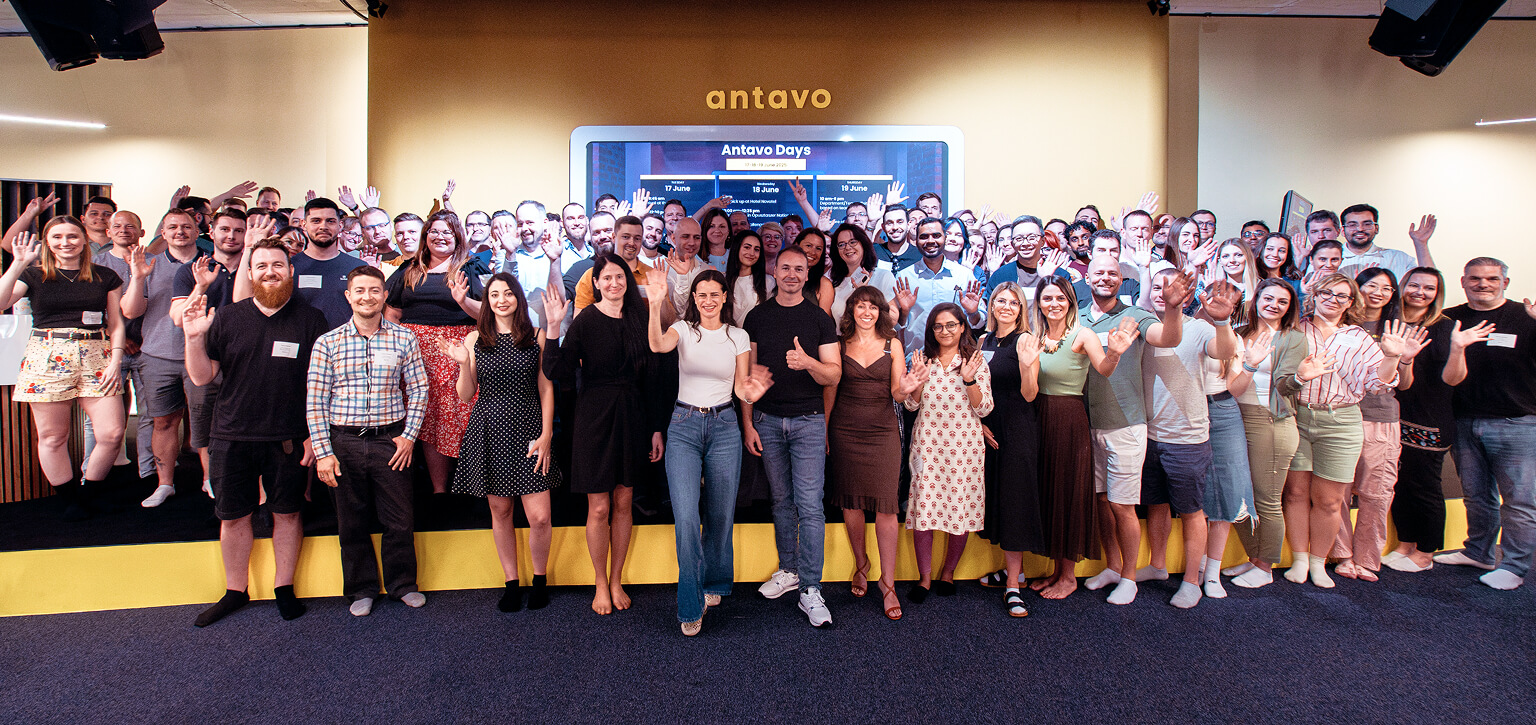
The company was incorporated in 2012 by four Hungarian founders - Attila Kecsmar, Zsuzsa Kecsmar, Gabor Csarnai and Andras Nemes. Its first software rode Facebook's early growth, helping brands run contests and sweepstakes. The trouble arrived on schedule: customers used it for seasonal campaigns, then left. Antavo had a churn problem. Co-founder Zsuzsa Kecsmar says that experience turned the team's attention to customer loyalty - they needed more loyal customers themselves. Since 2017, Antavo has been fully dedicated to the category. Enterprise loyalty is less like installing a marketing widget and more like replacing plumbing while the hotel remains open.
01 / The thing underneathA control room for repeat customers
Antavo does not replace a brand's storefront, point-of-sale system, customer database or messaging service. It plugs into them. APIs and webhooks take in purchases, refunds, profile changes and tracked behaviors; the engine decides who earns what; connected systems display a balance, deliver an offer or recognize a member at the till. Pre-built connections include Shopify, Salesforce, Braze, Bloomreach and Klaviyo, while custom systems can use the same API-first architecture.
The useful distinction is between building the program and operating it. Integrating a multinational retailer still requires architects, developers, testing and a careful migration. Antavo does not wave that work away. Once connected, however, its visual workflows are meant to let loyalty and marketing teams adjust day-to-day logic without asking an engineer to hard-code every campaign. A tier threshold can change. A bonus-point weekend can go live. A segment can get a different reward. The marketer gets the knobs; the technical team keeps responsibility for the machine.
That puts Antavo in a particular market slot. At one end are inexpensive ecommerce plugins, good for a familiar earn-and-burn scheme. At the other are broad marketing suites whose loyalty tools sit beside dozens of other products. Antavo competes with specialists such as Talon.One, Voucherify, Annex Cloud and LoyaltyLion by arguing that a complex program deserves its own engine - especially when it spans countries, brands, currencies, stores and mobile touchpoints.
02 / Proof, with caveatsThe scoreboard is behavior
The most persuasive evidence comes from individual programs, and it should be read as case-study reporting rather than a controlled trial. Antavo says KFC Rewards Arcade members increased purchase frequency by 24 percent. Hyatt's Inclusive Collection reported a 42 percent year-on-year revenue increase through Confidant Rewards after moving 3 million members into a seven-tier structure. Bergzeit reported a 95 percent rise in average order frequency among club members. Different brands, periods and baselines make those numbers poor ingredients for one grand average. They are still more useful than a vague promise of “engagement.”
Read the denominator. These are outcomes reported on Antavo's customer pages. They describe separate programs with separate measurement windows, not a guaranteed return from installing software.
What did the company itself spend to get here? Antavo raised EUR 10 million in a 2022 Series A led by Euroventures, with Lead Ventures, iEurope, Innovation Nest and private investor Zoltan Vardy. It said the money would fund global expansion, more integrations and further product development. The company reported 3.2 times year-on-year growth in 2022 and a tripling of headcount. Today its careers site says the remote-first team numbers more than 100; supplied company data puts it near 120.
Antavo makes a conspicuous product bet, too. Its current company page says 64 percent of budget goes to research and development, and it has issued quarterly releases since 2018. Earlier material put the share at 60 percent. Either figure is substantial. The cadence has produced a procession of modules rather than one annual reveal: clubs and shared accounts, a promotion engine, richer Shopify tooling, faster read APIs and product-catalog controls.
03 / The AI arrivesA colleague named Timi, then an analyst
Antavo's AI story is at its best when it stays close to paperwork. Loyalty Planner, introduced in 2024, takes workshop notes and program ideas and turns them into journeys, requirements and a shared scope. Antavo claims planning can be up to 10 times faster. Timi AI, launched alongside it, was modeled on Timi Garai, an actual business analyst at the company. The avatar is playful; the underlying problem is not. Brands, agencies and integrators routinely leave the same meeting with three different pictures of what will be built.
Optimizer, introduced in 2025 and now framed as an AI Analyst, tackles the other end of the lifecycle. A manager can ask a plain-language question about retention, purchase frequency or reward performance and receive a chart or report. The newer AI Loyalty Expert handles planning. Together they give Antavo a tidy sequence: describe the program, run it, then interrogate the results.
This is not an autonomous loyalty department. Someone must choose an objective, approve the economics and decide whether a chart justifies changing the offer. The sensible part is the reduction of translation work. AI is being asked to turn messy inputs into specifications and complex outputs into an explanation. That is less cinematic than a robot inventing the perfect reward, and considerably easier to audit.
04 / The invoiceActive members, implementation and no magic number
Antavo does not publish a universal price for its core platform. It describes two charges: a one-time implementation fee based on the work in the agreed scope, and a recurring license based on active members - people who have completed at least one loyalty action in the prior 365 days. Charging for activity rather than every dormant record is a revealing choice. The platform makes more money when a program has people doing things.
Public marketplaces provide landmarks, not a rate card. A Salesforce AppExchange listing prices one Antavo B2C Commerce add-on at $30,000 per company per year and says an active Antavo subscription is also required. A SAP marketplace listing has shown a full-version offer at EUR 130,000 annually plus a EUR 10,000 setup fee. A buyer should treat both as examples tied to particular packages and channels. The actual bill depends on scale, integrations and ambition.
This also answers what fails first. For a growing brand, it is often not the points ledger but the shortcuts around it: another tool for gamification, a manual export for segmentation, a developer request for every change. Antavo wins when those workarounds become expensive. Its sales argument weakens when a straightforward plugin already handles the program, or when the brand has neither repeat-purchase behavior nor rewards customers value.
05 / The useful copyBorrow the method before the machinery
A company does not need Antavo to copy its best operating ideas. First, separate the loyalty engine from the channels that display it. That keeps the rules consistent when a customer moves from web to app to store. Second, give the people accountable for retention controlled ways to change offers themselves. Third, reward more than spending: referrals, reviews, learning, attendance and community activity can reveal affinity without training everyone to wait for a coupon.
Finally, plan the reward economy like a real economy. Define issuance, expiration, liability and the behavior each mechanic is meant to change before drawing the shiny member screen. Antavo's Planner formalizes that discipline, but a spreadsheet and an argumentative meeting can begin it. The important move is to make assumptions visible.
The limits are equally plain. No engine can rescue weak unit economics, an undifferentiated brand or a reward catalog full of leftovers. Activity-based software can become expensive as participation grows. Multi-market flexibility creates governance work. AI recommendations are only as reliable as the event data and definitions underneath them. And “no code” applies to operation more convincingly than initial implementation; complex integrations still need competent technical owners.
Antavo's own history suggests why it understands the distinction. The company did not begin with today's clean three-part story. It narrowed its attention, invested repeatedly in the core and kept turning one-off campaign ideas into reusable controls. Its stated culture includes the line “Make progress, not perfection.” For loyalty managers, that may be the product's most practical promise: not a flawless scheme unveiled every three years, but a program they can keep editing while customers are actually using it.