Thursday looked like a sensible day to text a customer. The weekend was approaching; a new outfit might be welcome. Yet GANNI’s store teams found that Thursday messages took about seven days to turn into purchases. They moved their outreach earlier in the week. A small change, almost embarrassingly ordinary, reveals what Endear is trying to give retail: a way to test the instincts that once passed for a sales strategy.
- Customer history, conversations and sales in one retail CRM.
- Tools for associates: messages, lookbooks, appointments and AI-assisted notes.
- Subscriptions start at $350 a month, priced by store location.
- The copyable lesson: measure the delay between contact and purchase.
The Thursday problem
In Endear’s published case study, GANNI reports a 28% increase in average order value. Associates send back-in-stock texts, suggest related products and include payment links. Sophia Wood, its Global Retail Excellence Manager, explains the scheduling adjustment.
“So we decided to send earlier in the week to secure traffic on the weekend.”Sophia Wood · GANNI
The interesting feature is the feedback. A salesperson can have excellent taste and poor timing. Measuring the interval between contact and purchase gives that salesperson something to change besides the clothes.
Four ideas before the right one
Leigh Sevin and Jinesh Shah met through Venture for America in 2015. Sevin has described an awkward wrinkle in their history: a legal entity incorporated in 2016, several revenue-generating business ideas, and little she considered compelling enough to present to investors. Those years taught the pair how to work together. Endear itself dates its founding to 2019.
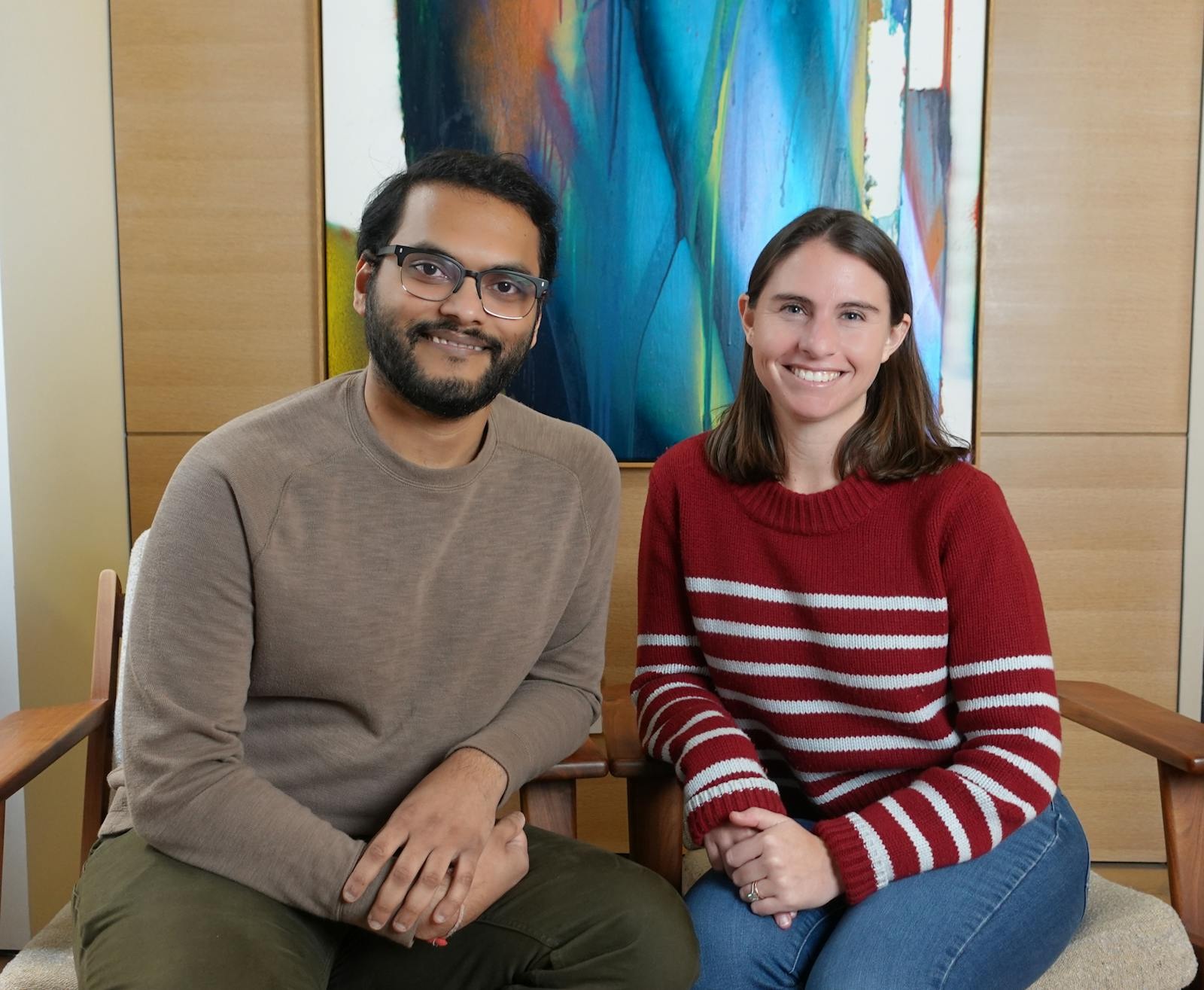
In their account of the launch, the founders describe a gap between the software available online and the tools inside physical stores. Associates were already reaching customers from their own devices, repeatedly copying messages. Headquarters struggled to understand the activity, particularly when the resulting sale happened online.
The pandemic then made remote selling urgent. Endear’s premise became easier to grasp: a salesperson’s usefulness need not end at the shop door. The more durable insight was that the relationship needed a shared record.
A client book with a memory
Endear is software for that record and the work around it. Its CRM combines purchases, preferences and interactions from connected systems. An associate can inspect a customer’s history, choose a relevant audience and start a conversation. Managers can see outreach across locations rather than reconstructing it from individual phones.
Its expertise lies in retail’s peculiar rhythm. A business sales pipeline moves toward a contract; a shopper may return repeatedly, in different places, for different reasons. The useful question is often what happens after the purchase. Endear organizes tools around that recurring relationship.
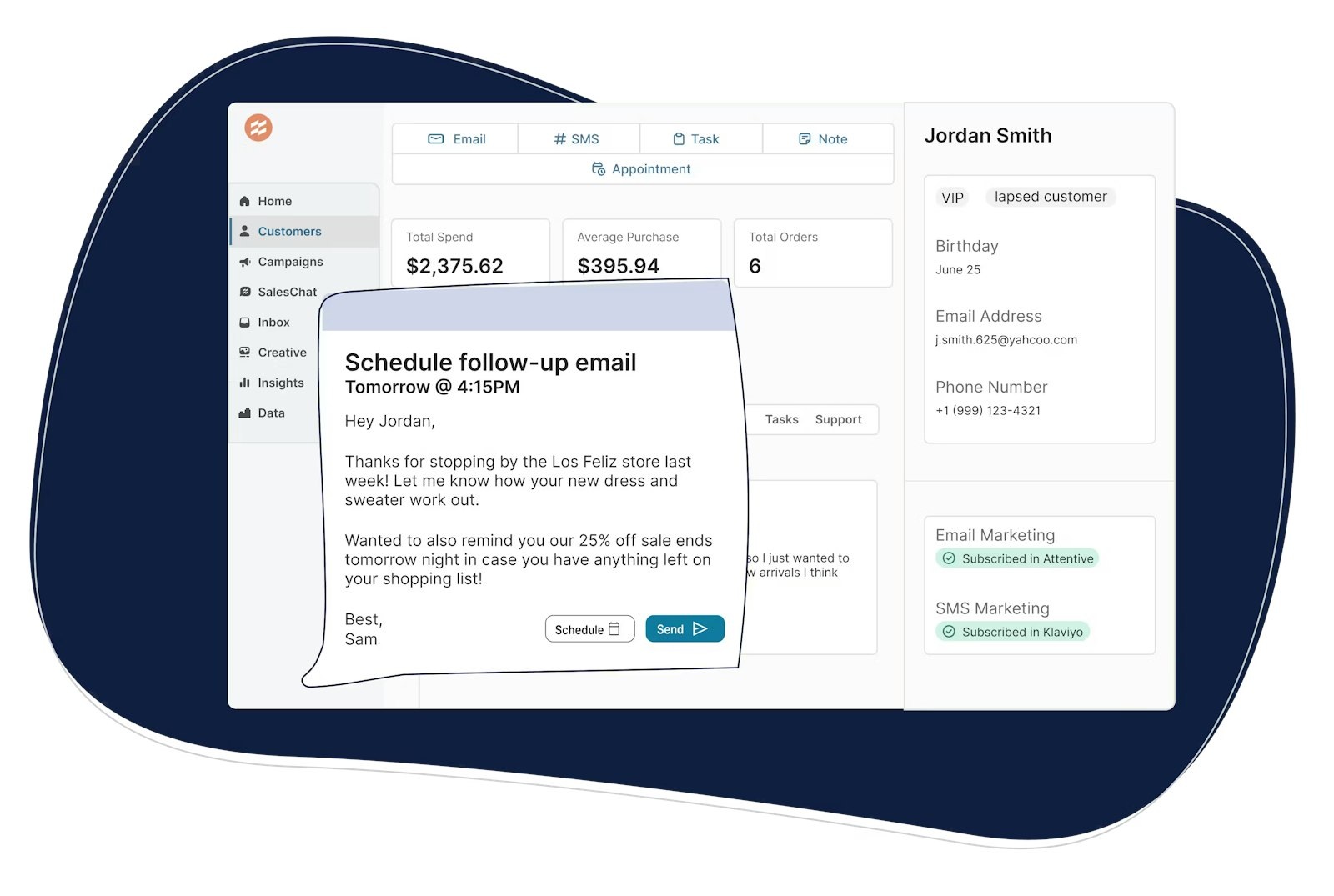
Shoppable Stories turn selected inventory into lookbooks. For Shopify brands, customers can browse, add items to a cart and purchase through the shared experience. Appointments connect bookings to customer profiles, giving teams context before a visit. SalesChat offers another entrance: the shopper who needs advice while browsing online.
Shopify, NewStore, Lightspeed and Teamwork Commerce appear among its commerce integrations. Support and marketing connections add further context. That matters because a purchase alone cannot explain whether someone is delighted, confused or waiting for help.
The reply is where the work begins
Gorjana’s published Endear story provides a useful distinction. The jewelry retailer reports an 8.4% conversion rate for automated SMS outreach and 20% for direct replies. It also says 65% of SMS-driven sales took place in physical stores. The phone was helping bring people back through the door.
A customer who answers is already doing something different from one who merely receives a message. Even so, the operational lesson is useful: a campaign needs someone available when the conversation starts. A full inbox with nobody responsible for it is a peculiar form of hospitality.
AI gets the preparation job
AI Notetaker, introduced in June 2025, addresses the details a busy shift can lose. Associates can capture voice, text, photos or video; the tool organizes customer context and helps prepare follow-ups. A handwritten observation becomes information another colleague can use.
The AI Opportunity Engine, announced in May 2026, takes on selection and drafting. It ranks reasons to contact customers and prepares messages using their context. Staff review and approve each message before sending. Endear’s August release added a month-long trial and usage limits for paid sending.
This division of labor makes sense for a product built around personal service. Preparation consumes time; judgment establishes whether the suggested message is appropriate. A machine may find the occasion. The associate still knows whether the invitation would be welcome.
The price of remembering
Endear’s published starting price is $350 per month, with subscriptions priced by store location. Additional messaging can be purchased. The company offers onboarding, training and a 14-day platform trial. Its Shopify listing says it serves more than 2,000 stores and has recorded over $1 billion in attributed sales.
Attributed revenue deserves a careful reading. A sale following a message is useful evidence, but the shopper might have bought anyway. A retailer evaluating the bill should examine extra gross profit, staff time and repeat purchasing alongside the dashboard’s revenue total.
Who holds the relationship?
Endear raised a $2 million Seed round in 2022, led by Reformation Partners with Habitat Partners participating. A $6 million Series A followed in January 2025, led by Channel Equity Partners. The founders said their choice of a growth equity partner reflected a desire to retain control of their long-term direction.
The product occupies a practical space beside marketing systems such as Klaviyo and Attentive, which retailers may continue using. Its emphasis is the associate’s conversation and the store’s performance. That emphasis suits brands whose customers value advice and whose teams have time to give it.
For a retailer trying the approach, the first experiment can be modest: one customer group, one relevant reason to contact them, and a named person to answer. Measure the purchases and the delay. Without usable customer records or time for replies, adding software will leave the central problem intact. The useful change begins when someone takes responsibility for the next conversation.