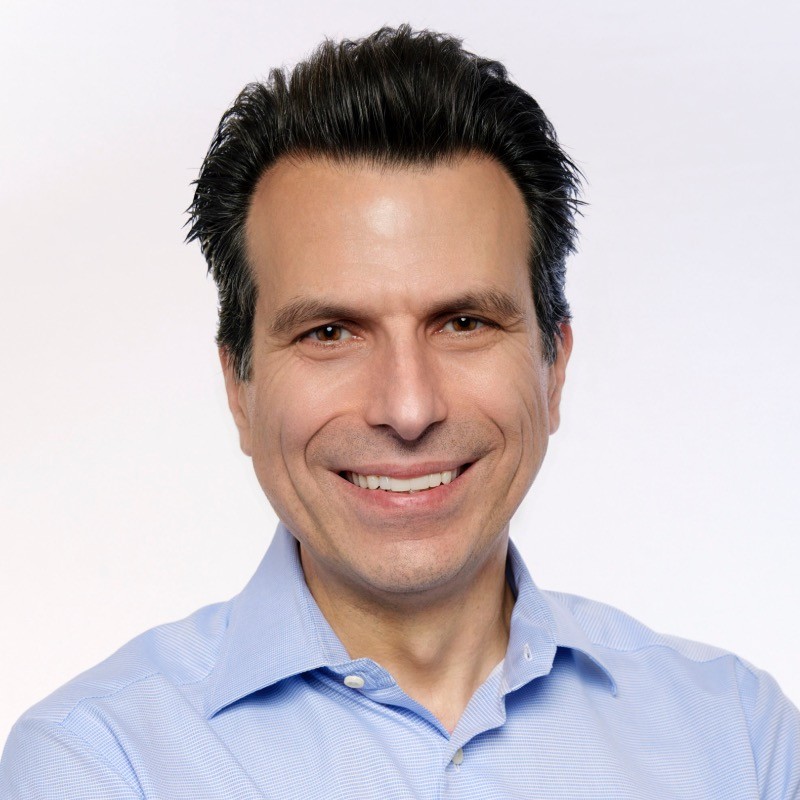
He dropped out of high school. Then he simulated a Mars rover. Then he ran a $41 billion company. Andrew Anagnost does not move in straight lines.
Growing up in Van Nuys, California - a sun-baked stretch of the San Fernando Valley not particularly famous for producing Fortune 500 CEOs - Anagnost had a rough early chapter. He ran into trouble, dropped out of school, and might have stayed stuck there. His family helped him find a new school, he graduated, and then he went somewhere no one in his immediate world had mapped: Stanford, for a PhD in aeronautical engineering and computer science. The kind of credential that ends most sentences. For Anagnost, it was the beginning of a long loop back to somewhere useful.
He spent time at NASA Ames as a National Research Council fellow, running simulations for what would become the Mars Pathfinder rover. Propulsion, composite structures, the slow science of aerospace. He was good at it. He also found it frustrating. Aerospace moved at the pace of institutional caution. He wanted faster feedback loops.
So in 1997, he joined Autodesk as a product manager. Autodesk at that time was best known for AutoCAD - the blue-collar workhorse of engineering desktops, a boxed CD sold to drafters and architects. Not the most glamorous entry point. But Anagnost understood something about the company that many people missed: Autodesk sat at the exact intersection of physical-world complexity and the tools required to manage it. The problem was the business model.
"I have spoken many times about how the CSU system - and CSUN specifically - saved me from falling through the cracks and gave me the opportunity to move beyond the mistakes and challenges of my youth."
Over the next two decades, Anagnost became the internal architect of Autodesk's transformation. He led the Autodesk Inventor product line - growing it five-fold to over $500 million in revenue. He became Chief Marketing Officer, then Senior VP of Business Strategy. And then he did the hard thing: he designed the plan to move Autodesk from selling perpetual software licenses to selling cloud subscriptions, a transition that required telling existing customers they could no longer buy the way they always had. It was controversial, painful, and - as the revenue curve now shows - correct.
In 2017, when CEO Carl Bass resigned, Autodesk's board did not recruit from outside. They looked at who had already done the work. Anagnost became President and CEO in June 2017.
Since then: revenue from approximately $2 billion to $6.13 billion in fiscal year 2025. Market cap north of $41 billion. A seat in the Fortune 500. Two activist investor campaigns from Starboard Value, both navigated without abandoning the long game. A $875 million acquisition of PlanGrid (then the largest in Autodesk's history) that pushed the company firmly into construction tech. And a sharpening focus on AI as the next lever - not as a product feature to market, but as the infrastructure layer that compresses the distance between a design idea and a built object in the real world.
He speaks plainly about what comes next: AI-driven generative design, simulation tools that let engineers test thousands of options in an afternoon, and software that finally helps the United States stop ignoring its crumbling infrastructure. He wrote about the last point in Fortune in December 2024, making the case that the tools already exist - the will to use them is the missing variable.
In February 2025, he made a difficult call: a 9% workforce reduction affecting approximately 1,350 employees, framed as a reallocation of resources rather than a retreat. In July 2025, he sat for a public conversation about surviving not one but two activist investor attacks - and what it costs to hold a strategic position when the pressure is to optimize for the next quarter.
Meanwhile, the college at CSUN that now bears his name - the Andrew J. Anagnost College of Engineering and Computer Science - is educating the next generation of engineers at the same public institution that gave him his first real foothold. His total giving to CSUN has reached $22.1 million. It is the kind of philanthropy that is less about legacy and more about a very specific acknowledgment: doors open for some people because other doors opened for them first.