Douglas Klein bought a real estate marketing system and then did something awkward for a marketing company's success story: he quit. There were too many features, too many updates, too much to learn. In Ylopo's published account, the New Jersey agent described a familiar software predicament: paying for possibility while struggling to turn it into a working day.
- Ylopo runs ads and branded property search for real estate agents and teams.
- AI text, voice and remarketing keep prospects engaged between visits.
- The agent still takes the call, wins the client and closes the deal.
- Judge the full cost and the follow-up routine together.
The agent who walked away
Klein's complaint deserves a place beside the testimonials. “I felt lost,” he said. He kept watching the company's community and webinars, saw new tools, and returned in June 2019. This time, he spent months learning the system and adopted a morning routine: call AI-engaged prospects, then priority leads, then new arrivals. His team grew to four people.
The useful detail is the order of those calls. It gave a crowded database a starting point. That is a lesson a reader can borrow without buying anything: decide which signals deserve attention, and decide who acts on them. A queue with an owner is a rather different proposition from a queue with good intentions.
A house hunt has a very long middle
Ylopo serves agents, teams and brokerages that want their own digital marketing operation. It manages advertising across Google and Meta, provides branded websites and property search, and follows up with prospects through automated conversations and remarketing. The work stretches from attracting a visitor to getting an interested person into an agent's conversation.
Consider the gap between looking at a house and deciding to move. Browsing is pleasant. Financing, timing and household agreement are less obliging. A registration form records interest at one moment; it cannot make that moment coincide with an agent's sales target. Ylopo's proposition is to keep the relationship alive while the buyer catches up.
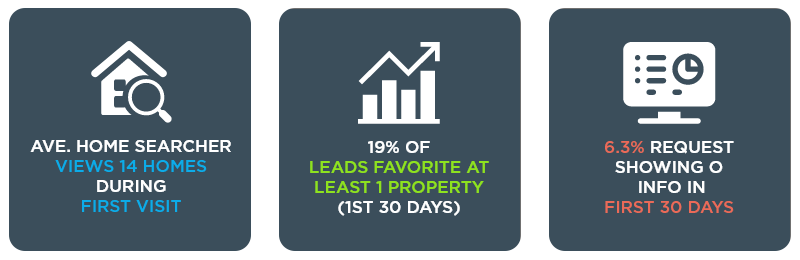
Its IDX home-search product supplies the setting. IDX lets an agent display participating property listings on a branded site. Ylopo tracks search behavior and adapts registration questions and messaging to the visitor's origin and activity. Listing alerts bring people back. The agent gets clues about what someone wants rather than merely a name in a spreadsheet.
Remarketing adds another encounter after the visitor leaves. The company also offers DyVA, its dynamic video advertising product, which automates the production and publication of property and branding videos. Seller tools extend the same relationship-building idea to homeowners. The common thread is repeated, relevant contact under the agent's brand.
- 01AttractGoogle + Meta ads
- 02UnderstandBranded IDX search
- 03Keep in touchCRM + text + voice
- 04TalkA human agent takes over
The telephone is still attached to a person
AI² combines Ylopo's AI Text and AI Voice. The text product engages prospects; the voice product calls, qualifies interest and transfers people to agents. Automation tackles the repetitive opening work while preserving a place for someone who knows the market, can arrange a viewing and can explain the next step.
The mechanics are more revealing than the sales language. An August 2026 support update says new eligible leads receive calls in three to five minutes. Unanswered leads can receive up to 14 attempts across 90 days. Activity that triggers a priority alert can prompt another call. The same documentation says AI Voice is currently available only to Follow Up Boss users.
AI Voice support overview, updated August 2026. Timing describes the workflow, not a promise of a sale.
Follow Up Boss supplies the CRM record and workflow; Ylopo supplies marketing and automated outreach. The CRM partner confirms jointly created Action Plans and synchronized AI conversations. This means a human can arrive with the earlier conversation available, rather than asking a prospect to begin their story again.
There is a wonderfully ordinary dependency here: a telephone number must route correctly. Ylopo warns clients that changing configured Follow Up Boss numbers without notifying the company can stop transfers. A system that can conduct a conversation still depends on someone answering the right phone. More intelligence does not remove the need for competent plumbing.
A second attempt at the same obsession
Howard Tager and Juefeng Ge came with experience from TigerLead, the earlier real estate marketing business. The company's current leadership page also identifies Chris Soto as co-founder and CTO/CFO. Their expertise sits at the junction of advertising, property search and the practical business of converting interest into appointments.
Ylopo's history has two beginnings. Contemporary reporting placed the original search startup in 2013, with Ge and Vian Chinner, followed by Tager joining in 2014. Move invested that year. Ylopo's own timeline puts the real estate marketing pilot and Follow Up Boss integration in 2016. Today's platform grew from that later chapter.

Even the name makes a little argument: Ylopo is the last five letters of Monopoly backwards. The company wants agents to build a recognizable brand and maintain their own consumer relationships. Its stated mission puts the operation of marketing alongside the software. Someone else handles the media buying; the agent handles the client.
That emphasis also explains its Realtors-in-Residence: practicing agents involved in training and guidance. The company hosts masterclasses and webinars, treating product adoption as work in its own right. Its careers page describes autonomy and professional development, with roles spanning U.S. remote work, Phoenix and the Philippines. Summit Partners lists an investment in 2021.
The bill has more than one line
Ylopo sells recurring software and marketing services. Its current pricing page offers Solo, Growing Team and Complete plans, quoted for the client's market and database. Platform pricing is based on data rather than seats. A purchase needs a full budget: platform fees, advertising, remarketing, AI, setup and the external CRM.
Published component prices offer some scale. A support FAQ updated in September 2025 lists bundled AI² at $400 monthly for a 10,000-contact database cap, with a $250 AI Voice setup fee. Those are dated AI component prices. The March 2026 PPC+ FAQ separately requires at least $600 a month in media spend for existing clients, plus an AI Voice purchase and an active Google Business Profile.
Customer economics require equal care. In a company-published account, Ryan Steel reported spending $17,800 in 2024 and producing $126,000 in gross commission income after increasing his investment following a success summit. Those figures produce a gross-commission-to-spend multiple of about 7.1. Gross commission precedes business expenses and agent splits; it is not profit.
About 7.1× gross commission ÷ reported spend. A selected customer account; commission is before splits and expenses.
Another published case, broker Michael Baird's, describes an 18-agent team and a $10,000 monthly marketing budget. Agents called new leads for three or four days, worked alerts and AI conversations, and let technology nurture longer-term prospects. These are different operating scales. A solo agent should not borrow a large team's spending plan simply because both use the same software.
Buy the routine you can actually run
Ylopo competes for budgets also served by real estate platforms such as Lofty, CINC, Real Geeks and Luxury Presence, as well as portal lead purchases. Its distinctive pitch is managed marketing connected to an external CRM. The buyer is choosing how several jobs get done: attracting prospects, storing their information, staying in touch and putting an agent in front of them.
The 2026 PPC+ product makes that division concrete. Google ads can offer a phone number as well as a form. Ylopo's call center screens incoming calls and transfers valid prospects. The support FAQ excludes these callers from standard automated texting and calling because an inbound call has different context. The agent works that conversation directly.
A queue with an owner is a rather different proposition from a queue with good intentions.An operating lesson from the customer accounts
There are conditions under which this approach disappoints. A team that cannot answer transfers squanders the handoff. A poorly configured CRM can obscure the very signals automation creates. A buyer expecting immediate closings may mistake early browsing for failed advertising. And a thin budget leaves less room for the time and repeated contact the model requires.
The practical move is to agree on a daily routine before increasing spend. Assign the live calls. Check the routing. Track appointments, signed clients and closed business alongside leads. Compare commission after splits and costs with the complete bill. Review the records that never became conversations. Klein's return is useful because it puts these ordinary habits back into a story about sophisticated software.
The buyer eventually becomes ready on the buyer's schedule. Ylopo's wager is that an agent can still be there when that happens. The technology keeps the introduction alive. The next conversation belongs to the person who picks up.
Follow the conversation
Explore Ylopo, its plans and blog. Find the team on LinkedIn, Instagram and Facebook.
Read Inman's 2025 Best of Proptech announcement or browse the Ylopo video channel.