The most revealing sentence on Z57’s website comes from an agent who had been unhappy with it. In a May 2019 testimonial, Marisa L. of PalmerHouse Properties describes a disappointing start: too little assistance after onboarding. Then a representative patiently worked through the details with her. The customer’s opinion changed during a conversation. For a company selling marketing automation, that is a rather human advertisement.
- The customer: real estate professionals who need a more consistent online presence.
- The offer: PropertyPulse connects social publishing, websites, lead management and follow-up, with features varying by package.
- The interesting part: coaching and support sit beside the software.
- The buying question: will the whole routine work in your market, at your budget, with your available time?
An agent’s website can be immaculate while the business behind it remains disorganized. A listing appears on Facebook. A visitor clicks. A contact enters a database. Somewhere between the database and the telephone, enthusiasm misplaces its keys. Z57’s commercial proposition lives in those handoffs. It sells tools for them, and help getting those tools used.
The website was only the beginning
Founded in December 1998 by Steve Weber and co-founder Dave Baird, Z57 grew out of the era when getting a business onto the internet was itself a service worth buying. Its early story belongs to San Diego. Its current company page lists Hunt Valley, Maryland. The more consequential journey, however, was from providing a presence to organizing what happened around that presence.
In a 2004 Inman interview, market-development vice president Tim Johnson described Z57’s evolution from websites and hosting fees into a broader internet marketing firm. The business was subscription-driven and locally targeted. Asked for its defining application, he answered: “Personal business consultants driving a territory-specific marketing strategy.” A person, in other words, was part of the product.
That account offers a useful interpretation of the company’s change in direction. A website gives an agent somewhere to send people. It does not, by itself, arrange their arrival or the next conversation. Z57 expanded into the work around the site: attracting visitors, capturing interest and helping agents follow up. The shift makes commercial sense wherever customers buy a tool but struggle to establish a habit.
Websites built before the 2012 sale, according to the founder’s 2019 ZDigital launch announcement. A cumulative claim, rather than today’s customer count.
One listing, several jobs
PropertyPulse arrived in September 2012 as a cloud-based social media management tool for real estate professionals. Its launch materials described scheduled Facebook and Twitter posts, customized Facebook pages, performance analytics and on-demand training. The practical problem was time: agents working with clients also had several online stages on which to keep appearing.
The current offer brings more of that routine together. Social automation handles listing posts, listing videos and engagement content. Agent websites provide a destination. Lead management and email tools help maintain contact after someone has expressed interest. Z57’s appeal is the combination, particularly for an agent who would otherwise stitch together several services and manage the seams.
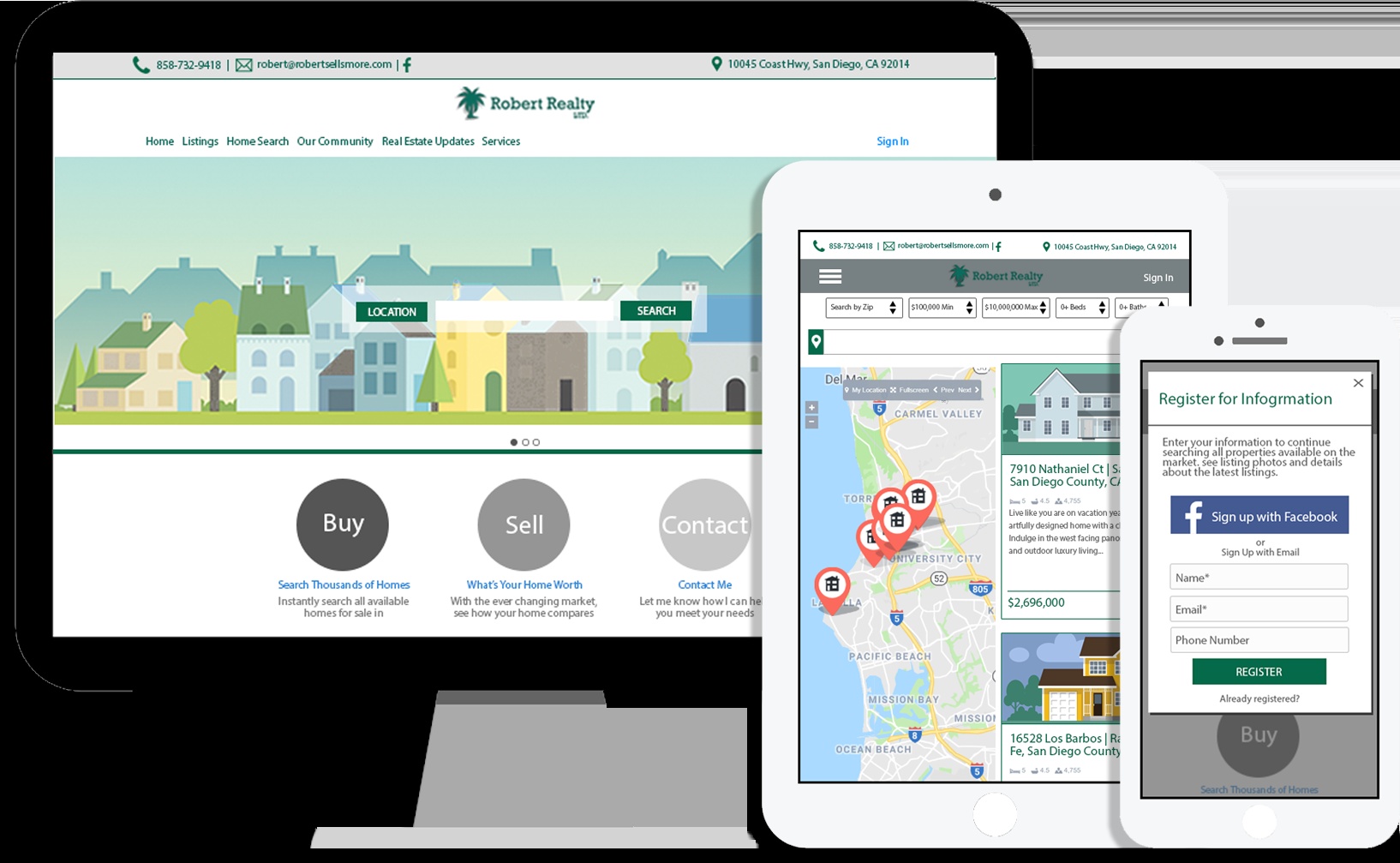
Its website tools include configurable lead capture and activity information that can help an agent tailor a response. Consider a hypothetical prospect repeatedly looking at a particular neighborhood. A useful follow-up would address that interest, rather than send a generic greeting. The software supplies signals; the agent supplies judgment. A browsing history is a prompt to investigate, not proof that someone is ready to buy.
- 01PublishPut the listing in view
- 02CaptureGive interest a next step
- 03Follow upRespond to the person
- 04ConverseEarn an appointment
Automation helps carry the work between stages. Each stage still needs a reason for the customer to continue.
The person inside the subscription
Z Academy makes the human component explicit. Its advertised program includes live workshops, recorded sessions, downloadable scripts, a private agent community and product training, with no added charge for Z57 customers. The topics range from business planning to lead generation and engagement. It is an attempt to teach a working routine alongside the interface.
There is a pleasingly specific precedent. In November 2011, Z57 Academy announced its thousandth ZPro graduate: Chris Emmett, a military-relocation specialist in North Pole, Alaska. The story is a reminder of how particular an agent’s business can be. A relocation specialist and a neighborhood seller may share software while needing quite different conversations.
“She made me do a 180 in my attitude toward the product and service you offer.”
Marisa L., PalmerHouse Properties
Company-published testimonial, May 2019
Marisa’s experience brings the story back to implementation. The first difficulty she describes was assistance after onboarding. What changed her mind was someone addressing the details. This is one customer’s account, selected and published by the company. It nevertheless identifies a sensible question for a demonstration: show me how the first week works, including what happens when I get stuck.
The lesson an unrelated service business can copy is straightforward. Map the points where a customer must make a decision, configure a setting or interpret a result. Put help there. Training hidden in a library is useful only if the customer knows which problem to bring to it. An automated system earns its keep when ordinary people can operate it on an ordinary Tuesday.
Price the work, not the promise
Z57 organizes PropertyPulse into tiers. The package table separates a social-focused starter offering from options with a website and email tools, then options with IDX property search and seller tools. IDX is the mechanism for displaying participating listing data on an agent’s site. Z57 specifically says it is not available in all areas. Local coverage is a purchasing condition, not a decorative footnote.
Search engine marketing and Facebook or Instagram advertising are offered as add-ons. A buyer should ask for an itemized quote covering the subscription, advertising management, actual media spend, setup and any applicable listing-data charges. Ask which costs recur and what the agreement requires. The relevant comparison is the cost of the complete routine over the same period.
If the same spend produces one qualified appointment, the cost becomes $600. Count the outcome you need, then work backward through the handoffs.
This arithmetic is deliberately plain. Impressions, clicks, contacts, appointments and completed transactions answer different questions. Reporting one as though it were another is an excellent way to become busy and remain disappointed. An agent can review which posts brought visitors, which visitors became contacts and which contacts led to useful conversations. The weak step tells them where to spend attention.
A very large owner, a very particular customer
On December 3, 2012, Constellation HomeBuilder Systems announced that it had purchased all of Z57’s shares. The buyer, a division of Constellation Software, described the deal as an expansion of its online marketing presence for residential real estate agents. Z57’s products fitted a portfolio of specialized real estate software businesses.
That ownership helps locate Z57 in the market. It serves professionals running a relationship business, supplying marketing machinery around their listings and contacts. BoomTown and Market Leader also offer real estate systems combining websites, CRM and marketing. Market Leader appears in Constellation’s own brand portfolio, so some apparent alternatives share a corporate family.
Z57’s particular emphasis is the pairing of social marketing automation with coaching and support. Those ingredients are not exclusive to it; the question is whether the bundle suits the buyer. Someone with a well-integrated brokerage system may have little use for another. Someone needing bespoke design, unsupported local IDX coverage or sophisticated team operations should test those requirements before committing.
For an agent short on time, the prospect is appealing: fewer tools to connect and a more consistent presence between transactions. It still depends on usable content, relevant local information, a workable budget and someone willing to respond. The best demonstration ends with a small rehearsal. Publish a listing. Capture a contact. Find the activity. Prepare the follow-up. Then decide whether the next conversation will be easier to begin.
See the company website, compare PropertyPulse packages, explore Z Academy, or request a product demonstration.