Paying off a mortgage ought to be the end of a story. The money arrives, the balance disappears, the homeowner exhales. But a property has a second life in the records. Until the release is filed, the paperwork can continue to describe a debt that the bank has already been paid to forget. The house and the file are living on different clocks.
That discrepancy helps explain PropLogix. The company sells research and follow-up to the professionals who get real estate transactions across the line. Its subject matter is gloriously unphotogenic: utility balances, association letters, expired permits, mortgage satisfactions. Its usefulness becomes easier to appreciate when one of those things refuses to cooperate.
- Before closing: investigate property debt, gather HOA documents, assemble tax and title reports.
- After closing: check that lien releases have been recorded and pursue missing filings.
- For the closing team: order through existing software and hand recurring research to specialists.
A file that wouldn’t stay closed
In a PropLogix-published case study, Michigan’s Liberty Title described the trouble with an earlier release-tracking vendor. Staff still had to fix issues they had paid someone else to handle. Business process manager Melissa Skamiera described ordering as a seven-step process that piled up on desks.
“It became a struggle to do business with them.”
Teresa Stuenkel, Liberty Title, on its previous vendor
What changed the agency’s mind was practical accommodation. PropLogix worked with Liberty’s process manager to fit ordering into its ResWare workflow. A couple of clicks could send the order with the commitment and payment. The agency became a customer in spring 2018. This is a vendor’s account of a customer’s experience, but the complaint is revealing: outsourcing had created another chore.
A useful supplier has to remove the handoff burden as well as perform the task. Otherwise, the closer gains a vendor to supervise and keeps the original worry.
The county clerk doesn’t have every answer
PropLogix began in 2010 as a municipal lien search provider for Florida title companies. Its original patch of ground remains instructive. A county-record search can leave questions about a property that require answers from municipal departments. An unpaid utility balance or an unresolved code issue may be waiting elsewhere.
The company’s municipal search covers open or expired permits, utility balances, property and tangible taxes, code violations, special assessments and municipal payoff information. Researchers contact municipalities, compile their findings and send the report through a Six Sigma quality review. The software carries the order; people still have to establish what the property owes and what remains unresolved.
Before the keys
Municipal departments
Association records
Tax and title research
After the keys
Public-record checks
Missing-release follow-up
Lender coordination
The service is built for title agents, closing attorneys and lenders. Homebuyers benefit from the work, while the professional handling the transaction places the order. That makes PropLogix part of the machinery behind the closing table: a company whose output is often most welcome when it prevents an unpleasant conversation.
A menu of things nobody wants to chase
The business has spread around that first research task. Association services obtain estoppel letters and resale certificates, including information about dues, assessments, violations and buyer requirements. Tax certificates assemble property tax information, with basic and full versions and a Texas-specific option that includes HOA details.
Title reports offer current-owner, two-owner and full searches. Underwriters can use white-label reports. Curative work addresses mortgage-related defects and missing assignments. Payoff-letter services take on lender requests. These are separate pieces of a closing file, each capable of consuming time while the customer asks when everyone can sign.
Survey coordination adds a different kind of expertise: finding qualified local providers, obtaining bids and keeping the job moving. PropLogix specifically positions this as useful where a title professional lacks existing surveyor relationships. It also coordinates mobile signings through a network advertised as more than 2,500 vetted notaries. Local knowledge travels surprisingly well when someone takes responsibility for the introductions.
The price of not doing it yourself
PropLogix’s core model is paid business services: customers order particular research and support work. Many service pages direct buyers to a quote. The economic choice is between paying an outside specialist and assigning the work, its interruptions and its follow-up to an internal team.
There is a concrete bundle to examine. Lien Search Plus automatically adds release tracking when an enrolled customer orders a municipal lien search. PropLogix advertises savings of 30-50% on the release-tracking portion. Those percentages describe the company’s offer, rather than an independently measured return on investment.
Lien Search Plus bundle. Eligibility is limited to Florida customers ordering only Florida municipal lien searches.
The restrictions matter. Enrollment changes the customer’s statement of work; the bundle is not simply a checkbox in every ordering system. Tracking covers recorded debt such as mortgages and tax liens, rather than the unrecorded municipal obligations the earlier search may uncover. Buyers still need to match the task to the service.
Turnaround has a similar qualification. PropLogix says it begins a municipal search within 24 hours or less, then provides an estimated completion time and additional fees. Starting the work is different from finishing it. The municipality is part of the timetable.
The expensive office for the invisible work
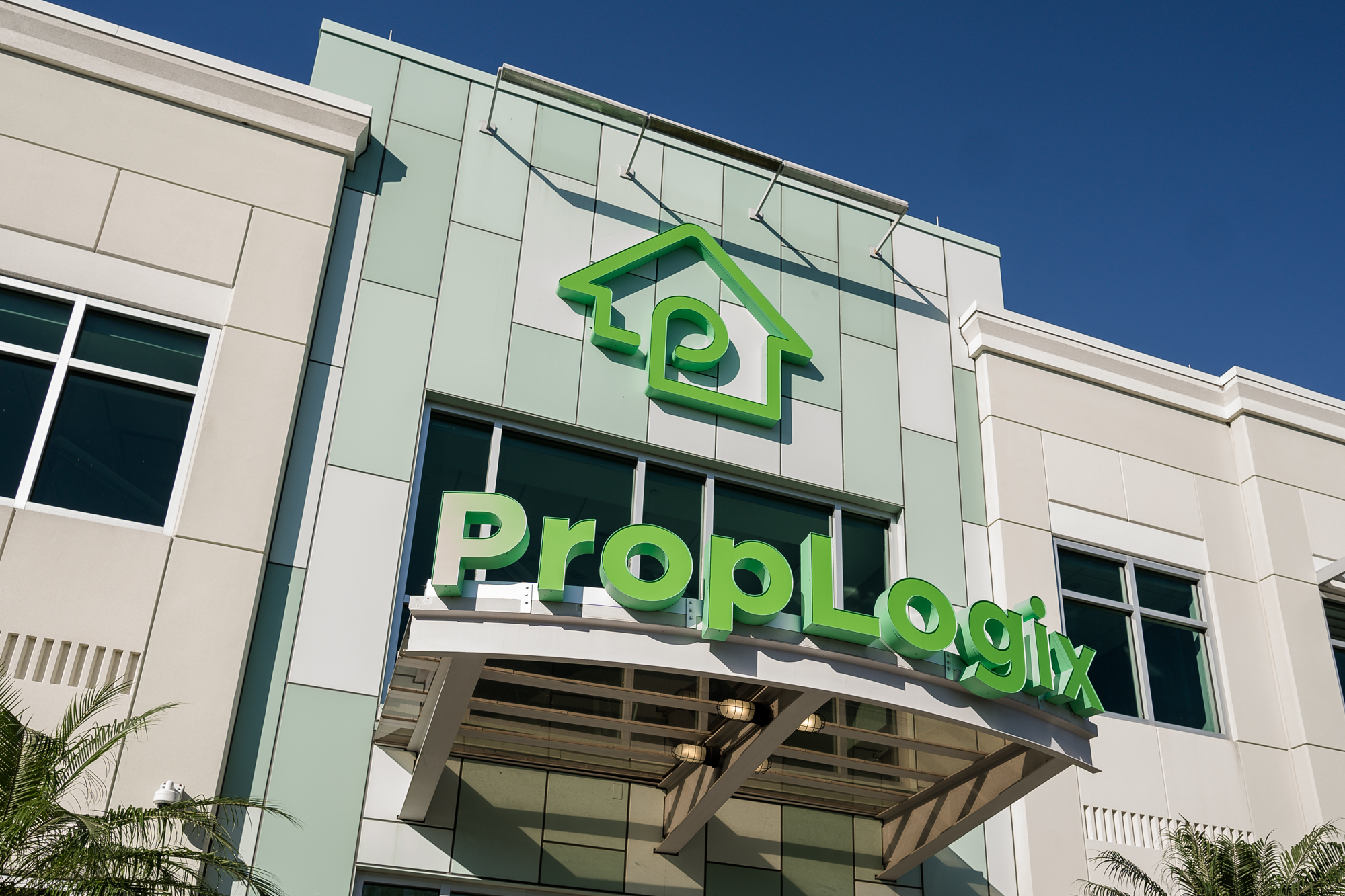
In January 2020, the American Land Title Association reported that Jesse Biter and partners Evan Berlin and Jamie Ebling had spent $10.5 million on a building for the growing company. The planned 44,000-square-foot headquarters included a gym, an arcade and a slide into a ball pit. Even property researchers, apparently, need an exit strategy from the second floor.
The company’s stated values are more workmanlike than the slide suggests: remember the purpose, fix problems, keep learning and ask whether the payoff justifies the effort. Those principles fit a service business where overlooked details can return as somebody else’s emergency.

Growth brought outside capital. In August 2021, PropLogix announced an investment from Accel-KKR to support product development, expansion and acquisitions. In May 2022 it completed its acquisition of City Lien Search, whose operations it had taken over in June 2019. Later that year, it announced its sixth consecutive Inc. 5000 appearance, ranking 2,317 with 253% growth over three years.
The city hall problem
There is a stubborn limit to organized research. In 2024, PropLogix warned customers that cyberattacks had interrupted municipal systems in several jurisdictions. In Hernando County, Florida, code-enforcement information could be supplied while permit information remained uncertain. Customers were offered partial results or available permit information accompanied by an accuracy disclaimer.
No ordering integration can make an unavailable source answer. Nor does an old report stay fresh indefinitely: the company’s help center explains that returned information is dated and can change, which is why customers order updates. Anyone comparing vendors should examine how exceptions are communicated, how updates work and who owns the next action.
REAL RES, Rexera and Skyline Title Support appear alongside PropLogix in SoftPro’s vendor documentation. In-house research is another alternative. Integration by itself is therefore an insufficient distinction. PropLogix’s case rests on combining a broad service menu, research and quality checks with a workable handoff. The Liberty account shows what a customer notices when that handoff improves.
From handling the file to finding the next one
The latest expansion reaches upstream. In May 2026, PropLogix launched PropOptix, sales outreach software that monitors listing activity and helps title teams time their approaches to real estate agents. The announced product supports HubSpot workflows. It extends the company’s role from completing transactions toward helping customers develop new relationships.
A week later, PropLogix announced approval as a vetted national vendor for the Investors Title network, with services available through SoftPro and its portal. Distribution remains close to the customer’s existing desk.
The practical lesson is easy to borrow: choose a neglected, repeated task, then make assigning it less troublesome than doing it yourself. Agree on what completion means, including the exception and the follow-up. In real estate, the keys are an excellent milestone. The records still deserve an ending.
Follow the paperwork
Explore PropLogix, its services and software integrations. For the newer outreach product, visit PropOptix.
Watch the Liberty Title customer video, listen to Jesse Biter on building the brand, or browse company news and the blog.