Three independent repair shops stood within walking distance of Boston Volkswagen. That is an inconvenient geography for a dealership hoping to see its customers again. When service director Leo Felipe arrived, the store had a Facebook audience of just over 200 people, posted irregularly, and appeared near the bottom of searches for Volkswagen parts and service. The cars were nearby. The dealership was difficult to find.
Affinitiv’s account of what happened next begins in March 2018. Boston Volkswagen added service-focused search advertising, reputation management, and targeted social messages tied to its customer records. Six months later, the company reported stronger search visibility. Its published case study recorded 21% year-over-year revenue growth. The parts department benefited, too. A campaign intended to bring owners back for service had found another door into the business.
- Affinitiv sells dealerships software and marketing services for sales, service, and retention.
- Its central idea: the customer relationship continues between vehicle purchases.
- Scheduling, inspections, reminders, and trade-in targeting sit within the same portfolio.
- The useful test is completed business, rather than how impressive a campaign looks.
That small battle over a service visit explains Affinitiv better than a procession of software acronyms. Selling the car is one transaction. Keeping the owner coming back requires an entirely different set of habits. A dealer must be visible, remember what the vehicle needs, offer an appointment the workshop can actually handle, and explain why a repair deserves approval. Affinitiv sells tools for those moments.
Four companies walk into a dealership
Affinitiv’s origin was a combination. In September 2016, OneCommand, Peak Performance, Dealer Product Services, and TimeHighway.com came together with backing from CIP Capital. The companies brought established capabilities in customer communications, marketing, and appointment scheduling. Mike Doobay was named the new company’s CEO; the predecessor companies’ chief executives joined in executive roles and invested in the transaction.
The founding argument concerned fragmentation. Dealers had separate vendors for separate encounters with the same owner. A marketing message might have little connection to the appointment that followed it. The merger proposed a more coherent relationship, assembled from businesses already familiar with automotive retail. There is something pleasingly practical about an origin story whose main character is a connection between systems.
In September 2019, Affinitiv completed its merger with AutoLoop. The announcement described a combined business with approximately $200 million in revenue. AutoLoop’s equity-mining, scheduling, service-lane, and appraisal capabilities would join Affinitiv’s marketing offerings. That figure belongs to the merger announcement, rather than a present-day financial scorecard. The strategic point survives the date: the company was extending its reach from messages into dealership work.
Make a relevant offer.
Book the appointment.
Explain the work.
Explore a trade-in.
The appointment behind the advertisement
The product names are unusually economical. Book schedules service. Quote identifies potential trade-ins. Essentials handles lifecycle marketing. MPI digitizes multi-point inspections; SmartLane supports service write-up; Tech Video lets technicians record what they find. Messaging supplies direct customer communication. The portfolio moves from persuading someone to visit to handling the visit itself.
Book’s role is especially revealing. It offers online scheduling and tools for managing service capacity. An advertisement can create demand, but a workshop has technicians, bays, and hours to account for. Treating those constraints as a marketing concern makes sense: a promise of convenience becomes expensive when the appointment experience disappoints.
In June 2024, during the CDK Global cyberattack outage, Affinitiv offered affected dealers free temporary Book scheduling until the disruption was resolved. Its announcement said the scheduler could operate without pulling data from the dealership management system, allowing appointment booking to be restored within hours. The useful detail is architectural. A customer-facing task could continue while another system was unavailable.
Essentials handles the quieter business of staying in touch. Its campaigns can use vehicle usage, service history, maintenance plans, and financial or market conditions to inform outreach. The channels include email, mail, text, voice, and social media. A printed reminder shares shelf space with predictive software. For an owner who responds to the envelope, that is a sensible arrangement.

The $167 question
Cullman CDJR, north of Birmingham, Alabama, offers a second concrete example. General manager Scott Spitzer had relied on individual efforts such as direct mail and occasional phone campaigns. He was dissatisfied with vendors sending enormous, untargeted email blasts. The problem was where the money went, and whom it reached.
The dealership tried Connectiv Prospect, combining email and social advertising to reach likely buyers and lapsed customers. Affinitiv’s March 2019 case study said results appeared after four months and reported a 34% drop in cost per vehicle sold, to $167. The change was a move toward defined audiences and coordinated contact. It gives a buyer a useful question to ask: how much did the campaign cost for each actual sale?
34% reduction reported in Affinitiv’s customer case study. Indexed comparison; a single dealership result, not a forecast.
These are vendor-published examples. They describe selected stores, with their own markets, staff, and starting points. They do not establish that every additional sale was caused by software. A sensible evaluation would compare campaign spending with completed transactions, ask how sales were attributed, and watch what happens over a comparable period. A click is easy to count. Its contribution to a purchase takes more work.
A bill with an opinion about incentives
Affinitiv’s business combines B2B software with marketing services. Dealers can buy operating tools, campaign support, and agency work rather than simply receive a login and fend for themselves. Its advertising offering spans search, SEO, social, display, streaming media, creative production, and analytics. The company also works through automotive manufacturer programs, where approvals, integrations, and possible co-op funding depend on the program.
A historical Quote brochure provides a rare glimpse of the commercial mechanics. In 2020, a performance-based option listed monthly tiers from $500 for one to five units sold to $1,500 for 31 or more. Data and dealership-management-system fees still applied. Those are dated terms, not a current offer. Their interest lies in the incentive: the software bill was connected to recorded vehicle sales.
Quote now presents AI-supported trade prediction and equity analysis as ways to identify existing owners who may be ready to change vehicles. Financial data, market conditions, and manufacturer incentives inform offers. The dealer’s customer database becomes a place to look for its next sale, including among people arriving for service.
The camera comes off the phone
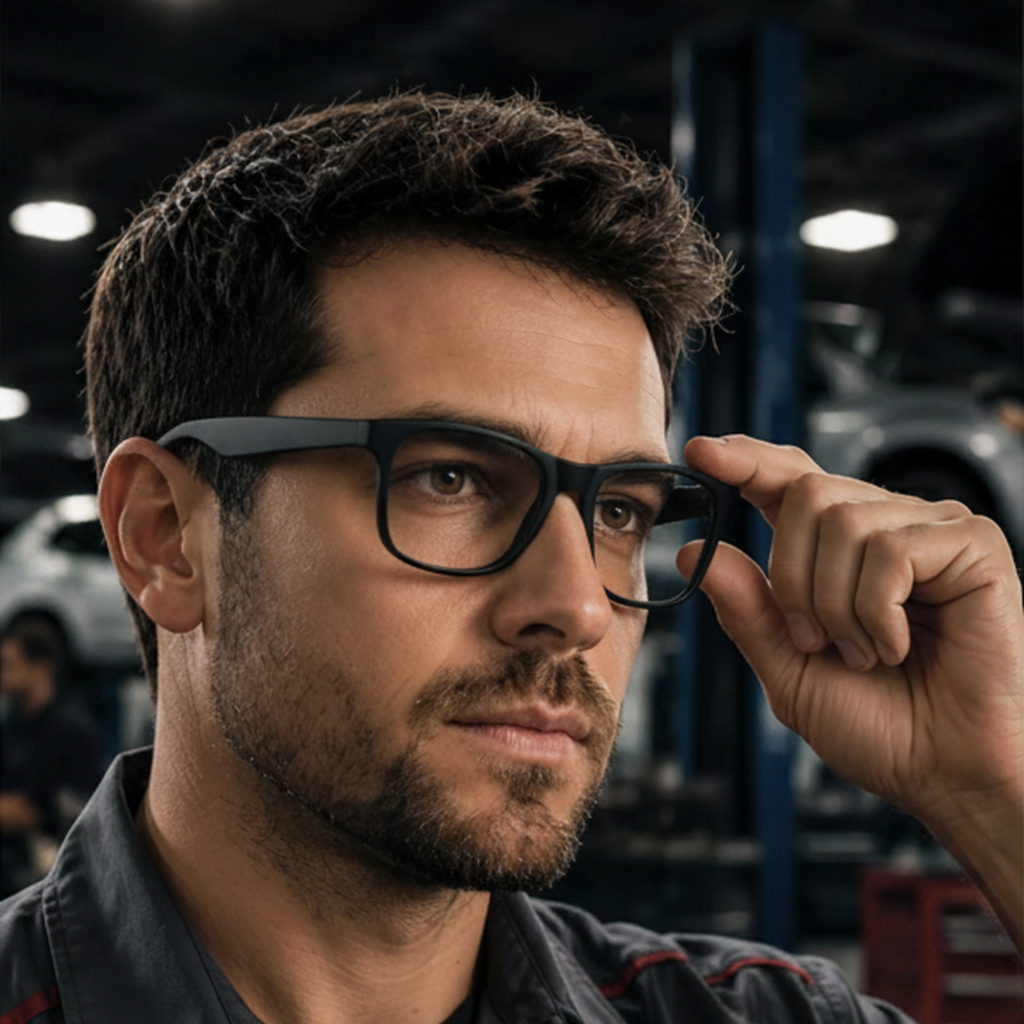
Affinitiv appointed Sharon Kitzman CEO in October 2025. She had previously led Dominion DMS and Infomedia Americas. By July 2026, the company had announced CapSure, integrating Meta AI glasses with its inspection and Tech Video tools. Technicians could record their view of worn components and recommended work while keeping their hands free.

The appeal is easy to understand. An advisor can send the customer visible evidence of a repair recommendation. The technician can document an issue without holding a phone or tablet. Whether that produces more approved work will depend on how well the team records and explains what matters. The product addresses a small interruption in a familiar workflow.
What travels beyond the car lot
Affinitiv sits where dealership marketing and operations meet. Fullpath offers an alternative centered on customer data and automated outreach. Dealer-FX combines service scheduling, shop management, and service marketing. Affinitiv’s particular proposition is the breadth of its operating tools and agency services around the ownership lifecycle. That combination is worth examining when several departments need to coordinate.
The lesson a different business can copy is modest: connect the invitation to the experience that follows. Identify the customer’s likely need, make the next action easy, and measure completed business. The conditions matter. Inaccurate records weaken targeting. Unavailable appointments waste demand. Staff who do not use the workflow leave the software’s promises stranded on a screen.
Keeping the owner coming back requires an entirely different set of habits.An observation from the ownership lifecycle
Boston Volkswagen’s nearby repair shops make a fitting last image. The competitors were close enough to walk to. Affinitiv’s response was to help the dealership become easier to find and more deliberate about staying in touch. The next sale might be years away. The next useful encounter could be Tuesday.
Keep exploring
Visit Affinitiv ↗ · Explore Book · Explore Quote · CapSure product overview
LinkedIn · X · Facebook · Company blog · Company news · Watch Kitzman’s NADA 2026 interview