A customer buys a shirt. Somewhere, a retailer records the sale. Somewhere else, a campaign tool prepares another message. The expensive part is what happens between those two systems: matching the person, finding a useful next offer and making sure the campaign knows what just happened. Dengage has built its business around that gap. Its proposition is practical: customer data should help decide what a company does next.
The London-based software company calls its product a Customer Experience Data Platform, or CXDP. It combines the records-and-segmentation work of a customer data platform with the execution machinery of marketing automation. Email, SMS, WhatsApp, mobile and web push, in-app messages and website personalization are part of the offering. The intended buyer has customers across several touchpoints and a growing suspicion that the tools serving them are talking past one another.
The database gets a vote
Dengage’s architectural pitch rests on relational data and remote source connections. A marketer can use information held in existing systems to build audiences, rather than treating the campaign database as an isolated address book. The company describes a star-schema structure: a way of arranging related data so that customer identities, transactions and other records can be queried together. The important outcome is the ability to ask a better question than “Who is on this mailing list?”
For a retailer, that question might concern a category someone bought last month. For a financial business, it might involve a transaction threshold or an unfinished onboarding step. Those are illustrative uses of the underlying approach. The attraction is keeping the business context attached to the customer as the record becomes a segment and the segment becomes a campaign.
Illustrative workflow, not a screenshot.
The distinction matters in a crowded market. Dengage explicitly compares itself with Braze, Insider One, CleverTap, MoEngage, Oracle Responsys and Salesforce. Its argument emphasizes data structure, deployment choice and integrated channels. A comparison page is a sales document, of course. A buyer still has to test whether those differences solve an actual bottleneck in its own operation.
A bank’s messages cannot take the afternoon off
Fibabanka supplies a useful test of that proposition. In its published Dengage case study, the bank describes messaging licenses tied to SMS and email volumes becoming increasingly costly as customers and transactions grew. It also needed availability, scale and compatibility with existing systems. Messages were part of banking processes, including credit applications, so interruptions could affect sales rather than merely delay a promotion.
The bank adopted an on-premise multichannel platform. The case study attributes lower ownership costs to a license model offering unlimited messaging capabilities, and reports a 35% cost reduction, an 18% reduction in time spent and zero downtime in the deployment described. Those are customer-specific reported outcomes. They do not establish a universal price or a promise that every future installation will run without interruption.
Here is where Dengage’s business model becomes interesting. It sells commercial software through a demo-led enterprise sales process, with cloud and on-premise options. A buyer should examine the license, implementation work and delivery arrangements together. “Unlimited” needs a defined scope in the contract; it is a poor substitute for a total-cost calculation.
Deployment choice also changes the discussion inside the customer’s organization. Dengage markets on-premise operation to businesses that want control over infrastructure and data, while its cloud offering provides another operating model. For an enterprise selecting marketing software, the people responsible for those systems have a stake in the decision. A beautiful campaign builder is only part of the purchase.
Sell the second shirt before buying another ad
Zellbury’s problem was closer to the shop floor. The Pakistani fashion retailer depended heavily on paid advertising to bring previous customers back. Its Dengage case study describes disconnected tools, manual campaigns and poor visibility for some clothing categories. The company connected Shopify, built category-specific journeys and contacted past customers through email and push before using paid ads for non-responders.
The details are refreshingly ordinary: product grids updated daily, city-specific subject lines and different flows for unstitched clothing, ready-to-wear and menswear. The reported result was a 73% reduction in cost per repurchase, a 2.8-fold increase in men’s category conversions and more than 80 hours saved each month. The strategy changed the order of operations: use the existing customer relationship first, then pay for another route back.
That is a copyable experiment, not a guaranteed percentage. It requires a reachable returning audience, useful purchase history and merchandise people might buy again. Measure repurchases and the cost of producing them. Sending more inexpensive messages is not, by itself, evidence that a business has become more profitable.
What failed first was the handoff
At Turkish payments company Ödeal, the trouble began with manual processes. Its case study describes inconsistent communication, missed customer moments and people sometimes assigned to the wrong groups. Behavioral information and scoring were difficult to incorporate into triggers. These are unglamorous failures, but they are exactly the kind that make personalization feel suspiciously impersonal.
“The foremost benefit we gained was minimizing human error.”
İhsan İlter Özgür
Chief Growth and Data Officer, Ödeal
Ödeal implemented Dengage’s on-premise CDP, connected core systems and used Remote Source to access tables for campaign work. It also integrated call-center workflows, aiming to reduce duplicates and provide more appropriate scripts or automated communication. Training and support accompanied adoption. The account makes a narrower, more persuasive case than a generic promise of transformation: remove repeated manual intervention from a process that already has identifiable mistakes.
MCB Funds illustrates another useful discipline: choose a business outcome beyond the send. The asset manager’s case study reports an 83% improvement in its account funding ratio and a 30% increase in average transaction size. These measures look further down the customer journey than registration or an email open. They give a marketing team a reason to ask whether its communication helped someone complete the next meaningful step.
AI with a campaign to answer for
Dengage’s AI offering, Zeki, spans several jobs. The company lists predictive analytics, audience shaping, content generation, translation, SQL assistance and insights into unusual performance patterns. That combination puts AI both near the creative work and near the data. A subject line and a segment query may live in different professional worlds; a campaign needs both to make sense.
Flormar provides a more concrete account of how a team changes its mind. The cosmetics brand had struggled with isolated data, laborious segmentation and limited reporting. It used purchase history and online behavior to predict category interest, then paired those segments with individualized send times. The published case reports approximately doubled SMS click-through rates, around 30% higher email and push click-through rates, and improved campaign efficiency.
More revealing is Flormar’s adoption habit: test new features in demos, then move them into live campaigns when the benefit is clear. The shift toward prediction was attached to observable campaign performance. For another marketer, the sensible imitation is that sequence of testing and evaluation, rather than assuming a model’s recommendation is automatically better than the old schedule.
Implementation still has a physical footprint in the software stack. Dengage’s public developer resources distinguish marketer onboarding from developer integration. Its verified GitHub organization publishes mobile SDKs, and its React Native guide covers credentials, push configuration, events and permissions. A team buying easier campaign management should plan for the engineering work that makes those campaigns possible.
A global business, with people on the other end
Aman Dotani and Itri Osman founded Dengage, with the company dating its start to 2018. Its September 2025 investment announcement identifies them as CEO and CTO respectively. TIBAS Ventures led the backing, joined by Gelecek Etki VC, Maxis and Türkiye Development Fund’s Invest 101 Fund. The stated priorities were product innovation and expansion across markets where Dengage already operated, including Europe, Latin America, the Middle East and Asia.
The company now reports more than 200 customers in over 30 countries and a team of more than 170. Its own account emphasizes local support alongside that geographic reach. This matters for a product whose purchase includes onboarding, data connections and changes to the way a marketing team works. The relationship extends beyond getting a login.
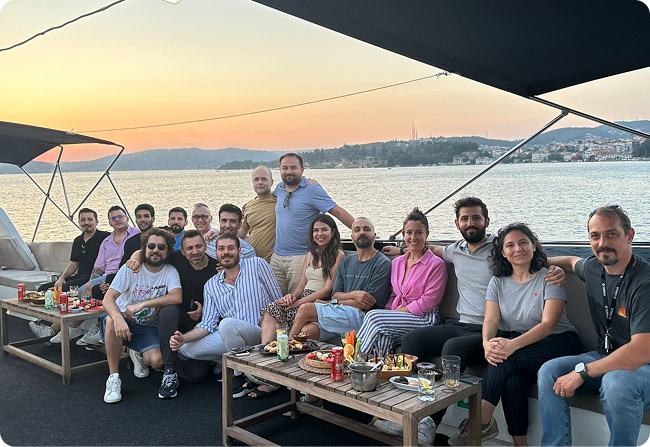
Its careers material describes mentorship, cross-border collaboration and a four-stage hiring process. One small detail stands out in a business promoting AI: the page says hiring decisions are human-led. That is an employer’s stated practice, not a comprehensive verdict on workplace culture, but it is more specific than the usual invitation to join a dynamic team.
By summer 2026, Dengage was also promoting Marketing Automation Momentum Leader recognition in G2’s seasonal reports. Such recognition can help a company get onto a shortlist. The harder test begins after that: connect the buyer’s actual records, build a real journey and measure whether the extra machinery pays for itself.
Dengage’s customer examples point toward a useful purchasing rule. Start with the costly handoff: the repeated audience export, the missed customer moment, the advertising spend used to rediscover yesterday’s buyer. Then ask the software to fix that particular problem. A customer database earns its keep when the next action is better because of what it knows.
Open another tab
Explore the platform, customer stories and company blog. For a closer look, visit the product guides, GitHub repositories or Dengage’s YouTube channel.
Follow Dengage on LinkedIn and Instagram, or read the investment announcement.