on-premise
(8)
Dengage wants your customer data to earn its keep
The London company connects customer data to the messages people actually receive. Its retail and banking customers show why the useful work begins long before anyone presses send.
Priority Software Spent 40 Years Making ERP Boring - and Built an $800 Million Company
Founded in the mainframe era, the Israeli company sells one promise to roughly 75,000 businesses in 70 countries: enterprise software people can actually change themselves. In 2024, Blackstone paid about $800 million for the pitch.
Vision Helpdesk
Secure & Reliable Customer Service Software

Four Survey Tools That Refuse to Be SurveyMonkey
Formstack, SmartSurvey, Zonka Feedback and Checkbox each picked a lane the survey giants ignored - workflows, data sovereignty, feedback intelligence and self-hosting. Here is how the quiet corners of the feedback market actually work.
Jitbit
Secure, email-first ticketing system that turns support requests from email, web portal, live chat and APIs into trackable tickets. Self-hosted or SaaS.

Mattermost
Mattermost is an open-source, self-hostable collaboration platform built for organizations that cannot put their conversations in someone else's cloud. Started as a game studio's internal chat tool and open-sourced in 2015, it grew into the leading self-hosted alternative to Slack and Microsoft Teams, combining channel messaging, voice and screen sharing, incident-response Playbooks, and integrated AI agents. Its customers skew toward defense, government, financial services, and technology organizations - from the U.S. Air Force to Uber - that need data sovereignty, air-gapped deployment, and government-grade security.
Matroid
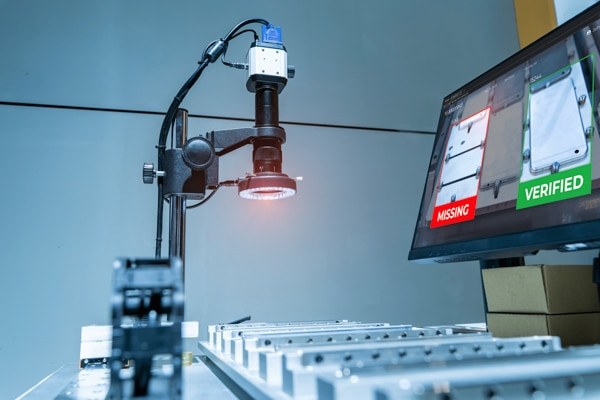
Matroid is a Palo Alto computer vision company that lets anyone build, train, and deploy custom object detectors without writing code. Founded in 2016 by Stanford professor and former Databricks founding-team member Reza Zadeh, its platform turns ordinary camera feeds into searchable, alert-generating systems that spot objects, people, defects, events, and safety violations in real time, across cloud, on-premise, and edge deployments. Matroid is used across manufacturing, aerospace, automotive, electronics, and video security to automate quality inspection and monitoring.

ZeroEntropy
ZeroEntropy is the AI infrastructure company fixing the broken retrieval layer of modern AI applications. Founded in 2024 by Ghita Houir Alami (CEO) and Nicholas Pipitone (CTO), the San Francisco–based startup builds rerankers, embedding models, and end-to-end search infrastructure that outperforms Google, OpenAI, Cohere, and Voyage on public benchmarks. Backed by Y Combinator (W25) and a $4.2M seed round led by Initialized Capital, ZeroEntropy's products — zerank-2, zembed-1, zsearch, and ze-onprem — are used by enterprises including Assembled (serving Stripe, Canva, Robinhood, and Notion). The company's proprietary zELO training methodology, derived from chess Elo ratings and the Thurstone statistical model, produces models with calibrated relevance judgments that binary labels cannot replicate.