A car dealership can know the name of a past buyer, the mileage on her trade, the model she browsed last night and the service she declined three months ago. It can still pay to show her the wrong ad. This absurd little gap - between possessing information and doing something useful with it - is where PureCars has spent nearly two decades building a company.
PureCars sells automotive marketing technology and the people needed to operate it. The Atlanta company cleans dealership records, compares local demand with the vehicles on the lot, identifies audiences, runs campaigns across search, social, video, streaming audio, direct mail, email and text, then attempts to connect the activity back to sales and repair orders. The customer is usually a dealer, dealer group, automaker or agency. The end consumer may never know the name PureCars. They simply see the relevant SUV, receive the service reminder or land on a more useful vehicle page.
01 / The wedge
It started with the car on the page
Founder Jeremy Anspach conceived PureCars in 2007, during a recession, and launched commercially around 2009. The first product, Value Intelligence, was a merchandising toolkit for used and certified pre-owned vehicles. It added market demand and reconditioning information to a dealer's vehicle detail pages. The wager was practical: make the inventory easier to understand, and more shoppers will convert.
That wedge pulled PureCars toward a larger problem. Dealers did not merely need a better product page. They needed to decide which cars to advertise, which shoppers to pursue and where the next dollar should go. PureCars added SmartAdvertising and became deeply associated with paid search. Then the channel menu multiplied: display, social, video, connected TV, streaming audio, direct mail, email and SMS. Each new outlet made fragmented dealership data more expensive.
“The question I hear most from dealers is: ‘Are my marketing dollars working?’”Lauren Donalson, CEO of PureCars
The company answers with the metrics dealers already argue about on Monday morning: cost per vehicle sold, cost per repair order, showroom traffic and attributed revenue. In one example shared by PureCars, CEO Lauren Donalson described linking $50,000 in ad spend to 300 influenced vehicle sales. That is company-reported attribution, not a controlled experiment, but it captures the pitch. Clicks are supporting evidence. Cars and service appointments pay the bills.
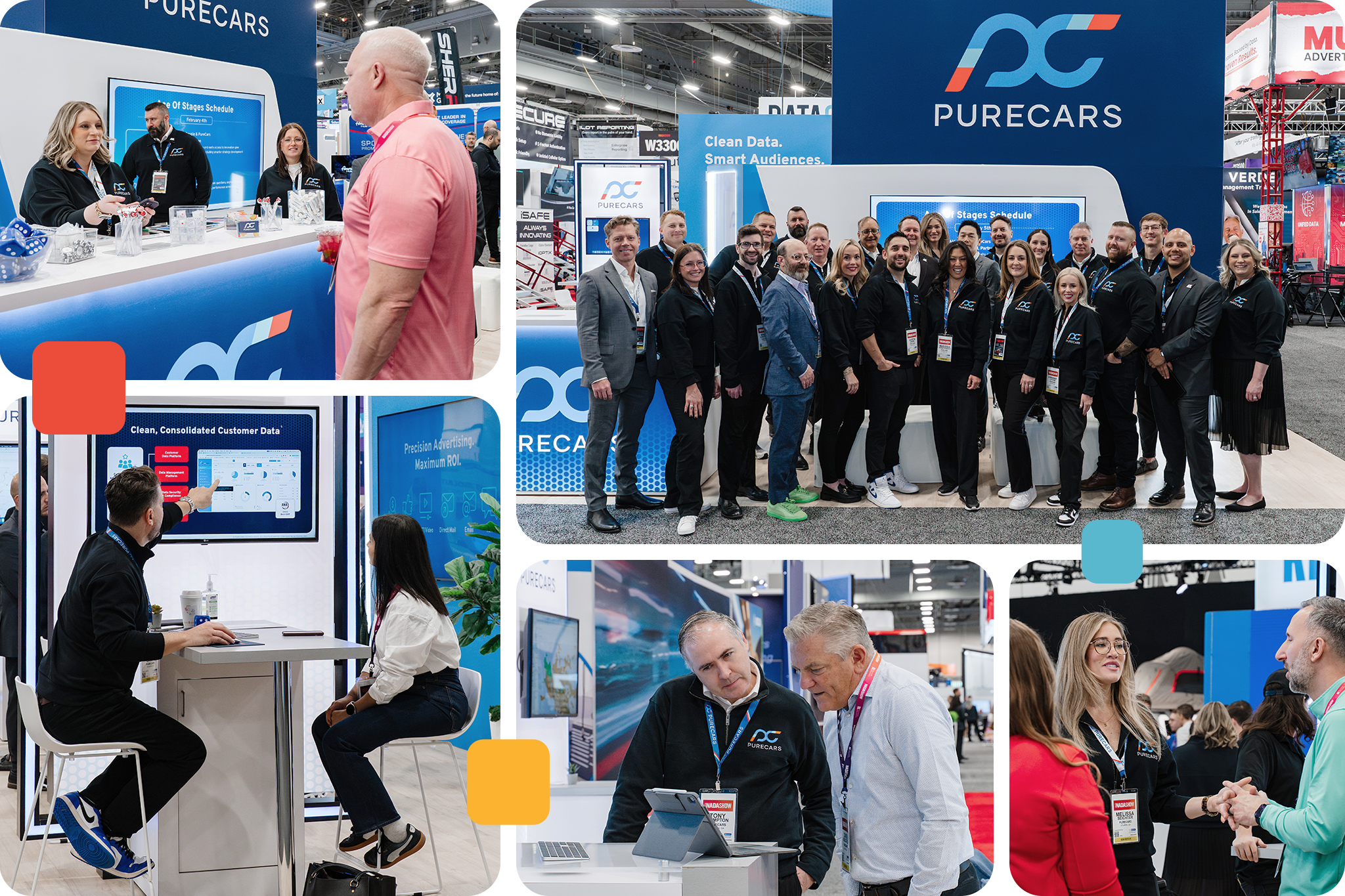
02 / What broke first
The dealership data junk drawer
The first thing to fail at scale was not an ad format. It was the handoff. Customer details lived in the CRM, transactions in the dealer management system, browsing in website analytics, inventory in feeds and campaign results inside several media platforms. Duplicate households, stale emails and missing phone numbers created waste before a campaign began. Privacy changes made the old habit of leaning on third-party cookies less dependable.
PureCars changed its center of gravity in January 2023 by acquiring The AutoMiner. The customer data platform consolidates, cleanses, enriches and segments first-party records. PURE Identity, introduced later, tries to turn otherwise anonymous website visits into usable profiles. PURE Insights layers market demand, competition and advertising performance onto the decision. In 2025, RylieAI added audience modeling, text-and-email conversations and a digital assistant that surfaces leads or suggests campaigns.
In April 2026, PureCars acquired AutoAlert, adding data mining, CRM engagement and customer-loyalty capabilities. The two platforms initially continued as separate products, but the strategic direction is plain: move from spotting a likely buyer to activating media, answering the lead and nurturing the relationship without exporting another CSV. PureCars is no longer merely selling ads. It is selling the connective tissue between records and action.
03 / The economics
A vertical business with three engines
PureCars does not publish a price list. Its terms point to negotiated order forms, specified products and, where relevant, named dealership rooftops. The model blends software access, managed marketing services and media management. That combination matters. A conventional agency can buy the ad; a horizontal CDP can organize the record; a point solution can answer the text. PureCars argues that one automotive specialist should connect all three.
The financial history is unusually tidy for an adtech story. Anspach and his early team bootstrapped first. PureCars raised $5 million from Gemini Investors and Stage 1 Ventures in January 2013, then another $5 million that December. In 2015, broadcaster Raycom Media paid $125 million in cash for the company. After Raycom merged with Gray Television, Diversis Capital and Stage 1 backed a 2019 carve-out. PureCars then used acquisitions - truPayments in 2021, The AutoMiner in 2023 and AutoAlert in 2026 - to broaden the product rather than chase a new customer category.
The useful detail is what the early company did not spend on. Anspach told Forbes that a strict board budget pushed cash toward critical needs, especially technology and data. PureCars reportedly became cash-flow positive about two years after launch. By the 2015 sale it had grown 1,401 percent across three years, landed at No. 335 on the Inc. 5000 and had 150 employees across three cities. This was a focused vertical business before “vertical SaaS” became a conference-panel cliché.
COVID supplied a harsh demonstration of the same thesis. When showrooms closed and inventory patterns lurched, the company advised dealers to keep advertising but reallocate budgets against current local demand. PureCars later described clients posting record months even through lockdowns. The experience appears to have sharpened its conviction that the valuable product was not a fixed campaign plan; it was a daily decision system. Chip shortages, rising wholesale prices and shifting interest rates reinforced that view. By the time Donalson became CEO in 2025, she was explicit about the change: PureCars would move from being known primarily for digital media toward data and audience activation. The ads stayed. The clean data increasingly decided what they should say, who should see them and when the store should follow up.
04 / What to steal
Copy the loop, not the car ads
The portable lesson is not “build a dealership CDP.” It is to find a valuable workflow where information dies between systems. Begin with one visible pain, as PureCars did with used-car merchandising. Learn the industry's odd vocabulary, data exhaust and buying calendar. Then expand only along the same customer's path to money.
The case studies show the pattern. A Volkswagen store testing over-the-top video reported, over a 60-day comparison, an 84 percent rise in sessions, 137 percent more vehicle-detail views and 28 percent more conversions. Bluebonnet reported an average 50-to-1 return and roughly 150 high-quality leads from a payment tool over 90 days at less than $20 per lead. A service win-back campaign targeting customers who had declined recent work attributed $88,000 and 124 repair orders in 30 days. These are vendor-published customer results, useful as examples rather than universal promises.
The conditions are the strategy. The dealer needs enough accurate, permissioned customer data to create meaningful audiences. Inventory feeds must be current. Sales and service teams must respond while intent is warm. Campaign volume must be large enough to optimize, and the store must agree on attribution before the results arrive. A tiny rooftop with sparse records, poor lead handling or no appetite for process change can buy sophisticated software and still produce a beautifully measured shrug.
05 / Where it fits
Between the agency and the operating system
PureCars competes with automotive marketing platforms such as Fullpath, Impel and Outsell; larger dealership ecosystems from Cox Automotive; specialist agencies; and the dealer's own team armed with Google, Meta and a heroic spreadsheet. Its difference is breadth inside one vertical: inventory-aware media, first-party data hygiene, identity, direct outreach, market benchmarking and high-touch account support.
That breadth is also the risk. An integrated suite can become integration work with a sales deck. AI conversations can book appointments only if the underlying records, offers and calendars are trustworthy. Attribution can clarify spending or simply make a complicated buyer journey look more certain than it is. Dealers should ask for incrementality tests, data-retention details, match rates, response-time commitments and a clean exit path for their records.
Still, PureCars occupies a sensible piece of the market. A dealership is a local retailer with expensive inventory, recurring service revenue, thin attention and unusually rich customer data. The software vendor that can see all four has a better chance of becoming infrastructure. PureCars spent its first chapter learning how to sell the car. Its next chapter is an attempt to remember the customer.