Kurt Geiger had a working example. The footwear and accessories retailer used Wunderkind on its flagship UK website. For other sites, its engineers would build something similar: familiar triggers, familiar timing, familiar creative. Why buy what you could make?
Months passed. Tens of thousands of pounds went into development. The homemade system improved on basic marketing tools, but disappointed against the flagship’s results. When those additional sites adopted Wunderkind, basket-abandonment email conversions rose 151%, according to the company’s customer case.
- Wunderkind connects shopping behavior to customers a brand can recognize and reach.
- Its identity and AI tools can run through a retailer’s existing messaging platform.
- The commercial test is additional profit after costs, not a handsome attribution number.
The copy was easy. The memory was expensive.
The revealing detail was what Kurt Geiger knew it lacked: the breadth of Wunderkind’s identity data. It could reproduce the visible campaign while missing part of the machinery that made the campaign work. A restaurant can copy the menu; remembering which regular dislikes coriander takes another kind of knowledge.
“What surprised me is how fast they beat our ROI model.”
Gareth Rees-John
Chief Digital Officer, Kurt Geiger
In his published interview, Rees-John describes an offer to test the service for 12 weeks against an agreed revenue expectation. The change of mind came from the performance comparison. That is a more useful buying story than a declaration that every company needs artificial intelligence.
A visitor is not yet an audience
Imagine a shopper who examines a handbag, leaves, and returns on another device. This is an illustrative journey, but an ordinary marketing problem. An email tool may know the subscriber’s address without connecting that address to the latest visit. The shopper exists in the database and still looks like a stranger.
Wunderkind’s work begins there. Identity resolution joins visits and devices to persistent profiles. Behavioral signals describe what the person does. Decisioning determines whether to engage, when, through which channel, and with which experience. A basket left behind, a price reduction, or an item returning to stock can become a reason to send something useful.
Recognition and permission remain separate matters. Wunderkind says its messaging activates opted-in consumers. Its privacy explanation describes consent for data collection and consent for marketing as distinct layers. Nor should “cookie-less” become shorthand for no cookies whatsoever: the current identity page explicitly includes essential first-party cookies alongside server-side collection.
The software behind somebody else’s software
The Autonomous Marketing Platform combines that identity foundation with AI decisioning, audiences, creative tools, and analytics. Brands can buy managed help, operate it themselves, or choose a hybrid arrangement. The expertise being sold includes data infrastructure and campaign execution, rather than simply a place to compose another email.
September’s Integrated Audiences release addresses a less glamorous chore: moving segments between systems. Marketers can publish opted-in audiences into their existing tools and synchronize them on demand or on a schedule. A segment can reflect purchase propensity or product affinity without becoming a spreadsheet that ages the moment somebody exports it.
Its customer world is consumer commerce: retailers, beauty brands, travel businesses, and publishers. The current website says it serves more than 700 brands. Named customers include Sonos, HelloFresh, Kendra Scott, and Harley-Davidson. These businesses already attract visitors; recovering value from those visits is the proposition.
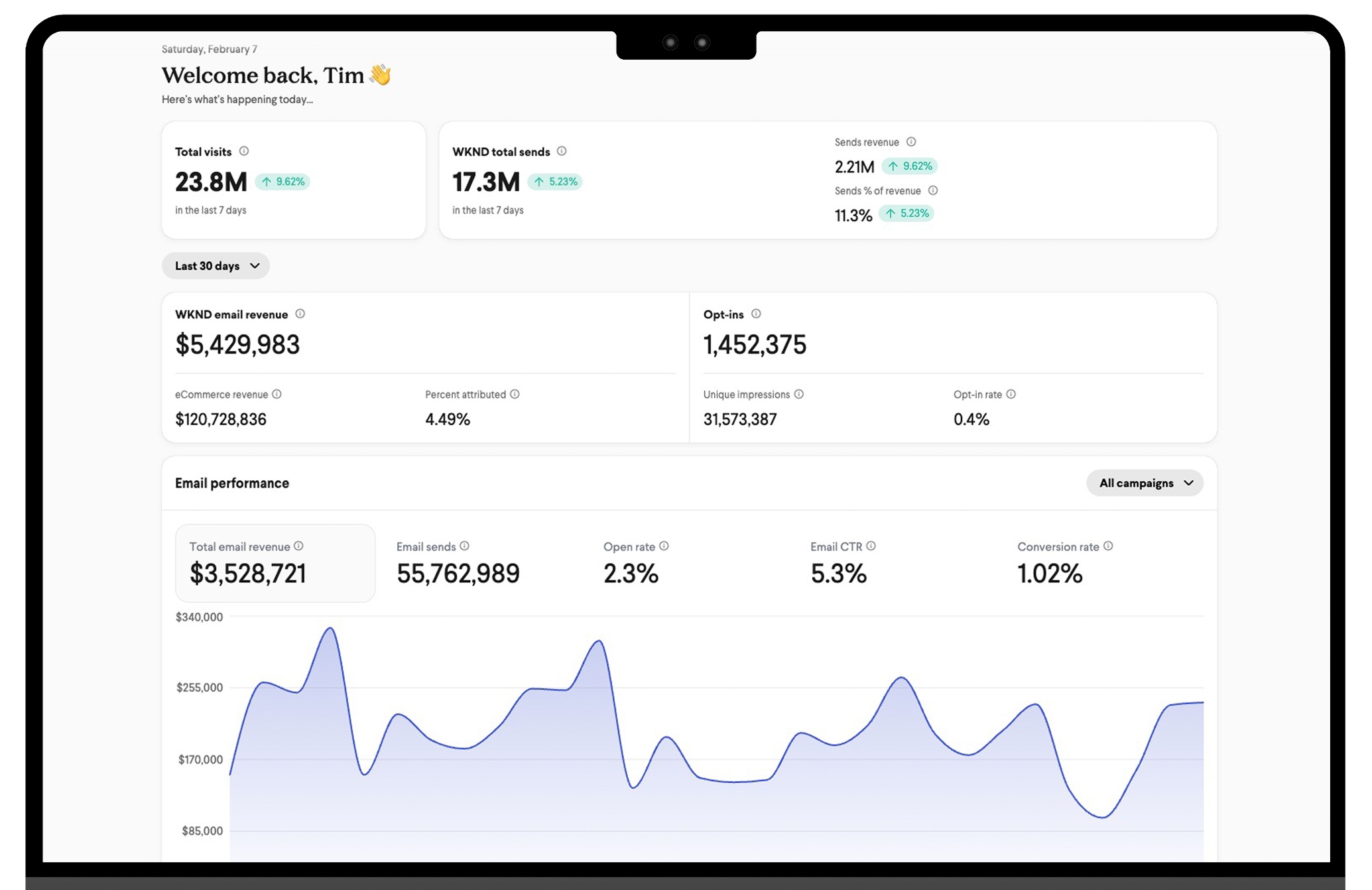
The 2026 partnerships make its market position clearer. Braze received identity and behavioral signals in March. Cordial followed in August; Iterable and SAP Engagement Cloud integrations arrived in September. These arrangements let marketers retain established tools while Wunderkind supplies recognition and recommended actions upstream.
In the Cordial integration, for example, Cordial delivers the message, enforces subscription status, and reports performance. That division matters. A vendor can compete for a marketing budget while cooperating with another vendor’s software. Alternatives include Bluecore, Retention.com, native platform features, and the engineering department - each covering a different portion of the job.
A guarantee needs a denominator
Wunderkind markets guaranteed revenue. Its public proposition is easier to understand than a universal price: engagements are negotiated. Kurt Geiger’s development bill tells us what its own experiment cost; it does not tell us Wunderkind’s fee.
The company also reports more than $5 billion in attributable client sales annually. That is customer sales credited to its activity, not Wunderkind’s revenue. Attribution alone cannot establish that every credited purchase would otherwise have vanished. A shopper who receives an email might already have intended to buy.
For a buyer, the transferable lesson is to write the experiment before admiring the result. Establish the existing baseline, agree attribution windows, and consider a holdout group. Compare additional margin with fees, message costs, discounts, and staff time. With little traffic, few eligible subscribers, or weak purchasing demand, better recognition may have too little opportunity to repay the investment.
A marketing team can start narrowly: one abandonment program, one eligible audience, one comparison against its existing setup. That keeps the question legible. If the added identity layer reaches people the current system misses, the team has something concrete to evaluate before extending the arrangement across more channels.
From the departing visitor to the shopping agent
Founded in 2010, the business formerly called BounceX announced the Wunderkind name in 2020, alongside $100 million in annual revenue. The stated ambition was individuality at scale. Its culture exercise had a surprisingly literal participatory streak: 89% of employees contributed survey feedback to its first formal values in 2019.

The product accumulated capabilities along the way. Wunderkind acquired SmarterHQ in November 2020 for its segmentation and orchestration technology; that offering became Audiences in 2022. The progression helps explain why the company now talks about decisions across channels rather than a single intervention at the edge of a website.
Bill Ingram’s arrival as CEO in 2023 accompanied the announcement of a $76 million Series C. In August 2026, he announced another investment round and Profiles MCP, an interface connecting AI assistants to shopper-specific product recommendations.
The developer documentation brings that ambition down to earth. Recommendations refresh daily, require a device identifier, and return product IDs rather than personal profile data. Unknown shoppers can yield no recommendations. Even this latest product begins with the same stubborn question: does the system know enough about the person to offer something worth their attention?