Wil Davis had done the sensible thing. He had gone to school, prepared for employment, and entered the working world. Then the sensible thing began to look peculiar. A day could be full of tasks, the boss could be satisfied, and the person doing the work could still wonder what all those hours were adding up to. Retirement seemed an odd ambition to organize a career around: spend decades doing something so that, eventually, you could stop.
That unease became a recurring question in Davis’s life. He co-founded a software company, became an author, and built a consulting practice around the relationship between people and their work. The company was Ontario Systems, later renamed Finvi. The question was harder to put on a business card. What would make a working day worth wanting?
“Is the goal of work simply to someday not have to work?”
Wil Davis
The garage had no grand industry plan
In 1980, Davis and Ron Fauquher started a custom software shop in Fauquher’s garage. Their background pointed toward manufacturing. They took on different kinds of programming assignments; a future in collections software was not the original premise. The familiar garage story usually arrives with an air of inevitability. This one includes a customer who changed the subject.
A collection agency wanted to automate its accounts and management, with a connection to its PBX telephone system. Davis and Fauquher accepted the assignment. As they worked, they saw that other organizations could need something similar. A particular client’s operational difficulty suggested a market. Ontario Systems developed into a receivables management software business.
There is a pleasing absence of prophecy in that sequence. The founders knew software and manufacturing. A customer knew the problem. Their encounter gave the business a direction. The garage matters as a starting place; the willingness to follow an unfamiliar assignment matters more to the plot.
A book before the exit
Davis’s concern with working life became a public subject while he was still building the business. In May 2003, he spoke to the Entrepreneur’s Alliance of Indiana on high-performance leadership and creating a culture of excellence. Ball State’s Alumni Association supported the dinner. The software founder was already explaining what he believed made an organization worth belonging to.
Two years later came Creating a Culture of Excellence: Changing the World of Work One Person at a Time. The subtitle assigns the work a deliberately human scale. A company might employ hundreds of people, but each person still arrives with a separate understanding of what a worthwhile life should contain.
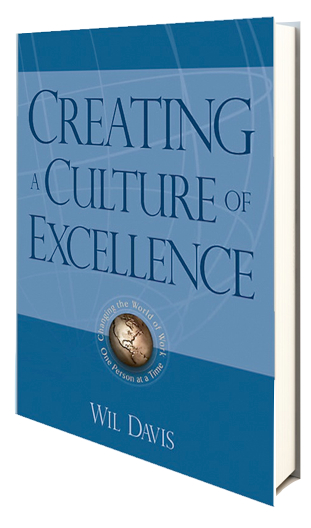
The book argues for values that serve both the organization and the individuals inside it. That is a demanding arrangement. A company can print its principles cheaply enough. Making them useful to the people who do the work requires decisions, relationships, and a willingness to be judged by ordinary experience. The subtitle keeps directing attention back to the individual.
Recognition followed Davis across those years. Ball State named him among past TechPoint Mira Trailblazer honorees in its 2009 announcement. His honors also include the university’s Distinguished Alumni Award and an honorary doctorate in Business Management from Indiana Wesleyan. The themes of his writing and speaking give those résumé lines a common setting: a software entrepreneur increasingly occupied with leadership.
His director biography places the end of his Ontario Systems CEO tenure in 2008 and his chairmanship in 2017. The Finvi name arrived in October 2021, under subsequent leadership. A founder’s history can become blurry when a familiar company changes its sign. Davis’s contribution belongs to the Ontario Systems years, before the newer name appeared.
Helping the next idea leave the building
His experience also found a home at Ball State Innovation Corporation. University reports for 2012 and 2013 identified him as interim president, directing commercialization and licensing of Ball State intellectual property. After helping build a software business, he was working on the passage from university ideas to outside use. The job put an entrepreneur’s judgment beside academic invention.
That passage involves more than declaring something innovative. Someone must consider a possible customer, a route to market, and the arrangements that allow an idea to travel. Commercialization places those practical questions alongside the work of discovery. Davis’s career had already supplied a memorable example of a business finding direction through a customer’s need.
In 2014, he was among the speakers preparing entrants for Muncie’s inaugural BIG Pitch competition. Thirty-seven pitches reached the judging panel. Winning ideas included a downtown brewery, digital storytelling, and a water-purification process. Each winning team received $5,000 in working capital, alongside space access and professional help. Davis’s part was in the preparatory Training Camp, where experience could be useful before anyone won a check.
His university work even intersected with book arts. A 2016 Ball State project planned to bring students into letterpress printing, binding, papermaking, and related crafts. Students would work with Davis to sell their materials through retail outlets and develop those relationships. Software and handmade books make unlikely neighbors on a résumé. Both, however, need a way to reach someone who values the work.
Davis could also be specific about the less glamorous help a young organization needs. Praising the Innovation Connector’s Alexis Dishman in 2018, he singled out flexible meeting space, reception, telephone services, and hospitality. These are the things a business notices when they go missing. His appreciation gave the person making them happen a place in the story.
Muncie gets a place in the balance sheet
Ontario Systems grew within a local business community whose relationships extended beyond software. Ontario Corporation, its former parent, supported the company through a partnership lasting 26 years. Former parent-company leader Kelly Stanley later described Davis and Fauquher’s values and care for their employees as foundations of the business. Their garage enterprise had acquired colleagues, institutional partners, and civic obligations.
By 2017, Ontario Systems had more than 300 employees in Muncie and Delaware County. Its annual United Way Pacesetter Campaign ran early to help launch the wider community effort. The same year, Casey Stanley became the seventh campaign chair from Ontario. That continuity matters: community involvement had become something successive people did, rather than an isolated founder’s gesture.
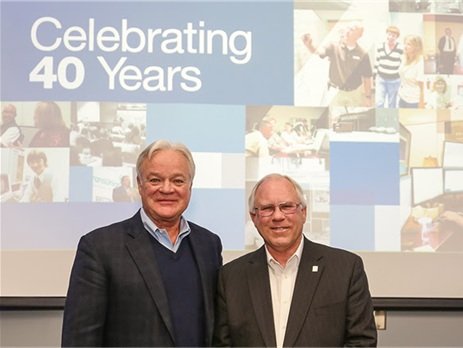
At the company’s anniversary gathering, colleagues unveiled an unrestricted community fund bearing both founders’ names. The Ontario Systems–Wil Davis and Ron Fauquher Fund sits with the Community Foundation of Muncie and Delaware County. Its purpose reaches beyond any one project, allowing charitable resources to serve the area as needs change.
The foundation later explained why that flexibility matters. Unrestricted giving leaves room for future judgment about where help belongs. It is an interesting way to honor entrepreneurs: preserve their names while allowing other people to make decisions about the work ahead. The gift can outlast the circumstances in which it was announced.
“We must do well so we can do good.”
Wil Davis and Ron Fauquher
The question gets its own company
At Noble Why, Davis’s consulting practice, the relationship between personal fulfillment and organizational purpose becomes the assignment itself. The firm addresses cultural difficulties that can accompany growth, leadership changes, and competition. Davis asks organizations to consider how the aspirations of their people meet the vision and values the business actually practices.
The framework gives a leadership team four subjects to work through: corporate purpose, personal purpose, leadership, and accountability. It asks why the organization exists beyond earning money, what motivates its people, how leaders cultivate the culture, and whether people trust the way responsibility is exercised. These are questions that resist a useful answer composed entirely of slogans.
In a 2022 conversation, Davis described leadership as helping people connect their individual contribution with the organization’s work. He uses overlapping circles to explain the relationship. He also pressed for a fuller understanding of accountability: “It’s gotta be more than you’re fired.” The line has the practical impatience of someone who has heard a management word used too easily.
His speaking work carries those questions into different rooms. A leadership conference for independent retailers included Davis alongside speakers on local buying, values, and customer service. In April 2024, he addressed the Resource Management Global Symposium in Indianapolis on finding a noble why. The settings changed; the relationship between a person’s purpose and the day’s assignments remained the subject.
His story now encompasses software, university enterprise, consulting, and board service. Northwest Bancshares’ annual report still listed him as a director in February 2026. There are several ways to count such a career: companies built, offices held, years served. Davis keeps returning to a more intimate accounting. A person goes to work. What does that working life make possible?