Before Vasu Prathipati raised a $25 million Series A, he assembled couches at a venture capital office. He also walked an investor’s dog. The dog was called Stan, which is useful to know, because entrepreneurial origin stories tend to remember the cheque and forget who needed taking outside.
The investor was Nihal Mehta of Eniac Ventures. Prathipati was working as his assistant while trying to build a startup called AdTrib. He talked about the business as he worked. Eventually, Mehta raised the possibility of investing. Prathipati later recalled that he had lacked the confidence even to ask.
That small reversal makes a fitting entrance to his story. The person who would spend years asking businesses to listen more carefully first needed someone to hear him. Since then, the objects of his attention have changed: advertising data, marketing campaigns, customer service conversations. The recurring question has become more precise. What are customers already telling a business that its leaders have failed to notice?
A finance graduate takes the unmarked exit
Prathipati grew up in San Diego and graduated from the University of Pennsylvania’s Wharton School in 2013, having studied finance. A conventional route into business was available as a subject of study. As a career, it did not particularly excite him.
During his senior year, Penn professor Kartik Hosanagar suggested an idea. Prathipati pursued it. His eventual co-founder, Harrison Hunter, brought a different training: computer science and electrical engineering at MIT. The partnership put business and technical backgrounds around the same problem, although it took time to discover which problem deserved their attention.
Later, Prathipati described his fondness for New York’s energy and pace, and for spending time with people who care deeply about their craft and remain curious about the world. Those preferences sit comfortably beside his professional choices. He has built his career around people explaining what they do, where it gets difficult, and what they wish worked better. Listening, in his case, became a line of business.
Two products, and a name nobody had energy for
AdTrib tried to help advertisers determine which marketing channels deserved credit for online purchases. The next attempt, MaestroIQ, offered marketing automation across channels. Its name suggested orchestration: different campaigns, one conductor. Both attempts failed to become the business the founders wanted.
The third name arrived with rather less ceremony. Prathipati explained that after AdTrib and MaestroIQ, the team had little energy left for creative naming. They would worry about the brand if the new idea succeeded. MaestroQA was therefore partly a name of convenience. Brand consultants may wish to look away.
By 2019, the naming problem had become a welcome one: the company described hundreds of customers around the world, and a reason to reconsider how it presented itself. The useful distinction is between staying with a company and staying with its first idea. Prathipati and Hunter did the former while repeatedly surrendering the latter. A discarded product could still leave behind a working partnership and a better question.
- AdTribWhich ad earned the purchase?
- MaestroIQHow should campaigns work together?
- MaestroQAHow can support teams improve?
- RippitWhat are customer conversations telling us?
The customer had a calendar
The founders interviewed 150 people working in customer service. They concentrated on a particular person: the customer service manager. Rather than sell an imagined solution, they asked how managers spent their time and examined the tools they used. Quality assurance emerged from the work those people were already doing.
The distinction mattered because a useful feature can still be an unwelcome interruption. A manager may recognise fifteen possible improvements and have time to pursue one. The founders learned to look for the problem that already occupied that first position. Their interviews also created relationships with people who could become early customers when a relevant product existed.
There is an agreeable lack of theatre in that discovery. No thunderbolt was required. A person with a crowded calendar showed two founders where the hours went. Customer service quality, an activity easily mistaken for administrative housekeeping, became a product opportunity because someone paid sustained attention to its daily inconveniences.
The founders’ account, December 2016
The progress was visible before the larger financing. MaestroQA appeared on Forbes’ 2020 Under 30 enterprise technology list, with Prathipati and Hunter named as co-founders. Its profile recorded 200 paying customers and $6.25 million raised, figures belonging to that period. They describe a business finding buyers after its earlier false starts. The recognition supplied a public milestone, but the paying customers supplied something more operationally useful: evidence that people outside the founding team wanted the work to continue.
Eight years to a Series A
In 2021, MaestroQA raised $25 million in a Series A led by Base10 Partners. The company was profitable at the time, with more than 250 large-scale clients. An investment round usually announces a destination in neat financial shorthand. This one also marked eight years of work since the founders’ start in 2013.
The product helped managers review customer interactions and coach representatives. It integrated with systems companies already used, including Zendesk and Salesforce. Machine learning could identify interactions worth investigating, such as an unusually long call or a poor follow-up survey. A manager could then examine what had happened and decide how to help.
Prathipati described growing more attached to the problem over the years. That is a revealing choice of attachment. Products had changed, and the company would change again. The problem offered continuity: a business could be receiving useful feedback all day while leaving much of it inaccessible to the people making decisions. The funding created room to pursue that gap at a larger scale.
“We have only fallen more in love with the problem over the years.”
Vasu Prathipati, 2021
Even the second lesson needed repeating
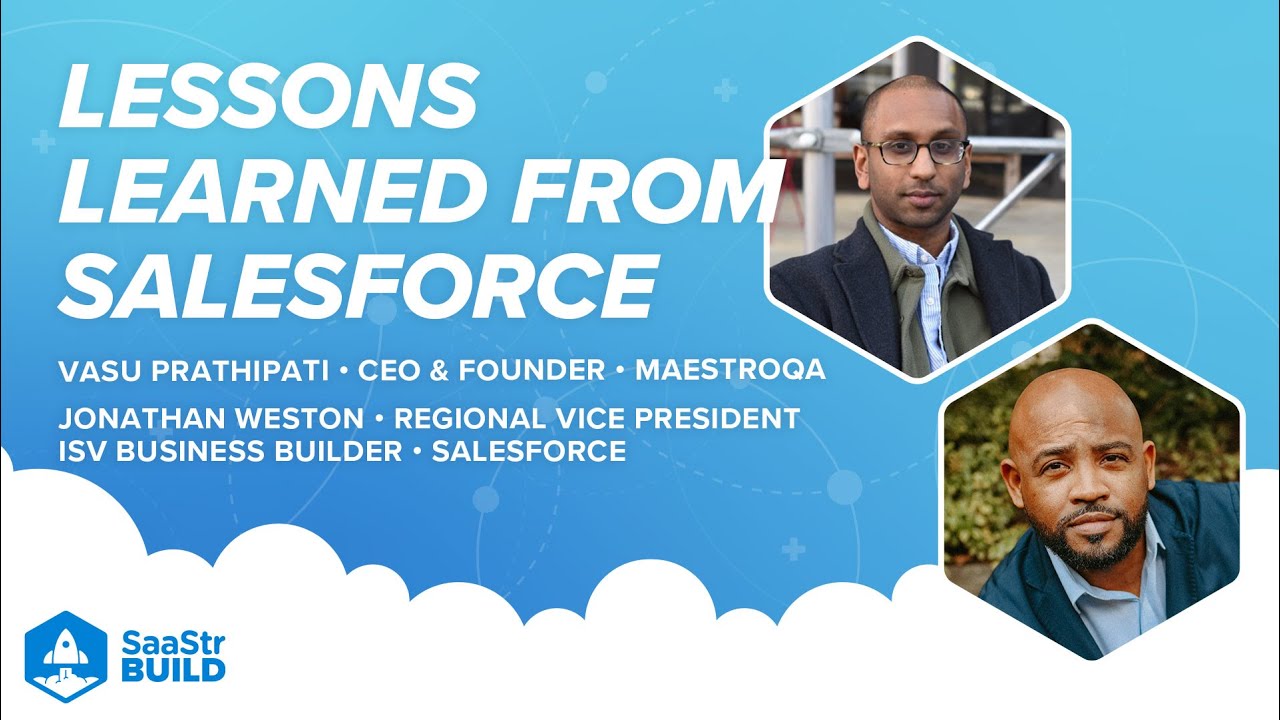
Experience did not make Prathipati immune to repeating himself. In a SaaStr discussion with Salesforce’s Jonathan Weston, he acknowledged that the team had spent years building technology while misreading customer demand. Later, when building a Salesforce application, they again expected customers to arrive more readily than they did.
His account gives distribution an unglamorous but necessary seat at the table. An application still needs a route to buyers. A partnership still needs attention from the whole company. Software can be carefully built and poorly introduced; both activities belong to the founder’s job.
That willingness to discuss the repeat offence makes the lesson more useful. A founder who has learned something once can still require a refresher, preferably before the next budget meeting. Prathipati’s public advice comes with the awkward details included. He can explain the mistake from inside it, which is often where the interesting information lives.
A job interview with room to change your mind
Asked about hiring in 2022, Prathipati set out three values: passion, evolution, and structured thinking with Socratic debate. The language sounds formal until he translates it into questions about a person. Do they love their craft? Will they reconsider a position even if doing so makes them look bad? How carefully do they reach decisions?
The second question is especially relevant to someone whose company had already changed direction more than once. Revising an opinion is easy to endorse in a meeting and harder to do when your own name is attached to it. His stated hiring preference asks candidates to tolerate that discomfort.
He also expressed curiosity about how the culture would develop as the company grew. This was an ambition, rather than a finished achievement to put in a display case. A founder can choose values in an afternoon. Establishing habits that survive new colleagues, new customers and different commercial pressures takes rather longer. His questions at least make the intended habits concrete.
The interviewer keeps asking
By 2025, Prathipati was conducting another kind of customer-adjacent inquiry through Quality Time, his interview series with business leaders. Guests included Zuora co-founder Tien Tzuo, Gainsight CEO Nick Mehta, Front CEO Dan O’Connell, Guru CEO Rick Nucci, and former Workday CEO Chano Fernandez.
The topics moved across subscriptions, customer success, communication and knowledge management. Together, they placed quality inside a wider business discussion. A support interaction might influence retention. Useful knowledge might exist inside a company without reaching the person who needs it. A recorded conversation might contain information that never appears in an executive report.
The series gives Prathipati a second role beside running the company: asking other operators how their businesses work. It also offers a way to understand his ambitions without relying on a grand personal declaration. Follow the questions. They keep travelling outward, from the representative and the manager toward the people deciding what an entire organisation should do next.
The company outgrows two letters
In 2026, MaestroQA became Rippit. The company’s September announcement described a rebuilt AI platform and a broader remit: using customer conversations to answer questions across a business. Quality assurance remained a use case, alongside identifying product feedback, possible churn and problems in chatbot interactions.
The rename fits the direction Prathipati had been discussing. A name ending in QA could tell a product manager, however unintentionally, that the software belonged to another department. Rippit is intended to invite more people into the same body of customer knowledge. The company says its platform can analyse all connected conversations; that is its product claim, and the practical promise on which this next chapter rests.
Names have followed the work throughout Prathipati’s career, sometimes reluctantly. The more durable thread runs through the conversations: a professor with an idea, an investor who listened, managers explaining their day, executives discussing how they learn. After years of building software around those exchanges, the next question remains wonderfully ordinary. What did the customer actually say?