Before Mark Cuban became a familiar face on television, he was a customer who needed technical support. His company, AudioNet, used chat software made by a small business called eShare. Brad Birnbaum remembers Cuban calling for help. The internet was young enough that two small teams could find themselves building pieces of its future while sorting out the ordinary business of getting something to work.
There is a pleasing absence of ceremony in that memory. A future billionaire calls. Someone answers. Software needs fixing. Birnbaum has since co-founded Assistly, worked inside Salesforce, and taken Kustomer into Meta and back out again. Yet the support call remains a useful place to begin. Behind every ambitious technology company is somebody hoping they will not have to explain their problem twice.
A browser, a chat room, an unexpected customer
Birnbaum began building internet software in 1994, while he was a college sophomore. The early business was chat: bringing some of the appeal of AOL’s communal rooms onto the web. Browsers were primitive, and the team worked around their limitations to make pages refresh. Their product, eShare Expressions, gave websites places where visitors could talk and, conveniently for an advertising business, reasons to hang around.
Then a local company asked whether that technology could serve a call center. Birnbaum had no background in how one operated. His team went to watch. They learned how inquiries waited in queues, how work reached the right agent, and what happened after a conversation ended. A new direction emerged from observing a workplace rather than predicting one.
The resulting product, NetAgent, carried the mechanics of a call center onto the internet. Customers included Microsoft, Dell, Sprint and AOL. eShare eventually sold to Melita. Birnbaum’s career had acquired its enduring subject almost by accident: the awkward distance between a business that has information and a customer who needs an answer.
His education offers a quieter clue to that practical bent. He holds a bachelor’s degree in information systems from Stony Brook University and also conducted organometallic chemistry research there as a fellow. The laboratory and the support desk make an unusual pairing. Both, at least, punish an explanation that sounds elegant but fails when someone tries it.
“I had no idea how a call center worked”
Brad Birnbaum, recalling the request that redirected eShare
The appeal of a shorter journey
By 2008, Birnbaum was running chat at AOL. He had spent years in enterprise software, including leadership roles at eAssist and Talisma. AOL gave him another view of a large organization. It also helped him recognize how much he wanted to build products. He and several colleagues began considering their next company.
There was a personal calculation alongside the commercial one. Birnbaum had become a father, and the travel that came with enterprise technology work had lost some of its appeal. Software delivered online, sold to smaller businesses with shorter buying cycles, looked like a way to change the rhythm of work. A business model can begin with a market opportunity and a desire to get home.
Assistly, founded in 2009 with colleagues including Alex Bard, Gary Benitt and Jeremy Suriel, pursued customer support software delivered as a service. Salesforce acquired it in 2011, and the product became Desk.com. Birnbaum spent three years at Salesforce. He then took a detour as chief technology officer at Sean Parker’s Airtime, working on group video and shared media.
The detour did not become a permanent change of subject. Suriel was at Airtime too. They left and founded Kustomer in 2015. Their partnership had survived different employers, products and corporate owners. In a business fond of describing each new company as a clean break, this one came with a long shared memory.
The customer who keeps disappearing
Kustomer’s central complaint was simple: support software had organized work around tickets, scattering a person’s history across separate cases. A customer might email, send a message, buy something, and return with another question. To that customer, these events belong to one relationship. To the software, they can look like unrelated pieces of work.
Birnbaum and Suriel built around a continuous customer timeline. Conversations and relevant data could sit together, giving an agent a view of what had happened before. The practical ambition was recognition. Nobody enjoys becoming a stranger to a company every time they contact it, particularly when that company has been quite diligent about remembering their payment details.
He also had to learn which customers wanted the product. Kustomer launched publicly in 2016 with an approach aimed at very small businesses and self-service trials. Within two months, the team concluded that the software’s capabilities suited larger deployments. They changed course. The work expanded to implementation, integrations and a sales organization equipped for more involved purchases.
That adjustment belongs beside the more celebrated transactions in his biography. It shows a founder willing to revise the customer he had imagined. A product’s intended buyer is a hypothesis. The people who actually need it get a vote, and sometimes their vote arrives with procurement paperwork.
Keep the conversation attached to the person.
A sale with another chapter attached
Facebook announced its agreement to acquire Kustomer in November 2020. After regulatory review, the acquisition closed in February 2022. Birnbaum’s announcement described the opportunity to combine Kustomer’s software with Meta’s resources and messaging channels. It was a plausible home for a company built around the ways customers increasingly communicated with businesses.
The stay was brief. In May 2023, Kustomer returned to independence. Previous investors Battery and Redpoint co-led a $60 million financing, with Boldstart participating. Birnbaum remained chief executive. The corporate story had taken the sort of turn that makes a founding timeline look as though someone has accidentally pasted the beginning into the middle.
For Birnbaum, independence coincided with the arrival of generative AI as a practical product opportunity. He has described 2023 as a chance to reconsider the market and build in the direction the team wanted. The same company, with its existing customer relationships and accumulated product work, could take another run at the problem.
The return also changes how one reads the acquisition. Selling a company can look like the finish when viewed from outside. For the person still responsible for its customers, the work has tomorrow’s date on it. Ownership changed twice. The requests for help continued to arrive.
- 2015Birnbaum and Suriel found Kustomer.
- 2022The Meta acquisition closes in February.
- 2023Independence returns, backed by $60 million.
- 2025A $30 million Series B supports the next phase.
The price of answering a question
The next financing arrived in August 2025: $30 million led by Norwest, with Battery, Redpoint and Boldstart returning. Birnbaum set out plans for more AI development, deeper integrations and international expansion. His stated ambition extended beyond generating replies to software capable of carrying out work, including issuing refunds and updating records.
But automation brings an uncomfortable question for anyone selling support software by the number of people who use it. What happens to the bill when machines absorb more of the work? In a March 2025 conversation about pricing, Birnbaum described Kustomer’s move toward charging by conversation, with unlimited seats, rather than layering new AI charges over the familiar human-seat model.
He said the company had spent six months examining usage and interviewing customers. Their dislike of managing seat counts informed the decision. It is an unusually revealing subject for a founder interview. The invoice is where a company’s promises meet the customer’s budget, and the budget is rarely persuaded by adjectives.
“They inevitably told us that they hate paying for seats.”
Brad Birnbaum, discussing customer interviews and pricing in 2025
For Birnbaum, the data behind the conversation remains essential. An automated agent needs more than a fluent answer. It needs to know which order belongs to the customer, what policy applies, and whether an action is permitted. The timeline that originally helped human agents recognize someone becomes part of the foundation for software acting on their behalf.
What happens after the demonstration
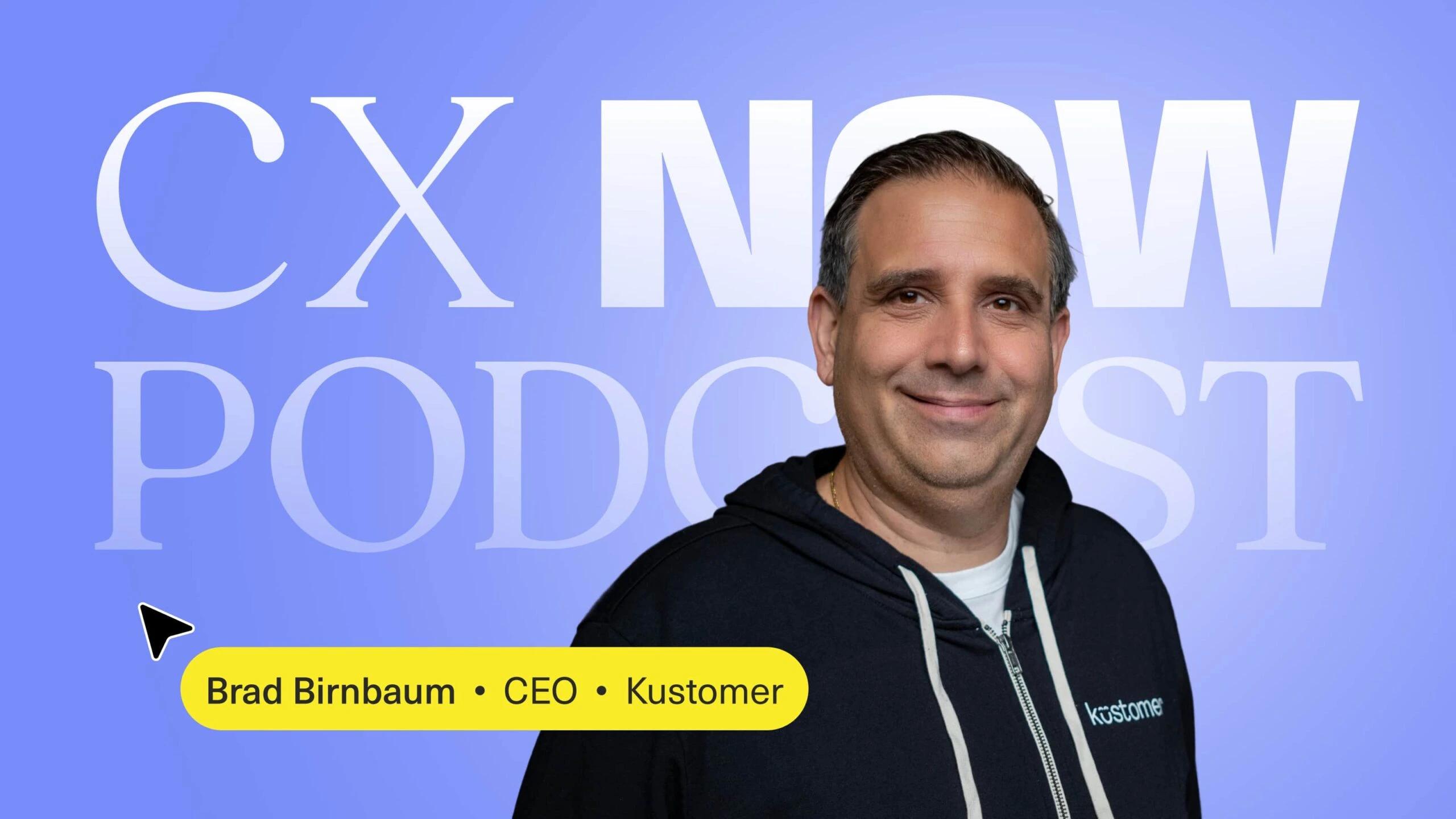
By 2026, his public conversations were turning increasingly toward how businesses judge AI. In May, he argued that reducing the number of inquiries reaching a human should not be the only measure of success. Retention, revenue and the result of the interaction deserve attention too. A cleared queue can look excellent on a dashboard while leaving the customer thoroughly unimpressed.
In June, he returned to the importance of business outcomes and keeping people involved as automation expands. The useful question becomes whether a customer’s problem was resolved in a way that helps the relationship continue. Counting activity is easier. That convenience can become its own trap for a company that sells tools to measure work.
His October 8 interview added another constraint: organizations themselves. Legal review, risk decisions and agreement about where to begin can hold up adoption even when technology is available. He discussed combining generative AI with predictable rules and moving people toward reviewing work. These are operating questions, familiar to anyone who has watched a promising demonstration collide with an actual business.
Birnbaum’s career keeps returning to that collision. A chat room became a support tool because someone asked and the team went to look. A software company changed its sales approach because different customers needed it. A founder returned to independence and found another reason to rebuild. After three decades, he is still working on the moment when a person asks for help. The technology has acquired a much larger vocabulary. The customer would still appreciate an answer.