A recorded call is an oddly unfinished object. The customer has explained the problem. The agent has tried to solve it. Somewhere, a file preserves the encounter. But unless somebody reviews it, the business may learn very little. ETS Labs has built a business around that gap between keeping a conversation and understanding what happened inside it.
- QEval evaluates conversations and turns findings into coaching.
- ICE handles customer engagement across channels.
- Engineers and implementation teams help the software fit the operation.
The lab came after the work
The order matters. Etech Global Services was founded in 2003 as a contact center business. Its engineers worked on problems their colleagues encountered while serving customers. ETS Labs’ published history begins with Effective Reports, an internal performance-reporting product. Reporting came before the present enterprise AI pitch. First, the company needed to see how the operation was doing.
Its current company-information page dates the formalized ETS Labs engineering group to 2019. Etech announced the distinct technology division in September 2025, appointing Jim Iyoob president. That sequence gives the company a particular sales argument: the people building the tools work alongside an operator that has to live with their consequences.

The company says it serves more than 100 enterprise clients, including Fortune 500 organizations. Its audience includes quality managers, supervisors and customer-experience leaders. These buyers already have telephony, customer records and reporting systems. Their problem is getting those systems to produce a useful decision before the next customer calls.
A score needs somewhere to go
QEval is the clearest expression of that ambition. It analyzes voice, chat and email interactions for quality monitoring and performance management. ETS Labs advertises coverage of every interaction, contrasting it with manual review of a small sample. Speech analytics, coaching recommendations and explanations of scoring decisions sit alongside the evaluation.
Interactions covered, according to ETS Labs.
Coverage measures reach. Accuracy needs a separate test.
That distinction is easy to overlook. Reading every conversation does not, by itself, establish that every judgment is correct. A manager needs to inspect why a score was assigned and decide what behavior should change. The attraction of explainability is practical: it gives the quality team something to discuss with an agent beyond a mysterious number.
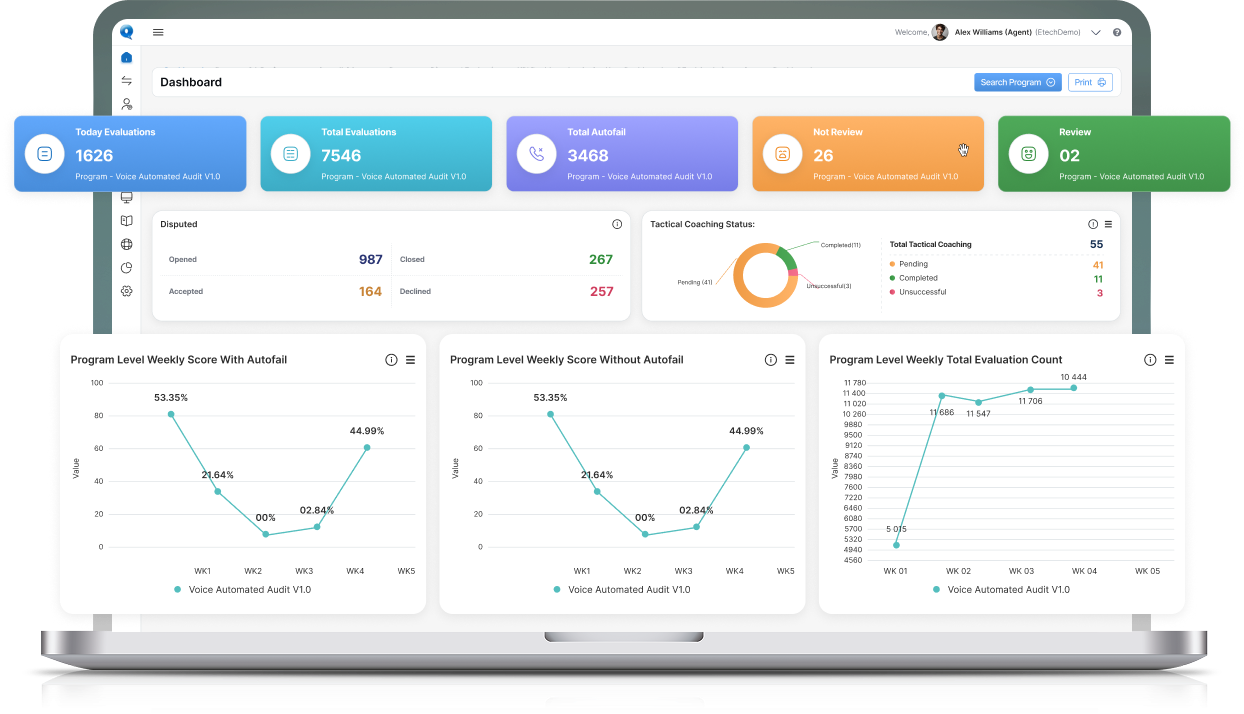
ICE, short for Integrated Customer Engagement, addresses a different part of the job: coordinating customer contact across channels, including routing and shared context. Process Automation tackles repetitive workflows, document processing and connections to existing business systems. Together, the offerings stretch from handling an interaction to evaluating it and acting on the result.
The expensive part is making it fit
Enterprise software has a habit of arriving with an invisible second project: fitting it into everything the buyer already owns. ETS Labs explicitly sells that work. Its services include system integration, API development, cloud architecture, model optimization, workforce management and ongoing support. The product comes with people who can connect it.
QEval is sold on a subscription basis, with fees set in an order form or master agreement. ETS Labs advertises a 30-day deployment for the platform. That makes integration readiness a sensible buying question: which recordings are accessible, which scorecards are agreed, and which systems must exchange data? A calendar promise becomes meaningful when the starting conditions are clear.
The practical obstacles show up in its case-study library: disconnected information, manual case handling and constrained access to useful data. These are descriptions of work getting stuck. They also explain why a capable model alone is an incomplete purchase. Someone must decide what information it receives and where its output goes.
One telecom case study makes the constraint unusually concrete. The customer had more than 15 million interaction records, while analysts faced lengthy analysis and language-model context limits. ETS Labs describes a system combining natural-language queries, token truncation and personal-information filtering. It reports analysis falling from four to six hours to 30 seconds, with an 83% reduction in query-related costs. Those are vendor-reported results for that program; the percentage is not a price quote for the product.
A different example concerns Polaris and more than 1,000 dealer websites. ETS Labs describes an audit framework and compliance dashboards for consistent brand presentation. That assignment sits comfortably beside the contact center work: define a standard, inspect a large collection of activity, and make exceptions visible. It also shows why the firm’s older software-development experience still matters. Some customer problems require a custom application and a reporting framework before an AI feature becomes useful.
“At ETS Labs, software gets you started, but our people deliver results.”
Jim Iyoob · September 2025 launch announcement
Sometimes the other vendor is your partner
Here the story gets more interesting. In May 2026, CallMiner announced a partnership with Etech combining its conversation intelligence with Etech’s QEval and coaching capabilities. ETS Labs would provide certified professional services, including optimization, automated quality assurance and managed analytics. The company can sell its expertise around somebody else’s software.
Capacity announced a similar services relationship in June 2026. ETS Labs would configure post-call analytics, integrate workflows with CRM, telephony and workforce systems, and provide ongoing optimization. This is a useful clue to its market position. The operating knowledge has commercial value even when the analytics platform carries another vendor’s name.
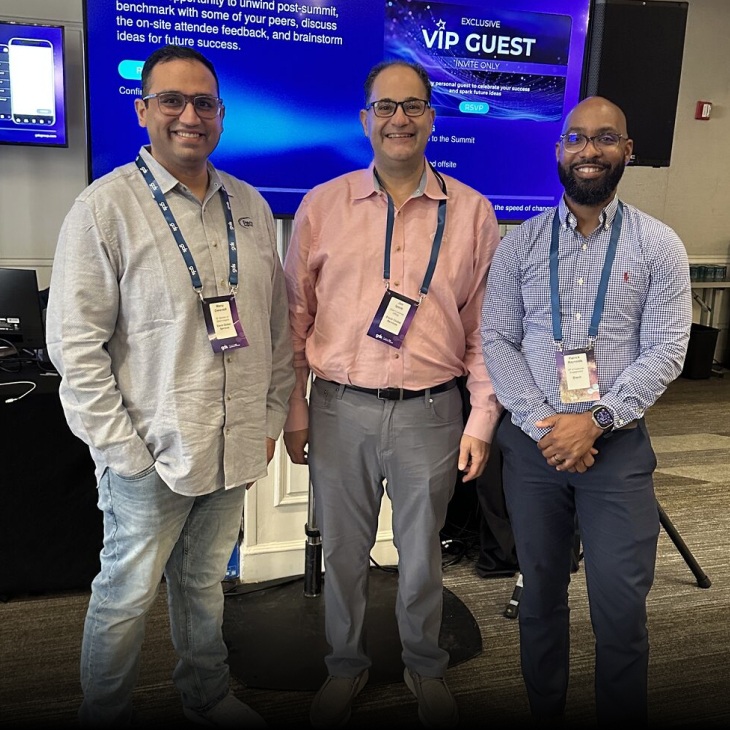
Buyers considering QEval can also examine NICE and Observe.AI. The comparison should turn on the actual job: evaluating interactions, improving coaching, connecting systems and supporting deployment. In October 2026, ETS Labs reported QEval’s CMP Prism placement as Leading in automated QA/QM and Core Performing in customer analytics. Those are distinct assessments, worth keeping distinct.
Bring the awkward calls
The lesson a reader can borrow is straightforward: start with a recurring operational problem. Choose a scorecard. Agree what a correct evaluation looks like. Then give a supervisor responsibility for acting on the findings. This is an editorial recommendation drawn from the company’s operating model, rather than a promised customer outcome.
For a trial, bring recordings with interruptions, ambiguous answers and disputed scores. Ask the system to explain itself. Compare its judgments with your quality team’s decisions. Test whether a coaching assignment reaches someone who can use it. Clean demonstrations are pleasant; awkward conversations tell you more about the purchase.
This approach needs usable interaction data, agreed standards and managers willing to review the results. Without those conditions, broader coverage can simply create a larger queue of unresolved questions. ETS Labs’ proposition is most persuasive where the buyer wants help doing that work. That means assigning ownership before the first dashboard fills up with results. The recording was only the beginning. The decision still belongs to somebody.