The Cardiologist Who Wants to Grow Your Chicken Without the Chicken
A former heart doctor traded the cath lab for the bioreactor to grow chicken from cells. He made history, hit a $1 billion valuation, and then ran straight into state legislatures that would rather ban his product than taste it.
In the summer of 2005, Uma Valeti was a cardiologist at the Mayo Clinic, injecting stem cells into damaged hearts to coax them back to life. It occurred to him that if you could regrow heart muscle in a person, you could grow muscle in a dish. And if you could grow muscle in a dish, you could grow meat - the kind people eat - without ever raising or killing an animal. Ten years later he left medicine to try it. The company he founded is now the biggest name in an industry that barely exists yet.
That company is UPSIDE Foods, based in Berkeley, California, and until 2021 it was called Memphis Meats. Its product is genuine chicken - not soy, not pea protein, not a mushroom pretending to be a nugget - grown directly from animal cells in stainless-steel bioreactors. Start with cells taken from a single heritage-breed chicken egg, feed them the nutrients muscle would normally get from blood, and in roughly three weeks you have chicken you can bread and fry.
01What UPSIDE actually does
The pitch is deceptively simple: everything you love about meat, without the factory farm behind it. UPSIDE's cells grow into muscle and fat inside cultivators - the same class of equipment that brews beer or makes insulin, scaled up and repurposed for animal cells. The company says the process can use far less land and water than conventional animal agriculture, and it removes the slaughterhouse from the supply chain entirely. This is not an imitation of meat. It is meat, made a different way.
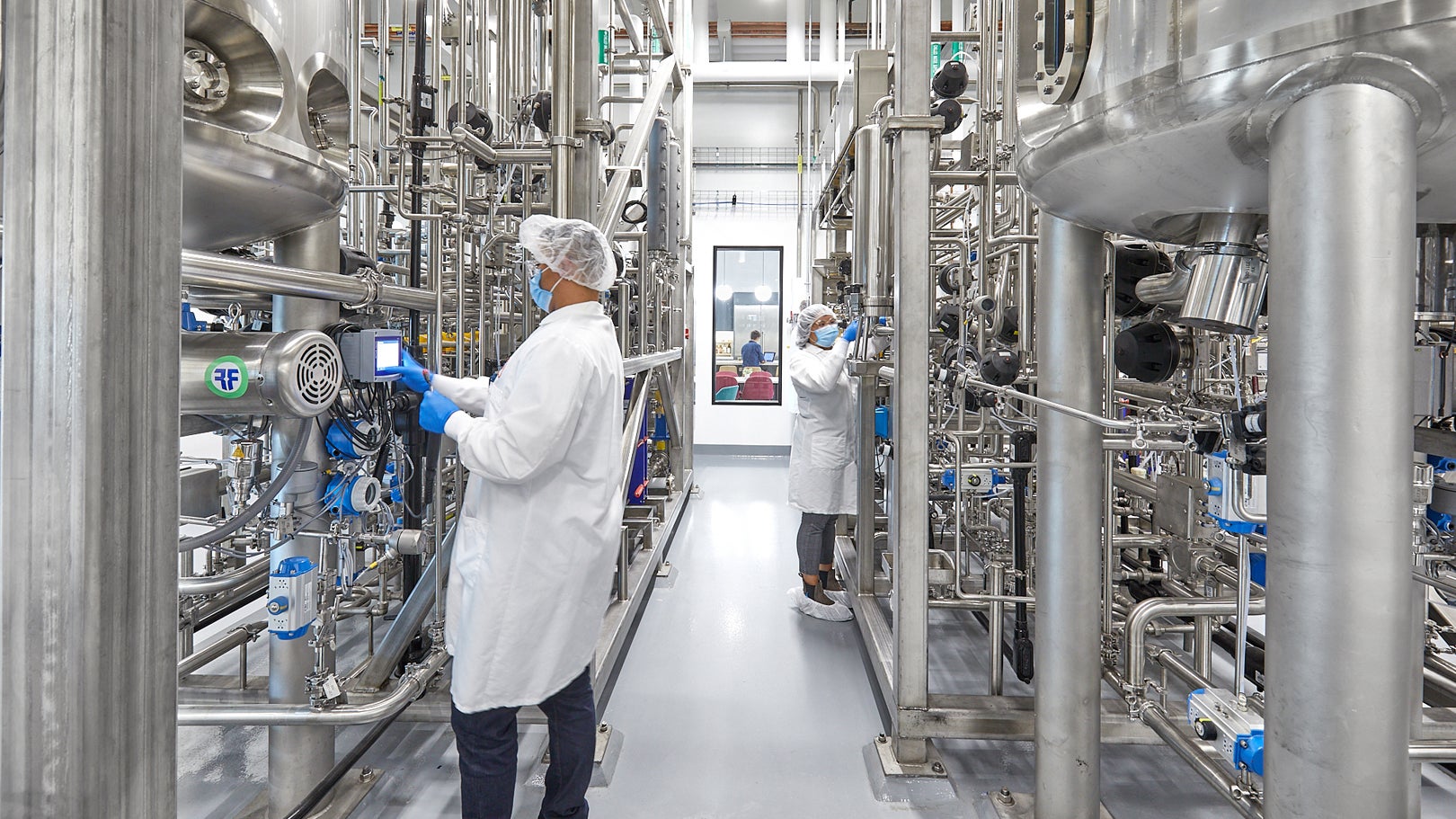
The heart of the operation is a facility called EPIC - Engineering, Production and Innovation Center - a roughly 53,000-square-foot plant that opened in Emeryville in November 2021 on a reported $50 million investment. Its initial design capacity was more than 50,000 pounds of finished meat per year, with room to scale beyond 400,000 pounds. For a category that skeptics love to call science fiction, EPIC is the concrete, humming counter-argument.
02The pivot: from the cath lab to the cultivator
Valeti's origin story is the part investors remember. He is a board-certified cardiologist who spent years in academic medicine before deciding the largest thing he could fix was not any one heart but the way the world makes meat. He has framed the choice in stark arithmetic.
"If I continued as a cardiologist, maybe I would save 2,000 or 3,000 lives over the next 30 years. But if I focus on this, I have the potential to save billions of human lives and trillions of animal lives."Uma Valeti, co-founder and CEO
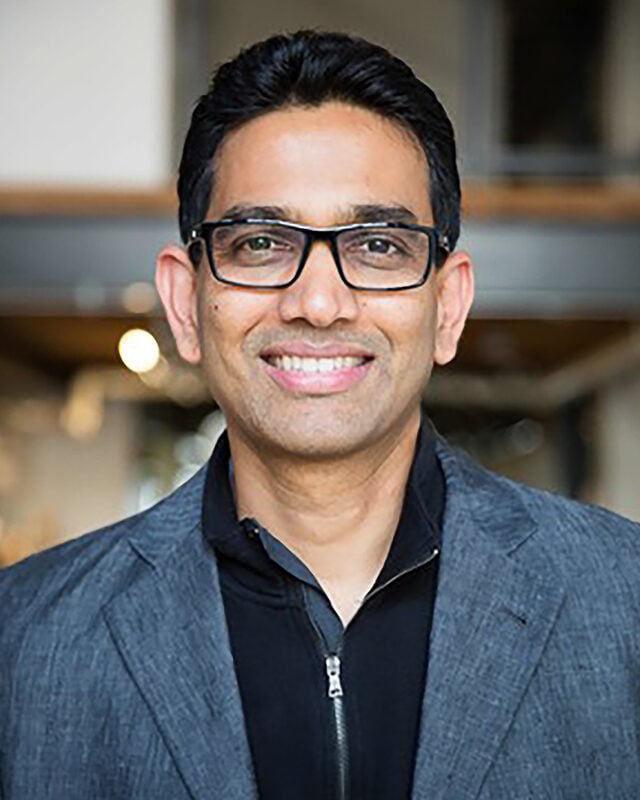
He founded Memphis Meats in 2015 with scientist Nicholas Genovese and co-founder Will Clem. In February 2016 the company released a video of the world's first cultured meatball. A year later it showed cultured chicken and duck - the first cultivated poultry anyone had produced. The demonstrations were expensive and tiny, closer to a magic trick than a menu. But they worked as proof, and proof is what opened the checkbooks.
03The money, in one chart
Few food startups have raised like this. A $5 million seed in 2016 gave way to a $17 million Series A in 2017 that famously drew Bill Gates and Richard Branson. Then the strategic giants of the meat industry itself - Cargill and Tyson Foods - joined a Series B north of $160 million. In April 2022, a $400 million Series C led by Temasek and the Abu Dhabi Growth Fund pushed the company past a $1 billion valuation, the largest round the cultivated-meat sector had ever seen.
04The regulatory marathon
Money buys science. It does not buy permission. In the United States, cultivated meat sits under a joint oversight system: the FDA reviews the cell-culture process and safety, and the USDA handles the finished meat and its label. No company had ever run that gauntlet before. In November 2022, UPSIDE received the world's first FDA "No Questions" letter for a cultivated meat product - regulatory shorthand for "we've reviewed your safety case and we're satisfied." In June 2023 the USDA granted inspection and label approval, clearing the last hurdle to sell.
"This is proven science, this is proven safety. All we're asking for is a chance to have that conversation."Uma Valeti, on state cultivated-meat bans
05The $1 dinner that made history
On July 1, 2023, at Bar Crenn in San Francisco, three-Michelin-star chef Dominique Crenn plated cultivated chicken for paying guests. It was the first commercial sale of cultivated meat in United States history. The symbolic price to those first diners was one dollar. The point was never the revenue - it was the receipt, the proof that a customer in America could legally order and eat meat grown from cells.
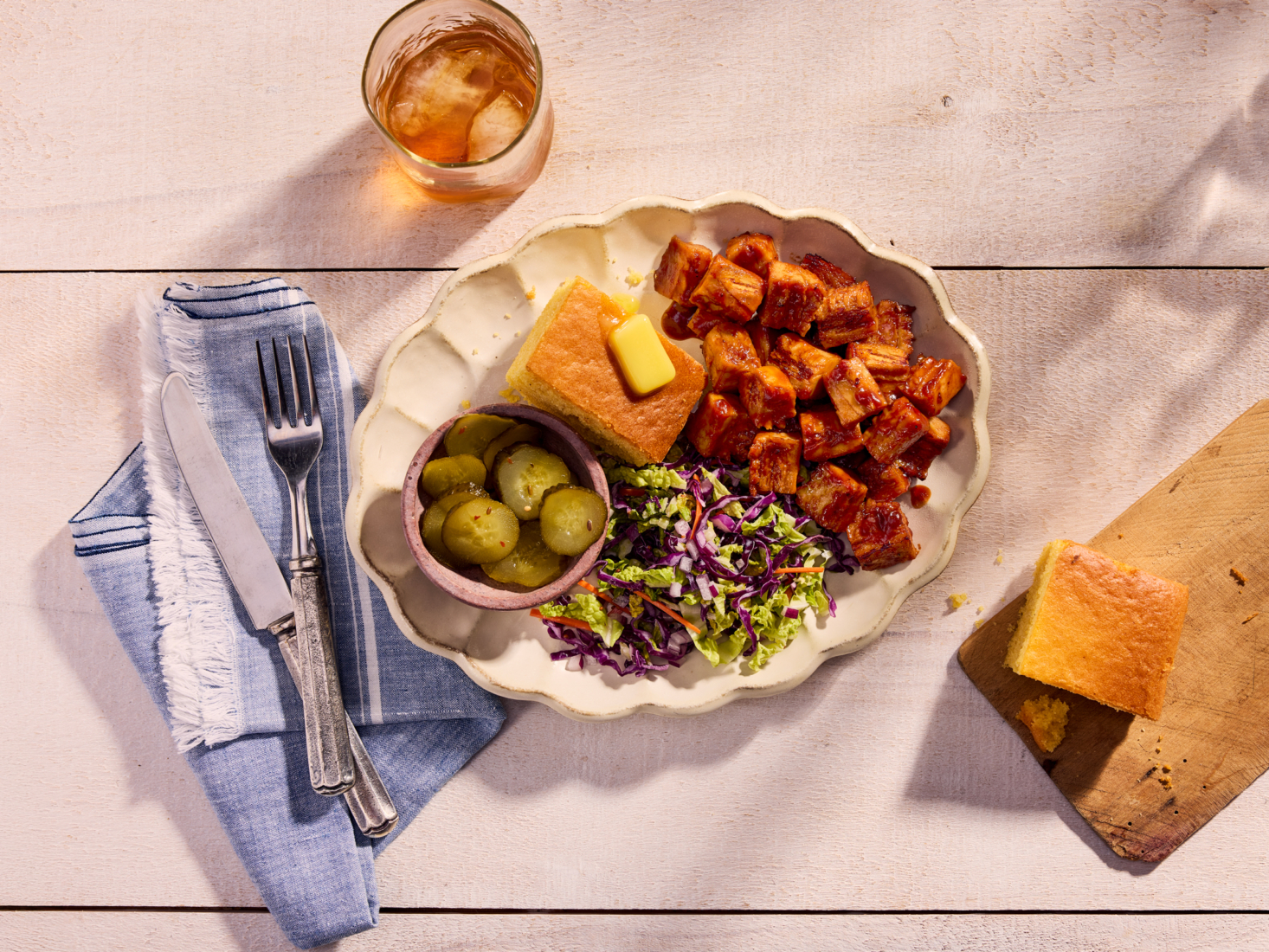
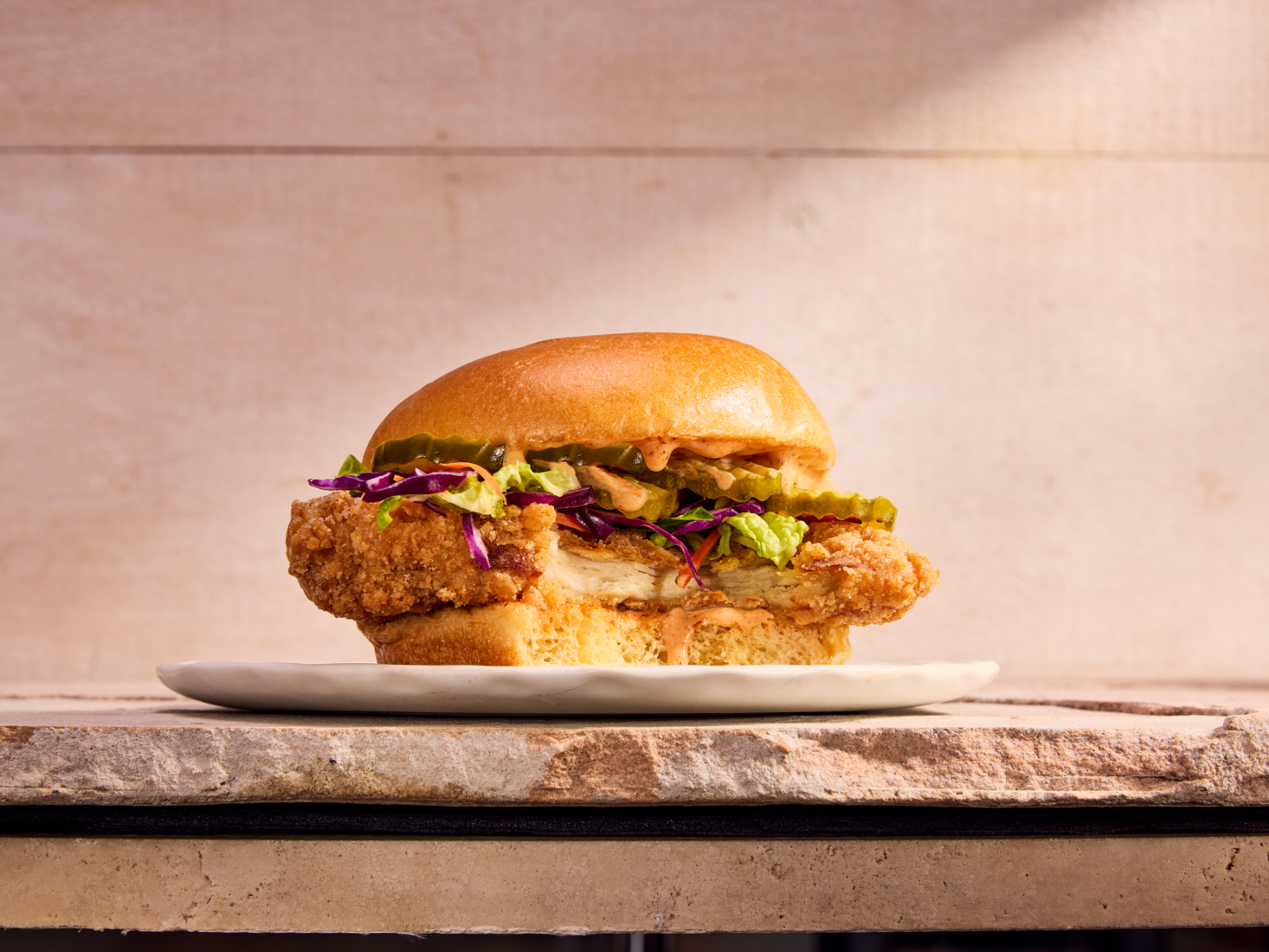
The debut was also a lesson in how fragile "first" can be. The chicken was later no longer served at Bar Crenn, and the company has leaned into a foodservice-first strategy: it sells to chefs and culinary partners rather than into grocery stores, where volume and price would need to be far higher. In early 2025 it teamed with meat distributor Pat LaFrieda to develop cultivated chicken formats - shredded chicken, sausage - built for restaurant kitchens. Later that year it served cultivated chicken sandwiches at the Indianapolis 500.
06Where the plan hit a wall
Here is the honest part. Approval did not equal a market. In early 2024 UPSIDE paused plans for a large commercial plant in Illinois and restructured, a quiet admission that the road to millions of pounds is longer and costlier than the road to a Michelin plate. The economics of growing meat at grocery-store prices remain the industry's unsolved problem: the cells, the growth media, the reactors and the yield all have to get dramatically cheaper before a cultivated fillet competes with a conventional one.
Then the politics arrived. In 2024 Florida banned the sale of cultivated meat; UPSIDE laid off staff and, with the public-interest law firm the Institute for Justice, sued the state, arguing the ban violates the US Constitution's Commerce Clause by shielding local producers from competition. Texas followed with a ban effective September 1, 2025; UPSIDE and cultivated-seafood maker Wildtype sued there too. By late 2025 the company was arguing its Florida case before a federal appeals court, where judges sounded skeptical of parts of its argument. A company that spent a decade earning the government's blessing now spends its days in court defending the right to sell.
"We just fundamentally believe that people should have a choice to choose what they want to put on their plate."Uma Valeti
07The field, and where UPSIDE sits in it
UPSIDE is not alone, but the field has thinned. Its closest US peer is GOOD Meat, part of Eat Just, which cleared the USDA the same month in 2023. Wildtype and BlueNalu are chasing cultivated seafood; Mosa Meat and Aleph Farms are working on beef abroad. Believer Meats, once considered a heavyweight, ceased operations in 2025 - a reminder that capital and headlines do not guarantee survival. Against that backdrop, UPSIDE's combination of the largest war chest, both federal approvals and the first real sale keeps it at the front of the pack, even as the whole pack slows.
08What a founder can steal from this
There are transferable moves here for anyone building in a regulated, capital-heavy category. Lead with a vivid proof - the 2016 meatball did more for fundraising than any spreadsheet. Recruit the incumbents you plan to disrupt; having Cargill and Tyson on the cap table gave the company credibility a pure challenger could not buy. Chase the symbolic first before the profitable scale; the $1 Bar Crenn plate bought years of narrative. And staff for the fight you will actually have - UPSIDE's hire of a former Twitter general counsel as chief legal officer signaled, correctly, that the next battle would be legal, not technical.
The cautions are just as clear. This model does not work if you cannot bend the cost curve - regulatory approval is a milestone, not a business, and a product that costs more than its shelf-neighbor stays a demo. It does not work if the public or their legislators decide against you before you can win them over; a ban does not care about your FDA letter. And it does not work on a venture clock if your timeline is measured in decades of infrastructure. Patient capital and a thick skin are the entry fee.
09The bet, restated
Strip away the courtrooms and the funding rounds and UPSIDE Foods is one wager: that within a generation, meat grown from cells becomes ordinary. The company has already proved the hard scientific part and the hard regulatory part. What remains is the two things money cannot shortcut - making it cheap, and making it welcome. Valeti still talks like a doctor, in outcomes and survival rates. Whether his diagnosis of the food system proves right is now less a question of biology than of price tags and politics.