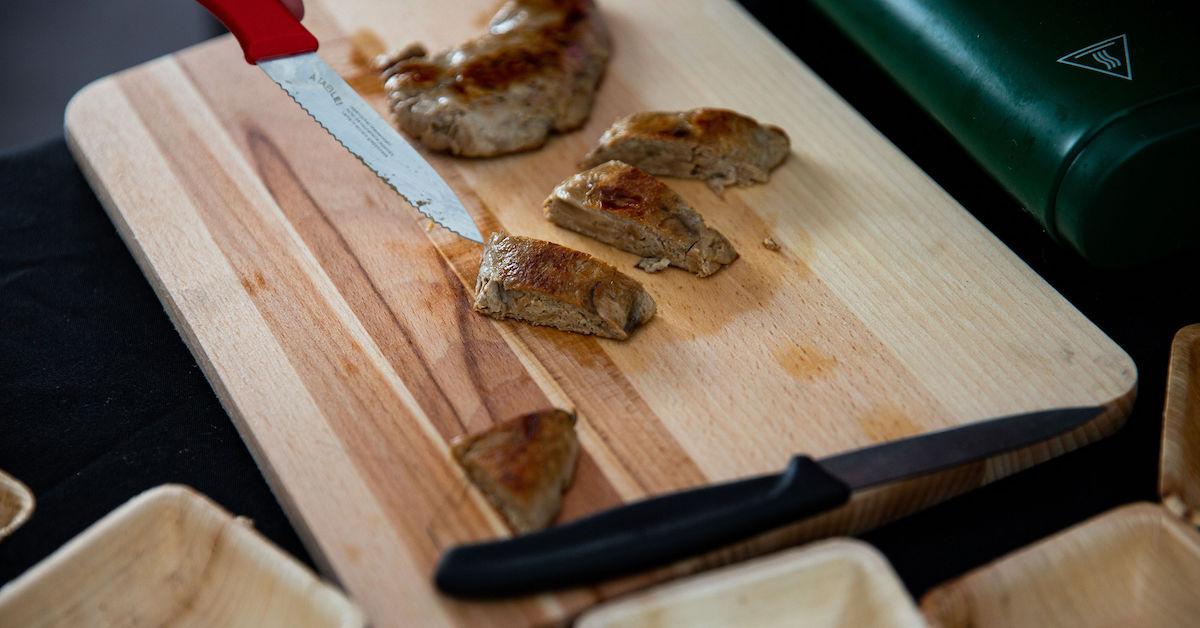
On a cutting board at a New York summit in 2023 sat several browned slices that looked, at first glance, like chicken. Their pale interior pulled into fibers. Their edges had taken color from the pan. But no bird was involved. Bosque Foods had persuaded fungus to do the architectural work.
The Berlin startup cultivated mycelium - the threadlike network from which mushrooms grow - on food-grade agricultural side streams. Rather than pulverize that network and rebuild it with an extruder, Bosque tried to keep the structure intact. A few functional ingredients and flavors came later. The fungi supplied the texture.
It was a neat reversal of the plant-based meat playbook. Burgers and nuggets are forgiving: grind enough protein, fat and binders together and the shape does not ask too many questions. A chicken breast does. Whole cuts have direction, chew and fibers that resist in particular ways. Bosque went directly at the annoying part.
The product was the shortcut
Founder Isabella Iglesias-Musachio came to fungi through sustainable agriculture, startup operations and years of home fermentation. She had helped expand TechShop in France and worked on international expansion at indoor-farming company Infarm. Bosque combined those threads: food systems, fast-moving companies and a personal fixation on microbes.
The initial company was called Kinoko Labs - “kinoko” means mushroom in Japanese - and began in April 2020. It joined SOSV's IndieBio accelerator in New York, where laboratory space and technical mentorship mattered as much as the demo-day spotlight. On January 1, 2022, it became Bosque Foods. The new name, Spanish for forest, marked a useful shift in posture: this was meant to be a food company with biotechnology at its core, not a science project waiting for an application.
Its pitch targeted a specific frustration. People reducing meat could buy plenty of patties, sausages and nuggets, but fewer minimally processed products that could sit in the center of a plate. Bosque planned chicken- and pork-style fillets that flexitarians could sear, slice, tuck into a bao or serve with waffles. It later showed chicken and chorizo prototypes. The goal was culinary interchangeability without a forensic impersonation of meat.
Solid-state fermentation made Bosque different from companies growing fungal biomass in a tank of liquid. Trays or incubators held a moist solid substrate, giving filamentous fungi something like the conditions of soil or a tree trunk. Growth took days. Bosque's old materials advertised production in under ten. The process also promised a circular input story: low-value food byproducts in, higher-value protein out.
That elegance reduced some downstream work. Mycelium already contains protein, fiber, micronutrients and an umami note; its network offers bite before a food scientist reaches for an arsenal of texturizers. The intended business stretched across branded products for restaurants and retail, along with ingredients or joint-label development for manufacturers. There were even early conversations with pet-food companies. In practice, Bosque's public life remained dominated by R&D, tastings and customer discovery.
“It's really simple. That's the beauty of it.”Isabella Iglesias-Musachio, describing the harvest-and-finish process in 2023
What the €2.8 million actually bought
In May 2022, Bosque announced a seed round of roughly €2.8 million, reported in dollar coverage as about $3 million. FoodLabs, Happiness Capital, SOSV, Blue Horizon and Blue Impact backed the round, joined by angels including FoodHack founder Arman Anatürk and Tier co-founder Lawrence Leuschner. Earlier accelerator and pre-seed support brings some database estimates above that figure, but €2.8 million is the cleanest disclosed check.
The money was not for a national advertising campaign. It was supposed to move the company from tiny lab quantities into small-scale production, refine the food with chefs and restaurants, hire specialists and begin the long regulatory path. That last item could be especially slow in Europe, where Bosque expected a novel-food approval process to take as long as three years.
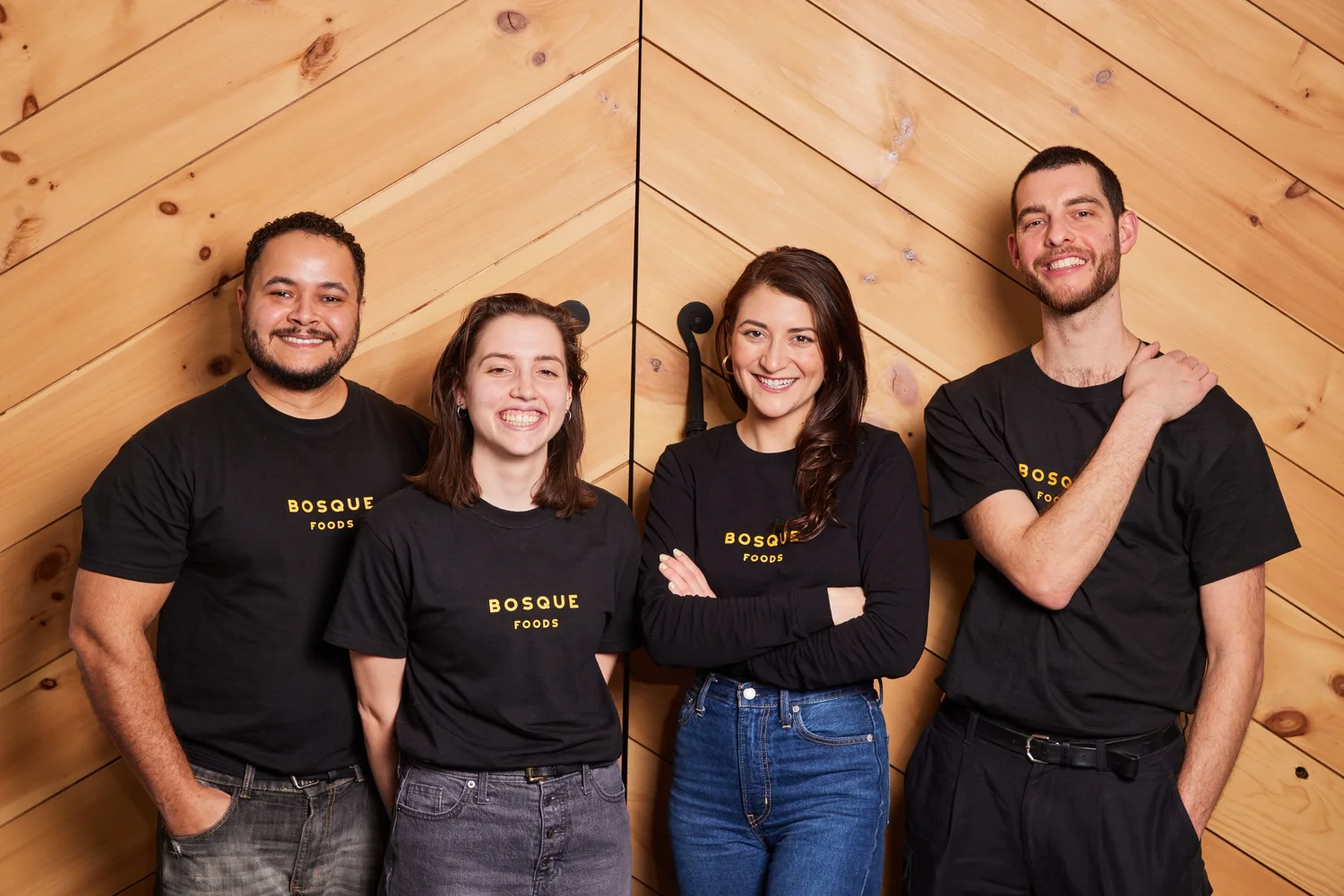
By 2023, Iglesias-Musachio said the company had a fully equipped Berlin lab and more than 15 employees. In her acquisition announcement, she described a peak team of 25 scientists and engineers across the United States and Europe. The disciplines tell the real story of the cost: microbiology, biotechnology, food science and process engineering had to work at once. This was a factory problem wearing a cutlet costume.
What failed first
Access failed before ambition did. Bosque was born just as COVID made laboratories, equipment and ordinary collaboration difficult. The team improvised in limited space while trying to prove that its organisms and process were viable. Later, the constraint migrated. It was no longer “Can this grow?” but “Can this grow repeatedly, legally and cheaply enough to become dinner?”
A hoped-for public launch of the chicken prototype by the end of 2023 did not become a documented broad retail rollout. The company kept presenting products - including chicken and chorizo at a 2024 HackSummit tasting - but the financing climate for alternative protein had cooled. In October 2024, German registry records show that insolvency proceedings were opened for Bosque Foods GmbH and that the entity was dissolved by operation of law.
The bottleneck moved downstream
Editorial illustration, not measured company data. The ranking reflects Bosque's stated challenges and eventual industrial outcome.
That distinction matters. The early technical thesis did not disappear. Tastings put physical food in front of chefs, investors and consumers. The company accumulated strains, process settings, whole-cut formulations and the less glamorous record of what did not reproduce cleanly. A startup can fail to become a durable manufacturer while generating knowledge that a larger manufacturer wants.
What changed their mind
In May 2026, Hamburg-based Infinite Roots acquired Bosque Foods for an undisclosed price. The buyer, formerly known as Mushlabs, had spent years building its own mycelium platform and industrial ambitions. It described the appeal plainly: Bosque added solid-state fermentation expertise, whole-cut texture development and process data.
Iglesias-Musachio framed the choice as a response to a maturing, consolidating category. Climate-tech headwinds had punished capital-intensive companies, while industrial infrastructure and reproducibility had become decisive. Infinite Roots offered a home where Bosque's work could continue at scale. The standalone brand was no longer the prize. The accumulated learning was.
The part worth stealing
Bosque's sharpest move was format selection. It did not enter the loudest, fullest part of the freezer. It picked a high-friction behavior - the missing whole cut - where fungal structure provided a genuine advantage. It also let the biological material remain visible in the product logic. Less reconstruction meant a cleaner story for both the label and the factory.
The second move was testing the object, not the slide deck. Early products appeared at IndieBio in New York, ProVeg in Berlin, the Vegan Women Summit and chef-led industry events. A bao bun is a much better focus group than a market-size chart. Bosque learned how people wanted to cook, season and describe a food that sat awkwardly between “mushroom” and “meat.”
The caution is equally portable. Accelerator access can solve the first laboratory bottleneck without solving the pilot plant. A compelling feedstock story can still lose money if side streams vary, require expensive handling or sit too far from production. And fast organisms do not guarantee fast approvals. Biology's clock, regulation's clock and venture capital's clock rarely agree.
Where Bosque fits now
Mycelium food spans several models. Quorn made mycoprotein familiar at mass-market scale. Meati and MyForest Foods pursued branded whole cuts in the United States. The Better Meat Co. and ENOUGH leaned toward ingredients for other manufacturers. Bosque sat between those poles: a consumer-friendly whole-cut concept resting on a process platform that could also serve B2B partners.
The acquisition nudged it firmly toward the platform side. Infinite Roots did not announce that it had bought a hit supermarket label. It bought expertise, product development and additional process data. In deep food tech, failed batches are often part of the asset. They narrow the map for the next production run.
Bosque's six-year run is therefore neither a tidy victory lap nor a cautionary tombstone. It is a more useful story. The company spotted a real hole in the market, used biology in a differentiated way, raised credible money and made food that left the laboratory. It also met the brutal economics between a tasting table and a repeatable industrial line. The fungi grew quickly. The institution around them needed a larger host.