The Yellowstone Microbe That Wants Your Breakfast Table
A geomicrobiologist scooped a strange fungus out of a Yellowstone hot spring. A decade and half a billion dollars later, it is being sold as cream cheese, yogurt and breakfast patties.
In 2009, a scientist named Mark Kozubal knelt beside a geothermal spring in Yellowstone National Park and collected a sample of something most of us would step around: a fungus thriving in water hot and acidic enough to kill nearly anything else. He was doing research funded partly by NASA, which is interested in organisms that survive in extreme places. He was not thinking about breakfast. Roughly sixteen years and more than half a billion dollars later, that microbe is on grocery shelves across America - as cream cheese, as yogurt, as a patty next to the eggs.
The company that pulled off this transformation is Nature's Fynd, headquartered in Chicago with a research lab in Bozeman, Montana. Its central idea is unusual in a crowded field of veggie burgers and pea-protein milks: instead of farming plants or raising animals, it grows protein by fermentation, coaxing a single microbe into a dense, edible mat. The ingredient it produces is called Fy, and the pitch behind it is that you can feed a lot of people using a small footprint of land, water and emissions.
What it actually doesProtein grown, not farmed or slaughtered
The microbe has a name that sounds like a spell: Fusarium strain flavolapis. Loosely, "flavolapis" means yellow stone in Latin - a tidy nod to the park it came from. Nature's Fynd feeds it a simple broth of sugars, nitrogen and acidic water inside open trays. Over about three and a half days, the microbe grows across the surface and knits itself into a mat of interconnected filaments, a bit like muscle tissue. Harvested and processed, that mat becomes Fy: roughly half protein by dry weight, high in fiber, and carrying all nine essential amino acids the human body cannot make on its own.
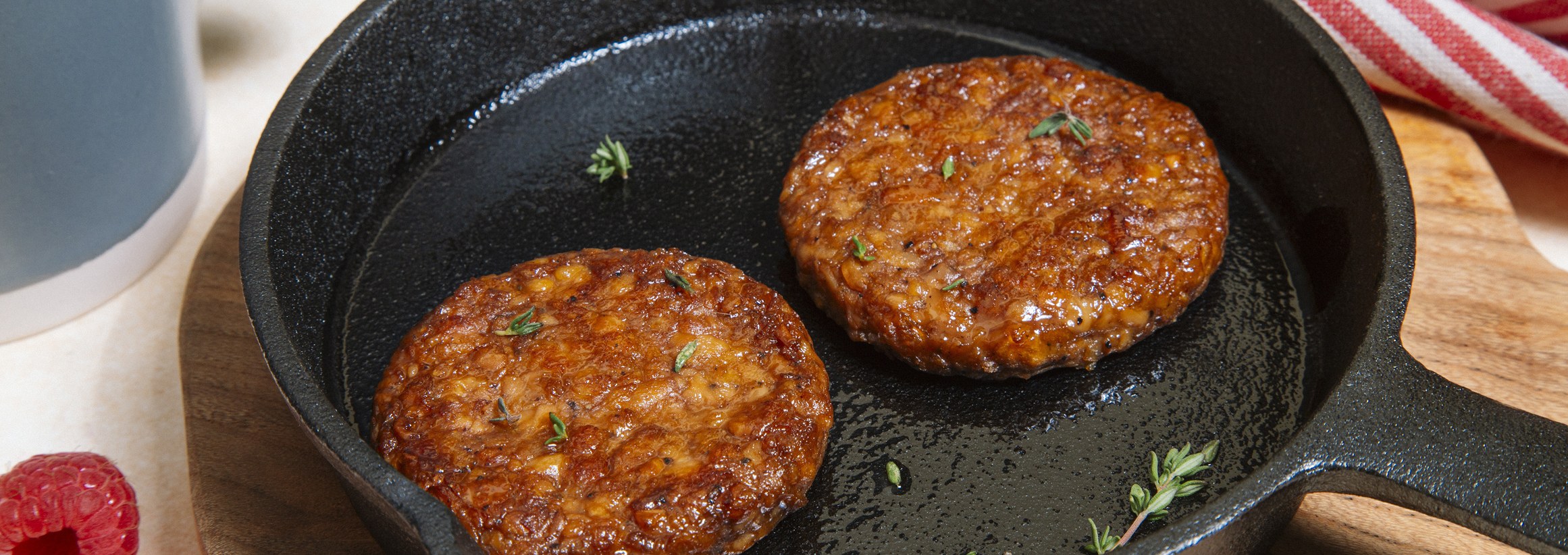
The growing method has a mouthful of a name too: Liquid-Air Interface Fermentation. What matters is the practical twist. Many fermentation startups need enormous steel bioreactors, which are expensive and slow to build. Nature's Fynd's microbe does its first work floating on the surface of liquid in stacked trays, which the company argues is cheaper and easier to scale. It set up shop in Chicago's historic Union Stockyards - once the beating heart of American meatpacking - and later broke ground on a much larger facility to expand output.
Feed
A broth of sugars, nitrogen and acidic water fills open trays.
Ferment
The microbe grows on the liquid-air surface, no giant bioreactor to start.
Mat
In ~3.5 days it knits into a protein-rich mat with a meat-like texture.
Make
Fy becomes patties, cream cheese, yogurt and snack bites.
The pivotIt was supposed to be biofuel
Here is the part founders should copy. Nature's Fynd did not begin as a food company. It launched in 2012 as Sustainable Bioproducts, and the original plan was to turn the fungus into biofuel. That did not pan out. Around 2015, the founders - CEO Thomas Jonas, chief scientist Mark Kozubal and their colleagues - concluded the microbe was far more valuable as protein for people than as fuel for engines. They kept the biology and threw out the business plan. In 2020 the company rebranded to Nature's Fynd, the name it carries today.
The re-founding was helped along by patient, unglamorous money. Between 2013 and 2020, federal agencies - the National Science Foundation, the USDA, the EPA and NASA - handed the company a string of research grants that de-risked the science before a single venture dollar arrived. That is the quiet scaffolding under the flashy headlines that came later.
The moneySoftBank, Bill Gates, and a unicorn
Once the food thesis clicked, the capital arrived quickly. A $33 million Series A in 2019 was led by 1955 Capital, with Breakthrough Energy Ventures, ADM and Danone alongside. An $80 million Series B followed in 2020. Then came the headline: a $350 million Series C in July 2021, led by SoftBank's Vision Fund 2, joined by Blackstone, Hillhouse, EDBI, SK Inc. and others. The round pushed the company past $500 million raised in total and into unicorn territory. Earlier that year, Bill Gates - whose Breakthrough Energy Ventures is an investor - had highlighted the company on 60 Minutes.
Funding by round
What did the money buy? Production capacity, a bigger Chicago plant, a growing product line, and the runway to push Fy from a single ingredient into a platform. It also bought time in a category that has since cooled - more on that below.
Who buys itFrom Whole Foods to a bodega in Queens
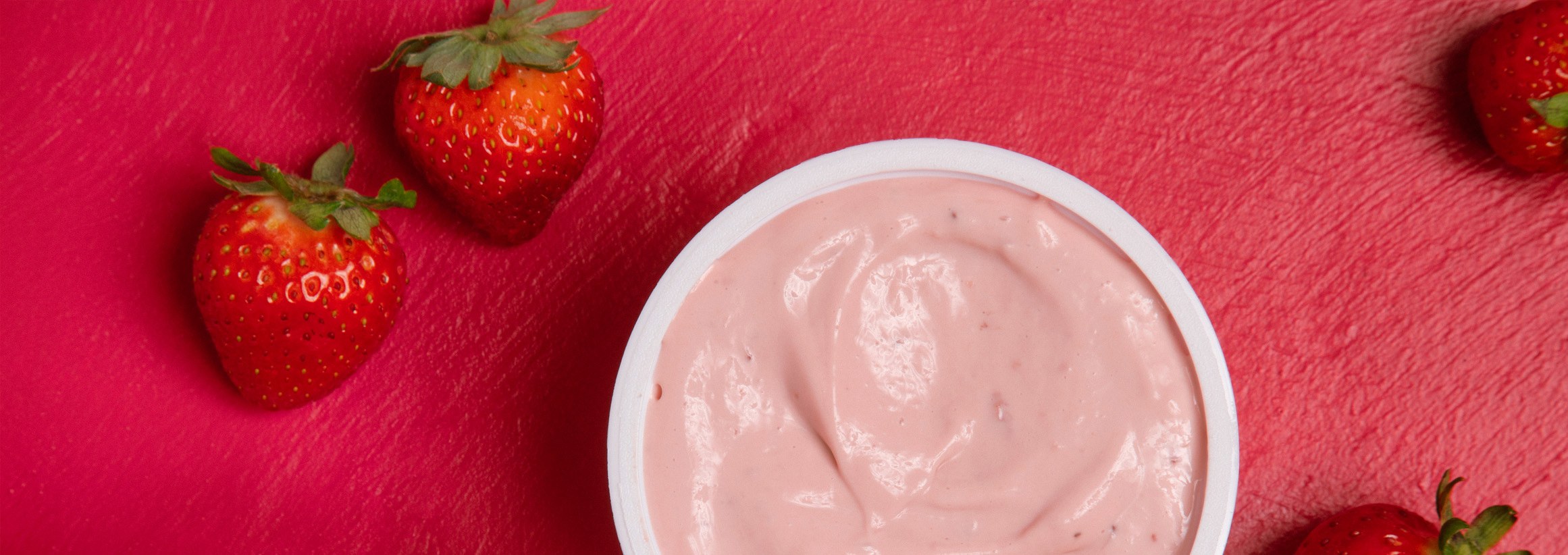
Nature's Fynd sells finished consumer products, not just a raw ingredient. Its first two launches in 2021 were Dairy-Free Fy Cream Cheese and Meatless Fy Breakfast Patties, initially by preorder. The patties later reached nearly 400 Whole Foods Market stores. The cream cheese, in Original and Chive & Onion, spread into Kroger, Fresh Thyme and other grocers. You can also buy the products on Amazon and directly from the company's website.
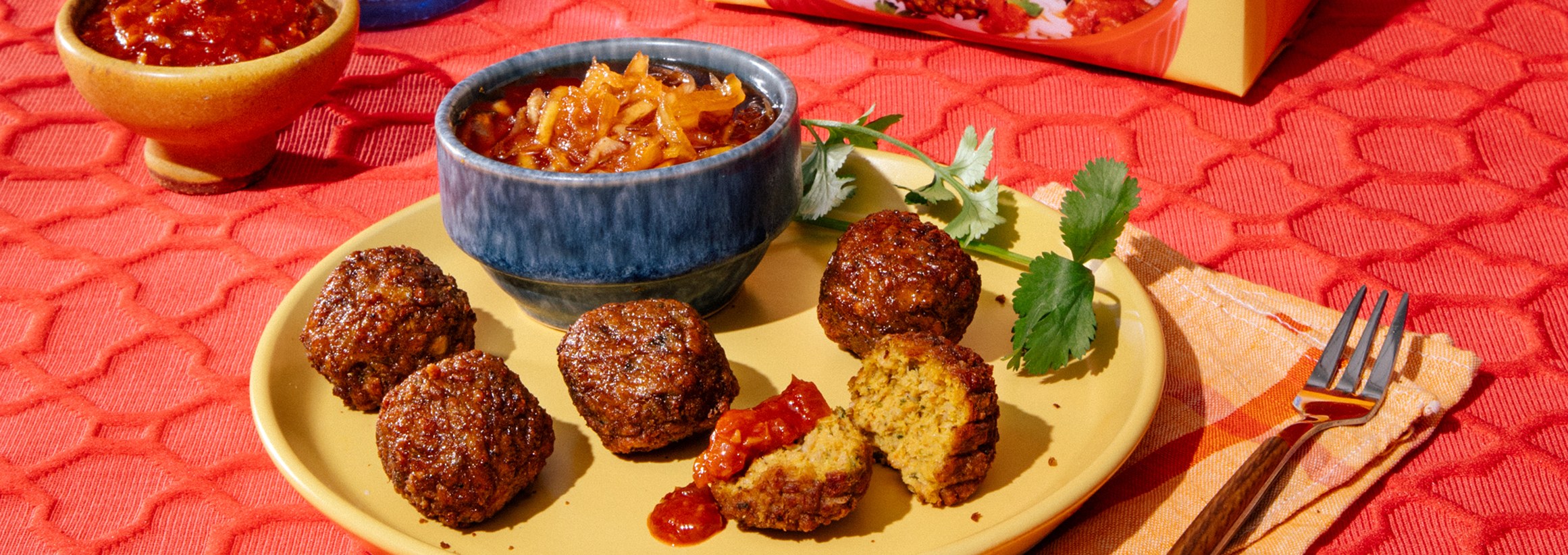
More recent additions widened the shelf: a Dairy-Free Fy Yogurt that won a NEXTY Award, and a line of Protein + Veg Bites - including a Spicy Indian flavor - that carry about 14 grams of protein, 5 grams of fiber and a serving of vegetables, while staying free of the top nine allergens. Those bites launched through Plantega, a network of affiliated bodegas across New York City, a distribution channel a long way from a Yellowstone spring.
Why it's differentNot fake meat - a new whole food
The alternative-protein aisle is crowded and, lately, bruised. Plant-based meat sales have softened after a hype cycle, and several high-profile brands have struggled. Nature's Fynd's positioning is a deliberate side-step: rather than trying to fool you into thinking Fy is beef, it leans on nutrition and sustainability. Fy is a complete protein that is dairy-free, soy-free and gluten-free - an unusual combination that lets a single ingredient stretch across meat, dairy and snack categories.
Its closest cousins are other fermentation and fungi players - Quorn's mycoprotein, mycelium companies like Meati, and precision-fermentation dairy such as Perfect Day - along with the plant-based giants Impossible and Beyond, and, of course, the incumbent meat and dairy brands it hopes to displace. The moat Nature's Fynd is betting on is not a recipe. It is the microbe itself, the fermentation IP around it, and a regulatory head start: an FDA GRAS review in 2021 and, later, authorization from Health Canada.
The efficiency pitch
The bars above illustrate the company's core claim - fermentation reaching protein in days with a smaller resource footprint. Exact figures vary by product and are best treated as approximate.
The honest partWhere the bet gets harder
None of this is guaranteed to work. Building food-manufacturing capacity is capital-hungry, and the broader alternative-protein market has been in a slump, which pressures pricing and shelf space. Some employee reviews describe repeated rounds of layoffs as the company grinds toward commercial scale. And there is a plain marketing problem: convincing shoppers to buy a food grown from a fungus with a Latin name that sounds faintly alarming. Nature's Fynd's answer has been to talk about protein, fiber and taste first, and biology second.
The timelineHot spring to grocery shelf
A fungus in a hot spring
Mark Kozubal collects the microbe during NASA-funded extremophile research.
Sustainable Bioproducts founded
The company launches in Chicago, aimed first at biofuel.
The pivot to food
Founders decide the microbe is worth more as protein for people.
Money and a new name
Series A and B land; the company rebrands to Nature's Fynd and opens its plant.
GRAS, $350M, first products
FDA review, a SoftBank-led Series C, unicorn status and the first launches.
Shelf space and awards
Patties reach ~400 Whole Foods stores; new yogurt and bites arrive; Gold at the 2025 Edison Awards.
What you can take from itThe repeatable part
The fungus is one of a kind, but the strategy is not. Find a biological asset nobody is using. Use non-dilutive government research money to prove the science before you sell equity. Be willing to abandon your first application - biofuel - when a better one appears. Then wrap hard biotechnology in a friendly consumer brand people can actually pronounce, and meet shoppers where they already are, from Whole Foods to a corner bodega. Whether Fy ends up on every breakfast table is still an open question. But the path from a hot spring to the grocery aisle is now well marked.