The work truck was a 2001 Honda Civic. Trevor Larson had just told a prospective corporate customer that it came equipped with a generator. That evening, he bought one and put it in the back. The business was mobile car detailing, and the distance between the sales pitch and the equipment inventory had briefly become a little ambitious.
Larson was trying to establish himself in Utah. A deal with Vivint put his service in front of 3,000 employees; Qualtrics followed. Washing cars had brought him into the parking lots of software companies. Asking questions helped get him inside. He went on to take an entry-level sales job at Qualtrics.
Today, as Nectar’s co-founder and CEO, he works on a different part of the employee experience: recognition. The connection between the two businesses is closer than it first appears. Both involve employers offering something to their people. Both depend on whether people actually notice, use, and value what is offered. Larson’s career has become an extended investigation of those differences.
The Honda Civic business school
He grew up in Mesa, Arizona, selling things long before he had software to sell. Duct tape wallets were among his childhood products. Later came the detailing business. There is a practical education in asking somebody to part with money for something you made or a service you can perform. The customer gets a vote, usually quite promptly.
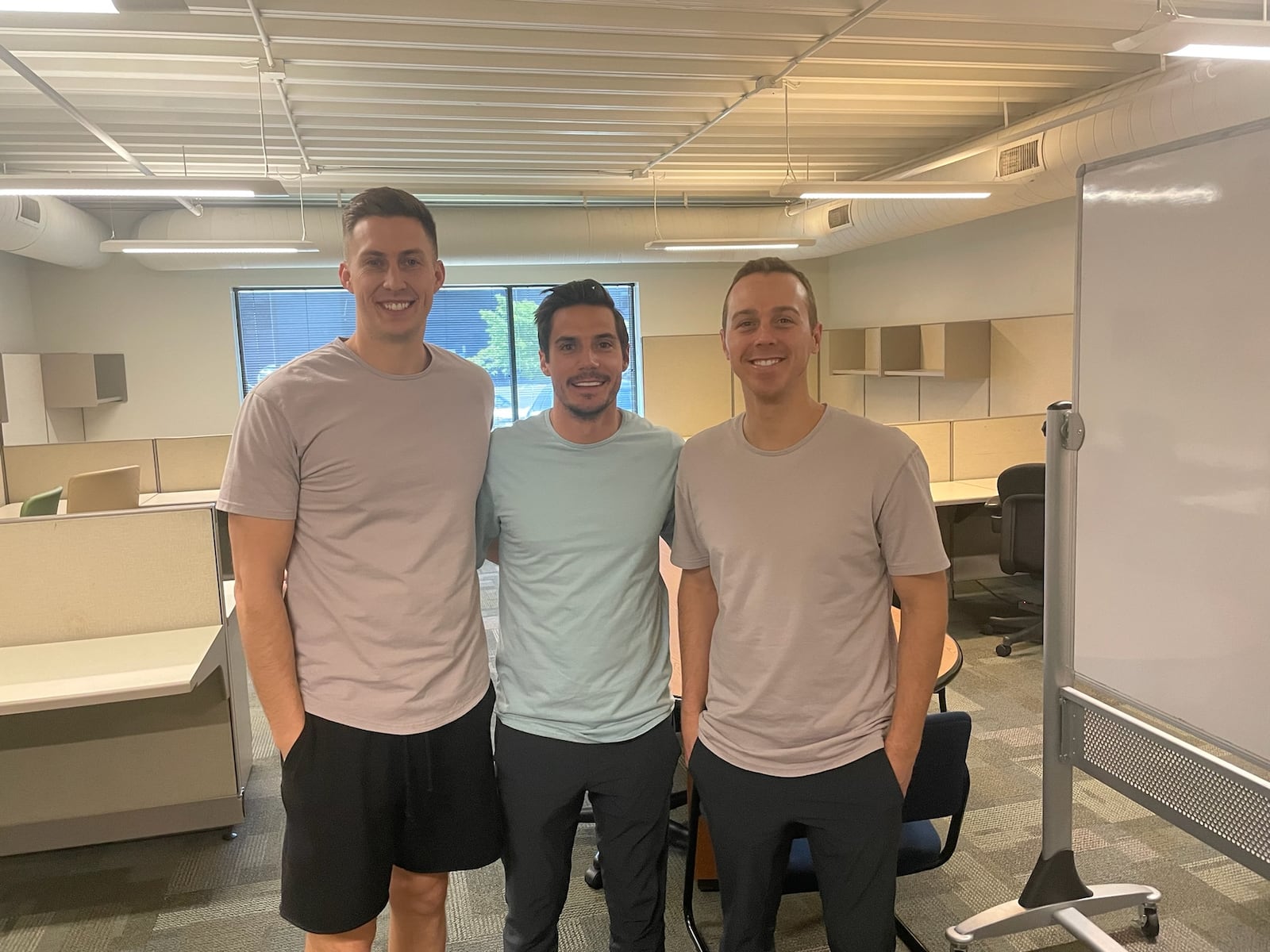
Larson and Andrew Hollis had known each other since playing childhood basketball in Mesa. They stayed close, then headed to neighboring Utah universities. Their eventual partnership grew out of a friendship that predated the product, the pitch, and the need to divide up executive responsibilities.
A cofounder relationship is easier to describe after the business has worked. In their case, the history matters because the original idea would change. They were committing to work together before they could know exactly which version of the company customers would support.
A company between classes
At Utah Valley University, Larson was building the venture originally called PerkNow while completing his undergraduate studies. By the university’s 2018 profile, it had reached six-figure revenue before his graduation. His studies and his company were sharing a timetable.
The early problem was wonderfully ordinary. Employers offered perks, but employees struggled to find them. A benefit sitting in an obscure document has a limited social life. The product would gather those offers in one place and make them easier to discover.
The team put the idea through more than 150 demonstrations. The university competition and the Business Resource Center gave the founders access to support and advice. Those encounters widened a small team’s circle of experience, an advantage when the founders were still learning how to build the business they had already begun selling.
Larson’s advice to students was to use the access available while they had it. He used his own company for assignments and internship credit. School supplied introductions as well as coursework. The venture supplied rather immediate feedback on whether the lessons were working.
“I don’t know, but I’m going to figure it out.”
Trevor Larson, on learning to build a technology company
The customer who liked it and left
Then came the sort of result that makes a founder reread the dashboard. An early pilot reportedly reached 96% monthly usage. The customer still chose not to renew. People opening an app had seemed like evidence in the company’s favor. The renewal conversation asked a harder question about what that activity was worth.
Larson and Hollis reconsidered the proposition. The business moved toward employee recognition and rewards, eventually becoming Nectar. Colleagues acknowledging one another’s contributions would become central to the product.
The failed renewal is the useful hinge in Larson’s story. A perks directory can be convenient without becoming indispensable. High usage can coexist with a decision to stop paying. For the founders, the customer’s departure created pressure to understand the employer’s underlying priorities.
Reported monthly usage
There is no need to turn that episode into a universal rule. Plenty of useful software deserves to remain modestly useful. But a founder choosing what to build next needs to know whether the customer’s enthusiasm reaches the budget. The awkward answer can be more informative than the flattering one.
Let the buyer see the price
Larson applied a related curiosity to selling. In a 2022 conversation, he described looking for small improvements in a crowded software category. The purchasing process offered one: Nectar published pricing and provided material that prospective customers could study for themselves.
“When you buy a Tesla, you can do it on a website. Buying software is an excruciating process.”
Trevor Larson, ProfitLed, 2022
His point was practical. A buyer should be able to learn enough to decide whether a conversation is worthwhile. Making information accessible respects the work a customer must do before a purchase. It also asks salespeople to contribute something beyond possession of the price list.
For someone who had learned to sell services and later sold software, that choice has a certain symmetry. The founder who once knocked on doors was now considering how much a buyer could accomplish without having to answer one. Reducing friction had become part of the product’s appeal.
Monopoly Deal, then back to work
Larson’s public answers have room for pleasures smaller than a funding announcement. In a 2019 interview, he named Binho Board and Monopoly Deal as favorite office-break activities. The breaks were described as strategic. A card game acquires a more respectable bearing when it has a strategy attached.
He also described enjoying the moment a product comes to life after months of work, hearing from customers, and working with his team. Asked why he wanted to be an entrepreneur, he emphasized building things and having control over his future. The enjoyable part and the difficult part sit close together: there is always more to make, and always more to decide.
His answer about the challenge was prioritization. Maintenance can consume the available day. Growth requires choosing what deserves the next hour. That answer supplies a useful check on the more entertaining origin stories. Improvising a generator into the business is memorable; deciding what to do on an ordinary Tuesday is the recurring job. Larson’s affection for making things does not remove the need to choose among them. A founder can run out of hours much faster than ideas. The office games offer a small, human counterweight to that account of endless demands. Even a company built around workplace appreciation needs people to stop working occasionally.
The CEO on the caller ID
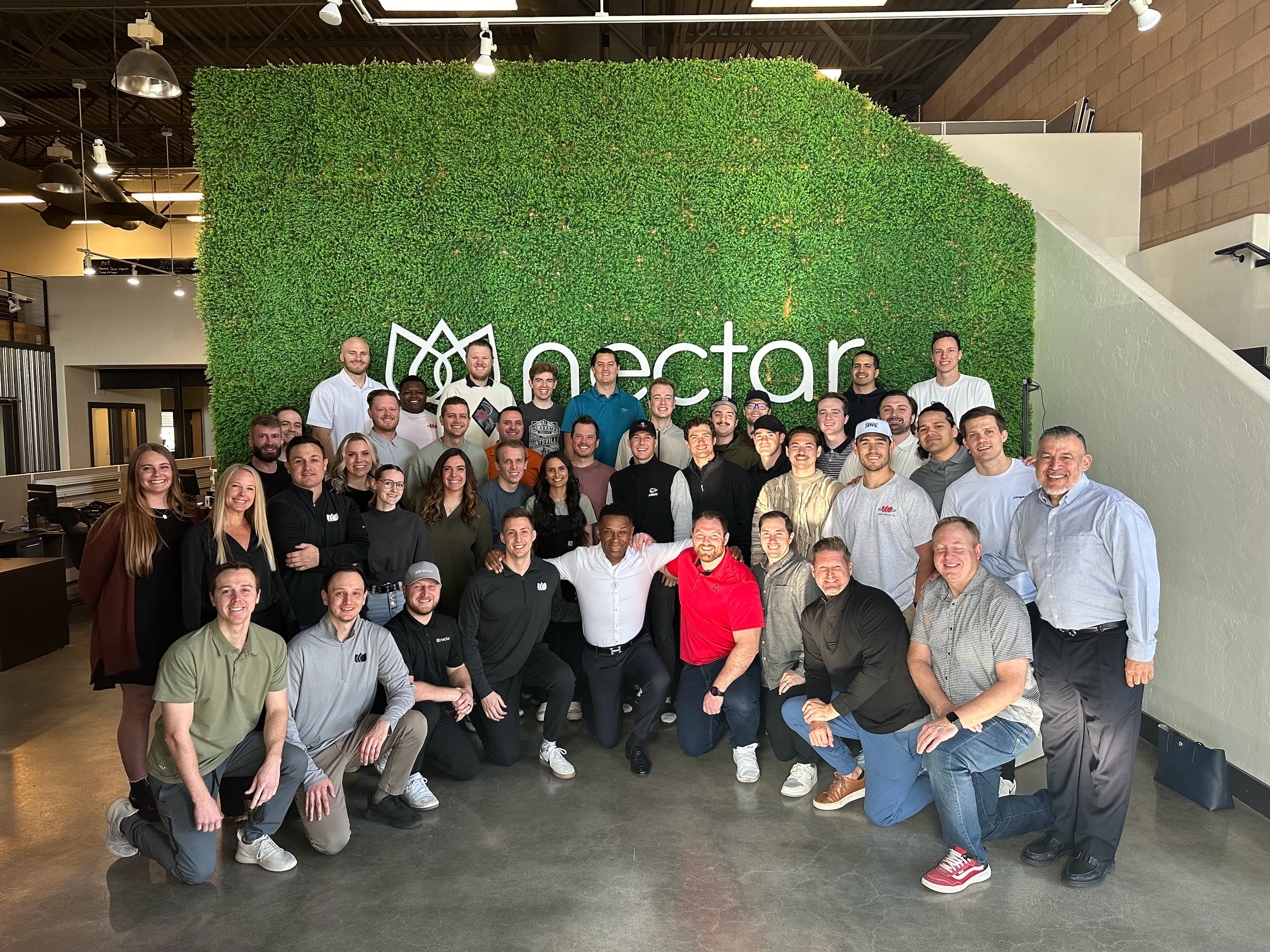
One employee’s story makes the recognition idea less abstract. Nate Bagley described getting a call from Larson during his first week at Nectar. Seeing the CEO’s name, he initially assumed something might be wrong. Larson was calling to welcome him and ask how his first days had gone.
Recognition also has a timing problem. The message reaches someone in a particular moment, when they may be uncertain about their place or simply busy getting through the day. In Bagley’s account, the welcome arrived before he expected it. Its meaning came partly from that surprise. A single call cannot stand in for an entire company’s culture. It can show what a principle looks like at an ordinary moment. Bagley remembered the surprise of receiving appreciation without first having to deliver some conspicuous achievement.
As the company grew, recruiting became another part of Larson’s work. His 2025 PHX Founders conversation addressed personally recruiting executives and important hires, alongside the role selling plays in attracting people and investment. The founder’s audience had widened. Convincing a customer and convincing someone to spend years building the business require different conversations, but both depend on making a credible case.
A bigger company, the same question
The company milestones eventually became substantial. Nectar announced $40 million in committed Series B funding with PeakSpan Capital in April 2024, intended to support its recognition product and broader platform development. Inc. ranked the company No. 87 on its 2024 Inc. 5000 and No. 599 in 2025. It also placed first on the 2025 Utah 100.
$40M committed Series B announced
No. 87 on the Inc. 5000
No. 1 on the Utah 100
Larson has stayed enthusiastic about building in Utah. He points to experienced people emerging from earlier software companies and the local university network. That enthusiasm has a personal basis: his own business benefited from a university competition, introductions, and proximity to people who had done parts of the job before.
His newer ambition reaches beyond recognition. The Nectar One announcement proposes connecting more of the employee experience, including listening, communications, workflows, and performance. In August 2026, he published an argument against running that experience through a collection of separate tools.
The larger platform brings Larson back to an observation from the beginning: useful things can lose value when people have to hunt for them across disconnected places. That ambition carries a familiar risk for anyone who has watched the company’s earlier turns. A broader product gives a founder more ways to help a customer, and more decisions about where to spend the team’s attention. The pricing argument and the early renewal lesson remain relevant as the list of features grows. Each addition needs a purpose that survives the demonstration. The next test is whether bringing those things together makes customers’ work easier. Somewhere between the Honda Civic and the broader platform, he acquired a memorable reason to ask that question before the renewal arrives.