Yousef Shamoun and Mohamad Haj Hasan were bored. They wanted to play cards online, preferably the games they had grown up with. There were plenty of card games on the internet. Finding the right table proved harder. The experience they wanted involved familiar games and other people, and their search had come up short. So they decided to build it.
Jawaker would eventually be acquired by Stillfront for $205 million in upfront consideration. That is a considerable outcome for a thwarted wish to play cards. Yet the beginning is more revealing than the price: two prospective customers looking for something specific, discovering a gap, and deciding the gap was worth the work.
Shamoun's career has repeatedly returned to that space between a product being available and a product feeling made for its audience. A recruitment platform. Arabic card games. Human resources software. The settings change; the attention to regional needs keeps resurfacing. Now, as co-founder and CEO of ZenHR, he spends his working life with an especially demanding set of local rules: the ones that determine how people get paid.
A classroom, then ten months of building
The recruitment business began with a different kind of encounter. While studying for his MBA at Georgetown, Shamoun heard a guest speaker, CareerBuilder executive Richard Castellini. The talk connected with his own experience looking for work after university. Another course addressed unemployment in the Middle East. A business idea began taking shape where those two subjects met.
His education had already taken him across disciplines and countries. He studied mechanical engineering at McGill University in Canada, then earned his Georgetown MBA in 2006, with a focus on finance and entrepreneurship. Engineering, business school and the experience of looking for work supplied different ways of approaching a problem. The recruitment idea gave him a chance to put them to work together.
He returned to Jordan and found a partner in Haj Hasan, who was thinking along similar lines. Work on Akhtaboot began in August 2006; the site launched in June 2007. Those ten months largely went into development. Getting a website online was one substantial task. Making a company work required several more.
In his early account of Akhtaboot, Shamoun described the difficulties of finding a team, signing the first client and financing the business. A recruitment company having trouble recruiting is the sort of joke a founder earns rather slowly. Friends and family helped support the venture before its first proper revenue arrived.
By 2012, his argument about online recruitment was quite specific. Workers and employers needed better ways to find each other. Digital platforms could help bridge gaps in information and geography. He also saw potential in software that could turn a company's own website into a hiring tool. The opportunity extended beyond publishing vacancies.
He also understood that access to a platform depended on access to the internet. In 2012, he discussed device affordability and connectivity as conditions for the growth of digital services. It was a practical qualification to the online recruitment argument. A website could make a job application easier to submit, but prospective applicants still needed a way to reach the website.
“I don’t think there was a stage when it was smooth sailing.”
Yousef Shamoun, recalling Akhtaboot's early years, 2010
A card table needs other people
Jawaker supplied a less solemn application of the partners' interest in useful regional products. People already knew how to play Trix and Tarneeb. The challenge was to recreate enough of the social experience online that they would want to stay. Playing against a computer would not satisfy the original wish.
The early development story includes arguments over the games' rules and how much information a player should see. A card game sounds agreeably finite until someone has to decide which version of its rules becomes official. Software requires decisions that a table of friends can postpone until an argument becomes entertaining.
Haj Hasan described a small team learning from users and watching how people played. Their experience with Akhtaboot had made the second venture more focused. That matters in Shamoun's story: these businesses share people and accumulated experience as well as a region. Starting again did not mean returning to the same starting point.
Employment continues after the offer letter
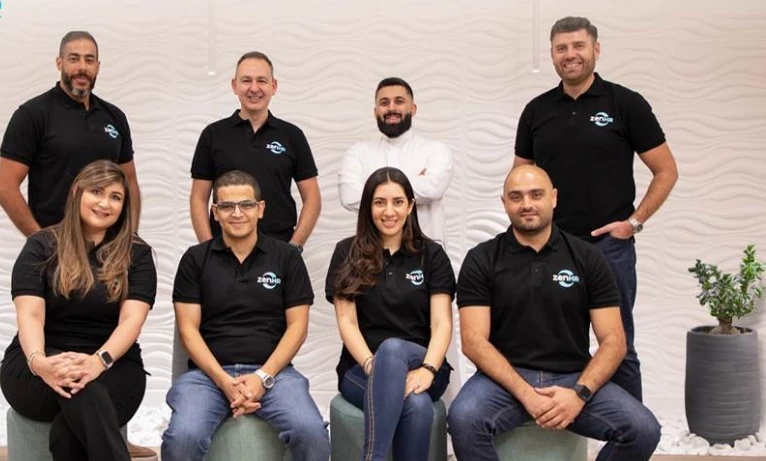
ZenHR brought him further into the employer's working day. Founded in 2017, it expanded the field of attention from finding people to managing employment: onboarding, attendance, payroll, performance and the eventual departure. A successful hire opens a long administrative relationship. Someone has to keep it organized.
For Shamoun, the business also presents a regional question with practical consequences. An employer operating in several countries has to deal with different requirements. Payroll, tax, social insurance and employment rules are part of the product's job. A handsome interface is pleasant company; it cannot do the arithmetic on its own.
ZenHR's platform brings those processes together with local requirements. Its current offering includes employee self-service, mobile access, recruiting tools and connections to other business systems. The scope helps explain why a founder associated with a job board would keep working on HR software. Recruitment is one entrance to a much larger building.
The contrast with games is enjoyable, but there is a useful connection. Familiarity matters in both settings. At a card table, a surprising rule may spoil the evening. In a payroll department, an unexpected result carries consequences beyond disappointment. Local knowledge has to survive the journey into software.
Two businesses, overlapping calendars
The dates complicate any tidy account in which Shamoun sold a gaming company and then discovered enterprise software. ZenHR was already operating before the Jawaker transaction. His business interests overlapped. The career looks less like a succession of dramatic reinventions when its calendar is allowed to remain untidy.
Stillfront announced its agreement to buy Jawaker in September 2021 and completed the acquisition on October 4. The $205 million upfront consideration covered the whole company. At the announcement, Jawaker was headquartered in Abu Dhabi with a team of about 50. Familiar regional games had become a business substantial enough to interest an international games group.
A year later, ZenHR announced a different financial event: a $10 million growth round led by Rua Growth Fund, with Endeavor Catalyst and existing investors participating. Shamoun identified Saudi Arabia as its main market. The money was intended to deepen its presence there and support expansion across the markets it served.
The operating figures from that announcement belong to October 2022: ZenHR was approaching 1,000 customers and 100,000 users. They describe the business at the time of the round. They also give the financing some context. There were already employers using the product and employees interacting with it before the new capital arrived.
One was a company acquisition; the other financed continued expansion.
The advice he once wanted
One of the more human details in Shamoun's early reflections is the resource he wished he had possessed: mentorship. Building Akhtaboot involved learning during the work itself. Experienced guidance at the right moment would have helped. It is an unglamorous admission, which makes it a useful one.
His later public appearances place him on the other side of that exchange. At LEAP23, his announced session concerned the top five mistakes first-time SaaS founders should avoid. The subject is well chosen for someone whose early businesses required practical lessons in customers, teams and product development. Mistakes acquire a second use when someone else can learn from them.
He also delivered a team-building workshop for King Saud University students, organized with IMPACT46 and Riyadh Valley Company. The setting brings the story back to a classroom. Years earlier, another executive's visit had helped him see a business opportunity. Now his own operating experience was material for students considering one.
There is a governance strand, too. Shamoun joined Bank of Jordan's board as an independent non-executive member in April 2021, and he previously served on the board of Entrepreneurs' Organization Jordan. Those responsibilities sit alongside the startup roles. They add an institutional dimension to a career often easiest to describe through products and funding announcements.
The next desk is in Cairo
In October 2026, ZenHR opened its sixth regional office in Cairo. The company announced plans to invest more than EGP 150 million in Egypt over the following two years, directing the effort toward its local team and services. An office opening makes a crisp photograph. The stated purpose was the slower work of being closer to customers.
Shamoun described years of serving Egyptian companies before the move. The announcement placed ZenHR at more than 2,500 active corporate customers across 11 countries. Egypt gives the localization argument a concrete setting: employers need payroll and employment processes that reflect their own operating environment, and a team available to work with them.
His publicly stated ambition reaches further. He wants ZenHR to become the first choice for HR automation across its Arab-world markets and to affect millions of lives positively. That is an aspiration with a daily test attached. The company's usefulness has to show up repeatedly in tasks that employers and employees cannot simply skip.
Seen together, his businesses suggest an attentiveness to things a distant observer might file under minor differences: which games people know, how job seekers find employers, how a country calculates pay. Their users have reasons to care. Shamoun has spent years making businesses around those reasons. The latest office has a Cairo address; the work still starts with getting the details right.