Terrel Bird had a problem that the eventual success of internet calling could not solve retroactively: he had arrived early. The idea would become familiar. His money had already taken a beating. For a founder, the future can be correct and the present can still send a rather unpleasant bill.
Bird’s response was to stay with the venture. He had lost a large portion of his capital on Voice over Internet Protocol, or VoIP. Instead of leaving the next attempt to somebody else, he decided to supply it himself. His explanation, years later, was unusually plain.
“I decided to pick myself up and be that second investor.”
Terrel Bird, 2013
TCN, the company he co-founded in 1999, eventually reached its twenty-fifth anniversary. By then, the experiment had become a business supplying cloud contact center software across countries and industries. Yet the costly early decision remains a useful place to begin. It leaves the uncertainty in the picture, where a founder actually has to live with it.
Sixteen years before the startup
Bird came to software with an accounting degree from Brigham Young University and a substantial previous career. For sixteen years he was president of Northern Allied Steel and Propane in Ontario, Canada. Before the contact center platform, there were industrial products and an operating business to run. The technology chapter occupies only part of his working life.
His route to Ontario was personal: after university, he moved to his wife’s hometown. The later move to the United States also involved his family. He wanted his children to grow up there. Southern Utah, with its red rocks and outdoor possibilities, became home, and St. George became the base for TCN.

The combination is distinctive: an accounting education, a long spell in a Canadian steel and propane business, then a software venture in Utah. A conventional founder biography might hurry past those first jobs. Here they matter. Bird had already spent years responsible for a business before he started asking what an emerging communication technology might make possible.
A small box, a long memory
There is an earlier glimpse of Bird that has little to do with telecommunications. Neil L. Andersen, a friend from high school in Pocatello, Idaho, later became his roommate at BYU. They had played basketball together. What Andersen remembered decades afterward, though, was Bird’s habit of collecting words.
Bird typed scriptures and quotations that mattered to him and stored them in a small box. The collection could contain more than a thousand passages, many committed to memory. Andersen began keeping a collection of his own. It is an appealingly tangible detail: a personal library assembled one typed thought at a time, with neither a search bar nor a subscription renewal.
That memory belongs to the student rather than the executive. It gives the career another scale. Long before a company had customers around the world, a roommate had noticed what Bird chose to read, keep and share. Influence could be measured in a second box appearing beside the first.
Selling a telephone call differently
The company’s early chronology is less instantaneous than a founding date suggests. TCN began its VoIP research and development in 1999. In 2000, it combined the technology with an application-service-provider model for interactive voice messaging. Marketing to newspapers and casinos began in April 2001. Research, an application and commercial outreach belonged to separate stages.
Those first customers are a useful corrective to the abstract language of a technology launch. Newspapers and casinos are actual operating businesses. A communication service had to give them something they could use. Internet voice transport was the enabling idea; delivering a workable application was the commercial task.
- 1999TCN founded; VoIP research and development
- 2000Interactive voice messaging paired with hosted delivery
- 2001Marketing begins to newspapers and casinos
- 2015Global Connect merger announced
- 2026Abstrakt acquisition announced
The delivery model also helps explain the later company. Contact centers could access calling tools as a service rather than take on the entire supporting infrastructure themselves. The problem was practical and persistent: how to handle incoming and outgoing conversations without making every improvement a new equipment project.
By 2017, Bird was commenting on that shift as organizations sought the flexibility and savings of cloud platforms. The business case had become easier to express. Customers wanted room to adjust their operations and costs. A technology that had once required an argument about its future could now be discussed in the language of a purchasing decision.
When a customer needs more than a dial tone
TCN’s scope widened. The December 2015 announcement of its Global Connect merger described two sets of capabilities coming together. TCN customers would gain access to Global Connect’s SMS and email services. Global Connect customers would gain TCN tools including inbound calling, Agent Gateway and business intelligence reporting.
The combined operation was set to serve more than 1,500 customers worldwide. Global Connect’s executives would continue leading the East Coast operation in Mays Landing, New Jersey. The transaction involved products, customers and a continuing team, giving the growth story more substance than a larger number attached to a company name.
It also changed what a customer could reasonably expect from the platform. Voice remained part of the service, alongside other channels and tools for understanding the work. The phone call increasingly sat inside a wider operation: messages, reporting, agent activity and decisions about how those pieces should fit.
enterprise customers served globally by TCN
The merger’s product list makes a useful picture of the business Bird was running. Customers needed to reach people through different channels, then understand what happened. Bringing those capabilities together meant working across the boundaries between one communication method and another. Each new feature also needed a place in the customer’s existing day. A contact center cannot pause its conversations while a vendor decides how its offerings ought to fit.
In 2016, TCN announced ClearTouch, a subsidiary in India. By its twentieth anniversary in September 2019, it reported more than 2,000 enterprise customers globally. Its product set included speech analytics, workforce optimization and tools for communicating across channels. The original voice bet had grown into a collection of related operating problems.
Bird’s accounting degree is an interesting detail to keep beside that history, without asking it to explain every decision. A contact center produces plenty to count. The harder question is which information helps somebody run it. As the company expanded, its offering came to include more ways of examining and managing those daily activities.
The people on both ends of the line
Asked about predictive dialing, Bird urged communication among consumers, agents, managers and attorneys. His emphasis was on keeping a conversation open between the people involved. It is a modest answer in a field full of technical terminology, and a useful reminder that the software ultimately serves interactions between people.
That concern appears again in TCN’s later SMS work. Its consent-tracking tools addressed the administration around messaging: registration, permissions and carrier relationships. Bird emphasized making the service manageable for clients. A message may take seconds to read; arranging a system that sends it appropriately requires rather more attention.
In his own account of management, Bird also stressed appreciation and trust, including giving people room to make mistakes. That is a demanding principle for someone whose early technology commitment had already proved expensive. His experience supplied a practical reason to take the possibility of error seriously.
The public recognition arrived in 2015, when Utah Business named him one of eight CEO of the Year honorees. TCN had reported growth of more than 75 percent in 2014 and opened data centers in Europe and Australia. Bird credited collaboration within the company. The award carried one executive’s name; the operating story involved a team.
The anniversary, and the next decision
TCN marked twenty-five years in July 2024. A year later, its first in-person C3 user conference brought customers and partners to Black Desert Resort in southern Utah. Sessions addressed artificial intelligence and product development. The program also included outdoor activities, making the landscape around the company’s home part of the gathering.
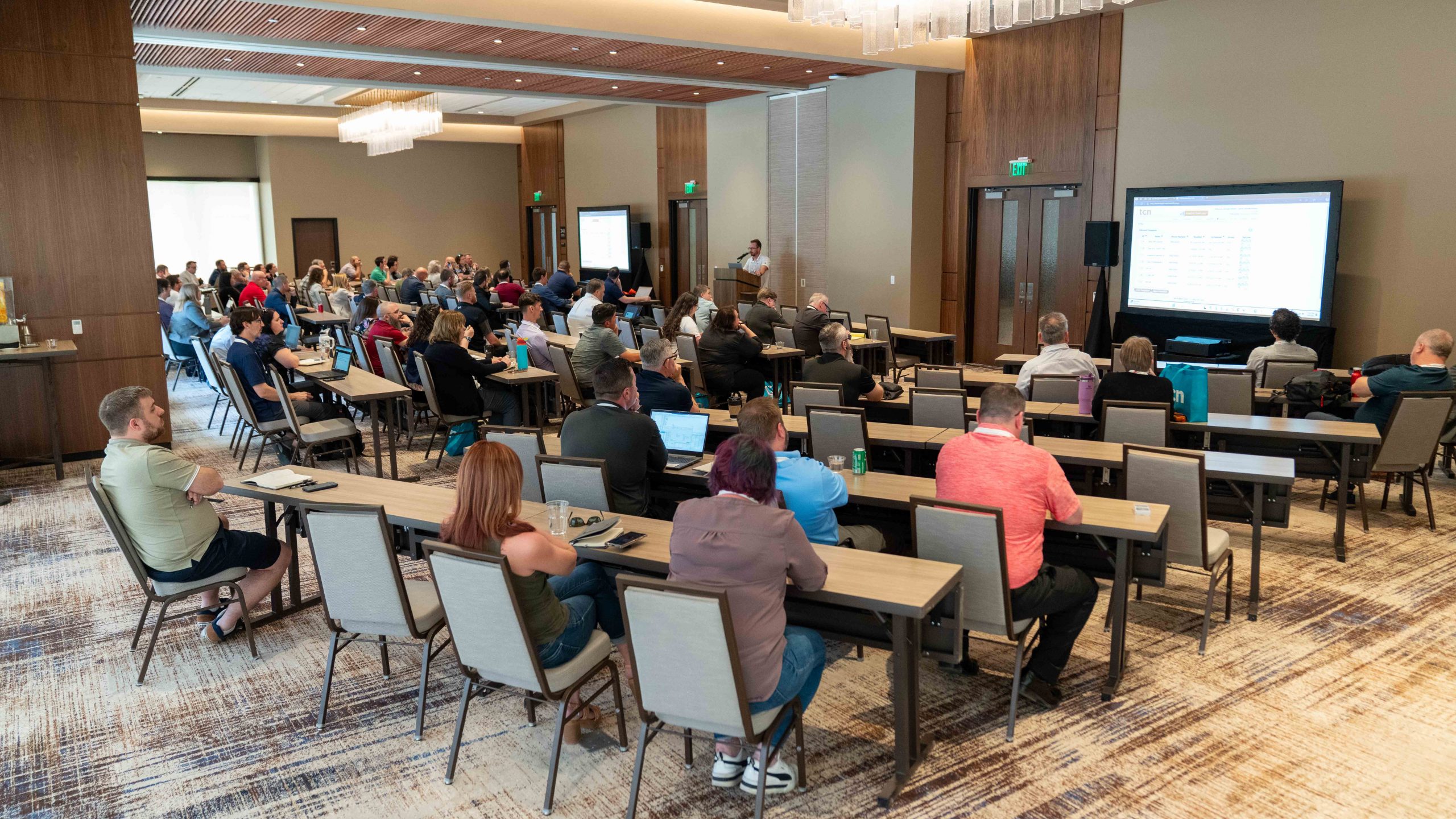
At C3, co-founder and chief technology officer Jesse Bird discussed AI chatbots, changes to flows and a large language model within Operator. A customer panel brought different uses of the software into the same discussion. Product development and customer experience were sharing a program, with questions extending beyond the company’s original calling technology.
On October 1, 2026, TCN announced its acquisition of Abstrakt, a provider of real-time agent assistance and automated quality assurance. The stated purpose was concrete: support agents during conversations and give managers a clearer view of performance. TCN and Abstrakt had worked together before the acquisition.
The integration remained a continuing project. An October update described enhancements to the existing connection between the platforms and a longer-term plan to bring Abstrakt’s services directly into TCN Operator. Even after twenty-seven years, adding a capability still meant doing the work of making different parts function together.
An acquisition also puts the next chapter in several people’s hands. Darrin Bird, TCN’s chief operating officer, explained the agent-support rationale in the announcement; Abstrakt founder Greg Reffner described an existing relationship between the businesses. Terrel remains the co-founder and CEO, with a wider cast around him. The company’s current work has its own participants and responsibilities, just as the early venture did.
That is where Bird’s story stands: a company founded around an early communication technology, still absorbing new tools. The milestones deserve their place. So does the earlier industrial career, the student’s box of quotations and the expensive first commitment. Together, they make the founder visible behind the anniversary arithmetic.
Continue the conversation
- TCN website ↗
- Terrel Bird on LinkedIn ↗
- The 2013 conversation ↗
- TCN’s leadership biographies ↗
- The college-roommate recollection ↗
- 2015 CEO recognition ↗
- The Global Connect merger ↗
- TCN at twenty years ↗
- TCN at twenty-five years ↗
- Cloud economics in 2017 ↗
- Predictive dialing discussion ↗
- SMS consent tracking ↗
- C3 2025 in pictures ↗
- The Abstrakt announcement ↗
- The integration plans ↗
- Watch TCN on YouTube · company channel ↗