Olivier Verdin was on holiday in Vevey when a familiar building sent him back twenty years. Nestlé’s headquarters had once been a regular destination. In 2005, his first company, OpenHR, was helping the group move human resources processes onto the internet. Now he was standing outside again, with a different company to run and another technological transformation to think about.
He later described the encounter by recalling the work his company had done there and the changes that followed. The vocabulary had changed: internet, software as a service, mobile, AI. Customers still needed someone to solve a problem. They still needed to trust the person offering to do it.
That is a useful place to begin with Verdin, the Brussels-based co-founder and co-CEO of AppTweak. His business helps apps become easier to discover. His career keeps returning to a more personal question: how do you persuade people to stay interested long enough for something to work?
A teacher gets homework
Before AppTweak, Verdin had already built OpenHR, an enterprise human resources software and consulting business sold to ARINSO in 2006. He became a business angel and coached entrepreneurs at Solvay. The transition put him on both sides of the table: someone who had asked for confidence, and someone being asked to provide it.
One of those coaching relationships proved consequential. Sébastien Dellis, an experienced search marketing practitioner, attended evening classes at Solvay, where Verdin was his coach. Their complementary interests gave them a promising subject for conversation: what happens when the software people want becomes difficult to find?
A mobile app can be competently built and still disappear into the shelves. A developer understands what it does; a prospective customer may describe the need in entirely different words. Between those two people sits an app store search box, a remarkably small piece of real estate on which to stake a business.
AppTweak began as an after-hours project called The ASO Toolbox. Its early attraction was an instant report recommending improvements to an app’s store presence. The company launched in 2014. ASO, short for app store optimization, was still an acronym that needed explaining. Selling a new tool is demanding enough. Explaining the category first adds a little unpaid teaching to every sales conversation.
The calendar declined to cooperate
In 2014, AppTweak raised €130,000 from two business angels and another €130,000 in credit from Brustart. Verdin expected that money to last a year. The market moved slowly. Pricing needed work. So did the product. Another €500,000 followed in 2015; the turning point arrived in mid-2016, with profitability in 2017.
The important relationship during that interval was with investors Cindy Naegel and Xavier Huerre. Naegel later credited Verdin’s regular, candid communication with preserving her confidence through difficult discussions. He wanted backers who could listen and challenge him. They were prepared to do both.
“Being transparent allows you to benefit from everyone’s experience and advice.”
Olivier Verdin · 2020
There is a practical argument tucked inside that sentence. An investor cannot help solve a problem that has been tidied out of the update. Verdin’s approach allowed other people into the uncomfortable part of building the company. His advice afterward included raising more initial capital. The teacher had acquired some expensive course material.
A phone in the lecture hall
Solvay also connects Verdin to a very different application. Sébastien Lebbe met Jonathan Alzetta and Verdin through a programme for developing an app prototype. The three joined forces to create Wooclap, whose first prototype appeared in 2015.
Wooclap lets teachers ask questions and receive students’ answers in real time. The phone, so often treated as the lecture hall’s most industrious distraction, becomes part of the lesson. Quizzes, surveys and open questions give an instructor a way to see whether a room has understood what was just said.
For a professor of entrepreneurship, there is something pleasing about that arrangement. Teaching can produce a company; the company can give teachers a better view of their teaching. Verdin’s involvement makes his educational work more than a decorative line beneath a chief executive’s title.
His studies add another revealing detail. At the Université libre de Bruxelles, his master’s thesis asked: “Do we take better decisions by tossing a coin?” It is a marvellous question for someone whose subsequent working life would involve investors, uncertain markets and decisions that could hardly be settled by exact calculation. His academic interests included decision making, free will and the perception of randomness. He completed that master’s degree in 2013.
The bridge came with customers
A photograph from AppTweak’s San Francisco expansion places Verdin beside colleague Laurie Galazzo, the Golden Gate Bridge doing a generous amount of scenic work behind them. The office opened in 2018. For a software company, crossing the Atlantic sounds almost unnecessary: surely the whole advantage of software is that it travels without the founder.
Customers supplied the answer. At the time of the announcement, the United States represented a quarter of AppTweak’s customers. More than 200 were there, including about 50 in San Francisco. Verdin wanted the company closer to them, better able to respond and better placed to meet prospective buyers.
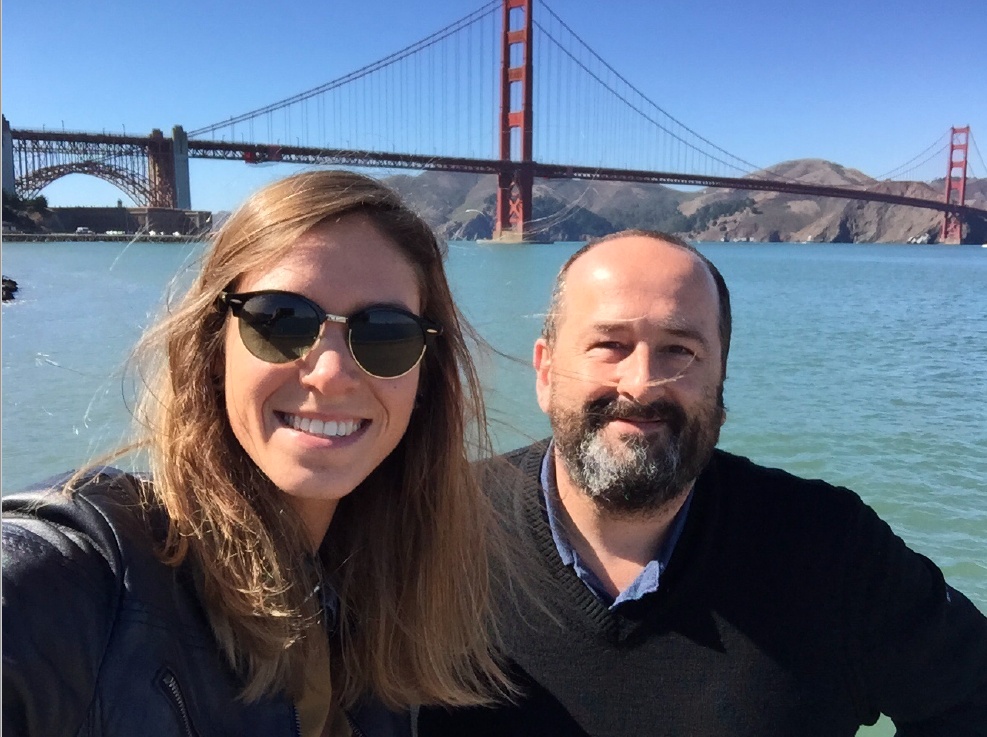
The move gives his international ambitions a specific human scale. Being global means answering somebody’s question during their working day. It means understanding the market where they are trying to sell an app. A dashboard may cross borders easily; a useful working relationship takes more arranging.
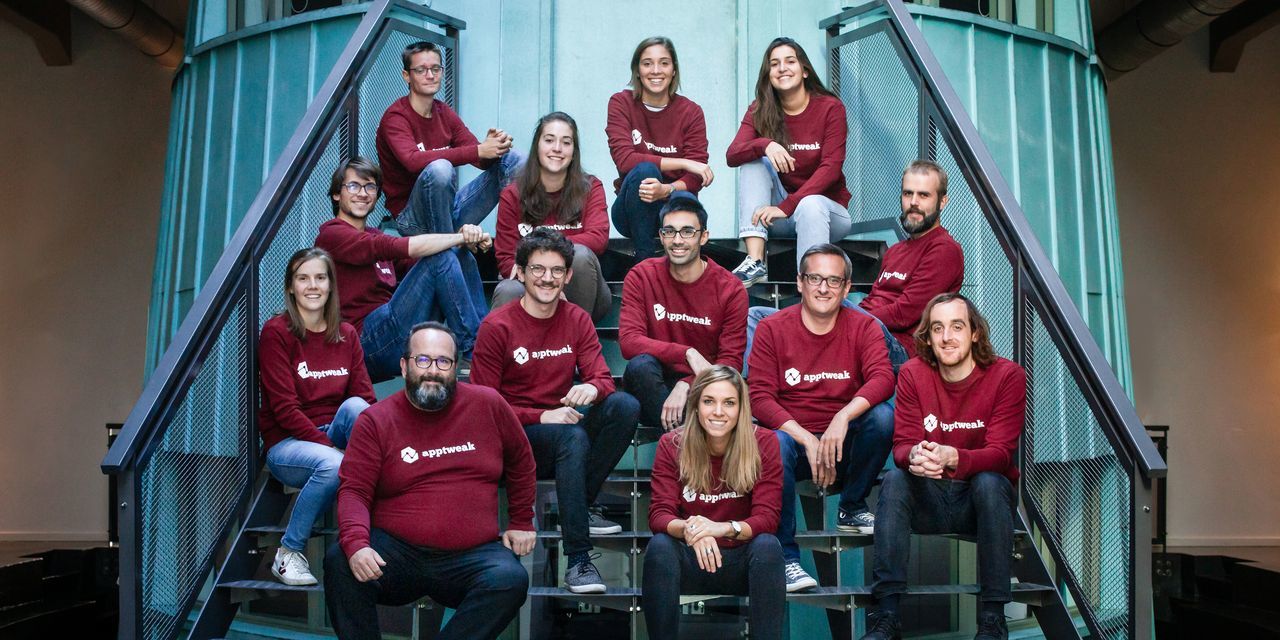
By April 2021, AppTweak’s international footprint included Brussels, San Francisco, Tokyo and Bengaluru. The company had 47 full-time employees speaking 16 languages. That is a considerable translation exercise before anyone has even opened the software.
A rocket with a passenger list
That April brought a $22 million Series B investment from existing backer Media Group Rossel. Verdin called the next phase a second-stage rocket. His account of why the company needed it was fairly earthbound: demand for products, support and managed services required faster hiring and new locations sooner than organic growth could provide.
The investor was already aboard. Rossel had backed AppTweak during its earlier development, and Verdin saw an expanded relationship as a way to support the next stage. The pattern resembles the early angel relationships: people who had watched the business develop were being asked to commit again.
By 2023, his description of the business had widened. AppTweak was developing more products, providing tailored services and supporting customers locally across six offices. Its Atlas semantic engine, launched in 2022, helped analyse relationships between apps and keywords. Reporting Studio followed in 2023, bringing different streams of performance data together.
That change also altered the conversations around the product. A publisher working across several markets might need advice about keywords, advertising, creative assets and customer reviews. Bringing those questions into one business meant coordinating people with different expertise. The company’s growth gave Verdin another teaching problem: how to make the expanding proposition understandable to colleagues as well as customers.
The founder who began with a report was now describing a broader acquisition partner. Each addition asked the company to do more work around the original question of visibility. Getting found had become the beginning of a longer conversation.
Make room at the top
In September 2025, Verdin announced Nicolas Beraudo as co-CEO, responsible for the customer journey. Beraudo brought experience from gaming, mobile analytics and software, including roles at Glu Mobile, Atari, data.ai and Kochava. His California base also fitted AppTweak’s international plans.
Verdin said they had first met six years earlier and had stayed in touch. The appointment therefore continued a familiar habit: developing a relationship before giving it a larger job. He framed shared leadership as a response to a more complicated business, with more markets and opportunities competing for attention.
In his public description of hiring, Verdin looks for people eager to learn and willing to share what they know. The preference is consistent with his other work. ScaleFund lists him among its venture partners; he also serves on BeAngels’ strategic board and teaches entrepreneurship at Solvay. A company can occupy most of his calendar without being the only room in which he exchanges ideas.
His tenth-anniversary message in 2024 had already made that point through a list of thanks. He named Dellis, early backers and Jessica Pettie for the opportunity to work with King’s marketing team. Alongside the reported 120 employees and more than 2,000 customers were the people who had opened particular doors.
The search box moves again
In April 2026, AppTweak introduced AI Visibility for Apps, measuring how apps appear in AI-generated recommendations. The discovery problem was moving beyond the store itself. Someone could ask an assistant for an app suited to a goal, then arrive at the store with a recommendation already in mind.
Verdin publicly backed the launch. For a founder whose original product helped publishers understand store visibility, it is a recognisable extension of the assignment: find out where people are making a choice, and help customers understand whether they appear there.
The technology has changed again since his visits to Nestlé. So has his title, now shared with another chief executive. The recurring work is familiar: explain an unfamiliar problem, bring useful people into the conversation and give them a reason to keep working together. AppTweak’s first few years offered plenty of practice. The market took its time. Verdin kept the conversation going.