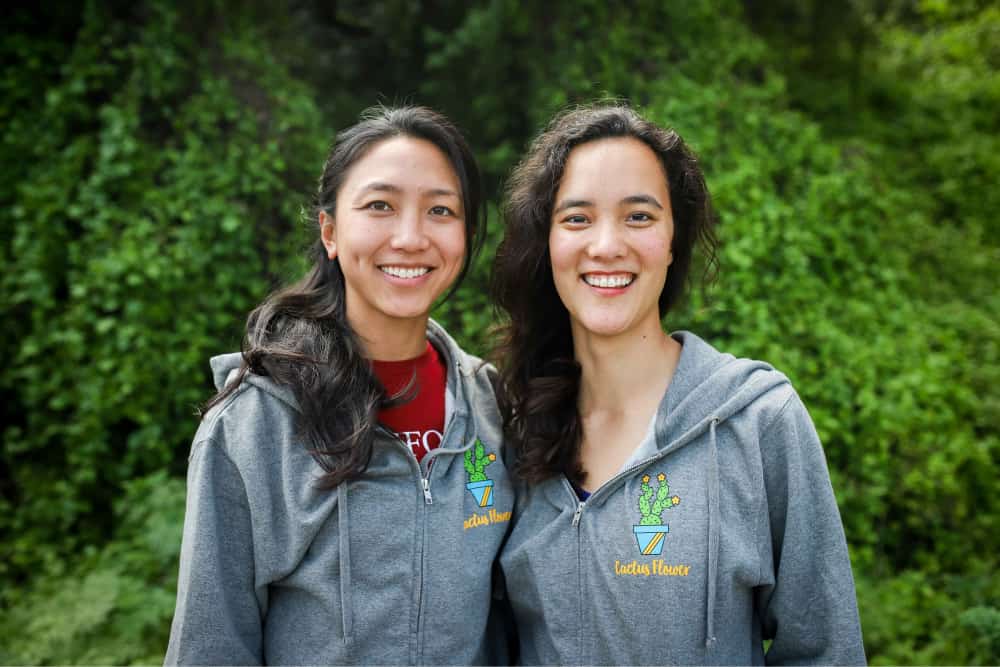
A campfire is an unusual place to begin a software company. It offers poor Wi-Fi, unreliable lighting and very little encouragement to open a spreadsheet. Before starting business school at Stanford, Madeline Dangerfield-Cha and Joy Zhang found themselves talking beside one at Lake Tahoe. The subject was how to bring different generations together. They would eventually give their answer a French name: Mon Ami, my friend.
For Dangerfield-Cha, the question had a familiar face. Her grandmother was her best friend. That is how she described the relationship when explaining the company in 2019, with the uncomplicated affection of someone for whom spending time with an older person needed no sales pitch. The business question was harder: could something so ordinary in her own life be made easier for other people to arrange?
Her route to that question had taken her through Columbia, digital marketing in Asia and an MBA. She could work with numbers. She could tell a story. Mon Ami would ask her to do both, while confronting a peculiarly awkward feature of the idea: the thing customers wanted was personal attention, and the thing a growing company needed was a repeatable system.
A grandmother before a business plan
Dangerfield-Cha grew up with a single mother and her maternal grandmother. An intergenerational household was part of her upbringing before it became a subject for customer interviews. The connection gives her later work a practical starting point. An older person could be a central character in a young person’s life, someone with opinions and stories, rather than an abstraction discussed at a conference.
At Stanford, she and Zhang investigated how that kind of relationship might work beyond a family. They interviewed more than 150 older adults and people around them before offering their service across the Bay Area. That sequence matters. A conversation by a lake can produce an appealing idea; a long run of interviews gives other people the chance to complicate it.
The early service paired college students with older adults for visits. Painting, puzzles and memoir writing were among the activities. Its appeal rested partly on the visitor having chosen to come. An appointment on a calendar could create room for a conversation that otherwise might never happen. The machinery of booking was allowed to be quite prosaic. The visit itself had to feel worth having.
Asia, analytics and a taste for starting things
Before Mon Ami, Dangerfield-Cha worked in education and marketing. At Essence Digital she helped open the Singapore office; over three years, the regional team grew from four people to more than 100. Mon Ami’s own biography describes her earlier work as running marketing and analytics for Google in Asia. The common thread is experience making complicated activity legible through data.
She had also accumulated experience of starting things in unfamiliar places. By the time she returned to Hawken, her former school, for an alumni event in March 2019, her biography counted work in more than 20 countries over the preceding five years. New York, London, Singapore and Tokyo appeared among her longer stops. California was the latest address in that account.
Her session for students concerned the unexpected dilemmas of building businesses. Its description included sexism, racist remarks from clients and the difficulty of dismissing employees older than the person doing the dismissing. There is something bracing about bringing that list back to school. Career day can become a parade of polished outcomes. Dangerfield-Cha offered the troublesome middle, where a promising opportunity still comes with conversations nobody volunteers to rehearse.
That willingness to discuss awkward questions would also become useful at Mon Ami. Friendship is easy to praise and harder to price. A founder explaining a paid visit has to take that difficulty seriously, particularly when the company’s name makes such a direct promise.
“My grandmother is my best friend.”Madeline Dangerfield-Cha · 2019
The awkward price of a good conversation
In 2019, asked about friendship for hire, Dangerfield-Cha acknowledged “an incredibly human element, but also a transactional element”. It was a sensible admission. A payment does not settle the question of whether two people will enjoy each other’s company. Equally, a warm feeling does not arrange a student’s timetable or make a visit reliably happen next week.
One early student companion, Mary Gillette, described walking with a woman named Marcia and listening to accounts of her travels. The pleasure was in hearing someone recount places she had loved. The student got a route out of the campus bubble; her companion got an interested audience. Travel stories had found another destination, without either person having to board a plane.
Dangerfield-Cha herself helped a retired professor write his memoir. It is a fitting detail in a career that has moved between storytelling and analytics. A memoir requires someone to listen long enough for a life to acquire shape on the page. No dashboard can do that listening on a person’s behalf, though software can help make sure the meeting happens.
Mon Ami announced $3.4 million in seed funding in October 2019. Freestyle Ventures and Cowboy Ventures led the round, with Maverick Ventures, Felicis Ventures and Bruce Dunlevie participating. Capital gave the young company room to expand its work. It also placed a very human proposition inside the familiar expectations of a venture-backed business: build a team, improve the product, reach more customers.
When the customer became the organizer
The company’s next substantial change concerned who would use its technology. During 2020, Mon Ami began licensing its platform to governments and nonprofits. Those organizations could coordinate volunteers for calls, errands and grocery deliveries. The founders had started by arranging individual visits; now they were supplying tools to organizations already responsible for reaching whole communities.
In San Francisco, the volunteer matching program was piloted with Openhouse, an organization serving LGBTQ older adults. In Los Angeles, a program in Council District 4 used Mon Ami to connect residents with volunteers. The details were local and practical: someone to buy groceries, someone to run an errand, someone to call. Software sat behind a series of small commitments that needed to be kept.
The change also brought a different kind of customer conversation. An individual might want a suitable visitor at a suitable time. An agency has to coordinate many people, keep useful records and understand what has happened across a program. Those are separate demands even when the desired result, a person receiving attention, looks much the same.
Dangerfield-Cha later described the business publicly as government technology delivered through software subscriptions. That vocabulary is a considerable distance from a campfire. Yet the distance helps explain the company’s development. An idea about connection had led into the everyday administrative work required to make connections dependable.
- 2018Arrange a visitStudents and older adults
- 2020Equip the organizerGovernments and nonprofits
- TodaySupport the operationAgency data and workflows
The unromantic work behind a friendly name
Mon Ami now presents its product as a data system for agencies and social service organizations. Its tools cover work such as case management, reporting and billing. Those words are unlikely to feature in anyone’s fond account of an afternoon with a friend. They do, however, describe jobs that somebody must complete if an organization is to keep operating.
HearstLab, one of Mon Ami’s investors, describes a company using cloud tools to track services, maintain records and simplify reporting. Its customers include Area Agencies on Aging, volunteer programs and nonprofits across the country. This gives Dangerfield-Cha a particular audience: people whose daily work involves organizing support, and whose available hours have to stretch across both people and paperwork.
A database is easy to regard as the dull part of a story. Its importance becomes clearer when the alternative is repeated administrative work. The editorial attraction of Mon Ami’s development lies here: the founders followed a convivial idea into an occupation with forms, workflows and records. Friendship supplied the name. Coordination supplied a growing part of the job.
Steve Fram is the third co-founder, alongside Dangerfield-Cha and Zhang. He previously co-founded Caring.com and brings a history of building technology companies to the team. Mon Ami’s current account places the three founders together at its beginning in 2018. The partnership combines different professional experiences around the same operational problem, rather than asking one founder’s biography to explain every part of the product.
A founder who asks questions for a living
Dangerfield-Cha’s Stanford years also put her in the interviewer’s chair with Jeffrey Katzenberg for the school’s View From The Top series. Their conversation addressed leadership, taking risks and allowing employees to fail. It is a different setting from a student’s visit with an older neighbor, but the useful skill overlaps: ask a question, pay attention and leave enough room for an answer.
Her public record contains that combination of storytelling and practical inquiry throughout. There are customer interviews before the launch, a frank discussion of paid companionship, and a return to school to talk about the less flattering parts of entrepreneurship. None requires a polished origin myth. Together they make a more interesting picture of someone willing to examine the idea while she is building it.
By 2021, Dangerfield-Cha and Zhang had been named among Next Avenue’s Influencers in Aging. Recognition followed a business that had already changed shape. The original visits, the volunteer coordination and the agency software belong to different stages. Treating them as one unchanged service would miss the decisions that make her career worth following.
The ambition is national in scope: Mon Ami is working to become part of the systems that public agencies use every day. For Dangerfield-Cha, that means a company organized around the patient business of implementation, partnerships and getting records right. It is a less picturesque destination than Lake Tahoe. Very few people put a reporting workflow on a postcard.
The campfire question still gives the work its human scale. How do people from different generations get the chance to know one another? Dangerfield-Cha and her colleagues have answered with visits, with volunteer programs and with software for the people doing the organizing. Her grandmother’s friendship made the possibility familiar. Building Mon Ami has meant attending to everything required for somebody else to show up.