Eran Zinman spent fourteen or fifteen months building a product before discovering that he had been postponing the most useful part of the job: letting somebody else dislike it. The young programmer was developing a search engine for user reviews. He worried about criticism, about a dismissive blog post, about the verdict that might arrive once his work left his hands. Meanwhile, the months and his own money were going. A product can enjoy a very agreeable existence when its only customer is its creator.
The company closed. Looking back, Zinman recognized that an early mockup could have attracted much of the feedback he eventually received. He had paid for a long education in avoiding a short conversation. The experience gave him a principle he would carry into monday.com: expose the work, learn from the response, try again. The awkward moment belongs near the beginning.
Today, that principle sits behind a more complicated career. Zinman is the co-founder and co-CEO of monday.com, the Tel Aviv software company whose products include monday CRM. His story runs through programming, a failed startup, a partnership with Roy Mann, and the effort to make a growing organization behave like people who are still willing to change their minds.
A programmer meets an inconvenient customer
Zinman began coding at nine. He later studied electrical engineering and computer science at Tel Aviv University, attending from 2006 to 2010. His first company, Othersay, occupied the closing stretch of those university years: he was its co-founder and chief executive from 2009 to 2010. He then worked as research and development manager on the founding team of Conduit Mobile, now Como, from 2010 to 2012.
That sequence matters. Programming offers unusually direct evidence that something works: the code runs, or it fails. A customer brings a less cooperative test. Software can execute perfectly and still solve a problem nobody particularly wants solved. Zinman’s early experience made that distinction expensive enough to remember. Technical competence would remain central to his work, but customers would have to be allowed into the argument.
In 2012, he became a co-founder of the company then known as dapulse. He served as chief technology officer until 2020. The early product concentrated on communication before moving toward flexible work management. That change widened the question from what colleagues were saying to what their teams were actually trying to accomplish. A conversation could help; a usable system could make the next step visible.
“We’re metrics-obsessed”
Eran Zinman, 2018
The line is revealing because obsession usually sounds like a private habit. In Zinman’s company, the numbers became a shared environment. The engineer’s interest in how a system behaves gradually extended from the software itself to the business built around it.
The numbers get wall space
Consider BigBrain, monday.com’s internal business intelligence system. Zinman described it in 2018 as tracking money entering and leaving the company, along with the performance indicators between those events. It gave a growing software business a way to inspect the machinery of growth rather than admire its output from a distance.
Customer acquisition spends money before a subscription business has necessarily collected enough cash to justify it. The gap matters. A campaign can produce pleasing numbers and still leave a company waiting uncomfortably for its money. Zinman’s writing treated measurement as a practical question of what could be reinvested, and when. The spreadsheet had consequences beyond the spreadsheet.
By 2022, the founders were describing dashboards displayed around the office, tracking marketing campaigns and customer interactions. Their shareholder letter said the business had generated more than four dollars of annual recurring revenue for every dollar of cash burned since inception. ARR measures the annualized value of recurring subscriptions; it should never be mistaken for cash already collected. The comparison was a statement about the founders’ attention to efficiency.
Company-reported historical measure, Q2 2022
The same system also served a social purpose. Zinman wrote that employees could access BigBrain, and that employees and investors received a daily text containing the most important numbers. Dozens of office screens showed team metrics. A difficult result could arrive without first being polished into a reassuring presentation.
His argument was that access lets people see their own contribution in the larger business and respond to problems sooner. That is a demanding form of openness. It asks leaders to surrender some control over the timing of bad news. A daily message is unlikely to wait until everyone has found an attractive explanation.
Even the name had to take criticism
In November 2017, dapulse became monday.com. By then, the company had enough customers for a rename to be a substantial undertaking. Familiarity was an asset. So was the time already invested in teaching people what dapulse meant. Both could become reasons to keep a name that was causing friction.
The jokes had been persistent. Employees appeared in a promotional video reading confused tweets about the old brand, including suggestions that it sounded more suitable for a rapper. There are many ways to spend a marketing budget; asking your staff to recite the public’s insults is at least economical in its honesty.
The new name gave people something recognizable. Monday means work to an enormous number of people, with all the mixed feelings attached. Choosing it also meant accepting the association with a day that rarely needs additional publicity. The point was intelligibility: a name people could spell, pronounce, and remember.
Zinman’s explanation at the time credited the user community with helping define the company’s purpose. As the product grew beyond its earlier identity, the name needed to catch up. The rebrand repeated the lesson of his first venture in a different form: existing effort does not exempt an idea from examination.
One company, two people in the top job
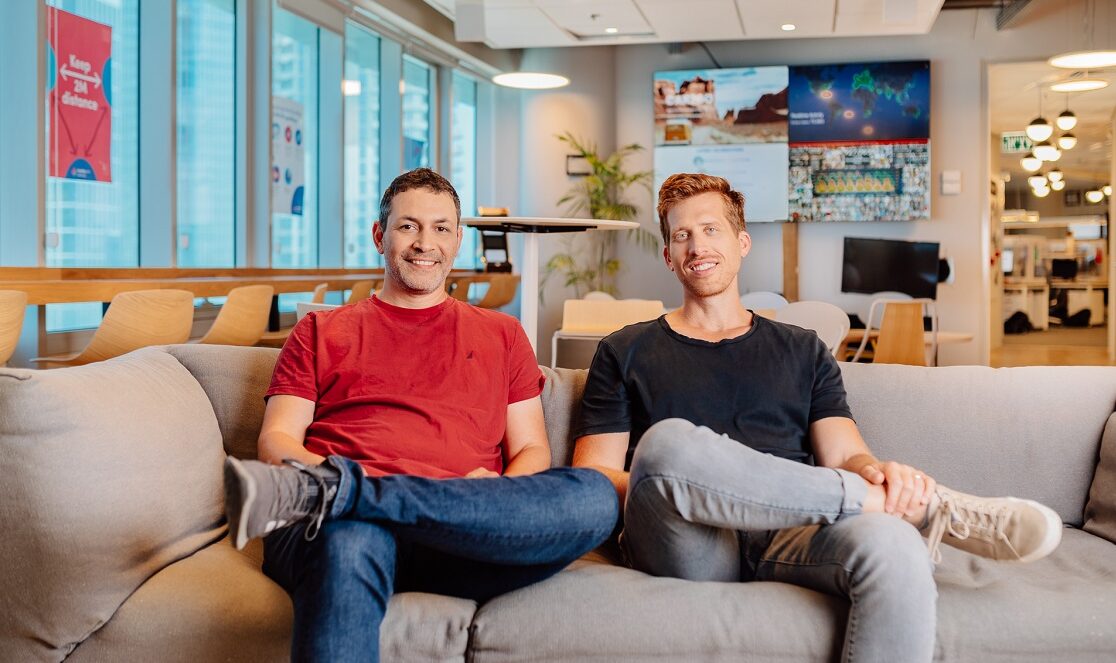
Zinman joined monday.com’s board in March 2018 and became co-CEO in November 2020. Mann had already been chief executive. The arrangement formalized a partnership that had existed for years, rather than pairing two strangers under an organizational experiment.
The company’s 2026 description gives the partnership a more specific shape. Mann drives research and the platform and ecosystem roadmap. Zinman leads business and go-to-market strategy, executive operations, and organizational execution. They jointly direct strategy. Two people share the title, but their responsibilities have identifiable centers of gravity.
For Zinman, the move from CTO to co-CEO is a useful correction to the idea that an engineer must remain on one side of a business. His remit now includes how the company reaches customers and how its organization gets things done. The person once concerned about strangers judging his product has a job in which strangers’ decisions become revenue.
In June 2021, monday.com went public on Nasdaq under MNDY. The offering priced 3.7 million ordinary shares at $155 each and raised roughly $574 million. Salesforce’s venture arm and Zoom also agreed to buy shares in private placements. A company built around helping other people organize work now had its own performance placed under regular public examination.
Public ownership changes the audience for a decision. Customers judge usefulness, colleagues experience its consequences, and investors assign a price. The founders’ habit of sharing operating numbers had preceded the listing; the company would now have a formal obligation to explain its results beyond the office walls.
Customers build the next chapter
The product’s flexibility opened another route forward. In 2022, monday.com introduced packaged products on its Work OS infrastructure, including sales CRM and development tools. They gave customers a more specific starting point while retaining the ability to customize how work flowed.
That helps explain where monday CRM fits into Zinman’s story. He leads the broader company with Mann; CRM is part of its product portfolio. The move brought the platform closer to a defined daily job: managing sales relationships and the processes around them. A flexible system needs enough structure for someone to begin using it without first designing an entire workplace.
By the second quarter of 2022, the new products had attracted more than 1,000 paying customers. The company was also serving organizations whose work crossed markets and departments. Renault used the platform to manage brand communication activities across 39 countries. Savills worked with it to standardize marketing processes across global markets. Those examples show the distance from a small team trying to keep track of itself.
Zinman has also discussed culture through the experience of a new employee: how people greet someone, whether problems can be discussed, and whether a person can argue with a manager. The first fifteen or twenty employees, he has said, help shape those habits. An organization teaches its rules through ordinary encounters long before anybody writes them down.
There is a dry practicality to this account. The office may display its values beautifully, but a newcomer will notice who gets interrupted. Zinman’s emphasis falls on behavior, information, and the permission to participate. These are conditions people can experience during an ordinary meeting.
Changing the company is harder than changing a board
By 2026, Zinman was discussing another shift: software that performs more of the work, with people and AI agents operating together. His March conversation with Harry Stebbings addressed the difference between quickly generating an interface and maintaining software that an organization can rely on. A convincing screen is only the beginning of that assignment.
monday.com subsequently described rebuilding its platform around people and agents working on live operational data, within customers’ existing permissions and governance. The aspiration was to let software act across workflows under human oversight. The ambition had moved beyond showing where work stood toward helping carry it out.
The transition also brought an organizational cost. On July 22, 2026, the company initiated a restructuring plan that included reducing its workforce by approximately 20%. It said the changes would align the organization with its AI Work Platform strategy and that hiring would continue in selected areas. This belongs in the same account as its earlier growth.
For a founder who speaks about openness and employee ownership, those decisions sharpen the stakes of leadership. A product experiment can be revised. People experience a restructuring immediately. The company expected much of the plan to be completed in the second half of 2026; its eventual business results remained a future test.
Later in October, Zinman is scheduled to join Mann and other executives for the Elevate opening keynote in New York. The announced agenda covers AI direction and the product roadmap. Once again, a next version will be put before an audience. The young programmer’s expensive lesson still offers a useful question for the executive: how soon will the people affected get to answer back?
Continue the conversation
Writing, interviews, and the company behind the story.
- monday.com · monday CRM
- Eran Zinman on LinkedIn · His writing on Medium
- monday.com author page
- Watch: Zinman with Harry Stebbings, 20VC (2025)
- 20VC: the March 2026 conversation and transcript
- Listen: The Logan Bartlett Show, episode 126
- Zinman’s essay on growth metrics
- The June 2021 Nasdaq listing
- The July 2026 restructuring announcement