At Carver, a hospitality staffing agency, the invoice went out through QuickBooks. Then came the waiting. The company paid professionals before hotel customers paid the company. Every late invoice stretched that uncomfortable interval. Its corporate controller, Darrnell Long, described the old routine with admirable economy: “We’d send the invoices through QuickBooks and just hope and pray they pay.”
- Upflow connects invoice data, collection conversations and payment methods.
- Its buyers are B2B finance teams wrestling with scattered records and overdue cash.
- The useful lesson: automate routine work and give difficult accounts a human owner.
Prayer is inexpensive software. Its reporting capabilities are poor. Upflow sells a more organized approach: bring the ledger, the reminder and the payment into the same conversation. The interesting question is what changes when the finance team can finally see all three.
They offered financing. Customers asked for collection.
In 2018, Alex Louisy was exploring a financing platform for businesses. Finance teams kept redirecting him. Before borrowing against unpaid invoices, they wanted help getting those invoices paid. The financing thesis yielded to a more immediate problem.
Louisy met fellow engineer Barnaby Malet through the startup studio now called Hexa. Louisy took commercial strategy; Malet led product and engineering. They began in France, selling to smaller businesses, then turned toward the US mid-market. Their company history describes a substantial rethink of product, positioning and sales. Front, Lattice and AB Tasty became early American customers.

Upflow joined Y Combinator’s Winter 2020 batch. A $15 million Series A followed in 2021. In April 2024, a $5 million extension led by Lorimer Ventures backed bringing Payments by Upflow to market. Collecting invoices had provided a route into the larger ambition: helping businesses manage the financial side of a customer relationship.
The missing purchase order has entered the chat
Upflow sits alongside accounting and billing software. Connections include NetSuite, Sage Intacct, QuickBooks Online, Xero, Chargebee and Stripe Billing. Finance teams retain their underlying systems while using Upflow to coordinate the work around receivables.
Insights shows collection performance and payment behavior. Collections organizes segmented follow-ups and customer histories. Payments gives buyers a portal and ways to pay, including cards and direct debit. Cash App helps match incoming money to invoices and post reconciled payments back to supported ERPs.
- 01See what is owed
- 02Find the blockage
- 03Make payment easy
- 04Match the money
A clearer handoff at each step gives the next person less detective work.
The company calls this Financial Relationship Management. The name makes a reasonable argument: finance deserves the shared memory that sales gets from a CRM. A disputed invoice, a missing purchase order and an unwilling payer demand different responses. Sending each another identical reminder is administrative enthusiasm masquerading as progress.
Competitors including Chaser, HighRadius, Billtrust and Versapay also address receivables automation. Upflow’s distinction is its emphasis on coordinating collections, payment experience and customer context. Buyers should compare actual workflows and integrations; the category name alone settles very little.
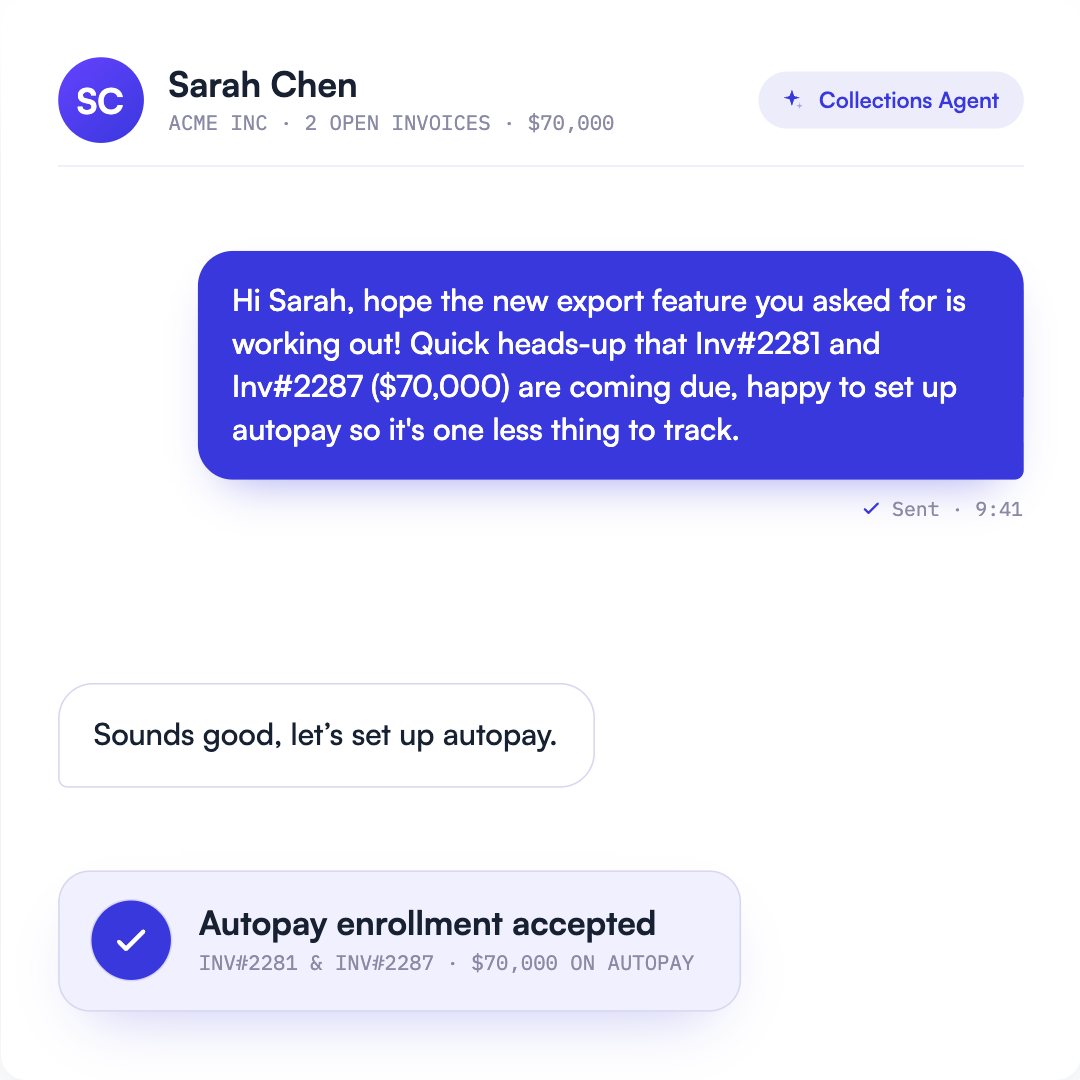
Nine days, and the people behind them
Carver’s published customer story reports days sales outstanding falling from 46 to 37 between September 2023 and August 2024. Its overdue balance fell 49%. The work involved tailored reminders, phone and letter checkpoints, and bringing business development into stalled conversations. Roughly 24% of follow-up emails still went out manually.
At Productboard, the first thing to buckle was the process. Collections lived across five tools, making work difficult to delegate. Its case study reports 75% less collection time after seven months. The practical gain was a record another teammate could understand without an archaeological expedition through the original operator’s inbox.
The copyable lesson is specific. Keep customer history together. Segment reminders. Give disputed or sensitive accounts an owner. Put a usable payment route near the request. Measure overdue balances and collection time, then review the exceptions. Automation earns its keep when it leaves people enough time to investigate.
“Prioritize boring technology”Upflow’s published engineering principles
The gateway has a bill of its own
Upflow’s business now combines software subscriptions and payment revenue. Collection plans are quoted according to annual invoice value and volume, with unlimited user seats. Its Discover plan provides free analytics access.
The published payment gateway price is $390 a month. Card transactions cost 3.5% plus $0.30; ACH direct debit costs 0.8%, capped at $5 per successful transaction. Those figures were checked in October 2026. A $1,000 card payment therefore costs $35.30 in transaction fees; the listed ACH charge reaches its $5 cap. Subscription costs, taxes and negotiated terms belong in the budget too.
The economics favor examining the payment mix. Faster cash can be valuable, but a business still needs to compare processing charges with time saved and cash released. A neat portal cannot fix a customer without funds, resolve a genuine contractual dispute or manufacture accurate invoice data.
Give the machine records. Keep the judgment.
In April 2026, Upflow launched an MCP server connecting receivables records with AI assistants such as Claude and Copilot. Teams can ask which accounts need attention or what is holding up payment. The company’s NetSuite guidance describes a useful boundary: clear payment matches can post automatically; ambiguous ones become suggestions for a person to confirm.
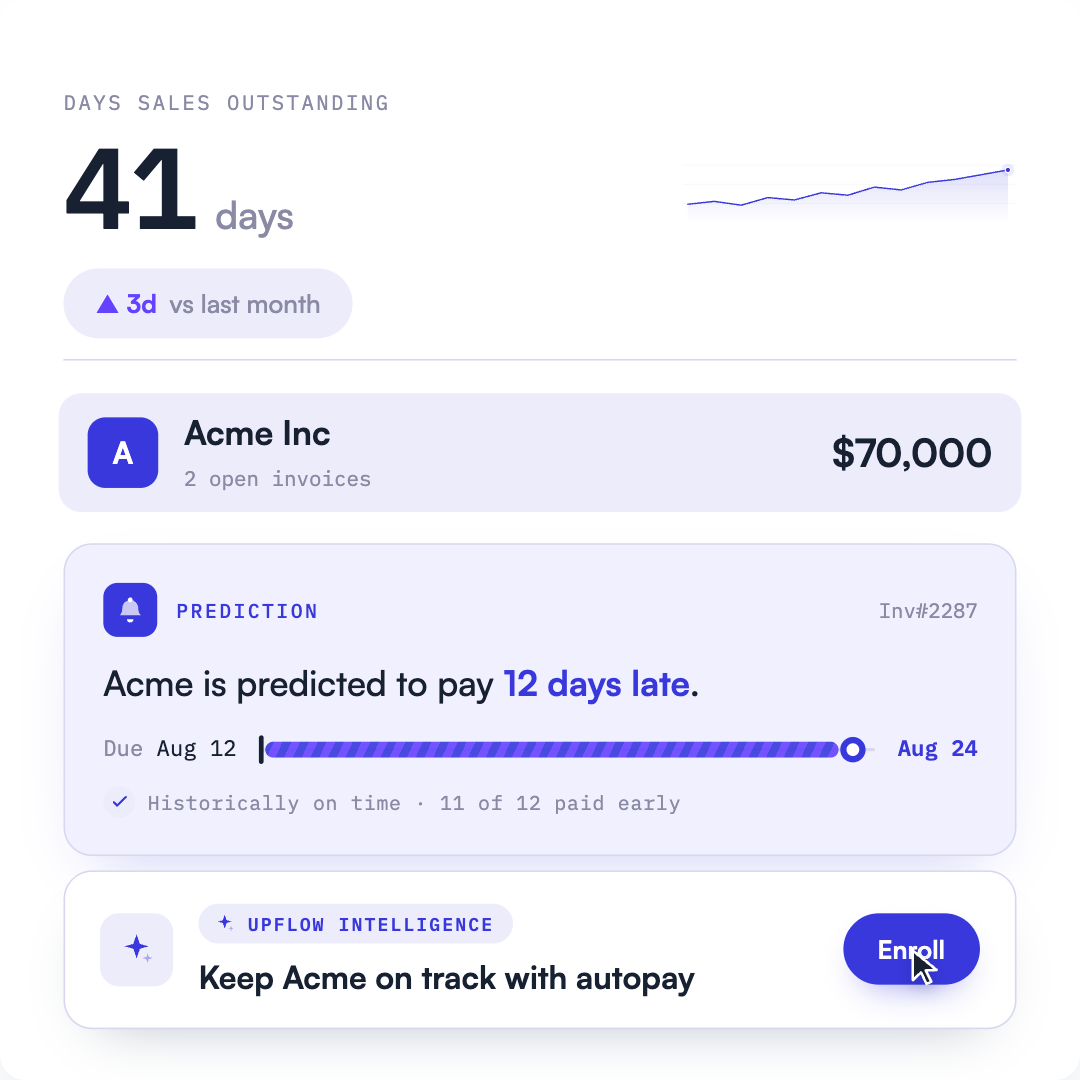
Its internal habits echo that caution. Engineering principles favor small batches and maintainable technology. After rapid hiring made its original values harder to interpret, Upflow developed more explicit operating principles through workshops. Both choices address the same problem as collections: people need enough shared context to act sensibly.
The revealing detail at Carver remains the manual email. A company bought automation and preserved a place for discretion. Sometimes getting paid requires a better button. Sometimes it requires the colleague who knows whom to call.