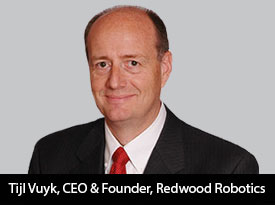
A software founder promising to abolish boredom might sound like someone selling a particularly ambitious spreadsheet. Tijl Vuyk made a more specific promise. During Devin Gharibian-Saki’s final interview before joining Redwood Software in 2011, Vuyk assured him: “There is never a boring day at Redwood.” Ten years later, Gharibian-Saki remembered the line, and said it had proved true.
It is a useful way into Vuyk’s story. His company worked on the repetitive business of business: tasks that needed doing, then doing again, with sufficient accuracy that someone else could rely on the result. Building the software to remove that repetition could keep a person thoroughly occupied. The customer, ideally, would have fewer reasons to be.
Gharibian-Saki had left the corporate world hoping to make an impact. His anniversary recollection dwelt on the people and the spirit of the place. The hiring conversation had stayed with him. For a company whose products might operate without attracting much attention, that is a pleasantly personal thing to have left behind.
The work between the applications
Vuyk founded Redwood in the Netherlands in 1993 with a small group that included fellow Oracle employees. The company released its first IT automation product, Express for Unix, the following year. Expansion into the United States, Germany and the United Kingdom followed in the late 1990s. It was a software business growing across borders before its name would be associated with a large financing announcement.
The early work involved building Oracle applications. Manual activity around those applications opened another line of business: helping customers automate the processes surrounding them. SAP also became part of that work. The opportunity lay in the practical effort required to make useful applications function together.
Vuyk’s writing about customer relationship management in 2012 shows how he thought about the problem. Companies had accumulated technologies and processes department by department. A customer, however, expected the organization to behave as one organization. Buying a CRM application could leave the underlying connections unresolved.
He argued for joining those processes across platforms, including through cloud delivery. The observation gives his career a recognizable human setting. Anyone who has repeated a request to a second department understands the cost of a missing connection. There may be impressive software on both sides of the conversation. The customer still has to explain everything again.
One more chair at the top table
By June 2013, Vuyk was proposing a new executive position: Chief Automation Officer. Corporate life already offered a generous supply of chiefs. He thought this one had a particular job to do.
The CIO, in his account, faced competing requests from finance, marketing and other departments. Meeting those requests individually could leave the relationships between them neglected. Someone needed responsibility for the sequence as a whole, with enough authority to connect business operations and technology.
He illustrated the difficulty with an imagined automobile factory whose separate activities had been automated without coordination. Parts could accumulate while the finished car remained elusive. Faster components were of limited comfort to the person waiting for a vehicle.
His proposed officer would look across those divisions, identify the manual work between them and establish a broader automation strategy. The ambition also concerned how people spent their time. He wanted staff to have more room for analysis, thinking and strategy. A title was his suggested means of making someone answerable for the connections. The management question survives whichever letters a company chooses to print on the office door.
checks, waits→Application B
The luxury of going unnoticed
Another essay that summer addressed a peculiar disadvantage of reliable IT: people tend to notice it when it fails. While systems behave, the work behind them can seem almost absent. A problem changes the atmosphere quickly. Questions arrive, priorities shift and the people keeping things running have a very visible afternoon.
Vuyk linked that operational experience to business consequences. Inaccurate financial processes, delayed business intelligence and billing errors could expose the technology team to scrutiny. Reliable processes gave that team time to improve services and anticipate future requirements.
The examples he chose were practical. One financial-services organization processed sales transaction data overnight for reports due the next morning. A fashion retailer connected sales and replenishment activity to respond to demand. These were arguments about getting necessary information to the right place in time. The attraction was the ordinary working day that could follow.
He was also interested in the small indignities on the customer’s side of a broken process. Redwood commissioned a 2013 survey of 2,000 US consumers about interactions with retailers, service providers and financial organizations. Long waits, redundant questions and disconnected service were among the frustrations it examined.
There is a straight line from that concern to the founder’s product choices. A back-office handoff can become somebody’s front-of-house complaint. The system may call it a dependency; the person waiting calls it a waste of time. Vuyk treated the connection between the two as a reason to improve the machinery.
“Can I do this easier and faster or not do it at all?”
Tijl Vuyk, describing his response to repetition, 2017
His argument about employees deserves its own space. Writing in October 2013 about smart machines and jobs, he pushed back against accounts focused on displacement. He presented automation as a way to release people from repetitive tasks and give them greater scope for skilled work.
That was his view of what the technology could accomplish. It was also a statement of ambition for the business he ran. Removing routine should create room for judgment. The interesting question then becomes how an organization uses the time it gets back. A saved hour has rather less charm if it is immediately filled with another hour of copying.
A product, rather than another project
The method of delivering automation mattered to Vuyk. Redwood initially supplied tools customers could use to build automated processes. He later described the difficulty some customers encountered in building those automations themselves. The company moved toward packaging more of that work into products.
That distinction is easy to miss from outside a software business. A tool can make something possible while leaving its buyer with a substantial construction job. Vuyk wanted implementation and maintenance to demand less effort. The automation had to earn its keep after the demonstration was over.
The Redwood Robotics proposition included prebuilt services and a catalog of reusable components. Its stated ambition was to help companies redirect resources toward customer-facing activity. That makes the product direction consistent with the people argument: reduce the effort needed to automate, then reduce the effort consumed by the routine itself.
Cloud delivery supplied another part of the approach. In a December 2012 outlook, Vuyk criticized the habit of attaching the word cloud to products without delivering corresponding benefits. He expected buyers to demand demonstrable improvements, more connected activities and packaged solutions. The sales vocabulary would have to survive an encounter with the customer’s working day.
His test was refreshingly awkward for a marketing department. A fashionable label was insufficient. The business needed a process that worked better.
Twenty-eight years to the financing headline
On May 11, 2021, Redwood announced a €315 million strategic investment from Turn/River Capital. Vuyk was still founder and CEO. The stated purpose was to accelerate product development and broaden enterprise automation capabilities, with Turn/River also contributing expertise in bringing software to market.
Turn/River Capital’s investment arrived 28 years after Redwood’s founding.
That interval changes the feel of the announcement. The capital arrived after years of products, customers and adjustments to the business. The list of customers named at the time included Coca-Cola, Mercedes-Benz, Airbus and Heineken. Redwood said its solutions served organizations across 150 countries.
Vuyk welcomed the combination of his company’s technology and the investor’s commercial experience. The funding represented another stage in the development of a business he had started in the Netherlands almost three decades earlier.
Then the leadership changed. Kevin Greene became Redwood’s CEO in January 2022. That date draws a clear line in Vuyk’s professional biography. He remains the founder; the subsequent chief executive chapter belongs to Greene.
- 1993Vuyk founds Redwood in the Netherlands.
- 2021€315 million investment announced while Vuyk is CEO.
- 2022Kevin Greene becomes CEO in January.
- 2024Acquisition by Vista and Warburg Pincus closes in December.
The company continued expanding its portfolio. It acquired Tidal in January 2023 and Cerberus the following month. In September 2024, Vista Equity Partners and Warburg Pincus announced an agreement to acquire Redwood; the terms were undisclosed. At that point, Redwood reported more than 7,500 customers globally. The acquisition closed that December.
Those are developments in the company Vuyk founded, under the leadership that followed him. They give his earlier work a continuing setting. A founder’s career can include both building an organization and seeing its story acquire other principal characters.
An occasional change of altitude
Beyond software, there is a glimpse of Vuyk enjoying a different kind of technical challenge. In a public helicopter-training testimonial, attributed to him as Redwood CEO, he praised instructor James Kenwright’s teaching and remembered practicing quick stops at the airfield.
He described the learning as fun and exciting, and said he looked back on it with a smile. It is a welcome detail in a career otherwise documented largely through enterprise software. Even someone devoted to removing unnecessary activity can appreciate an afternoon spent learning a demanding new skill.
Which returns us to that job interview. Gharibian-Saki remembered a promise of interesting days inside a company devoted to reducing repetition elsewhere. Both ambitions fit comfortably together. There is plenty of work involved in making something easier for another person. Vuyk spent decades building a business around that prospect. The task that disappears from someone’s list can be the one that kept its inventor interested.
Continue the conversation
- Tijl Vuyk on LinkedIn
- Redwood Software
- The 2017 conversation with Vuyk and Neil Kinson
- Vuyk on the Chief Automation Officer
- His essay on CRM and connected processes
- Redwood’s €315 million announcement
- Redwood’s company history
- Redwood videos on YouTube (company channel)
- Helicopter-training testimonial
- Vuyk on IT reliability
- Vuyk on smart machines and work
- Vuyk’s 2013 automation outlook
- The customer-frustration survey
- The January 2022 CEO transition
- The 2024 acquisition agreement
- The acquisition closes