A solar manufacturer wanted to move to the cloud. On Excelencia’s account of the project, the luggage included 50 reports, 20 extensions, and more than 200 integrations. That is a wonderfully inconvenient packing list. It suggests that the hard part of replacing an enterprise system is discovering how many other things have quietly attached themselves to it.
- Excelencia implements and supports Oracle systems, then helps keep them running.
- Its migration work includes editing old customizations and rebuilding connections.
- Its own tools target two recurring chores: moving data and testing changes.
The manufacturer’s older Oracle E-Business Suite installation had become costly and difficult to upgrade. Excelencia describes moving finance and supply-chain operations to Oracle Fusion, using standard features to reduce customization, reworking integrations, and redesigning reports. The company reports a 30% reduction in operational costs. The instructive detail is the editing: somebody had to decide which pieces of the old arrangement still deserved a place.
01 / A business lives between its systems
Enterprise software records a company’s promises: what it ordered, what it owes, what it can ship. An integration carries one promise into another system. Over time, a report becomes essential, an exception becomes routine, and a workaround acquires the dignity of a process. Moving that collection requires more judgment than the word “migration” suggests.
That is Excelencia’s territory. Its Oracle practice covers enterprise applications, cloud infrastructure, and databases. Its digital engineering teams develop applications, modernize older software, and work on data, automation, and testing. Staffing adds another option: a customer can bring in technical people without handing over an entire project. These offers address different versions of the same problem - the gap between owning technology and having the capacity to operate it.
Connections turn a software upgrade into an organizational project. Scope described by Excelencia.
The buyers are IT leaders and business teams with systems that cannot simply take a holiday. Excelencia’s public examples include manufacturers, universities, senior care, utility software, and legal services. A university may need an international-student portal; a manufacturer may need functioning supply-chain integrations. The technologies overlap. The consequences of getting them wrong differ.
02 / The day after the launch
A migration ends on a calendar. Support keeps producing Tuesdays. Excelencia’s managed-services proposition covers the recurring attention that enterprise systems demand: application issues, databases, monitoring, upgrades, and infrastructure operations. This creates a business relationship that can continue after implementation, while its consulting and staffing offers let customers buy a more bounded piece of help.
CareOne offers a useful glimpse of the buying motive. In a testimonial published by Excelencia, IT director Kristen Riley describes slow issue resolution under a previous provider with limited Oracle expertise. Her headline verdict is compact: “The Difference was Immediate.” It is a customer’s endorsement, presented by the supplier, and it identifies a specific frustration: waiting for expertise while problems accumulate.
“The Difference was Immediate”
Kristen Riley · Director of IT, CareOne
Company-published customer testimonial
Excelencia’s position makes sense against that frustration. A broad consultancy can offer many disciplines; an internal team offers context and control. Excelencia emphasizes Oracle knowledge together with implementation and operational support. A buyer choosing among them should ask who will understand the application, who will own an incident, and how an unresolved problem moves between those people.
03 / Turning repeat work into tools
The product catalog makes the strategy more interesting. Syntra ETL handles data movement into Oracle Fusion Cloud. Excelencia describes connectors for more than 130 legacy systems, along with mappings, validation, reconciliation, audit trails, and incremental loads. Those features concern the awkward middle of a migration: proving that the data arriving in the new system still means what it meant in the old one.
- ExtractBring the old records across.
- TransformMap, validate, reconcile.
- LoadMove checked data into Fusion.
SyntraFlow addresses the next repetition: testing business processes when enterprise applications change. Its advertised capabilities include no-code test creation, workflow validation, and AI-assisted adaptation to interface changes. The commercial logic is straightforward. A consulting practice repeatedly encounters similar tasks; a reusable tool can carry some of that experience into the next engagement. That is an interpretation of the portfolio, rather than a disclosed financial breakdown.

Partnerships extend the toolkit. Excelencia markets Opkey’s Oracle automation agents and Enginatics’ Blitz Report and Supply Chain Hub. The latter partnership is particularly revealing: it helps users work with EBS data through familiar Excel reporting. Modernization can include making an existing installation more useful. A business need does not always require a new destination.
04 / Keep the judgment in the loop
The company’s people story supports this emphasis on accumulated knowledge. Co-founder Balakrishnan Ranganathan led the business from 2005; its leadership biographies also identify co-founders Rajesh Ramanathan and finance chief B Buvaaneswari. Published values encourage employee authority, quick responses, and responsibility for outcomes. In a service business, those principles matter most when a problem falls between job descriptions.
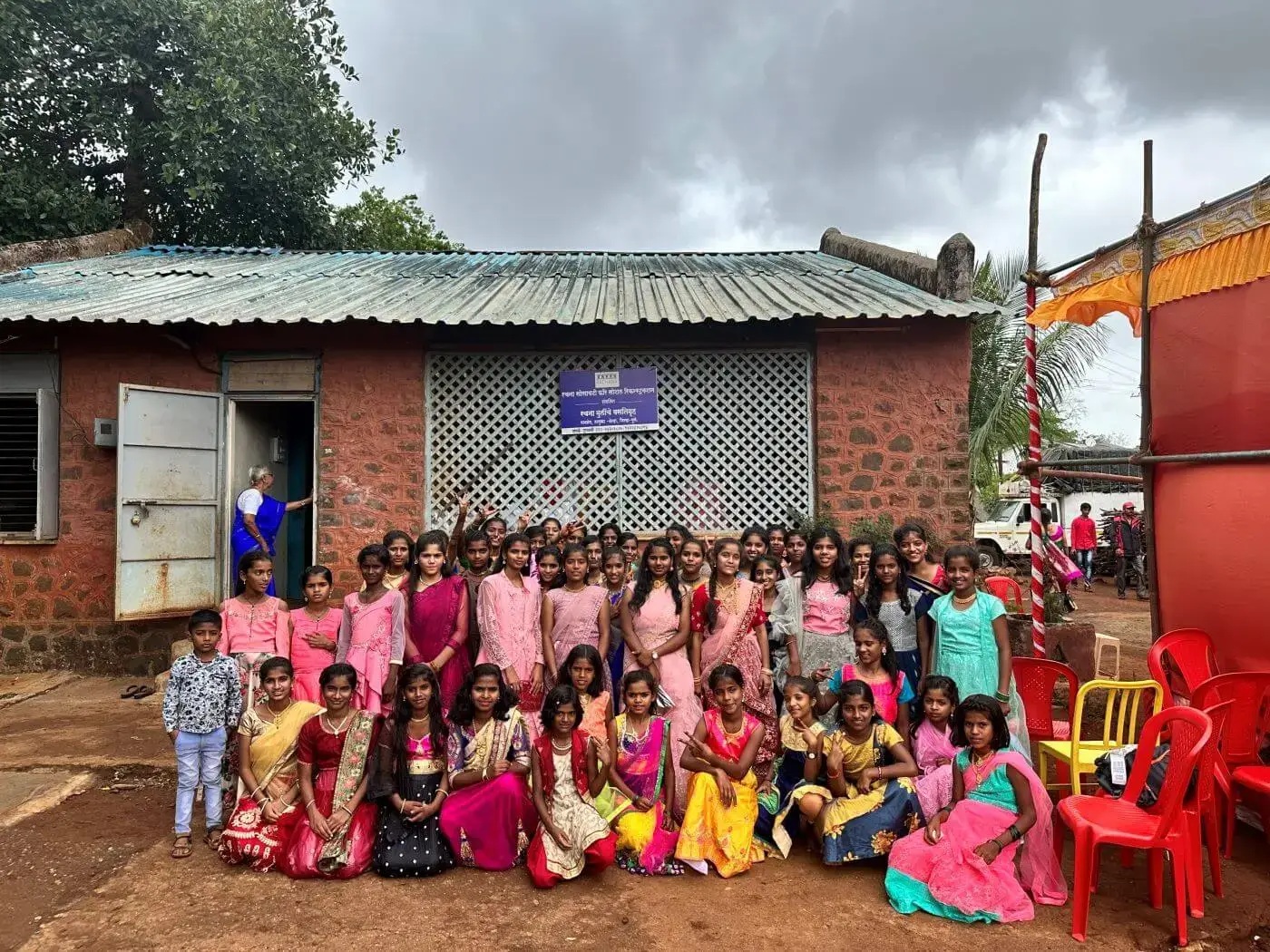
There is a more tangible people detail in its community work. Under Green Tomorrow, employees sponsored 250 saplings and the company matched them. Its education initiatives include support associated with Rachana Girls Hostel. These are modest, specific mechanisms: an employee contribution gets doubled; a local institution receives support. They make the culture claim easier to picture.
The lesson a reader can borrow is practical. Count dependencies before choosing a deadline. Challenge customizations before reproducing them. Reconcile records before accepting a cutover. Decide who owns support before the launch party. Oracle-specific tools make sense where Oracle workflows drive the problem; elsewhere, their specialization deserves scrutiny. Automation also needs clear business rules and people empowered to resolve exceptions.
Excelencia’s upcoming Oracle AI World appearance puts a fashionable vocabulary around this work. The enduring question is simpler: can the organization change its systems while preserving the useful things those systems do? The answer begins with that inconvenient packing list, and the willingness to leave something behind.