Tara Youngblood wanted a bed with the manners of a car. The driver gets one temperature. The passenger gets another. Nobody has to surrender the entire cabin because the person beside them has a different opinion about winter. She and her husband, Todd, preferred different temperatures in bed. Separate controls seemed a reasonable request. Marriage already involves enough negotiations without appointing a winner of the thermostat.
That was the compact, domestic brief behind Chilipad, the temperature-controlled mattress pad they launched in 2007. Youngblood has described the idea in the language of individual comfort: two people could share a bed without sharing a setting. It is an appealingly ordinary place for a business to begin. You need no elaborate account of the future to understand the problem. You need only have met another person.
Youngblood’s career has since taken her through product development, scientific leadership, the CEO’s job, authorship and another bedding venture. The interesting continuity is her willingness to keep revisiting the original object. A bed can look like a finished invention until someone asks which parts of it still deserve an argument.
A small adjustment with a long apprenticeship
By 2019, Tara and Todd had spent almost two decades designing products, consulting and bringing ideas to market. Chilipad grew out of that practical background. Youngblood’s training was in physics; her professional territory included the less tidy work of turning an idea into something another person could order, unpack and use.
She initially understood the opportunity as personalized temperature within a mattress market already interested in individualized comfort. That detail matters. A founder can have a clear understanding of a product while still having to discover where it belongs commercially. The object may be ready before the customer has a familiar category for it.
The early years were a lengthy introduction to that distinction. In an interview about persistence, entrepreneur Mike Dillard described a roughly decade-long interval between Chilipad’s launch and its wider traction. The broad shape of that account is more revealing than an overnight-success anecdote: there was considerable business to do while waiting for the business to catch on.
For a physical product, waiting has an inconvenient weight. An idea can sit quietly in a notebook. A manufactured object brings questions about inventory, shipping and support. Youngblood’s public conversations about entrepreneurship return to those practical responsibilities. The invention is only the beginning of the customer’s experience, and a rather early beginning at that.
The person who knew where everything was
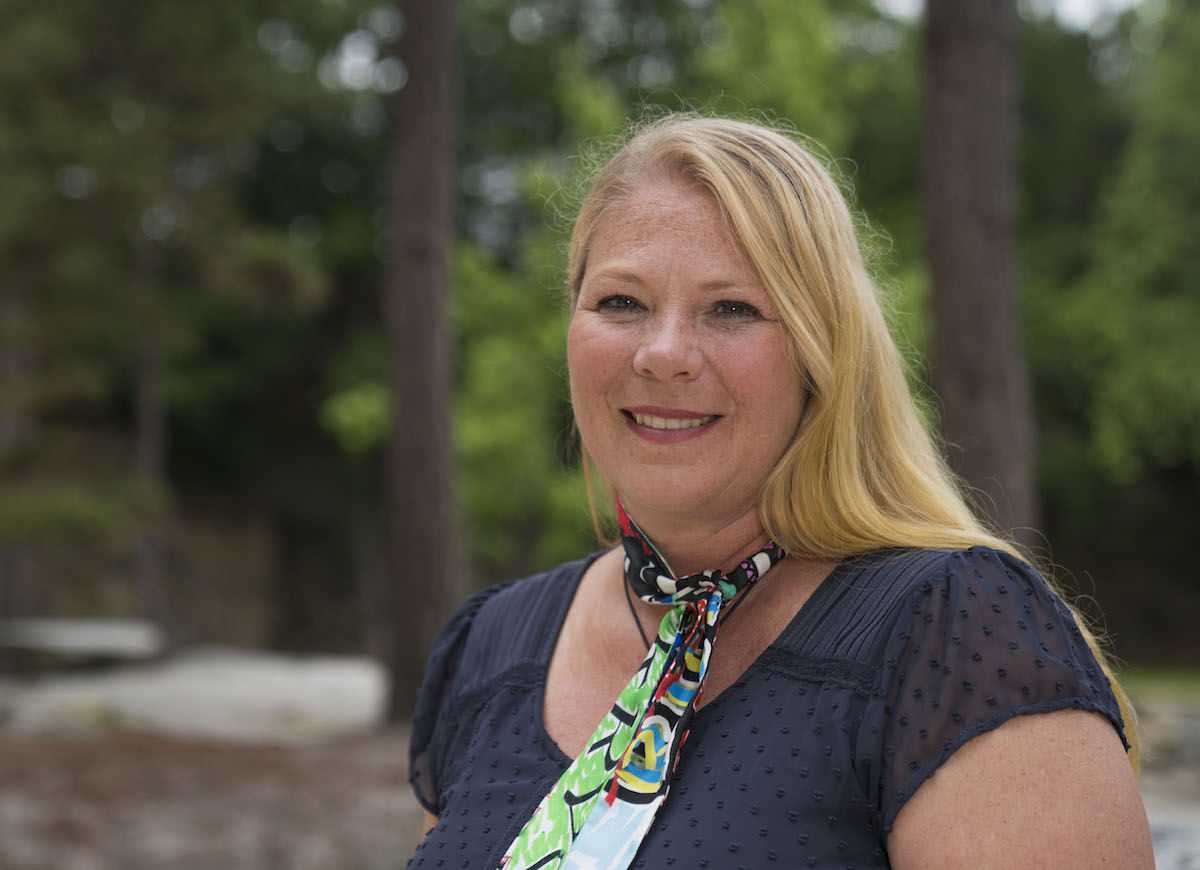
Her route into leadership passed through the company’s ordinary jobs. She handled accounting and graphic design, among other responsibilities, while Todd managed the supply chain and inventory. Over time, her work increasingly concerned the direction of the company and the products it would develop next. She became chief science officer and later CEO.
There is a particular education in knowing how many different ways a company can need your attention before lunch. The person handling those tasks learns the distance between an attractive proposal and the work required to deliver it. That experience can make a leadership decision more informed. It can also make handing over a task surprisingly difficult.
Youngblood has spoken about that difficulty. Capability can become a trap: if you know how to do the job, doing it yourself feels efficient. Repeat the decision across enough jobs and the founder becomes a queue. Growing into management requires allowing other people to acquire the confidence that came from your own years of practice.
The transition also required the co-founders to reconsider who should lead. Todd had held the CEO role; Tara’s vision for the company’s next phase helped bring her into it. Their partnership had to accommodate a changing business, rather than preserve every division of labor from its beginning. A working arrangement can be useful for years and still need revising.
- 2007Chilipad launches
- 2019Chief science officer and co-founder
- 2020Publicly discussing the CEO role
- 2023 onwardGeli and a new business chapter
The useful life of someone else’s idea
The original cooling design illustrates the kind of ingenuity Youngblood enjoys. The team considered compressors, then used small thermoelectric chips associated with computer cooling, combined with tubing and a water-circulation system. An existing component found a different household assignment. The resulting product could be explained in everyday language, even when its construction required specialist choices.
“A lot of time, it is pairing things that are already in the market.”Tara Youngblood, 2022
The modesty of that description is part of its value. Invention does not always announce itself as an unprecedented material or a wholly unfamiliar machine. Sometimes the fresh work lies in the combination: the component, the setting, the way a person controls it. Familiar ingredients can still demand a great deal of engineering before they cooperate.
Her interest extended to protecting what the company developed. In 2022 she discussed the importance of choosing advisers who understood the commercial purpose of a patent. Paperwork was insufficient on its own. The business had to know what it intended to do with the protection. That question puts the customer and the company back into a process that can otherwise sound like a contest to accumulate certificates.
Across an ocean, even the plug gets a vote
Youngblood’s product thinking has also included the constraints that arrive when hardware travels. In a 2019 conversation about expansion into Europe and Australia, she discussed differences in bed sizes and electrical cords. International growth sounds wonderfully abstract until the product reaches a socket. Then the details become the whole proposition.
In the same conversation, she explained why a separate mattress pad offered flexibility: a mattress and a piece of technology do not necessarily have the same useful life. Keeping them separate gave customers choices. It was a design decision about replacement as much as installation, and a reminder that a product’s relationship with the rest of the room matters.
Those considerations make the later arrival of Geli especially interesting. Youngblood eventually turned her attention to mattresses themselves. An earlier decision about what a company should make can be sensible without becoming a lifelong prohibition. New work allows an inventor to return to a question with different materials and a different business around it.
An introvert acquires an audience
Alongside the products came a public identity: the Sleep Geek. Youngblood wrote Reprogram Your Sleep: The Sleep Recipe That Works, appeared on podcasts and delivered a TEDxCaryWomen talk. Interviews introduced the scientist and executive to people who might never encounter a patent document or sit through a product-development meeting.
She has described herself as an introvert and acknowledged that becoming more public took effort. That admission gives her speaking career some useful texture. An audience sees the finished appearance. The speaker may be experiencing a much less polished internal event. Repeating the job is one way to become able to do it, even when natural ease remains an unreliable colleague.
Outside that public work, her speaker biography lists painting, gardening and travel among her interests. The portrait is pleasantly less streamlined than a professional slogan. There are products and presentations, but also things to grow and pictures to make. A career can occupy a great deal of someone’s life without being qualified to describe all of it.
The company changes hands. The inventor keeps going.
Chilipad’s history took a sharp turn in 2023. Sleepme Inc. ceased operations, and Sleep Solutions Inc. acquired its assets on July 17. The business continued under new management, with the brands subsequently brought together as Chilipad by Sleepme. Youngblood’s role in founding the original venture belongs to its history; the present ownership is a separate chapter.
For a reader following a founder, the distinction is essential. A product name can remain familiar while the organization behind it changes. Old interviews preserve an earlier title in perfect working order long after the business has moved on. Understanding Youngblood’s career means following her beyond that frozen introduction.
Geli’s own timeline places its beginning in 2023 and records a partnership with Essentia in 2025. Its products use gel-based materials in mattresses and pillows. In June 2026, Youngblood discussed the venture on Daniel Finneran’s Pneuma podcast, alongside the consulting work she and Todd offer through T2. The partnership that produced Chilipad had another assignment.
A different object, a familiar question
Youngblood’s current work also includes speaking and executive coaching. Her website presents reinvention as a subject she now helps other people consider. In her case, the word has a concrete business setting: responsibility changed, a company changed hands, and she returned to product development with another venture.
The pattern is more interesting than a neat arrival at a final title. Physics informed a product. Running the product business required learning unfamiliar jobs. Leadership required giving some of them away. A later venture reopened questions about the mattress that the earlier business had deliberately left to others. Each stage changed the scope of the work.
There is still something recognizable in that first request for separate controls. Youngblood noticed that an ordinary object asked two people to accept one answer. Her subsequent career has involved a series of less domestic adjustments, but the habit of questioning the setting remains. The thermostat was a good place to start. It gave everyone a dial.
Follow the next chapter
Find Youngblood at Youngblood Coaching, Geli Sleep and LinkedIn. Her public social links also include Instagram, Twitter / X and Facebook.
Continue with the 2022 conversation on invention and patents, the 2019 founder interview, her TEDxCaryWomen video, or Chilipad’s ownership update.